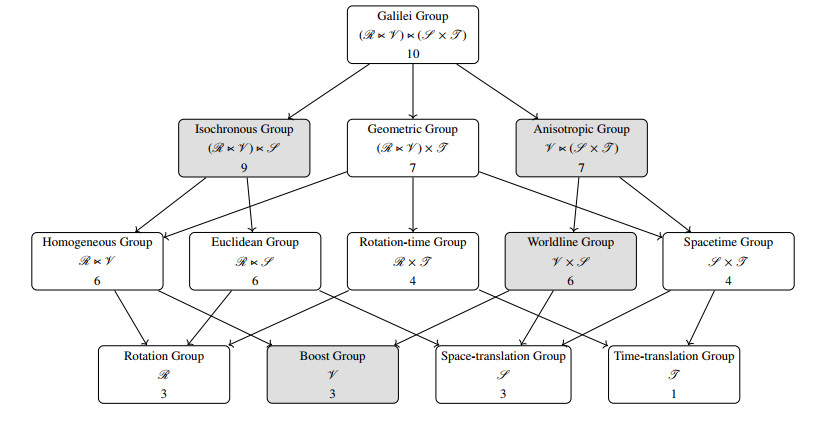
We present a geometric construction of irreversible dynamics on Poisson manifolds that satisfies the axioms of metriplectic mechanics and the general equation for nonequilibrium reversible-irreversible coupling (GENERIC) framework. Our approach relies solely on the underlying Poisson structure and its deformation theory, without requiring any additional metric structure. Specifically, we show that if the second Lichnerowicz–Poisson cohomology group of a Poisson manifold is nontrivial, one can construct a symmetric bracket that generates irreversible dynamics compatible with energy conservation and entropy production. This bracket is derived from a 2-cocycle that deforms the original Poisson structure, thereby modifying the associated Casimir foliation. We illustrate the construction with two finite-dimensional examples and one infinite-dimensional example: the duals of the Lie algebras of the special Euclidean group $ SE(2) $, the Galilei group $ SGal(3) $, and the group of diffeomorphisms over the circle. These examples demonstrate the applicability of the method in classical mechanics, control theory, and mathematical physics.
Citation: Erwin Luesink. Irreversible dynamics on Poisson manifolds[J]. Communications in Analysis and Mechanics, 2026, 18(4): 749-782. doi: 10.3934/cam.2026031
We present a geometric construction of irreversible dynamics on Poisson manifolds that satisfies the axioms of metriplectic mechanics and the general equation for nonequilibrium reversible-irreversible coupling (GENERIC) framework. Our approach relies solely on the underlying Poisson structure and its deformation theory, without requiring any additional metric structure. Specifically, we show that if the second Lichnerowicz–Poisson cohomology group of a Poisson manifold is nontrivial, one can construct a symmetric bracket that generates irreversible dynamics compatible with energy conservation and entropy production. This bracket is derived from a 2-cocycle that deforms the original Poisson structure, thereby modifying the associated Casimir foliation. We illustrate the construction with two finite-dimensional examples and one infinite-dimensional example: the duals of the Lie algebras of the special Euclidean group $ SE(2) $, the Galilei group $ SGal(3) $, and the group of diffeomorphisms over the circle. These examples demonstrate the applicability of the method in classical mechanics, control theory, and mathematical physics.

| [1] |
L. Onsager, Reciprocal relations in irreversible processes. I, Phys. Rev., 37 (1931), 405. https://doi.org/10.1103/PhysRev.37.405 doi: 10.1103/PhysRev.37.405

|
| [2] |
L. Onsager, Reciprocal relations in irreversible processes. II, Phys. Rev., 38 (1931), 2265. https://doi.org/10.1103/PhysRev.38.2265 doi: 10.1103/PhysRev.38.2265
|
| [3] | M. A. Biot, Variational Principles in Heat Transfer: A Unified Lagrangian Approach to Heat and Mass Transport, Oxford University Press, New York, 1970. |
| [4] | S. R. de Groot, P. Mazur, Non-equilibrium Thermodynamics, Courier Corporation, 2013. |
| [5] | P. Glansdorff, I. Prigogine, Thermodynamic Theory of Structure, Stability and Fluctuations, Wiley-Interscience, London, 1971. |
| [6] | D. Kondepudi, I. Prigogine, Modern Thermodynamics: From Heat Engines to Dissipative Structures, John Wiley & Sons, Chichester, 2008. https://doi.org/10.1002/9781118698723 |
| [7] | B. H. Lavenda, Thermodynamics of Irreversible Processes, Macmillan, London, 1978. |
| [8] | E. C. G. Stueckelberg, P. B. Scheurer, Thermocinétique Phénoménologique Galiléenne, Birkhäuser, Basel, 1971. |
| [9] | C. Truesdell, Rational Thermodynamics, Springer-Verlag, New York, 1984. https://doi.org/10.1007/978-1-4612-5206-1 |
| [10] | L. C. Woods, The Thermodynamics of Fluid Systems, Oxford University Press, Oxford, 1975. |
| [11] |
F. Gay-Balmaz, H. Yoshimura, A Lagrangian variational formulation for nonequilibrium thermodynamics. Part I: Discrete systems, J. Geom. Phys., 111 (2017), 169–193. https://doi.org/10.1016/j.geomphys.2016.08.018 doi: 10.1016/j.geomphys.2016.08.018
|
| [12] |
F. Gay-Balmaz, H. Yoshimura, A Lagrangian variational formulation for nonequilibrium thermodynamics. Part II: Continuum systems, J. Geom. Phys., 111 (2017), 194–212. https://doi.org/10.1016/j.geomphys.2016.08.019 doi: 10.1016/j.geomphys.2016.08.019
|
| [13] |
F. Gay-Balmaz, H. Yoshimura, From Lagrangian mechanics to nonequilibrium thermodynamics: A variational perspective, Entropy, 21 (2018), 8. https://doi.org/10.3390/e21010008 doi: 10.3390/e21010008
|
| [14] |
B. M. Maschke, A. J. van der Schaft, Port-controlled Hamiltonian systems: Modelling origins and system theoretic properties, IFAC Proc. Vol., 25 (1992), 359–365. https://doi.org/10.1016/S1474-6670(17)52308-3 doi: 10.1016/S1474-6670(17)52308-3
|
| [15] |
H. Ramirez, Y. Le Gorrec, An overview on irreversible port-Hamiltonian systems, Entropy, 24 (2022), 1478. https://doi.org/10.3390/e24101478 doi: 10.3390/e24101478
|
| [16] |
M. Grmela, Contact geometry of mesoscopic thermodynamics and dynamics, Entropy, 16 (2014), 1652–1686. https://doi.org/10.3390/e16031652 doi: 10.3390/e16031652
|
| [17] |
A. van der Schaft, B. Maschke, Geometry of thermodynamic processes, Entropy, 20 (2018), 925. https://doi.org/10.3390/e20120925 doi: 10.3390/e20120925
|
| [18] |
A. Bravetti, Contact geometry and thermodynamics, Int. J. Geom. Methods Mod. Phys., 16 (2019), 1940003. https://doi.org/10.1142/S0219887819400036 doi: 10.1142/S0219887819400036
|
| [19] |
J. C. Willems, Dissipative dynamical systems part I: General theory, Arch. Ration. Mech. Anal., 45 (1972), 321–351. https://doi.org/10.1007/BF00276493 doi: 10.1007/BF00276493
|
| [20] |
A. N. Kaufman, Dissipative Hamiltonian systems: A unifying principle, Phys. Lett. A, 100 (1984), 419–422. https://doi.org/10.1016/0375-9601(84)90634-0 doi: 10.1016/0375-9601(84)90634-0
|
| [21] |
P. J. Morrison, A paradigm for joined Hamiltonian and dissipative systems, Phys. D, 18 (1986), 410–419. https://doi.org/10.1016/0167-2789(86)90209-5 doi: 10.1016/0167-2789(86)90209-5
|
| [22] |
M. Grmela, H. C. Öttinger, Dynamics and thermodynamics of complex fluids. I. Development of a general formalism, Phys. Rev. E, 56 (1997), 6620. https://doi.org/10.1103/PhysRevE.56.6620 doi: 10.1103/PhysRevE.56.6620
|
| [23] |
H. C. Öttinger, M. Grmela, Dynamics and thermodynamics of complex fluids. II. Illustrations of a general formalism, Phys. Rev. E, 56 (1997), 6633. https://doi.org/10.1103/PhysRevE.56.6633 doi: 10.1103/PhysRevE.56.6633
|
| [24] |
D. Goreac, J. Kirchhoff, B. Maschke, Generating functions for irreversible Hamiltonian systems, J. Geom. Phys., 216 (2025), 105578. https://doi.org/10.1016/j.geomphys.2025.105578 doi: 10.1016/j.geomphys.2025.105578
|
| [25] | R. Abraham, J. E. Marsden, Foundations of Mechanics, Benjamin/Cummings, Reading, MA, 1978. |
| [26] | D. D. Holm, T. Schmah, C. Stoica, Geometric Mechanics and Symmetry: From Finite to Infinite Dimensions, Oxford University Press, 2009. |
| [27] | J. E. Marsden, T. S. Ratiu, Introduction to Mechanics and Symmetry: A Basic Exposition of Classical Mechanical Systems, Springer, 2013. https://doi.org/10.1007/978-0-387-21792-5 |
| [28] | M. Crainic, R. L. Fernandes, I. Mărcuţ, Lectures on Poisson Geometry, American Mathematical Society, 2021. |
| [29] |
P. J. Morrison, M. H. Updike, Inclusive curvaturelike framework for describing dissipation: Metriplectic 4-bracket dynamics, Phys. Rev. E, 109 (2024), 045202. https://doi.org/10.1103/PhysRevE.109.045202 doi: 10.1103/PhysRevE.109.045202
|
| [30] | J. M. Lee, Introduction to Riemannian Manifolds, Springer, 2018. https://doi.org/10.1007/978-3-319-91755-9 |
| [31] | D. Alekseevsky, P. Guha, On decomposability of Nambu-Poisson tensor, Acta Math. Univ. Comenian., 65 (1996), 1–9. |
| [32] |
R. W. Brockett, Dynamical systems that sort lists, diagonalize matrices, and solve linear programming problems, Linear Algebra Appl., 146 (1991), 79–91. https://doi.org/10.1016/0024-3795(91)90021-N doi: 10.1016/0024-3795(91)90021-N
|
| [33] |
E. Luesink, O. D. Street, Symplectic techniques for stochastic differential equations on reductive Lie groups with applications to Langevin diffusions, J. Differential Equations, 458 (2026), 114034. https://doi.org/10.1016/j.jde.2025.114034 doi: 10.1016/j.jde.2025.114034
|
| [34] |
F. Magri, A simple model of the integrable Hamiltonian equation, J. Math. Phys., 19 (1978), 1156–1162. https://doi.org/10.1063/1.523777 doi: 10.1063/1.523777
|
| [35] |
A. S. Mishchenko, A. T. Fomenko, Generalized Liouville method of integration of Hamiltonian systems, Funct. Anal. Its. Appl., 12 (1978), 113–121. https://doi.org/10.1007/BF01076254 doi: 10.1007/BF01076254
|
| [36] | J.-P. Dufour, N. T. Zung, Poisson Structures and Their Normal Forms, Birkhäuser Basel, 2005. https://doi.org/10.1007/b137493 |
| [37] | N. Jacobson, Lie Algebras, Courier Corporation, 1979. |
| [38] | D. B. Fuks, Cohomology of Infinite-Dimensional Lie Algebras, Springer, 2012. |
| [39] |
B. Janssens, C. Vizman, Central extensions of Lie algebras of symplectic and divergence-free vector fields, Banach Center Publ., 110 (2016), 105–114. https://doi.org/10.4064/bc110-0-7 doi: 10.4064/bc110-0-7
|
| [40] |
B. Janssens, L. Ryvkin, C. Vizman, Universal central extension of the Lie algebra of exact divergence-free vector fields, J. Reine Angew. Math., 2025 (2025), 253–284. https://doi.org/10.1515/crelle-2025-0053 doi: 10.1515/crelle-2025-0053
|
| [41] |
B. Janssens, M. Niestijl, Generalized positive energy representations of the group of compactly supported diffeomorphisms, Comm. Math. Phys., 406 (2025), 1–27. https://doi.org/10.1007/s00220-024-05226-w doi: 10.1007/s00220-024-05226-w
|
| [42] | J.-M. Souriau, Structure des Systèmes Dynamiques, Dunod, Paris, 1970. |
| [43] |
F. Barbaresco, Lie group statistics and Lie group machine learning based on Souriau Lie groups thermodynamics & Koszul-Souriau-Fisher metric: New entropy definition as generalized Casimir invariant function in coadjoint representation, Entropy, 22 (2020), 642. https://doi.org/10.3390/e22060642 doi: 10.3390/e22060642
|
| [44] |
J. Vankerschaver, E. Kanso, J. E. Marsden, The dynamics of a rigid body in potential flow with circulation, Regul. Chaotic Dyn., 15 (2010), 606–629. https://doi.org/10.1134/S1560354710040143 doi: 10.1134/S1560354710040143
|
| [45] | J.-M. Lévy-Leblond, Galilei group and Galilean invariance, In: Group Theory and Its Applications, Elsevier, 1971,221–299. https://doi.org/10.1016/B978-0-12-455152-7.50011-2 |
| [46] | R. Goodman, N. R. Wallach, Symmetry, Representations, and Invariants, Springer, 2009. https://doi.org/10.1007/978-0-387-79852-3 |
| [47] | K. B. Wolf, Geometric Optics on Phase Space, Springer, 2004. |
| [48] | D. D. Holm, Geometric Mechanics: Dynamics and Symmetry, Imperial College Press, 2008. |
| [49] |
V. Bargmann, On unitary ray representations of continuous groups, Ann. of Math., 59 (1954), 1–46. https://doi.org/10.2307/1969831 doi: 10.2307/1969831
|
| [50] |
V. I. Fushchich, A. G. Nikitin, Reduction of the representations of the generalised Poincaré algebra by the Galilei algebra, J. Phys. A: Math. Gen., 13 (1980), 2319–2330. https://doi.org/10.1088/0305-4470/13/7/015 doi: 10.1088/0305-4470/13/7/015
|
| [51] | B. Khesin, R. Wendt, The Geometry of Infinite-Dimensional Groups, Springer, 2009. https://doi.org/10.1007/978-3-540-77263-7 |
Figures(1)
Erwin Luesink. Irreversible dynamics on Poisson manifolds[J]. Communications in Analysis and Mechanics, 2026, 18(4): 749-782. doi: 10.3934/cam.2026031





 DownLoad: