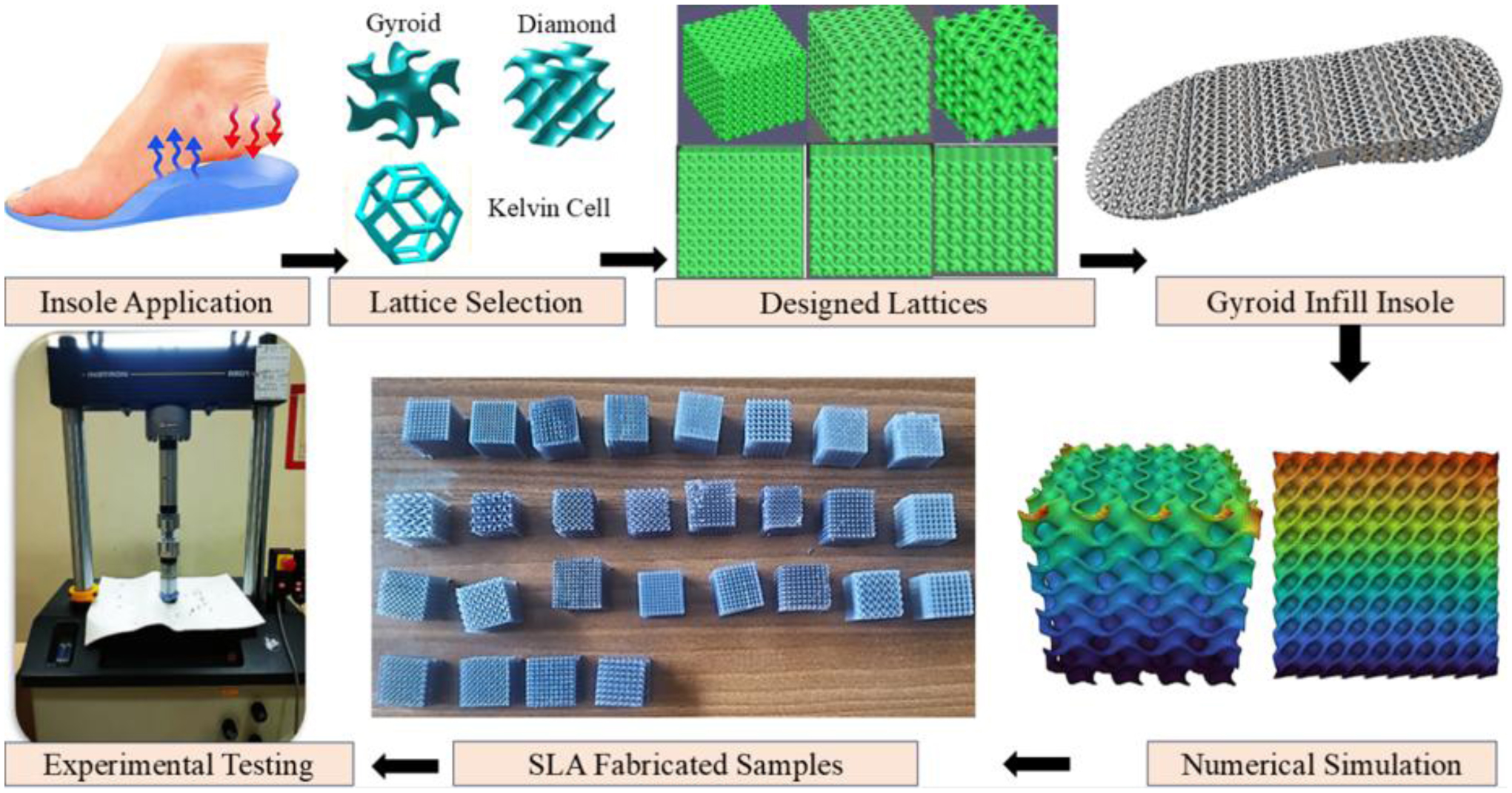
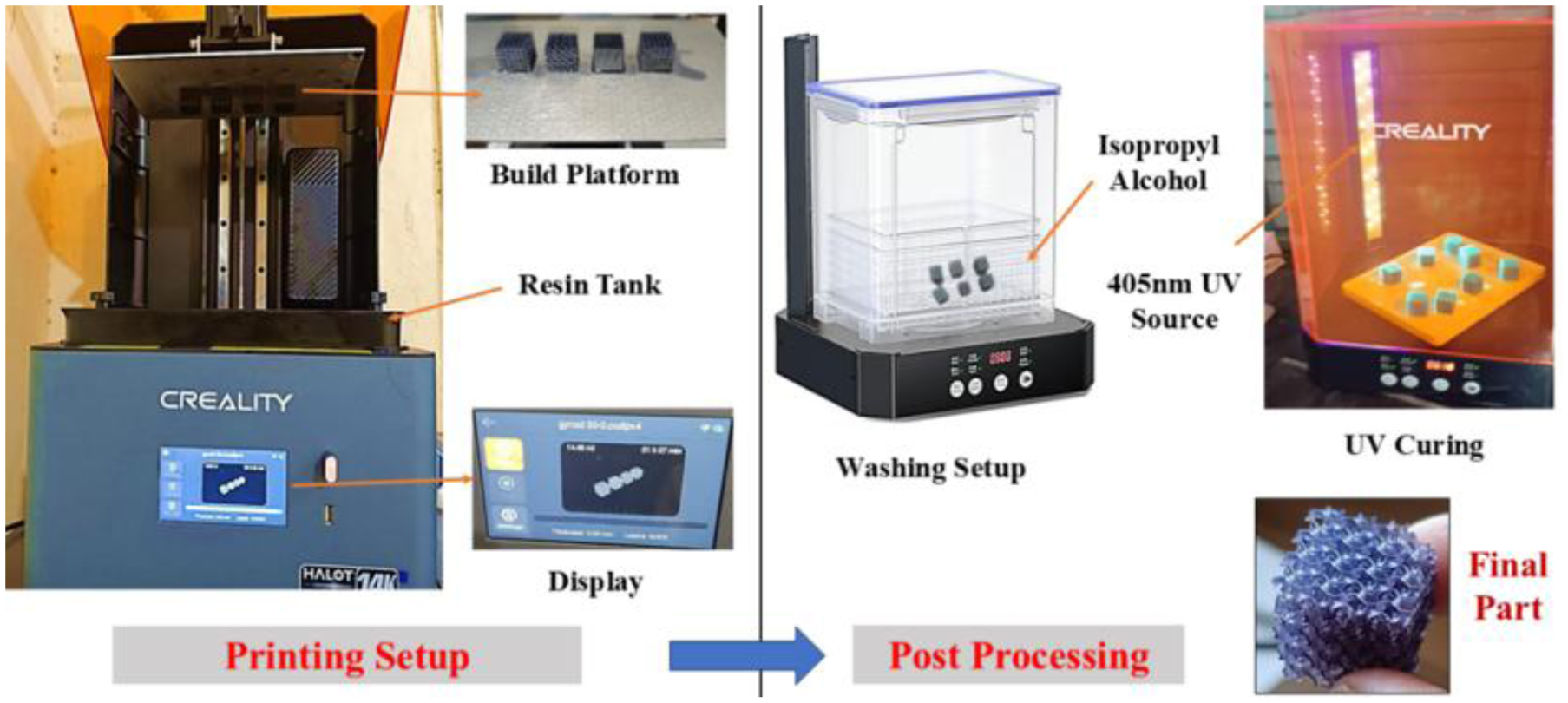
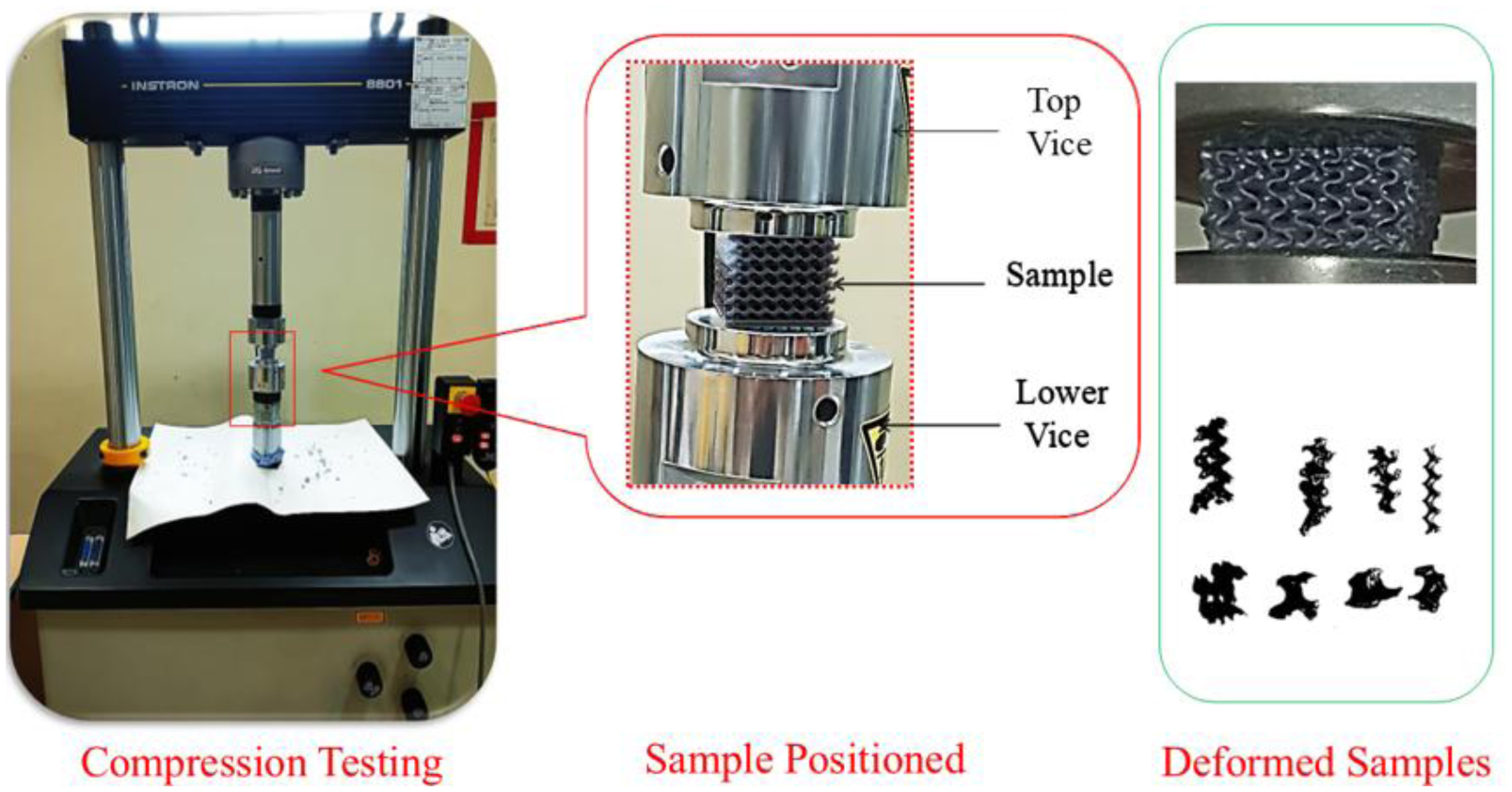
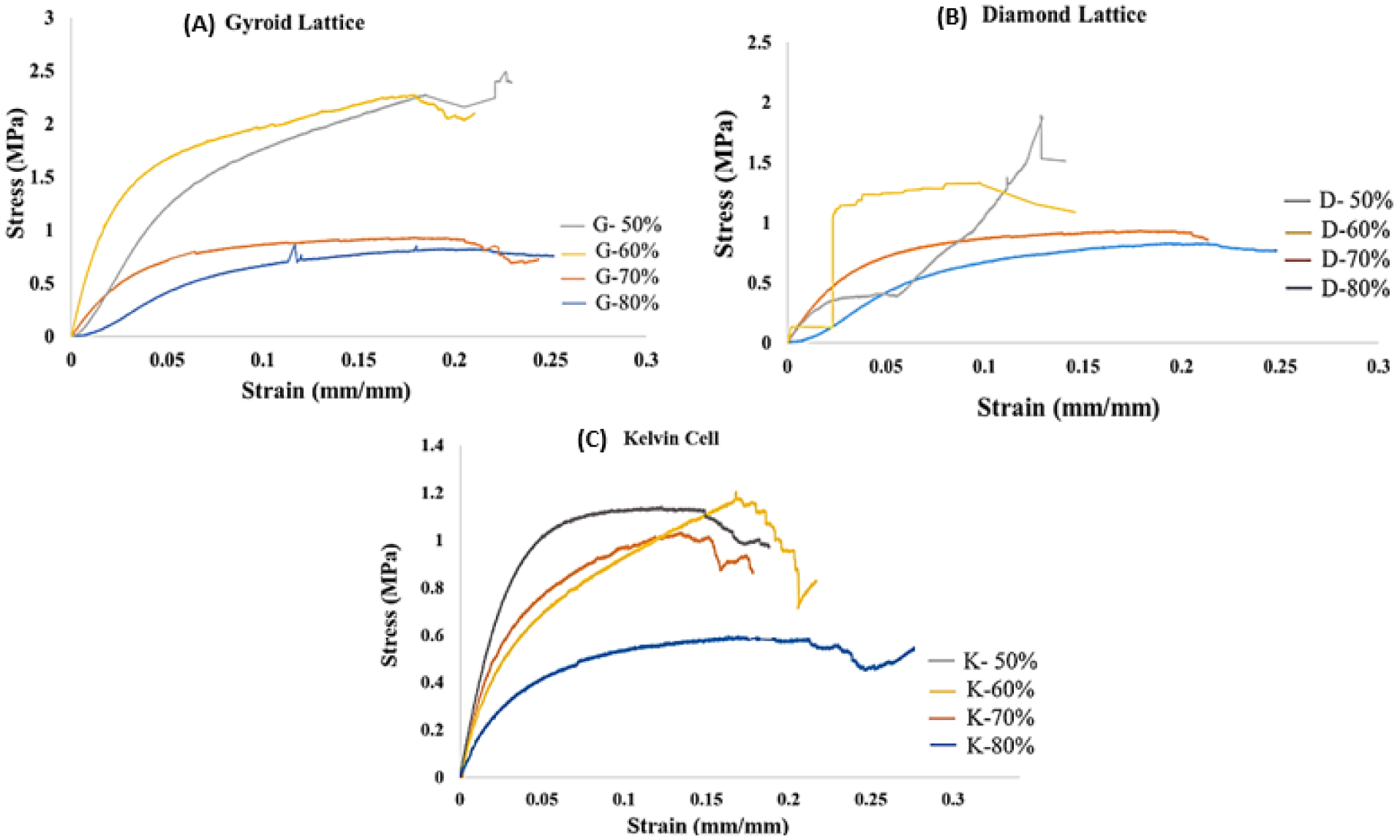
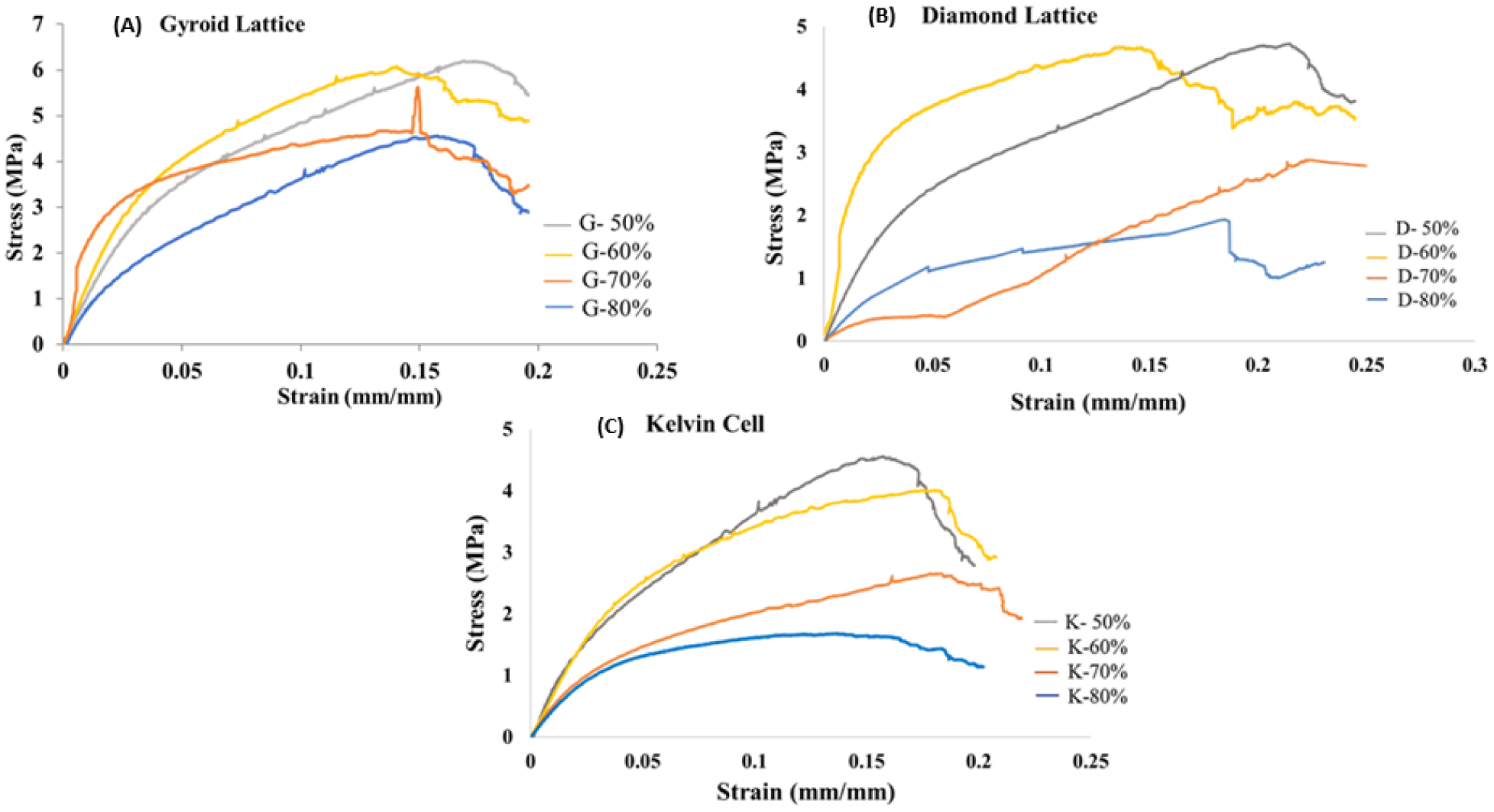
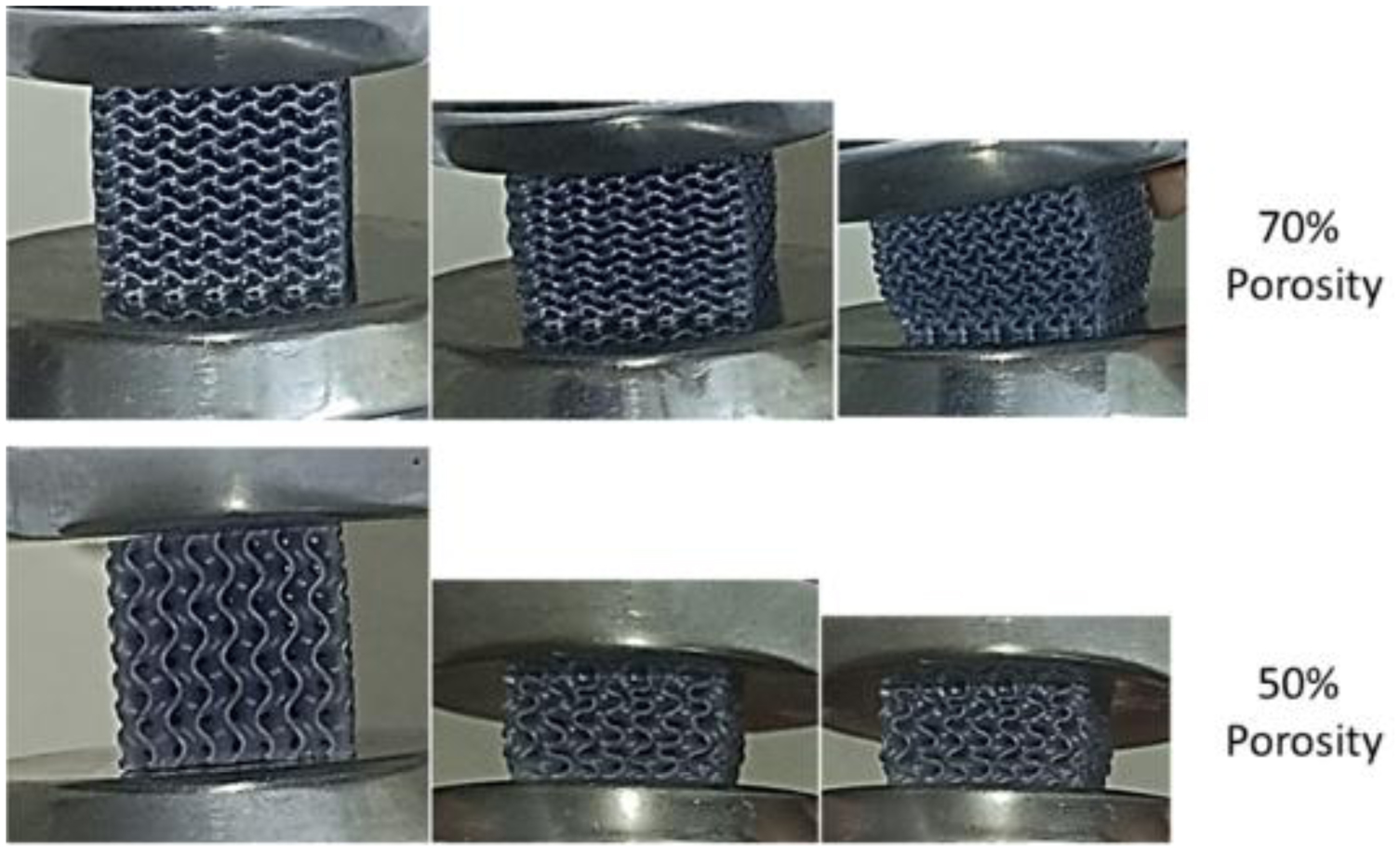
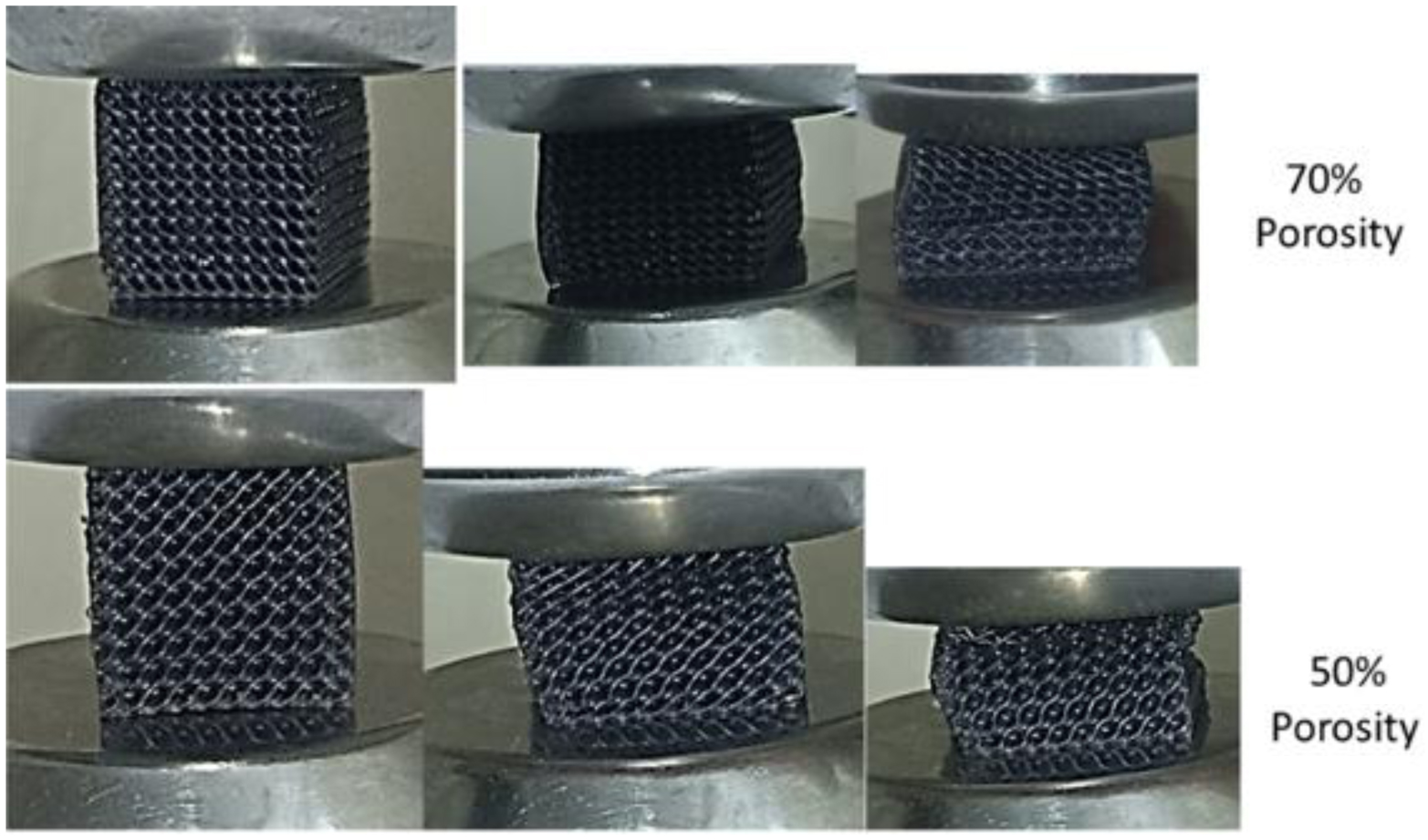
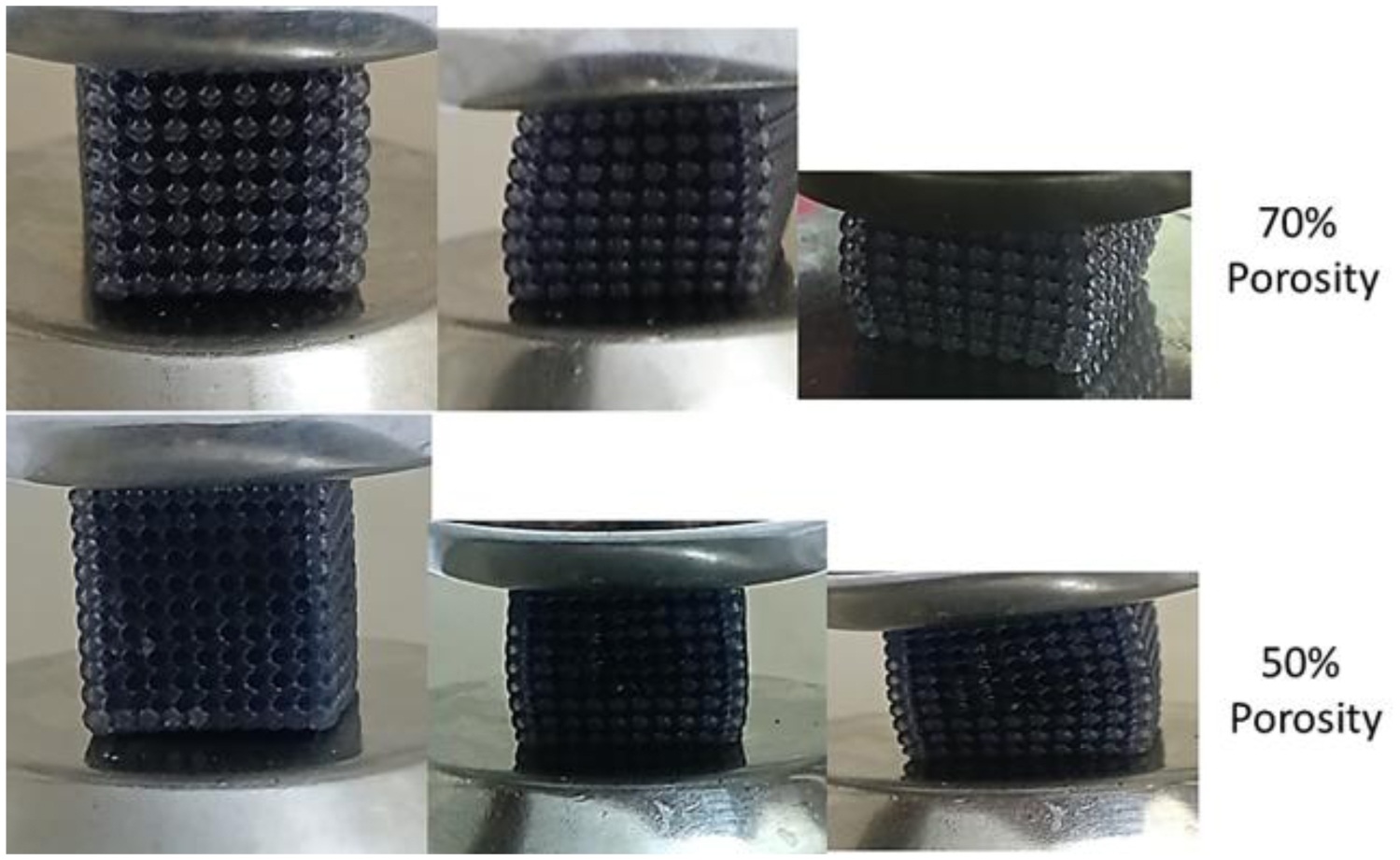
All of the materials used to produce soles for traditional casual athletic shoes are nearly uniform, foam-based materials which lack any ability to regulate the long-term durability and energy absorption properties of the shoe. The recent advances of lattice-based additive manufacturing technologies have given rise to an opportunity to produce unique contoured cushioning systems that can be constructed with adjustable mechanical properties by varying the topology and porosity in a controlled manner. This research paper discusses the investigation of three types of lattice structures (i.e., gyroid, diamond, and Kelvin cell) when subjected to compressive load conditions. The lattice samples were created with four variations of porosity (i.e., 50%, 60%, 70%, and 80%) as well as two variations of thickness (i.e., 0.8 mm and 1 mm). Flexible ABS resin was produced by using the Vat photopolymerization process and the resultant samples were characterized through mechanical testing. Quasi-static loading and numerical analysis were performed on samples created using SLA technology. The results indicate that the mechanical characteristics of the three lattice types, as dictated by their topology and relative density, greatly influenced the performance of each structure; specifically, the gyroid lattice provided the best mechanical performance with the highest load resistance and the most uniform stress distribution. The diamond lattice was second to the gyroid lattice, while the Kelvin cell was found to have the lowest stiffness and failed by exhibiting signs of instability at the highest porosity levels before the other two lattice performed.
Citation: Jayesh Barve, Mohammed Irfan Khan, Chitresh Nayak. Development of a high-performance lattice cushioning system for shoe insoles[J]. AIMS Bioengineering, 2026, 13(3): 433-452. doi: 10.3934/bioeng.2026021
All of the materials used to produce soles for traditional casual athletic shoes are nearly uniform, foam-based materials which lack any ability to regulate the long-term durability and energy absorption properties of the shoe. The recent advances of lattice-based additive manufacturing technologies have given rise to an opportunity to produce unique contoured cushioning systems that can be constructed with adjustable mechanical properties by varying the topology and porosity in a controlled manner. This research paper discusses the investigation of three types of lattice structures (i.e., gyroid, diamond, and Kelvin cell) when subjected to compressive load conditions. The lattice samples were created with four variations of porosity (i.e., 50%, 60%, 70%, and 80%) as well as two variations of thickness (i.e., 0.8 mm and 1 mm). Flexible ABS resin was produced by using the Vat photopolymerization process and the resultant samples were characterized through mechanical testing. Quasi-static loading and numerical analysis were performed on samples created using SLA technology. The results indicate that the mechanical characteristics of the three lattice types, as dictated by their topology and relative density, greatly influenced the performance of each structure; specifically, the gyroid lattice provided the best mechanical performance with the highest load resistance and the most uniform stress distribution. The diamond lattice was second to the gyroid lattice, while the Kelvin cell was found to have the lowest stiffness and failed by exhibiting signs of instability at the highest porosity levels before the other two lattice performed.
Additive manufacturing
Computer-aided design
Finite element analysis
Fluorinated ethylene propylene
Stereolithography
Triply periodic minimal surface
Ultraviolet

| [1] |
Liu F, Shao Y, Chen M (2026) Generative design strategies for additive manufacturing of lattice structures: a review. Mater Des 262: 115431. https://doi.org/10.1016/j.matdes.2026.115431 
|
| [2] |
Zimmerman BK, Carlton HD, Lind J, et al. (2026) Investigating property-porosity relationships for micro-architected lattice structures. Sci Rep 16: 5521. https://doi.org/10.1038/s41598-026-35262-6
|
| [3] |
Yu Z, Savinov R, Matura M, et al. (2025) Current research status on advanced lattice structures for impact and energy absorption applications: a systematic review. Thin-Walled Struct 215: 113490. https://doi.org/10.1016/j.tws.2025.113490
|
| [4] |
Chouhan G, Bidare P, Bala Murali G (2024) Triply periodic minimal surface based lattices for acoustic performance. Noise Vib Worldw 55: 454-468. https://doi.org/10.1177/09574565241270201
|
| [5] |
Habib C, Kwon YW, Sachau D, et al. (2025) Review and assessment of various lattice structure homogenization. Multiscale Multidiscip Model Exp Des 9: 55. https://doi.org/10.1007/s41939-025-01118-1
|
| [6] |
Udenni Gunathilake TMS, Ching YC, Ching KY, et al. (2017) Biomedical and microbiological applications of bio-based porous materials: a review. Polymers 9: 160. https://doi.org/10.3390/polym9050160
|
| [7] |
Liu J, Xu M, Zhang R, et al. (2022) Progress of porous/lattice structures applied in thermal management technology of aerospace applications. Aerospace 9: 827. https://doi.org/10.3390/aerospace9120827
|
| [8] |
Taub AI, Luo AA (2015) Advanced lightweight materials and manufacturing processes for automotive applications. MRS Bull 40: 1045-1054. https://doi.org/10.1557/mrs.2015.268
|
| [9] |
Zhang J, Shen Y, Sun Y, et al. (2022) Design and mechanical testing of porous lattice structure with independent adjustment of pore size and porosity for bone implant. J Mater Res Technol 18: 3240-3255. https://doi.org/10.1016/j.jmrt.2022.04.002
|
| [10] |
du Plessis A, Razavi N, Benedetti M, et al. (2022) Properties and applications of additively manufactured metallic cellular materials: a review. Prog Mater Sci 125: 100918. https://doi.org/10.1016/j.pmatsci.2021.100918
|
| [11] |
Rico-Baeza G, Pérez-Soto GI, Morales-Hernández LA, et al. (2023) Additively manufactured foot insoles using body-centered cubic (BCC) and triply periodic minimal surface (TPMS) cellular structures. Appl Sci 13: 12665. https://doi.org/10.3390/app132312665
|
| [12] |
Lyu Y, Gong T, He T, et al. (2024) Study on the energy absorption performance of triply periodic minimal surface (TPMS) structures at different load-bearing angles. Biomimetics 9: 392. https://doi.org/10.3390/biomimetics9070392
|
| [13] |
Cho J, Lee ES, Kim JH, et al. (2025) Design of lattice-based energy-absorbing structure for enhancing the crashworthiness of advanced air mobility. Aerospace 12: 332. https://doi.org/10.3390/aerospace12040332
|
| [14] |
Chouhan G, Bala Murali G (2024) Designs, advancements, and applications of three-dimensional printed gyroid structures: a review. Proc Inst Mech Eng Part E J Process Mech Eng 238: 965-987. https://doi.org/10.1177/09544089231160030
|
| [15] |
Gandhi R, Salmi M, Roy B, et al. (2025) Mechanical performance, fatigue behaviour, and biointegration of additively manufactured architected lattices. Virtual Phys Prototyp 20: e2530733. https://doi.org/10.1080/17452759.2025.2530733
|
| [16] |
Chouhan G (2024) Comparative study on tensile and morphological properties of resin and rice husk reinforced polymer composite gyroid lattice structures. Eng Res Express 6: 25543. https://doi.org/10.1088/2631-8695/ad4aec
|
| [17] |
Qiu N, Mou W, Yang J, et al. (2026) Mechanical performance of triply periodic minimal surface (TPMS) lattices under multiple loading conditions. Thin-Walled Struct 223: 114634. https://doi.org/10.1016/j.tws.2026.114634
|
| [18] |
Song W, Mu K, Feng G, et al. (2023) Mechanical properties of 3D printed interpenetrating phase composites with TPMS architectures. Thin-Walled Struct 193: 111210. https://doi.org/10.1016/j.tws.2023.111210
|
| [19] |
Shi W, Lin Y, Li J, et al. (2024) Optimization of mechanical properties of Ti–6Al–4V triply periodic minimal surface porous structures prepared by laser beam powder bed fusion technology based on orientation control. Mater Sci Eng A 894: 146183. https://doi.org/10.1016/j.msea.2024.146183
|
| [20] |
Carlsson J, Kuswoyo A, Shaikeea A, et al. (2024) Compression of filled, open-cell, 3D-printed Kelvin lattices. Mech Mater 188: 104851. https://doi.org/10.1016/j.mechmat.2023.104851
|
| [21] |
Wei Y, Li H, Ma Y, et al. (2025) Kelvin lattice structures fabricated by laser powder bed fusion: Design, preparation, and mechanical performance. China Foundry 22: 117-127. https://doi.org/10.1007/s41230-025-5007-z
|
| [22] |
Fauziah S, Amirpour M (2025) Fatigue behavior of 3D-printed solid liquid composite (SLC) orthotic insole: an experimental study. Int J Adv Manuf Technol 139: 5991-6008. https://doi.org/10.1007/s00170-025-16204-4
|
| [23] |
Chhikara K, Singh G, Gupta S, et al. (2022) Progress of additive manufacturing in fabrication of foot orthoses for diabetic patients: a review. Ann 3D Print Med 8: 100085. https://doi.org/10.1016/j.stlm.2022.100085
|
| [24] |
Cracknell D, Battley M, Fernandez J, et al. (2024) Fluid-filled lattices for responsive orthotic insoles. Smart Mater Struct 33: 115034. https://doi.org/10.1088/1361-665X/ad860c
|
| [25] |
Chibinyani M, Dzogbewu TC, Maringa M, et al. (2024) Natural cellular structures in engineering designs built via additive manufacturing. Mater Technol 40: 2443211. https://doi.org/10.1080/10667857.2024.2443211
|
| [26] | Williams C (2008) Design and development of a layer-based additive manufacturing process for the realization of metal parts of designed mesostructure[PhD thesis]. USA: Georgia Institute of Technology. |
| [27] |
Khan K, Hussain MI, Tareen AK, et al. (2026) Advances in vat photopolymerization 3D printing: Multifunctional materials, process innovations, and emerging applications. Mater Sci Eng R Reports 167: 101120. https://doi.org/10.1016/j.mser.2025.101120
|
| [28] |
Xu S, Huang C, Liu H, et al. (2026) Vat photopolymerization additive manufacturing for advanced ceramics: techniques, multimaterial strategies, and applications. Adv Eng Mater 28: e202501811. https://doi.org/10.1002/adem.202501811
|
| [29] |
Ali F, Kalva SN, Koc M (2024) Advancements in 3D printing techniques for biomedical applications: a comprehensive review of materials consideration, post processing, applications, and challenges. Discov Mater 4: 53. https://doi.org/10.1007/s43939-024-00115-4
|
| [30] |
Hozdić E (2024) Characterization and comparative analysis of mechanical parameters of FDM- and SLA-printed ABS materials. Appl Sci 14: 649. https://doi.org/10.3390/app14020649
|
| [31] |
Li D, Liao W, Dai N, et al. (2019) Comparison of mechanical properties and energy absorption of sheet-based and strut-based gyroid cellular structures with graded densities. Materials 12: 2183. https://doi.org/10.3390/ma12132183
|
| [32] |
Dias Gonçalves VP, Vieira CMF, Simonassi NT, et al. (2024) Evaluation of mechanical properties of ABS-like resin for stereolithography versus ABS for fused deposition modeling in three-dimensional printing applications for odontology. Polymers 16: 2921. https://doi.org/10.3390/polym16202921
|
| [33] |
Watters MP, Bernhardt ML (2018) Curing parameters to improve the mechanical properties of stereolithographic printed specimens. Rapid Prototyping J 24: 46-51. https://doi.org/10.1108/RPJ-11-2016-0180
|
Figures(11) / Tables(2)

Jayesh Barve, Mohammed Irfan Khan, Chitresh Nayak. Development of a high-performance lattice cushioning system for shoe insoles[J]. AIMS Bioengineering, 2026, 13(3): 433-452. doi: 10.3934/bioeng.2026021




 DownLoad: