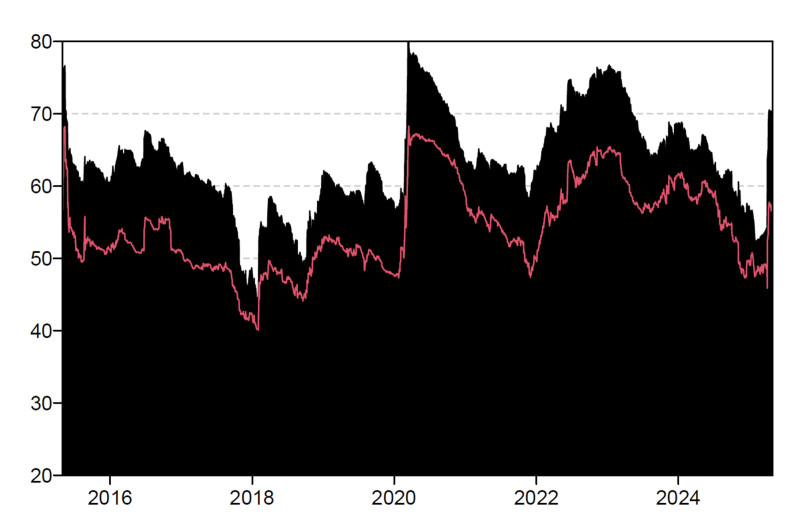
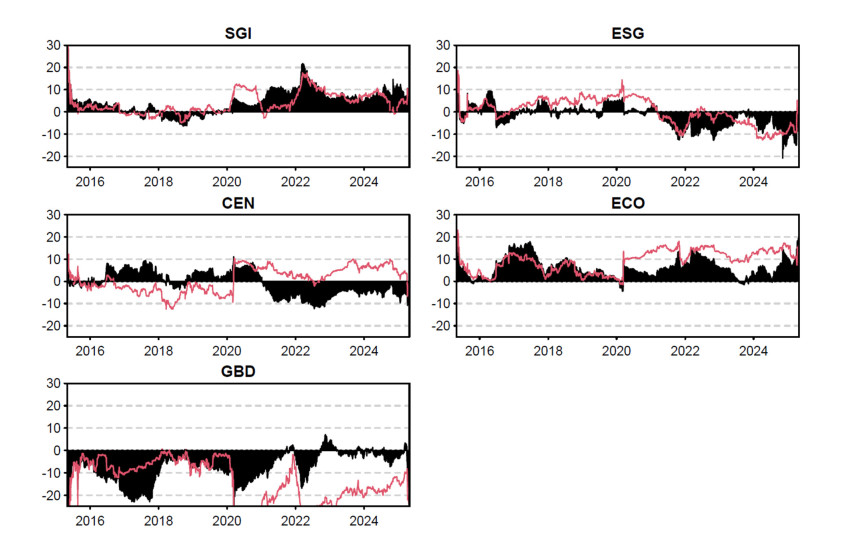
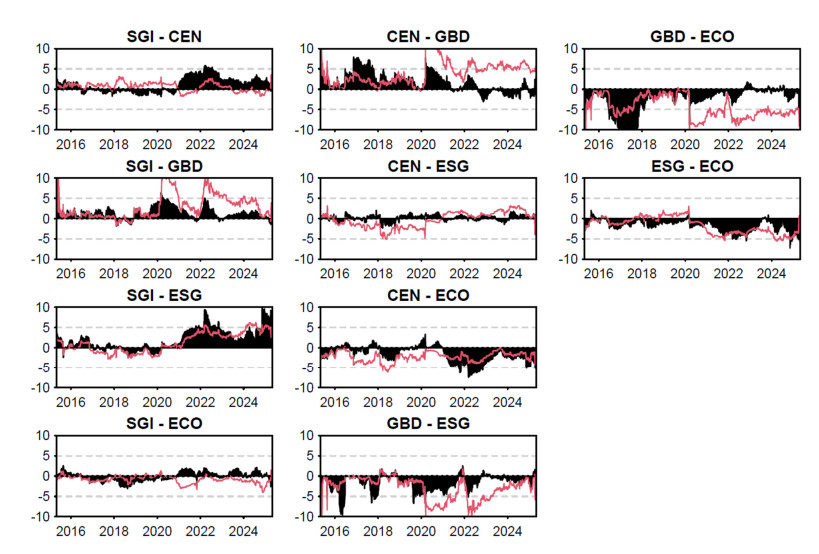
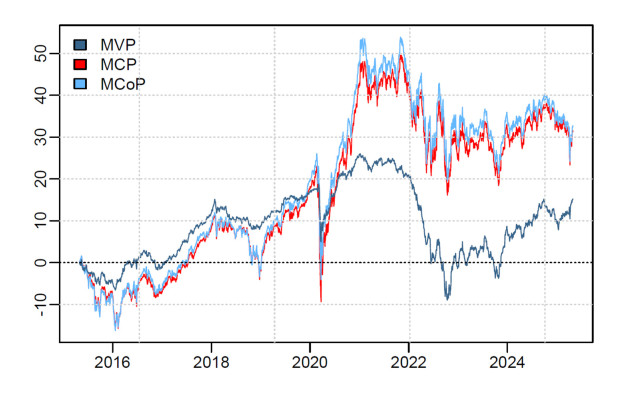
This paper investigated the dynamic interconnectedness and portfolio implications of five major pillars of green finance: clean energy (CEN), ESG equities (ESG), green bonds (GBD), smart-grid infrastructure (SGI), and ecology-focused equities (ECO). Using daily indices from 2015 to 2025, we applied a TVP-VAR-based extended joint connectedness framework to quantify total, net, and bilateral spillovers. The results indicated a structurally integrated system, led by SGI and ECO as persistent shock transmitters, while GBD consistently operates as a net receiver. CEN and ESG alternate between transmission and absorption depending on market regimes, particularly during COVID-19 and the Inflation Reduction Act period. Portfolio analysis showed that network-aware allocation via the minimum connectedness portfolio (MCoP) outperforms traditional variance- and correlation-based strategies (MVP, MCP) by improving drawdown control and cumulative returns. The study contributes by incorporating infrastructure and ecological assets into green contagion analysis and by translating systemic connectedness into actionable portfolio strategies, offering practical insights for sustainable investment management.
Citation: Nader Naifar. Dynamic interconnectedness and portfolio strategies in green finance: Evidence from clean energy, ESG, and smart infrastructure[J]. Green Finance, 2025, 7(4): 661-688. doi: 10.3934/GF.2025025
This paper investigated the dynamic interconnectedness and portfolio implications of five major pillars of green finance: clean energy (CEN), ESG equities (ESG), green bonds (GBD), smart-grid infrastructure (SGI), and ecology-focused equities (ECO). Using daily indices from 2015 to 2025, we applied a TVP-VAR-based extended joint connectedness framework to quantify total, net, and bilateral spillovers. The results indicated a structurally integrated system, led by SGI and ECO as persistent shock transmitters, while GBD consistently operates as a net receiver. CEN and ESG alternate between transmission and absorption depending on market regimes, particularly during COVID-19 and the Inflation Reduction Act period. Portfolio analysis showed that network-aware allocation via the minimum connectedness portfolio (MCoP) outperforms traditional variance- and correlation-based strategies (MVP, MCP) by improving drawdown control and cumulative returns. The study contributes by incorporating infrastructure and ecological assets into green contagion analysis and by translating systemic connectedness into actionable portfolio strategies, offering practical insights for sustainable investment management.

| [1] |
Antonakakis N, Cunado J, Filis G, et al. (2020) Oil and asset classes implied volatilities: Investment strategies and hedging effectiveness. Energ Econ 91: 104762. https://doi.org/10.1016/j.eneco.2020.104762 doi: 10.1016/j.eneco.2020.104762

|
| [2] |
Balcilar M, Gabauer D, Umar Z (2021) Crude Oil futures contracts and commodity markets: New evidence from a TVP-VAR extended joint connectedness approach. Resour Policy 73: 102219. https://doi.org/10.1016/j.resourpol.2021.102219 doi: 10.1016/j.resourpol.2021.102219
|
| [3] |
Diebold FX, Yilmaz K (2012) Better to give than to receive: Predictive directional measurement of volatility spillovers. Int J Forecasting 28: 57–66. https://doi.org/10.1016/j.ijforecast.2011.02.006 doi: 10.1016/j.ijforecast.2011.02.006
|
| [4] |
Dogan E, Madaleno M, Taskin D, et al. (2022) Investigating the spillovers and connectedness between green finance and renewable energy sources. Renew Energ 197: 709–722. https://doi.org/10.1016/j.renene.2022.07.131 doi: 10.1016/j.renene.2022.07.131
|
| [5] |
Duan X, Xiao Y, Ren X, et al. (2023) Dynamic spillover between traditional energy markets and emerging green markets: Implications for sustainable development. Resour Policy 82: 103483. https://doi.org/10.1016/j.resourpol.2023.103483 doi: 10.1016/j.resourpol.2023.103483
|
| [6] |
Inglesi-Lotz R, Dogan E, Nel J, et al. (2023) Connectedness and spillovers in the innovation network of green transportation. Energ Policy 180: 113686. https://doi.org/10.1016/j.enpol.2023.113686 doi: 10.1016/j.enpol.2023.113686
|
| [7] |
Jiang W, Dong L, Liu X (2023a) How does COVID-19 affect the spillover effects of green finance, carbon markets, renewable/non-renewable energy markets? Evidence from China. Energy 281: 128351. https://doi.org/10.1016/j.energy.2023.128351 doi: 10.1016/j.energy.2023.128351
|
| [8] |
Jiang W, Dong L, Chen Y (2023b) Time-frequency connectedness among traditional/new energy, green finance, ESG in pre-and post-Russia-Ukraine war periods. Resour Policy 83: 103618. https://doi.org/10.1016/j.resourpol.2023.103618 doi: 10.1016/j.resourpol.2023.103618
|
| [9] |
Kroner KF, Ng VK (1998) Modeling asymmetric comovements of asset returns. Rev Financ Stud 11: 817–844. https://doi.org/10.1093/rfs/11.4.817 doi: 10.1093/rfs/11.4.817
|
| [10] |
Lin B, Zhang Z (2025) Extreme spillovers among green finance, energy, energy metals markets in China: Evidence under the dilemma of energy transition. Renew Energ 241: 122403. https://doi.org/10.1016/j.renene.2025.122403 doi: 10.1016/j.renene.2025.122403
|
| [11] |
Lu X, Huang N, Mo J, et al. (2023) Dynamics of the return and volatility connectedness among green finance markets during the COVID-19 pandemic. Energ Econ 125: 106860. https://doi.org/10.1016/j.eneco.2023.106860 doi: 10.1016/j.eneco.2023.106860
|
| [12] |
Mahmood S, Sun H, Iqbal A, et al. (2024) Green finance, sustainable infrastructure, green technology innovation: pathways to achieving sustainable development goals in the belt and road initiative. Environ Res Commun 6: 105036. https://doi.org/10.1088/2515-7620/ad898f doi: 10.1088/2515-7620/ad898f
|
| [13] |
Naeem MA, Ashraf S, Karim S, et al. (2024) Green finance under stress: Unraveling the spillover effects of tail risk. Int Rev Econ Financ 93: 225–236. https://doi.org/10.1016/j.iref.2024.03.026 doi: 10.1016/j.iref.2024.03.026
|
| [14] |
Naifar N (2024) Climate policy uncertainty and comparative reactions across sustainable sectors: Resilience or vulnerability? Financ Res Lett 65: 105543. https://doi.org/10.1016/j.frl.2024.105543 doi: 10.1016/j.frl.2024.105543
|
| [15] |
Naifar N (2025) Dynamic connectedness and portfolio strategies: Insights from fintech, robotics, renewable energy, green bonds in China. J Clim Financ 10: 100060. https://doi.org/10.1016/j.jclimf.2025.100060 doi: 10.1016/j.jclimf.2025.100060
|
| [16] |
Pham L, Do HX (2022) Green bonds and implied volatilities: Dynamic causality, spillovers, implications for portfolio management. Energ Econ 112: 106106. https://doi.org/10.1016/j.eneco.2022.106106 doi: 10.1016/j.eneco.2022.106106
|
| [17] |
Pham SD, Nguyen TT, Do HX (2024) Impact of climate policy uncertainty on return spillover among green assets and portfolio implications. Energ Econ 134: 107631. https://doi.org/10.1016/j.eneco.2024.107631 doi: 10.1016/j.eneco.2024.107631
|
| [18] |
Polat O, Ozcan B, Ertuğrul HM, et al. (2024) Fintech: A Conduit for sustainability and renewable energy? Evidence from R2 connectedness analysis. Resour Policy 94: 105098. https://doi.org/10.1016/j.resourpol.2024.105098 doi: 10.1016/j.resourpol.2024.105098
|
| [19] |
Taghizadeh-Hesary F, Rasoulinezhad E (2025) Accelerating the renewable energy transition in the EU: the role of smart technologies and ESG investments. Discover Sustainability 6: 692. https://doi.org/10.1007/s43621-025-01476-3 doi: 10.1007/s43621-025-01476-3
|
| [20] |
Tiwari AK, Abakah EJA, Gabauer D, et al. (2022) Dynamic spillover effects among green bond, renewable energy stocks and carbon markets during COVID-19 pandemic: Implications for hedging and investments strategies. Glob Financ J 51: 100692. https://doi.org/10.1016/j.gfj.2021.100692 doi: 10.1016/j.gfj.2021.100692
|
| [21] |
Trancoso T, Gomes S (2024) Green Shocks: The Spillover Effects of Green Equity Indices on Global Market Dynamics. Economies 12: 83. https://doi.org/10.3390/economies12040083 doi: 10.3390/economies12040083
|
| [22] |
Wang J, Mishra S, Sharif A, et al. (2024) Dynamic spillover connectedness among green finance and policy uncertainty: Evidence from QVAR network approach. Energ Econ 131: 107330. https://doi.org/10.1016/j.eneco.2024.107330 doi: 10.1016/j.eneco.2024.107330
|
| [23] |
Wu R, Qin Z (2024) Asymmetric volatility spillovers among new energy, ESG, green bond and carbon markets. Energy 292: 130504. https://doi.org/10.1016/j.energy.2024.130504 doi: 10.1016/j.energy.2024.130504
|
| [24] |
Wu R, Liu BY (2023) Do climate policy uncertainty and investor sentiment drive the dynamic spillovers among green finance markets? J Environ Manage 347: 119008. https://doi.org/10.1016/j.jenvman.2023.119008 doi: 10.1016/j.jenvman.2023.119008
|
| [25] |
Wu R, Li B, Qin Z (2024) Spillovers and dependency between green finance and traditional energy markets under different market conditions. Energ Policy 192: 114263. https://doi.org/10.1016/j.enpol.2024.114263 doi: 10.1016/j.enpol.2024.114263
|
| [26] | Xie W, Cao G (2024) Volatility and returns connectedness between cryptocurrency and China's financial markets: A TVP-VAR extended joint connectedness approach. N Am J Econ Financ 74: 102231. |
| [27] |
Xu D, Corbet S, Lang C, et al. (2024) Understanding dynamic return connectedness and portfolio strategies among international sustainable exchange-traded funds. Econ Model 141: 106864. https://doi.org/10.1016/j.econmod.2024.106864 doi: 10.1016/j.econmod.2024.106864
|
| [28] |
Zhang Y, Umair M (2023) Examining the interconnectedness of green finance: an analysis of dynamic spillover effects among green bonds, renewable energy, carbon markets. Environ Sci Pollut R 30: 77605–77621. https://doi.org/10.1007/s11356-023-27870-w doi: 10.1007/s11356-023-27870-w
|
Figures(4) / Tables(5)

Nader Naifar. Dynamic interconnectedness and portfolio strategies in green finance: Evidence from clean energy, ESG, and smart infrastructure[J]. Green Finance, 2025, 7(4): 661-688. doi: 10.3934/GF.2025025





 DownLoad: