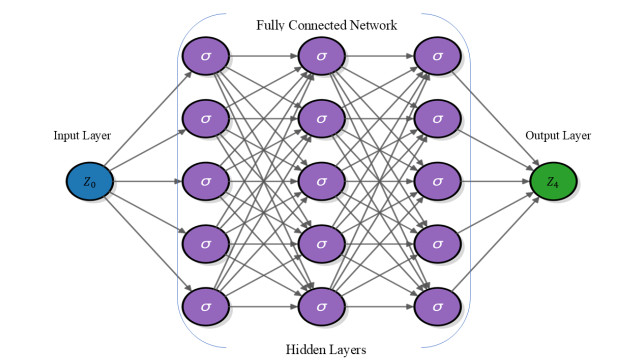
This research introduced a physics informed neural network (PINN) framework designed to effectively solve the highly nonlinear Bratu equation, which arises in various physical contexts such as chemical reaction theory and combustion processes. PINNs provide a mesh-free solution by embedding physical laws directly into the loss function of the neural network and utilizing automatic differentiation for accurate derivative calculations. However, standard PINNs often face challenges in strictly enforcing boundary conditions (BCs), resulting in numerical inaccuracies and slow convergence. To overcome this, we proposed an innovative method that precisely enforces BCs through a transformation, thereby eliminating residual errors and significantly improving the reliability and performance of the PINN framework. Numerical experiments validated the effectiveness of the proposed approach, showing improved accuracy, faster convergence, and more stable training dynamics. Detailed analyses were conducted to investigate the influence of key hyperparameters, such as activation functions, network architecture, and learning rates, on the model's performance.
Citation: Saurabh Tomar, Higinio Ramos. Physics-informed neural networks framework for solving the highly nonlinear Bratu equation arising in combustion theory[J]. AIMS Mathematics, 2025, 10(9): 21853-21872. doi: 10.3934/math.2025972
This research introduced a physics informed neural network (PINN) framework designed to effectively solve the highly nonlinear Bratu equation, which arises in various physical contexts such as chemical reaction theory and combustion processes. PINNs provide a mesh-free solution by embedding physical laws directly into the loss function of the neural network and utilizing automatic differentiation for accurate derivative calculations. However, standard PINNs often face challenges in strictly enforcing boundary conditions (BCs), resulting in numerical inaccuracies and slow convergence. To overcome this, we proposed an innovative method that precisely enforces BCs through a transformation, thereby eliminating residual errors and significantly improving the reliability and performance of the PINN framework. Numerical experiments validated the effectiveness of the proposed approach, showing improved accuracy, faster convergence, and more stable training dynamics. Detailed analyses were conducted to investigate the influence of key hyperparameters, such as activation functions, network architecture, and learning rates, on the model's performance.

| [1] |
J. A. Nichols, H. W. H. Chan, M. A. B. Baker, Machine learning: Applications of artificial intelligence to imaging and diagnosis, Biophys. Rev., 11 (2019), 111–118. https://doi.org/10.1007/s12551-018-0449-9 doi: 10.1007/s12551-018-0449-9

|
| [2] |
H. Wang, T. Fu, Y. Du, W. Gao, K. Huang, Z. Liu, et al., Scientific discovery in the age of artificial intelligence, Nature, 620 (2023), 47–60. https://doi.org/10.1038/s41586-023-06221-2 doi: 10.1038/s41586-023-06221-2
|
| [3] |
T. Hey, K. Butler, S. Jackson, J. Thiyagalingam, Machine learning and big scientific data, Philos. Trans. A Math. Phys. Eng. Sci., 378 (2020), 20190054. https://doi.org/10.1098/rsta.2019.0054 doi: 10.1098/rsta.2019.0054
|
| [4] |
W. S. McCulloch, W. Pitts, A logical calculus of the ideas immanent in nervous activity, Bull. Math. Biophys., 5 (1943), 115–133. https://doi.org/10.1007/BF02478259 doi: 10.1007/BF02478259
|
| [5] |
I. E. Lagaris, A. Likas, D. I. Fotiadis, Artificial neural networks for solving ordinary and partial differential equations, IEEE Trans. Neural Netw., 9 (1998), 987–1000. https://doi.org/10.1109/72.712178 doi: 10.1109/72.712178
|
| [6] |
M. Raissi, P. Perdikaris, G. E. Karniadakis, Physics-informed neural networks: A deep learning framework for solving forward and inverse problems involving nonlinear partial differential equations, J. Comput. Phys., 378 (2018), 686–707. https://doi.org/10.1016/j.jcp.2018.10.045 doi: 10.1016/j.jcp.2018.10.045
|
| [7] | A. G. Baydin, B. A. Pearlmutter, A. A. Radul, J. M. Siskind, Automatic differentiation in machine learning: A survey, J. Mach. Learn. Res., 18 (2018), 5595–5637. |
| [8] |
S. R. Vadyala, S. N. Betgeri, N. P. Betgeri, Physics-informed neural network method for solving one-dimensional advection equation using PyTorch, Array, 13 (2022), 100110. https://doi.org/10.1016/j.array.2021.100110 doi: 10.1016/j.array.2021.100110
|
| [9] |
D. Kochkov, J. A. Smith, A. Alieva, Q. Wang, M. P. Brenner, S. Hoyer, Machine learning–accelerated computational fluid dynamics, Proc. Natl. Acad. Sci. U.S.A., 118 (2021), e2101784118. https://doi.org/10.1073/pnas.2101784118 doi: 10.1073/pnas.2101784118
|
| [10] |
J. Abbasi, P. Andersen, Simulation and prediction of countercurrent spontaneous imbibition at early and late time using Physics-informed neural networks, Energy Fuels, 37 (2023), 13721–13733. https://doi.org/10.1021/acs.energyfuels.3c02271 doi: 10.1021/acs.energyfuels.3c02271
|
| [11] |
G. E. Karniadakis, I. G. Kevrekidis, L. Lu, P. Perdikaris, S. Wang, L. Yang, Physics‑informed machine learning, Nat. Rev. Phys., 3 (2021), 422–440. https://doi.org/10.1038/s42254-021-00314-5 doi: 10.1038/s42254-021-00314-5
|
| [12] |
V. R. Hosseini, A. A. Mehrizi, A. Gungor, H. H. Afrouzi, Application of a physics‑informed neural network to solve the steady-state Bratu equation arising from solid biofuel combustion theory, Fuel, 332 (2023), 125908. https://doi.org/10.1016/j.fuel.2022.125908 doi: 10.1016/j.fuel.2022.125908
|
| [13] |
L. Lu, X. Meng, Z. Mao, G. E. Karniadakis, DeepXDE: A deep learning library for solving differential equations, SIAM Rev., 63 (2021), 208–228. https://doi.org/10.1137/19M1274067 doi: 10.1137/19M1274067
|
| [14] | Y. Q. Wan, Q. Guo, N. Pan, Thermo-electro-hydrodynamic model for electrospinning process, Int. J. Nonlinear Sci. Numer. Simul., 5 (2004), 5–8. |
| [15] |
J. T. Jacobsen, K. Schmitt, The Liouville–Bratu–Gelfand problem for radial operators, J. Differ. Equ., 184 (2002), 283–298. https://doi.org/10.1006/jdeq.2001.4151 doi: 10.1006/jdeq.2001.4151
|
| [16] | I. M. Gelfand, Some problems in the theory of quasilinear equations, Trans. Amer. Math. Soc., 29 (1963), 295–381. |
| [17] |
J. V. Baxley, S. B. Robinson, Nonlinear boundary value problems for shallow membrane caps, II, J. Commun. Appl. Anal., 88 (1998), 203–224. https://doi.org/10.1016/S0377-0427(97)00216-1 doi: 10.1016/S0377-0427(97)00216-1
|
| [18] |
R. W. Dickey, Rotationally symmetric solutions for shallow membrane caps, Quart. Appl. Math., 47 (1989), 571–581. https://doi.org/10.1090/qam/1012280 doi: 10.1090/qam/1012280
|
| [19] | G. Bratu, Sur les équations intégrales non linéaires, Bull. Soc. Math. France, 42 (1914), 113–142. |
| [20] |
R. Saleh, S. M. Mabrouk, M. Kassem, Truncation method with point transformation for exact solution of Liouville Bratu Gelfand equation, Comput. Math. Appl., 76 (2018), 1219–1227. https://doi.org/10.1016/j.camwa.2018.06.016 doi: 10.1016/j.camwa.2018.06.016
|
| [21] |
M. Baccouch, H. Temimi, A new derivation of the closed-form solution of Bratu's problem, Int. J. Appl. Comput. Math., 9 (2023), 100. https://doi.org/10.1007/s40819-023-01570-y doi: 10.1007/s40819-023-01570-y
|
| [22] | U. M. Ascher, R. M. M. Mattheij, R. D. Russell, Numerical solution of boundary value problems for ordinary differential equations, 1995. https://doi.org/10.1137/1.9781611971231 |
| [23] |
A. Mohsen, A simple solution of the Bratu problem, Comput. Math. Appl., 67 (2014), 26–33. https://doi.org/10.1016/j.camwa.2013.10.003 doi: 10.1016/j.camwa.2013.10.003
|
| [24] |
R. Buckmire, Application of a Mickens finite‑difference scheme to the cylindrical Bratu–Gelfand problem, Numer. Methods Partial Differ. Equ., 20 (2004), 327–337. https://doi.org/10.1002/num.10093 doi: 10.1002/num.10093
|
| [25] |
B. Gidas, W. Ni, L. Nirenberg, Symmetry and related properties via the maximum principle, Commun. Math. Phys., 68 (1979), 209–243. https://doi.org/10.1007/BF01221125 doi: 10.1007/BF01221125
|
| [26] |
E. Keshavarz, Y. Ordokhani, M. Razzaghi, The Taylor wavelets method for solving the initial and boundary value problems of Bratu‑type equations, Appl. Numer. Math., 128 (2018), 205–216. https://doi.org/10.1016/j.apnum.2018.02.001 doi: 10.1016/j.apnum.2018.02.001
|
| [27] |
A. M. Wazwaz, Adomian decomposition method for a reliable treatment of the Bratu-type equations, Appl. Math. Comput., 166 (2005), 652–663. https://doi.org/10.1016/j.amc.2004.06.059 doi: 10.1016/j.amc.2004.06.059
|
| [28] |
S. Abbasbandy, M. S. Hashemi, L. S. Liu, The Lie‑group shooting method for solving the Bratu equation, Commun. Nonlinear Sci. Numer. Simul., 16 (2011), 4238–4249. https://doi.org/10.1016/j.cnsns.2011.03.033 doi: 10.1016/j.cnsns.2011.03.033
|
| [29] |
H. Temimi, M. Ben‑Romdhane, An iterative finite difference method for solving Bratu's problem, J. Comput. Appl. Math., 292 (2016), 76–82. https://doi.org/10.1016/j.cam.2015.06.023 doi: 10.1016/j.cam.2015.06.023
|
| [30] |
J. P. Boyd, Chebyshev polynomial expansions for simultaneous approximation of two branches of a function with application to the one-dimensional Bratu equation, Appl. Math. Comput., 143 (2003), 189–200. https://doi.org/10.1016/S0096-3003(02)00345-4 doi: 10.1016/S0096-3003(02)00345-4
|
| [31] |
J. Rashidinia, K. Maleknejad, N. Taheri, Sinc‑Galerkin method for numerical solution of the Bratu's problems, Numer. Algor., 62 (2013), 1–11. https://doi.org/10.1007/s11075-012-9560-3 doi: 10.1007/s11075-012-9560-3
|
| [32] |
H. Çağlar, N. Çağlar, M. Özer, A. Valarístos, A. Anagnostopoulos, B‑spline method for solving Bratu's problem, Int. J. Comput. Math., 87 (2010), 1885–1891. http://dx.doi.org/10.1080/00207160802545882 doi: 10.1080/00207160802545882
|
| [33] |
R. Jalilian, Non‑polynomial spline method for solving Bratu's problem, Comput. Phys. Commun., 181 (2010), 1868–1872. https://doi.org/10.1016/j.cpc.2010.08.004 doi: 10.1016/j.cpc.2010.08.004
|
| [34] |
S. A. Khuri, A new approach to Bratu's problem, Appl. Math. Comput., 147 (2004), 131–136. https://doi.org/10.1016/S0096-3003(02)00656-2 doi: 10.1016/S0096-3003(02)00656-2
|
| [35] | I. H. A. Hassan, V. S. Ertürk, Applying differential transformation method to the one‑dimensional planar Bratu problem, Int. J. Contemp. Math. Sci., 2 (2007), 1493–1504. |
| [36] |
S. N. Jator, V. Manathunga, Block Nyström type integrator for Bratu's equation, J. Comput. Appl. Math., 327 (2018), 341–349. https://doi.org/10.1016/j.cam.2017.06.025 doi: 10.1016/j.cam.2017.06.025
|
| [37] |
A. S. V. R. Kanth, K. Aruna, He's variational iteration method for treating nonlinear singular boundary value problems, Comput. Math. Appl., 60 (2010), 821–829. https://doi.org/10.1016/j.camwa.2010.05.029 doi: 10.1016/j.camwa.2010.05.029
|
| [38] | C. Yang, J. Hou, Chebyshev wavelets method for solving Bratu's problem, Bound. Value Probl., 2013 (2013), 142. |
| [39] |
Y. Aksoy, M. Pakdemirli, New perturbation–iteration solutions for Bratu-type equations, Comput. Math. Appl., 59 (2010), 2802–2808. https://doi.org/10.1016/j.camwa.2010.01.050 doi: 10.1016/j.camwa.2010.01.050
|
| [40] |
S. G. Venkatesh, S. K. Ayyaswamy, S. R. Balachandar, The Legendre wavelet method for solving initial value problems of Bratu‑type, Comput. Math. Appl., 63 (2012), 1287–1295. https://doi.org/10.1016/j.camwa.2011.12.069 doi: 10.1016/j.camwa.2011.12.069
|
| [41] |
E. Deeba, S. A. Khuri, S. Xie, An algorithm for solving boundary value problems, J. Comput. Phys., 159 (2000), 125–138. https://doi.org/10.1006/jcph.2000.6452 doi: 10.1006/jcph.2000.6452
|
| [42] |
E. H. Doha, A. H. Bhrawy, D. Baleanu, R. M. Hafez, Efficient Jacobi‑Gauss collocation method for solving initial value problems of Bratu type, Comput. Math. Math. Phys., 53 (2013), 1292–1302. https://doi.org/10.1134/S0965542513090121 doi: 10.1134/S0965542513090121
|
| [43] |
M. A. Z. Raja, R. Samar, E. S. Alaidarous, E. Shivanian, Bio‑inspired computing platform for reliable solution of Bratu‑type equations arising in the modeling of electrically conducting solids, Appl. Math. Model., 40 (2016), 5964–5977. https://doi.org/10.1016/j.apm.2016.01.034 doi: 10.1016/j.apm.2016.01.034
|
| [44] |
J. S. McGough, Numerical continuation and the Gelfand problem, Appl. Math. Comput., 89 (1998), 225–239. https://doi.org/10.1016/S0096-3003(97)81660-8 doi: 10.1016/S0096-3003(97)81660-8
|
| [45] |
X. Jiang, Z. Wang, W. Bao, Y. Xu, Generalization of PINNs for elliptic interface problems, Appl. Math. Lett., 157 (2024), 109175. https://doi.org/10.1016/j.aml.2024.109175 doi: 10.1016/j.aml.2024.109175
|
| [46] |
S. Cuomo, V. S. Di Cola, F. Giampaolo, G. Rozza, M. Raissi, F. Piccialli, Scientific machine learning through physics–informed neural networks: Where we are and what's next, J. Sci. Comput., 92 (2022), 88. https://doi.org/10.1007/s10915-022-01939-z doi: 10.1007/s10915-022-01939-z
|
| [47] |
K. Hornik, M. Stinchcombe, H. White, Multilayer feedforward networks are universal approximators, Neural Netw., 2 (1989), 359–366. https://doi.org/10.1016/0893-6080(89)90020-8 doi: 10.1016/0893-6080(89)90020-8
|
| [48] |
K. Funahashi, On the approximate realization of continuous mappings by neural networks, Neural Netw., 2 (1989), 183–192. https://doi.org/10.1016/0893-6080(89)90003-8 doi: 10.1016/0893-6080(89)90003-8
|
| [49] |
A. D. Jagtap, K. Kawaguchi, G. E. Karniadakis, Adaptive activation functions accelerate convergence in deep and physics‑informed neural networks, J. Comput. Phys., 404 (2020), 109136. https://doi.org/10.1016/j.jcp.2019.109136 doi: 10.1016/j.jcp.2019.109136
|
| [50] | X. Glorot, Y. Bengio, Understanding the difficulty of training deep feedforward neural networks, In: Proceedings of the 13th international conference on artificial intelligence and statistics (AISTATS) 2010, 2010,249–256. |
| [51] | C. C. Aggarwal, Neural networks and deep learning, Springer, 2018. https://doi.org/10.1007/978-3-031-29642-0 |
| [52] | D. P. Kingma, J. Ba, Adam: A method for stochastic optimization, arXiv: 1412.6980, 2014. https://doi.org/10.48550/arXiv.1412.6980 |
| [53] | M. Abadi, P. Barham, J. Chen, Z. Chen, A. Davis, J. Dean, et al., TensorFlow: A system for large‑scale machine learning, In: Proceedings of the 12th USENIX symposium on operating systems design and implementation (OSDI '16), 2016,265–283. |


Figures(11) / Tables(5)

Saurabh Tomar, Higinio Ramos. Physics-informed neural networks framework for solving the highly nonlinear Bratu equation arising in combustion theory[J]. AIMS Mathematics, 2025, 10(9): 21853-21872. doi: 10.3934/math.2025972





 DownLoad: