The aged care sector faces significant challenges due to rising demand from aging populations and chronic diseases, in addition to workforce shortages, contributing to staff stress, burnout, and poor mental wellbeing. In this review, we synthesized quantitative studies on factors and interventions to improve the mental wellbeing of the aged care workforce across indicators and system levels.
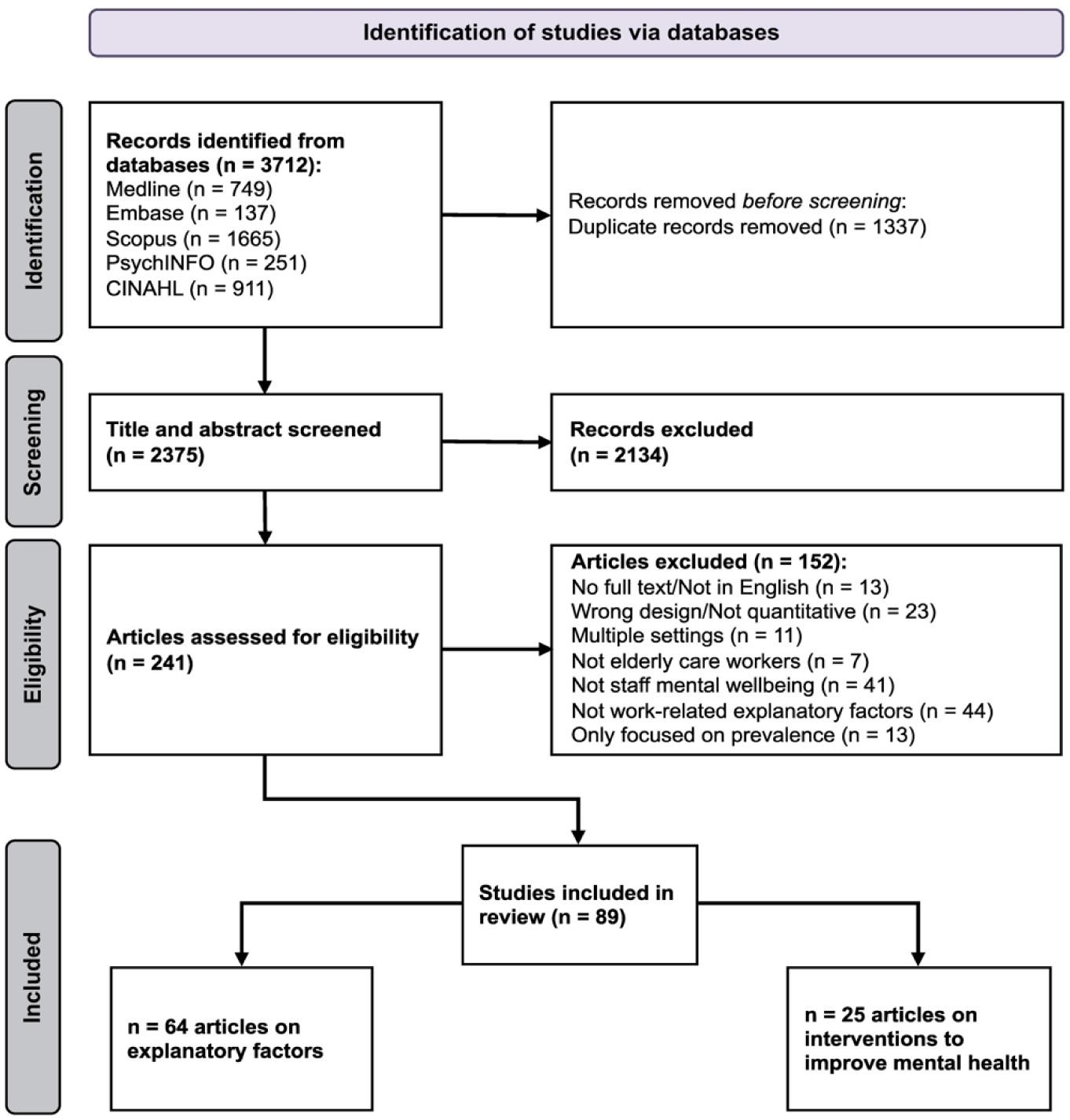
Five academic databases (Medline, Embase, Scopus, PsycInfo, and CINAHL) were searched from January 2014 to May 2024, using keywords related to aged care, care workers, and mental wellbeing. Quantitative studies examining factors or outcomes of interventions related to staff wellbeing were included. Identified factors were classified as micro-, meso-, and macro-level using a combined inductive and deductive approach.
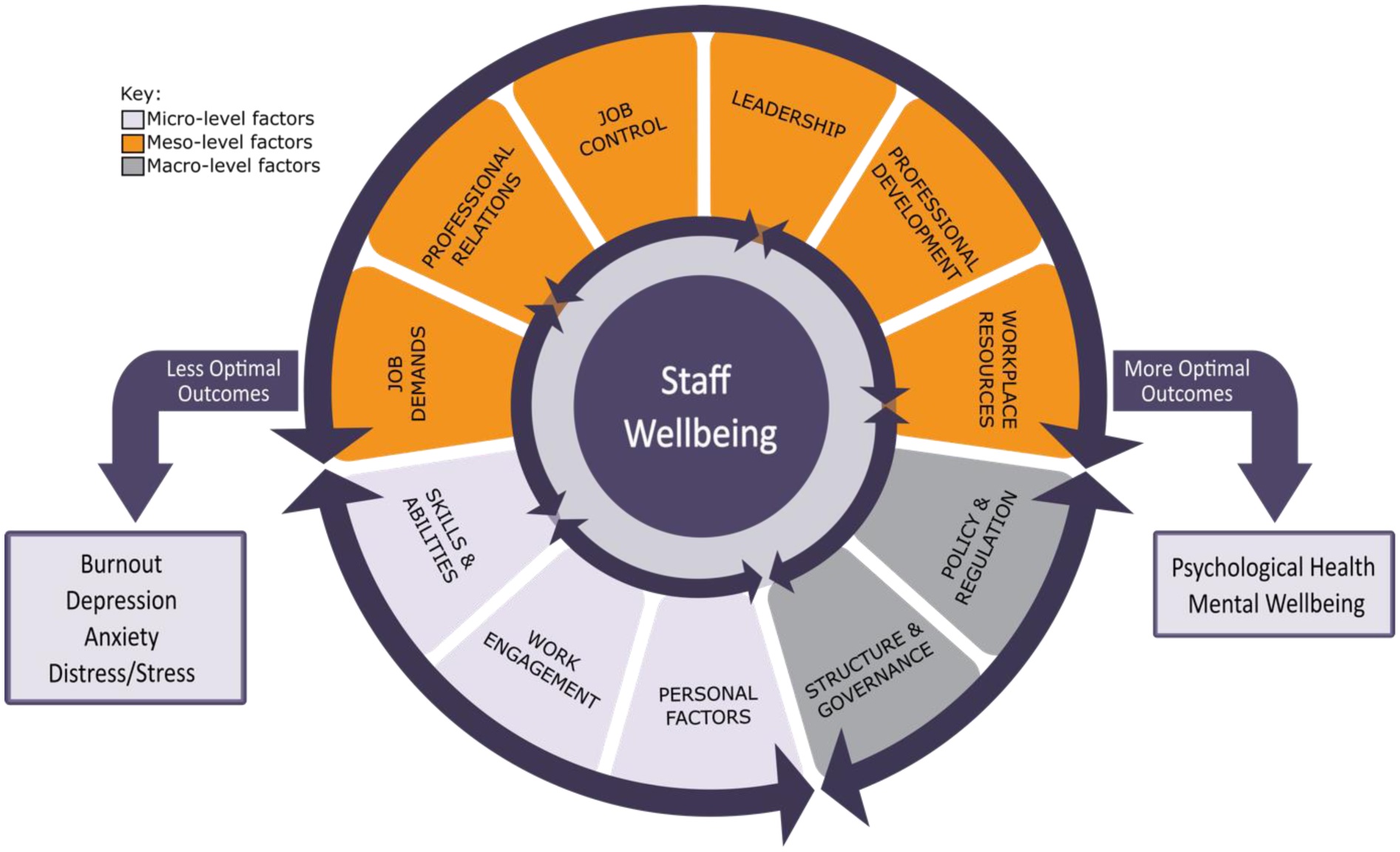
Eighty-nine studies were included: 64 (72%) identified significant factors, and 25 (28%) evaluated interventions aiming to improve workers' mental wellbeing. Almost half concentrated on nursing staff (n = 38, 43%), with others addressing direct care workers (n = 25, 28%) or aged care workers more broadly (n = 19, 21%). From the synthesis, a multi-level model of factors affecting aged care worker wellbeing was developed, comprising 11 themes and 39 sub-themes; 3 micro-level themes (1. personal factors, 2. work engagement, and 3. skills and abilities), 6 meso-level themes (4. job demands, 5. professional relations, 6. job control, 7. leadership, 8. professional development, and 9. workplace resources), and 2 macro-level themes (10. policy and regulation and 11. structure and governance). Among the 25 intervention studies, most entailed micro-level changes (n = 24, 96%), including relaxation, emotion regulation, and behavioral management education training.
Understanding system-level factors is a key to designing comprehensive improvement approaches. Our new model can help guide organizations in developing targeted strategies to promote mental wellbeing and strengthen care delivery. While individual-focused interventions have shown benefits, organizational and broader system-level strategies to improve mental wellbeing are pivotal for achieving sustainable change.
Citation: Louise A Ellis, Tanja Schroeder, Maree Saba, Kate Churruca, Janet C Long, Annie Haver, Kristin Akerjordet, Kristiana Ludlow, Inger Johanne Bergerød, Sini Nevantaus, Jan-Willem Weenink, Zoe Gonzales, Samantha Spanos, Hilda Bø Lyng, Cecilie Haraldseid-Driftland, Daniel Adrian Lungu, Malin Knutsen Glette, Mari Lahti, Florin Tibu, Andreas Chatzittofis, Juana Maria Delgado-Saborit, Eila Kankaanpää, Viviana Wuthrich, Robyn Clay-Williams, Jeffrey Braithwaite, Siri Wiig. Supporting the mental wellbeing of aged care workers: A systematic review of factors and interventions[J]. AIMS Public Health, 2025, 12(2): 600-631. doi: 10.3934/publichealth.2025032
The aged care sector faces significant challenges due to rising demand from aging populations and chronic diseases, in addition to workforce shortages, contributing to staff stress, burnout, and poor mental wellbeing. In this review, we synthesized quantitative studies on factors and interventions to improve the mental wellbeing of the aged care workforce across indicators and system levels.
Five academic databases (Medline, Embase, Scopus, PsycInfo, and CINAHL) were searched from January 2014 to May 2024, using keywords related to aged care, care workers, and mental wellbeing. Quantitative studies examining factors or outcomes of interventions related to staff wellbeing were included. Identified factors were classified as micro-, meso-, and macro-level using a combined inductive and deductive approach.
Eighty-nine studies were included: 64 (72%) identified significant factors, and 25 (28%) evaluated interventions aiming to improve workers' mental wellbeing. Almost half concentrated on nursing staff (n = 38, 43%), with others addressing direct care workers (n = 25, 28%) or aged care workers more broadly (n = 19, 21%). From the synthesis, a multi-level model of factors affecting aged care worker wellbeing was developed, comprising 11 themes and 39 sub-themes; 3 micro-level themes (1. personal factors, 2. work engagement, and 3. skills and abilities), 6 meso-level themes (4. job demands, 5. professional relations, 6. job control, 7. leadership, 8. professional development, and 9. workplace resources), and 2 macro-level themes (10. policy and regulation and 11. structure and governance). Among the 25 intervention studies, most entailed micro-level changes (n = 24, 96%), including relaxation, emotion regulation, and behavioral management education training.
Understanding system-level factors is a key to designing comprehensive improvement approaches. Our new model can help guide organizations in developing targeted strategies to promote mental wellbeing and strengthen care delivery. While individual-focused interventions have shown benefits, organizational and broader system-level strategies to improve mental wellbeing are pivotal for achieving sustainable change.
Dementia Care Mapping
Eye Movement Desensitization and Reprocessing
Joanna Briggs Institute
Maslach Burnout Inventory
Not applicable
National Academy of Medicine
Psychological First Aid
Personal protective equipment
Preferred Reporting Items for Systematic Reviews and Meta-Analyses
Residential aged care facilities
Randomised Controlled Trials
World Health Organization

| [1] |
Jones CH, Dolsten M (2024) Healthcare on the brink: Navigating the challenges of an aging society in the United States. NPJ Aging 10: 22. https://doi.org/10.1038/s41514-024-00148-2 
|
| [2] |
Costello H, Walsh S, Cooper C, et al. (2019) A systematic review and meta-analysis of the prevalence and associations of stress and burnout among staff in long-term care facilities for people with dementia. Int Psychogeriatr 31: 1203-1216. https://doi.org/10.1017/S1041610218001606
|
| [3] |
Tierney L, Doherty K, Elliott KE (2022) Distressed, detached, devalued and determined: aged care workers' experiences of the COVID-19 pandemic. Aust J Adv Nurs 39: 45-53. https://doi.org/10.37464/2020.393.661
|
| [4] |
Bamforth K, Rae P, Maben J, et al. (2023) Perceptions of healthcare professionals' psychological wellbeing at work and the link to patients' experiences of care: A scoping review. Int J Nurs Stud Adv 5: 100148. https://doi.org/10.1016/j.ijnsa.2023.100148
|
| [5] |
Hodgkin S, Warburton J, Savy P, et al. (2017) Workforce crisis in residential aged care: Insights from rural, older workers. Aust J Publ Admin 76: 93-105. https://doi.org/10.1111/1467-8500.12204
|
| [6] |
Xiao LD, Harrington A, Mavromaras K, et al. (2021) Care workers' perspectives of factors affecting a sustainable aged care workforce. Int Nurs Rev 68: 49-58. https://doi.org/10.1111/inr.12635
|
| [7] | (2022) World Health OrganizationMental health. Geneva (CH): World Health Organization. [cited 2024 December 20]. Available from: https://www.who.int/news-room/fact-sheets/detail/mental-health-strengthening-our-response. |
| [8] |
Keyes CL (2002) The mental health continuum: From languishing to flourishing in life. J Health Soc Behav 43: 207-222. https://doi.org/10.2307/3090197
|
| [9] | Chirico F, Ferrari G, Nucera G, et al. (2021) Prevalence of anxiety, depression, burnout syndrome, and mental health disorders among healthcare workers during the COVID-19 pandemic: A rapid umbrella review of systematic reviews. J Health Soc Sci 6: 209-220. |
| [10] |
Ruini C, Pira GL, Cordella E, et al. (2024) Positive mental health, depression and burnout in healthcare workers during the second wave of COVID-19 pandemic. J Psychiatr Ment Health Nurs 32: 192-202. https://doi.org/10.1111/jpm.13099
|
| [11] |
D'Alessandro-Lowe AM, Brown A, Sullo E, et al. (2024) Why are healthcare providers leaving their jobs? A convergent mixed-methods investigation of turnover intention among Canadian healthcare providers during the COVID-19 pandemic. Nurs Rep 14: 2030-2060. https://doi.org/10.3390/nursrep14030152
|
| [12] |
Cooper SL, Carleton HL, Chamberlain SA, et al. (2016) Burnout in the nursing home health care aide: A systematic review. Burnout Res 3: 76-87. https://doi.org/10.1016/j.burn.2016.06.003
|
| [13] |
Mahara N, Anderson J, Deravin LM (2024) Burnout in residential aged care managers: a scoping review. Contemp Nurse 60: 208-222. https://doi.org/10.1080/10376178.2024.2327361
|
| [14] | Rachel H, Francesco S (2018) Factors associated with and impact of burnout in nursing and residential home care workers for the elderly. Acta Bio Medica: Atenei Parmensis 89: 60. |
| [15] |
Sanchez S, Mahmoudi R, Moronne I, et al. (2015) Burnout in the field of geriatric medicine: Review of the literature. Eur Geriatr Med 6: 175-183. https://doi.org/10.1016/j.eurger.2014.04.014
|
| [16] |
Maslach C, Schaufeli WB, Leiter MP (2001) Job burnout. Annu Rev Psychol 52: 397-422. https://doi.org/10.1146/annurev.psych.52.1.397
|
| [17] | Shanafelt TD, Noseworthy JH (2017) Executive leadership and physician well-being: Nine organizational strategies to promote engagement and reduce burnout. USA: Elsevier 129-146. https://doi.org/10.1016/j.mayocp.2016.10.004 |
| [18] |
Heijkants CH, de Wind A, van Hooff ML, et al. (2023) Effectiveness of team and organisational level workplace interventions aimed at improving sustainable employability of aged care staff: A systematic review. J Occup Rehabil 33: 37-60. https://doi.org/10.1007/s10926-022-10064-5
|
| [19] |
Herz M, Bösl S, Gebhard D (2024) Individual and organizational interventions to promote staff health and well-being in residential long-term care: A systematic review of randomized controlled trials over the past 20 years. BMC Nurs 23: 195. https://doi.org/10.1186/s12912-024-01855-7
|
| [20] |
Otto AK, Gutsch C, Bischoff LL, et al. (2021) Interventions to promote physical and mental health of nurses in elderly care: A systematic review. Prev Med 148: 106591. https://doi.org/10.1016/j.ypmed.2021.106591
|
| [21] |
Radford K, Shacklock K, Bradley G (2015) Personal care workers in Australian aged care: Retention and turnover intentions. J Nurs Manag 23: 557-566. https://doi.org/10.1111/jonm.12172
|
| [22] |
Xiao Q, Cooke FL, Chen L (2022) Nurses' well-being and implications for human resource management: A systematic literature review. Int J Manag Rev 24: 599-624. https://doi.org/10.1111/ijmr.12295
|
| [23] | Johnston L, Malcolm C, Rambabu L, et al. (2021) Practice based approaches to supporting the work related wellbeing of frontline care workers in care homes: A scoping review. J Longterm Care 2021: 230-240. https://doi.org/10.31389/jltc.66 |
| [24] | Page MJ, McKenzie JE, Bossuyt PM, et al. (2021) The PRISMA 2020 statement: An updated guideline for reporting systematic reviews. BMJ 372. https://doi.org/10.1136/bmj.n71 |
| [25] | (2013) The Endnote TeamEndNote. EndNote 20.6 ed. Philadelphia, PA: Clarivate. |
| [26] |
Ouzzani M, Hammady H, Fedorowicz Z, et al. (2016) Rayyan—a web and mobile app for systematic reviews. Syst Rev 5: 210. https://doi.org/10.1186/s13643-016-0384-4
|
| [27] | Marine A, Ruotsalainen JH, Serra C, et al. (2006) Preventing occupational stress in healthcare workers. Cochrane Database Syst Rev 18: CD002892. https://doi.org/10.1002/14651858.CD002892.pub2 |
| [28] | Tufanaru C, Munn Z, Aromataris E, et al. (2017) Systematic reviews of effectiveness. Joanna Briggs Institute reviewer's manual 2017: 3. |
| [29] |
Barker TH, Stone JC, Sears K, et al. (2023) The revised JBI critical appraisal tool for the assessment of risk of bias for randomized controlled trials. JBI Evid Synth 21: 494-506. https://doi.org/10.11124/JBIES-22-00430
|
| [30] |
Barker TH, Habibi N, Aromataris E, et al. (2024) The revised JBI critical appraisal tool for the assessment of risk of bias for quasi-experimental studies. JBI Evid Synth 22: 378-388. https://doi.org/10.11124/JBIES-23-00268
|
| [31] | Moola S, Munn Z, Tufanaru C, et al. (2017) Systematic reviews of etiology and risk. Joanna Briggs Institute reviewer's manual . Australia: The Joanna Briggs Institute Adelaide 217-269. |
| [32] |
Kisely S, Warren N, McMahon L, et al. (2020) Occurrence, prevention, and management of the psychological effects of emerging virus outbreaks on healthcare workers: Rapid review and meta-analysis. BMJ 369: m1642. https://doi.org/10.1136/bmj.m1642
|
| [33] | (2018) National Academy of SciencesFactors affecting clinician well-being and resilience. Washington (US): National Academy of Sciences. [cited 2024 December 20]. Available from: https://www.aan.com/siteassets/home-page/tools-and-resources/academic-neurologist--researchers/program-and-fellowship-directors/factors-affecting-clinician-well-being-and-resilience.pdf. |
| [34] | Stewart MT, Reed S, Reese J, et al. (2019) Conceptual models for understanding physician burnout, professional fulfillment, and well-being. Curr Probl Pediatr Adolesc Health Care 49: 100658. https://doi.org/10.1016/j.cppeds.2019.100658 |
| [35] |
Gao F, Newcombe P, Tilse C, et al. (2017) Challenge-related stress and felt challenge: Predictors of turnover and psychological health in aged care nurses. Collegian 24: 361-369. https://doi.org/10.1016/j.colegn.2016.07.006
|
| [36] |
Liang YW, Hsieh Y, Lin YH, et al. (2014) The impact of job stressors on health-related quality of life of nursing assistants in long-term care settings. Geriatr Nurs 35: 114-119. https://doi.org/10.1016/j.gerinurse.2013.11.001
|
| [37] |
Zhang Y, Punnett L, Mawn B, et al. (2016) Working conditions and mental health of nursing staff in nursing homes. Issues Ment Health Nurs 37: 485-492. https://doi.org/10.3109/01612840.2016.1162884
|
| [38] |
Zhang Y, Punnett L, Nannini A (2017) Work-family conflict, sleep, and mental health of nursing assistants working in nursing homes. Workplace Health Saf 65: 295-303. https://doi.org/10.1177/2165079916665397
|
| [39] | Alenius M, Graf P (2016) Use of electronic medication administration records to reduce perceived stress and risk of medication errors in nursing homes. Comput Inform Nurs 34: 297-302. https://doi.org/10.1097/CIN.0000000000000245 |
| [40] |
Dhaini SR, Zúñiga F, Ausserhofer D, et al. (2016) Care workers health in Swiss nursing homes and its association with psychosocial work environment: A cross-sectional study. Int J Nurs Stud 53: 105-115. https://doi.org/10.1016/j.ijnurstu.2015.08.011
|
| [41] | Halperin D (2020) The association between work stressors, knowledge about aging, burnout, and job satisfaction among nursing home activity directors. Act Adapt Aging 44: 42-60. https://doi.org/10.1080/01924788.2019.1581023 |
| [42] |
Jameson S, Parkinson L (2022) Work-related well-being of personal care attendants employed in the aged care sector: Prevalence and predictors of compassion fatigue. Australas J Ageing 41: e131-e139. https://doi.org/10.1111/ajag.13019
|
| [43] |
Squires JE, Baumbusch J, Demery Varin M, et al. (2019) A profile of regulated nurses employed in Canadian long-term care facilities. Can J Aging 38: 130-142. https://doi.org/10.1017/S0714980818000478
|
| [44] |
Woodhead EL, Northrop L, Edelstein B (2016) Stress, social support, and burnout among long-term care nursing staff. J Appl Gerontol 35: 84-105. https://doi.org/10.1177/0733464814542465
|
| [45] |
Kim BJ, Ishikawa H, Liu L, et al. (2018) The effects of job autonomy and job satisfaction on burnout among careworkers in long-term care settings: Policy and practice implications for Japan and South Korea. Educ Gerontol 44: 289-300. https://doi.org/10.1080/03601277.2018.1471255
|
| [46] |
Tanaka K, Iso N, Sagari A, et al. (2015) Burnout of long-term care facility employees: relationship with employees' expressed emotion toward patients. Int J Gerontol 9: 161-165. https://doi.org/10.1016/j.ijge.2015.04.001
|
| [47] |
Yeatts DE, Seckin G, Shen Y, et al. (2018) Burnout among direct-care workers in nursing homes: Influences of organisational, workplace, interpersonal and personal characteristics. J Clin Nurs 27: 3652-3665. https://doi.org/10.1111/jocn.14267
|
| [48] |
Fushimi M (2019) Depressive symptoms and related factors among workers in care institutions for older persons in Japan: A cross-sectional study. Eur Geriatr Med 10: 957-964. https://doi.org/10.1007/s41999-019-00241-w
|
| [49] |
Hering C, Gangnus A, Budnick A, et al. (2022) Psychosocial burden and associated factors among nurses in care homes during the COVID-19 pandemic: Findings from a retrospective survey in Germany. BMC Nurs 21: 41. https://doi.org/10.1186/s12912-022-00807-3
|
| [50] |
Lee S, Oh G (2023) Working conditions affecting home care workers' stress and turnover intention. J Appl Gerontol 42: 717-727. https://doi.org/10.1177/07334648221148163
|
| [51] |
Lin WY, Chen YA, Huang KH, et al. (2024) Depression and anxiety between nurses and nursing assistants working in long-term care facilities during the COVID-19 pandemic. Int Nurs Rev 71: 1032-1043. https://doi.org/10.1111/inr.12953
|
| [52] |
Iecovich E, Avivi M (2017) Agism and burnout among nurses in long-term care facilities in Israel. Aging Ment Health 21: 327-335. https://doi.org/10.1080/13607863.2015.1102198
|
| [53] |
Jenull BB, Wiedermann W (2015) The different facets of work stress: a latent profile analysis of nurses' work demands. J Appl Gerontol 34: 823-843. https://doi.org/10.1177/0733464813495472
|
| [54] |
Duan Y, Song Y, Thorne TE, et al. (2023) The complexity of burnout experiences among care aides: A person-oriented approach to burnout patterns. Healthcare (Basel) 11: 1145. https://doi.org/10.3390/healthcare11081145
|
| [55] |
Eder LL, Meyer B (2023) The role of self-endangering cognitions between long-term care nurses' altruistic job motives and exhaustion. Front Health Serv 3: 1100225. https://doi.org/10.3389/frhs.2023.1100225
|
| [56] |
Awosoga OA, Odole AC, Onyeso OK, et al. (2023) Well-being of professional older adults' caregivers in Alberta's assisted living and long-term care facilities: A cross-sectional study. BMC Geriatr 23: 85. https://doi.org/10.1186/s12877-023-03801-9
|
| [57] |
Korbus H, Hildebrand C, Schott N, et al. (2023) Health status, resources, and job demands in geriatric nursing staff: A cross-sectional study on determinants and relationships. Int J Nurs Stud 145: 104523. https://doi.org/10.1016/j.ijnurstu.2023.104523
|
| [58] |
Wollesen B, Hagemann D, Pabst K, et al. (2019) Identifying individual stressors in geriatric nursing staff-a cross-sectional study. Int J Environ Res Public Health 16: 3587. https://doi.org/10.3390/ijerph16193587
|
| [59] |
Ikeda S, Eguchi H, Hiro H, et al. (2021) Work-family spillover, job demand, job control, and workplace social support affect the mental health of home-visit nursing staff. J UOEH 43: 51-60. https://doi.org/10.7888/juoeh.43.51
|
| [60] | Andrade C, Neves PC (2022) Emotional exhaustion in female health support workers in elderly care facilities. USA: Elsevier 102603. https://doi.org/10.1016/j.wsif.2022.102603 |
| [61] |
Elliott KEJ, Rodwell J, Martin AJ (2017) Aged care nurses' job control influence satisfaction and mental health. J Nurs Manag 25: 558-568. https://doi.org/10.1111/jonm.12493
|
| [62] |
Wu Q, Yamaguchi Y, Greiner C (2022) Factors related to mental health of foreign care workers in long-term care facilities in Japan during the COVID-19 pandemic-A comparative study. Int J Environ Res Public Health 19: 16419. https://doi.org/10.3390/ijerph192416491
|
| [63] |
Honda A, Fauth E, Liu Y, et al. (2020) Predictors of effort-reward imbalance among employees providing three types of long-term care services in Japan. Innov Aging 4: 183-184. https://doi.org/10.1093/geroni/igaa057.594
|
| [64] |
Ali H, Ahmed A, Cole A (2021) Capturing nurses' perception of communicative technologies in nursing facilities: Survey instrument development. Int J Older People Nurs 16: e12404. https://doi.org/10.1111/opn.12404
|
| [65] |
Chamberlain SA, Gruneir A, Hoben M, et al. (2017) Influence of organizational context on nursing home staff burnout: A cross-sectional survey of care aides in Western Canada. Int J Nurs Stud 71: 60-69. https://doi.org/10.1016/j.ijnurstu.2017.02.024
|
| [66] |
Kim B, Liu L, Ishikawa H, et al. (2019) Relationships between social support, job autonomy, job satisfaction, and burnout among care workers in long-term care facilities in Hawaii. Educ Gerontol 45: 57-68. https://doi.org/10.1080/03601277.2019.1580938
|
| [67] |
Zhao X, Song Y, Shi X, et al. (2022) Relationship between depressive symptoms and subjective occupational well-being among nursing home staff: The mediating role of resilience. Arch Psychiatr Nurs 36: 28-33. https://doi.org/10.1016/j.apnu.2021.10.010
|
| [68] |
Ciampa V, Steffens NK, Schuh SC, et al. (2019) Identity and stress: An application of the expanded model of organisational identification in predicting strain at work. Work Stress 33: 351-365. https://doi.org/10.1080/02678373.2018.1521884
|
| [69] |
Clausen T, Christensen KB, Nielsen K (2015) Does group-level commitment predict employee well-being? A Prospective Analysis. J Occup Environ Med 57: 1141-1146. https://doi.org/10.1097/JOM.0000000000000547
|
| [70] |
Altintas E, Boudoukha AH, Karaca Y, et al. (2022) Fear of COVID-19, emotional exhaustion, and care quality experience in nursing home staff during the COVID-19 pandemic. Arch Gerontol Geriatr 102: 104745. https://doi.org/10.1016/j.archger.2022.104745
|
| [71] |
Schmidt SG, Dichter MN, Bartholomeyczik S, et al. (2014) The satisfaction with the quality of dementia care and the health, burnout and work ability of nurses: A longitudinal analysis of 50 German nursing homes. Geriatr Nurs 35: 42-46. https://doi.org/10.1016/j.gerinurse.2013.09.006
|
| [72] |
Vogel B, De Geest S, Fierz K, et al. (2017) Dementia care worker stress associations with unit type, resident, and work environment characteristics: A cross-sectional secondary data analysis of the Swiss Nursing Homes Human Resources Project (SHURP). Int Psychogeriatr 29: 441-454. https://doi.org/10.1017/S1041610216002027
|
| [73] |
Low YS, Bhar S, Chen WS (2022) Exploring the relationship between co-worker and supervisor support, self-confidence, coping skills and burnout in residential aged care staff. BMC Nurs 21: 135. https://doi.org/10.1186/s12912-022-00901-6
|
| [74] |
Kada O (2019) Hospital transfers of nursing home residents: A vignette experiment on nurses' decision making. J Appl Gerontol 38: 499-509. https://doi.org/10.1177/0733464816687219
|
| [75] |
Kubicek B, Korunka C (2015) Does job complexity mitigate the negative effect of emotion-rule dissonance on employee burnout?. Work Stress 29: 379-400. https://doi.org/10.1080/02678373.2015.1074954
|
| [76] |
Gao F, Newcombe P, Tilse C, et al. (2014) Models for predicting turnover of residential aged care nurses: A structural equation modelling analysis of secondary data. Int J Nurs Stud 51: 1258-1270. https://doi.org/10.1016/j.ijnurstu.2014.01.011
|
| [77] |
Navarro-Prados AB, García-Tizón SJ, Meléndez JC, et al. (2024) Factors associated with satisfaction and depressed mood among nursing home workers during the Covid-19 pandemic. J Clin Nurs 33: 265-272. https://doi.org/10.1111/jocn.16414
|
| [78] |
Rouxel G, Michinov E, Dodeler V (2016) The influence of work characteristics, emotional display rules and affectivity on burnout and job satisfaction: A survey among geriatric care workers. Int J Nurs Stud 62: 81-89. https://doi.org/10.1016/j.ijnurstu.2016.07.010
|
| [79] |
Navarro Prados AB, Jiménez García-Tizón S, Meléndez JC (2022) Sense of coherence and burnout in nursing home workers during the COVID-19 pandemic in Spain. Health Soc Care Community 30: 244-252. https://doi.org/10.1111/hsc.13397
|
| [80] |
Blanco-Donoso LM, Moreno-Jiménez J, Amutio A, et al. (2021) Stressors, job resources, fear of contagion, and secondary traumatic stress among nursing home workers in face of the COVID-19: The case of Spain. J Appl Gerontol 40: 244-256. https://doi.org/10.1177/0733464820964153
|
| [81] |
Elovainio M, Heponiemi T, Kuusio H, et al. (2015) Job demands and job strain as risk factors for employee wellbeing in elderly care: An instrumental-variables analysis. Eur J Public Health 25: 103-108. https://doi.org/10.1093/eurpub/cku115
|
| [82] |
Muntaner C, Ng E, Prins SJ, et al. (2015) Social class and mental health: Testing exploitation as a relational determinant of depression. Int J Health Serv 45: 265-284. https://doi.org/10.1177/0020731414568508
|
| [83] |
Coleman A, McLaughlin E, Floren M (2024) Practitioner burnout and productivity levels in skilled nursing and assisted living facilities, Part 1: A descriptive quantitative account. Am J Occup Ther 78: 7801205090. https://doi.org/10.5014/ajot.2024.050341
|
| [84] |
Song JA, Oh Y (2015) The association between the burden on formal caregivers and behavioral and psychological symptoms of dementia (BPSD) in Korean elderly in nursing homes. Arch Psychiatr Nurs 29: 346-354. https://doi.org/10.1016/j.apnu.2015.06.004
|
| [85] |
Kubicek B, Korunka C, Tement S (2014) Too much job control? Two studies on curvilinear relations between job control and eldercare workers' well-being. Int J Nurs Stud 51: 1644-1653. https://doi.org/10.1016/j.ijnurstu.2014.05.005
|
| [86] |
Lee H, Seo Y, Kim J, et al. (2023) The impact of Long COVID, work stress related to infectious diseases, fatigue, and coping on burnout among care providers in nursing home: A cross-sectional correlation study. J Korean Gerontol Nurs 25: 271-283. https://doi.org/10.17079/jkgn.2023.00045
|
| [87] |
Navarro-Prados AB, Rodríguez-Ramírez Y, Satorres E, et al. (2024) Stress and burnout in nursing home and égida workers during COVID-19. J Adv Nurs 80: 733-744. https://doi.org/10.1111/jan.15849
|
| [88] |
Kim BJ, Lee SY (2021) A cross-sectional study on the impacts of perceived job value, job maintenance, and social support on burnout among long-term care staff in Hawaii. Int J Environ Res Public Health 18: 476. https://doi.org/10.3390/ijerph18020476
|
| [89] |
White EM, Aiken LH, Sloane DM, et al. (2020) Nursing home work environment, care quality, registered nurse burnout and job dissatisfaction. Geriatr Nurs 41: 158-164. https://doi.org/10.1016/j.gerinurse.2019.08.007
|
| [90] |
Jakobsen LM, Jorgensen AF, Thomsen BL, et al. (2016) Emotion work within eldercare and depressive symptoms: A cross-sectional multi-level study assessing the association between externally observed emotion work and self-reported depressive symptoms among Danish eldercare workers. Int J Nurs Stud 62: 183-192. https://doi.org/10.1016/j.ijnurstu.2016.07.021
|
| [91] |
Yepes-Baldó M, Romeo M, Westerberg K, et al. (2018) Job crafting, employee well-being, and quality of care. West J Nurs Res 40: 52-66. https://doi.org/10.1177/0193945916680614
|
| [92] |
Jakobsen LM, Jorgensen AF, Thomsen BL, et al. (2015) A multilevel study on the association of observer-assessed working conditions with depressive symptoms among female eldercare workers from 56 work units in 10 care homes in Denmark. BMJ Open 5: e008713. https://doi.org/10.1136/bmjopen-2015-008713
|
| [93] |
Ertan ŞS, Şeşen H (2022) Positive organizational scholarship in healthcare: The impact of employee training on performance, turnover, and stress. J Manag Organ 28: 1301-1320. https://doi.org/10.1017/jmo.2019.61
|
| [94] |
Kim BJ, Choi CJW (2023) Impact of compensation and willingness to keep same career path on burnout among long-term care workers in Japan. Hum Resour Health 21: 64. https://doi.org/10.1186/s12960-023-00845-1
|
| [95] |
Zwakhalen SM, Hamers JP, van Rossum E, et al. (2018) Working in small-scale, homelike dementia care: effects on staff burnout symptoms and job characteristics. A quasi-experimental, longitudinal study. J Res Nurs 23: 109-122. https://doi.org/10.1177/1744987118757838
|
| [96] |
Dreher MM, Hughes RG, Handley PA, et al. (2019) Improving retention among certified nursing assistants through compassion fatigue awareness and self-care skills education. J Holist Nurs 37: 296-308. https://doi.org/10.1177/0898010119834180
|
| [97] |
Dichter MN, Trutschel D, Schwab CGG, et al. (2017) Dementia care mapping in nursing homes: effects on caregiver attitudes, job satisfaction, and burnout. A quasi-experimental trial. Int Psychogeriatr 29: 1993-2006. https://doi.org/10.1017/S104161021700148X
|
| [98] |
Alperson S, Fowler C (2017) Holistic self-care: Tai chi, Qigong training for caregivers at an Alzheimer disease assisted living facility. Ann Longterm Care 25. https://doi.org/10.25270/altc.2017.10.00003
|
| [99] |
Kukihara H, Ando M, Yamawaki N (2022) The effects of yoga and mindful meditation on elderly care worker's burnout: A CONSORT-compliant randomized controlled trial. J Rural Med 17: 14-20.
|
| [100] |
DeGraves BS, Titley H, Duan Y, et al. (2024) Workforce resilience supporting staff in managing stress: A coherent breathing intervention for the long-term care workforce. J Am Geriatr Soc 72: 753-766. https://doi.org/10.1111/jgs.18727
|
| [101] |
Pérez V, Menéndez-Crispín EJ, Sarabia-Cobo C, et al. (2022) Mindfulness-based intervention for the reduction of compassion fatigue and burnout in nurse caregivers of institutionalized older persons with dementia: A randomized controlled trial. Int J Environ Res Public Health 19: 11441. https://doi.org/10.3390/ijerph191811441
|
| [102] |
Bluth K, Lathren C, Silbersack Hickey JV, et al. (2021) Self-compassion training for certified nurse assistants in nursing homes. J Am Geriatr Soc 69: 1896-1905. https://doi.org/10.1111/jgs.17155
|
| [103] |
Buruck G, Dörfel D, Kugler J, et al. (2016) Enhancing well-being at work: The role of emotion regulation skills as personal resources. J Occup Health Psychol 21: 480-493. https://doi.org/10.1037/ocp0000023
|
| [104] |
Faretta E, Garau MI, Gallina E, et al. (2022) Supporting healthcare workers in times of COVID-19 with eye movement desensitization and reprocessing online: A pilot study. Front Psychol 13: 964407. https://doi.org/10.3389/fpsyg.2022.964407
|
| [105] |
Schoultz M, McGrogan C, Beattie M, et al. (2022) Uptake and effects of psychological first aid training for healthcare workers' wellbeing in nursing homes: A UK national survey. PLoS One 17: e0277062. https://doi.org/10.1371/journal.pone.0277062
|
| [106] |
Barbosa A, Nolan M, Sousa L, et al. (2016) Effects of a psychoeducational intervention for direct care workers caring for people with dementia: Results from a 6-month follow-up study. Am J Alzheimers Dis Other Demen 31: 144-155. https://doi.org/10.1177/1533317515603500
|
| [107] |
Bielderman A, Nieuwenhuis A, Hazelhof TJ, et al. (2021) Effects on staff outcomes and process evaluation of the educating nursing staff effectively (TENSE) program for managing challenging behavior in nursing home residents with dementia: A cluster-randomized controlled trial. Int J Nurs Stud 120: 103982. https://doi.org/10.1016/j.ijnurstu.2021.103982
|
| [108] |
Levy AM, Grigorovich A, McMurray J, et al. (2024) Implementation of the Dementia Isolation Toolkit in long-term care improves awareness but does not reduce moral distress amongst healthcare providers. BMC Health Serv Res 24: 481. https://doi.org/10.1186/s12913-024-10912-5
|
| [109] |
Edvardsson D, Sandman P, Borell L (2014) Implementing national guidelines for person-centered care of people with dementia in residential aged care: Effects on perceived person-centeredness, staff strain, and stress of conscience. Int Psychogeriatr 26: 1171-1179. https://doi.org/10.1017/S1041610214000258
|
| [110] |
Kossek EE, Thompson RJ, Lawson KM, et al. (2019) Caring for the elderly at work and home: Can a randomized organizational intervention improve psychological health?. J Occup Health Psychol 24: 36-54. https://doi.org/10.1037/ocp0000104
|
| [111] |
Barbosa A, Nolan M, Sousa L, et al. (2015) Supporting direct care workers in dementia care: Effects of a psychoeducational intervention. Am J Alzheimers Dis Other Demen 30: 130-138. https://doi.org/10.1177/1533317514550331
|
| [112] |
Halek M, Reuther S, Müller-Widmer R, et al. (2020) Dealing with the behaviour of residents with dementia that challenges: A stepped-wedge cluster randomized trial of two types of dementia-specific case conferences in nursing homes (FallDem). Int J Nurs Stud 104: 103435. https://doi.org/10.1016/j.ijnurstu.2019.103435
|
| [113] |
Gillis K, van Diermen L, Lips D, et al. (2024) The impact of need-based care on formal caregivers' wellbeing in nursing homes: A cluster randomized controlled trial. Int J Nurs Stud 150: 104654. https://doi.org/10.1016/j.ijnurstu.2023.104654
|
| [114] |
O'Brien WH, Singh RS, Horan K, et al. (2019) Group-based acceptance and commitment therapy for nurses and nurse aides working in long-term care residential settings. J Altern Complement Med 25: 753-761. https://doi.org/10.1089/acm.2019.0087
|
| [115] |
Ericson-Lidman E, Åhlin J (2017) Assessments of stress of conscience, perceptions of conscience, burnout, and social support before and after implementation of a participatory action-research-based intervention. Clin Nurs Res 26: 205-223. https://doi.org/10.1177/1054773815618607
|
| [116] |
Fukuda K, Terada S, Hashimoto M, et al. (2018) Effectiveness of educational program using printed educational material on care burden distress among staff of residential aged care facilities without medical specialists and/or registered nurses: Cluster quasi-randomization study. Geriatr Gerontol Int 18: 487-494. https://doi.org/10.1111/ggi.13207
|
| [117] |
Young CC, Kesler S, Walker VG, et al. (2023) An online mindfulness-based intervention for certified nursing assistants in long-term care. J Holist Nurs 41: 130-141. https://doi.org/10.1177/08980101221105709
|
| [118] |
Jones KF, Kearney M, Best MC (2024) Effect of a spiritual care training program to build knowledge, competence, confidence and self-awareness among australian health and aged care staff: An exploratory study. J Relig Health 63: 274-288. https://doi.org/10.1007/s10943-023-01990-6
|
| [119] |
Kloos N, Drossaert CHC, Bohlmeijer ET, et al. (2019) Online positive psychology intervention for nursing home staff: A cluster-randomized controlled feasibility trial of effectiveness and acceptability. Int J Nurs Stud 98: 48-56. https://doi.org/10.1016/j.ijnurstu.2019.06.004
|
| [120] | World Health OrganizationPsychological first aid: Guide for field workers: World Health Organization (2011). |
| [121] |
De Vries N, Lavreysen O, Boone A, et al. (2023) Retaining Healthcare Workers: A Systematic Review of Strategies for Sustaining Power in the Workplace. Healthcare (Basel) 11: 1887. https://doi.org/10.3390/healthcare11131887
|
| [122] | (2024) The Department of Health, Disability and AgeingBetter and fairer wages for aged care workers. Canberra (AU): Australian Government. [cited 2024 December 20]. Available from: https://www.health.gov.au/topics/aged-care-workforce/what-were-doing/better-and-fairer-wages. |
| [123] |
Navajas-Romero V, Ariza-Montes A, Hernández-Perlines F (2020) Analyzing the job demands-control-support model in work-life balance: A study among nurses in the European context. Int J Environ Res Public Health 17: 2847. https://doi.org/10.3390/ijerph17082847
|
| [124] | Costa B, Pinto IC (2017) Stress, burnout and coping in health professionals: A literature review. Journal of Psychology and Brain Studies 1: 1-8. |
| [125] | Meenakshi A (2024) Burnout among junior nurses: Influences of demographics, workplace relationships, psychological flexibility, and perceived stress. J Nurs Manag 2023: 9475220. https://doi.org/10.1155/2023/9475220 |
| [126] |
Lim MH, Yoon JH, Lee WT, et al. (2023) Performance-based pay system and job stress related to depression/anxiety in Korea: Analysis of Korea working condition survey. Int J Environ Res Public Health 20: 4065. https://doi.org/10.3390/ijerph20054065
|
| [127] |
Lomas T, Medina JC, Ivtzan I, et al. (2017) The impact of mindfulness on well-being and performance in the workplace: An inclusive systematic review of the empirical literature. Eur J Work Organ Psy 26: 492-513. https://doi.org/10.1080/1359432X.2017.1308924
|
| [128] |
West CP, Dyrbye LN, Erwin PJ, et al. (2016) Interventions to prevent and reduce physician burnout: A systematic review and meta-analysis. Lancet 388: 2272-2281. https://doi.org/10.1016/S0140-6736(16)31279-X
|
| [129] | Gregory ST, Menser T, Gregory BT (2018) An organizational Intervention To Reduce Physician Burnout. J Healthc Manag 63: 338-352. https://doi.org/10.1097/JHM-D-16-00037 |
| [130] |
Cohen C, Pignata S, Bezak E, et al. (2023) Workplace interventions to improve well-being and reduce burnout for nurses, physicians and allied healthcare professionals: A systematic review. BMJ Open 13: e071203. https://doi.org/10.1136/bmjopen-2022-071203
|
| [131] |
Lawton R, Thomas EJ (2022) Overcoming the ‘self-limiting’nature of QI: can we improve the quality of patient care while caring for staff?. BMJ Qual Saf 31: 857-859. https://doi.org/10.1136/bmjqs-2022-015272
|
| [132] |
Greiner BA, Leduc C, O'Brien C, et al. (2022) The effectiveness of organisational-level workplace mental health interventions on mental health and wellbeing in construction workers: A systematic review and recommended research agenda. PLoS One 17: e0277114. https://doi.org/10.1371/journal.pone.0277114
|
| [133] |
Trbovich P, Shojania KG (2017) Root-cause analysis: Swatting at mosquitoes versus draining the swamp. BMJ Qual Saf 26: 350-353. https://doi.org/10.1136/bmjqs-2016-006229
|
| [134] |
Fox KE, Johnson ST, Berkman LF, et al. (2022) Organisational-and group-level workplace interventions and their effect on multiple domains of worker well-being: A systematic review. Work Stress 36: 30-59. https://doi.org/10.1080/02678373.2021.1969476
|
| [135] |
Noyes J, Booth A, Moore G, et al. (2019) Synthesising quantitative and qualitative evidence to inform guidelines on complex interventions: Clarifying the purposes, designs and outlining some methods. BMJ Glob Health 4: e000893. https://doi.org/10.1136/bmjgh-2018-000893
|
 publichealth-12-02-032-s001.pdf publichealth-12-02-032-s001.pdf |
 |
Figures(2) / Tables(2)

Louise A Ellis, Tanja Schroeder, Maree Saba, Kate Churruca, Janet C Long, Annie Haver, Kristin Akerjordet, Kristiana Ludlow, Inger Johanne Bergerød, Sini Nevantaus, Jan-Willem Weenink, Zoe Gonzales, Samantha Spanos, Hilda Bø Lyng, Cecilie Haraldseid-Driftland, Daniel Adrian Lungu, Malin Knutsen Glette, Mari Lahti, Florin Tibu, Andreas Chatzittofis, Juana Maria Delgado-Saborit, Eila Kankaanpää, Viviana Wuthrich, Robyn Clay-Williams, Jeffrey Braithwaite, Siri Wiig. Supporting the mental wellbeing of aged care workers: A systematic review of factors and interventions[J]. AIMS Public Health, 2025, 12(2): 600-631. doi: 10.3934/publichealth.2025032





 DownLoad: