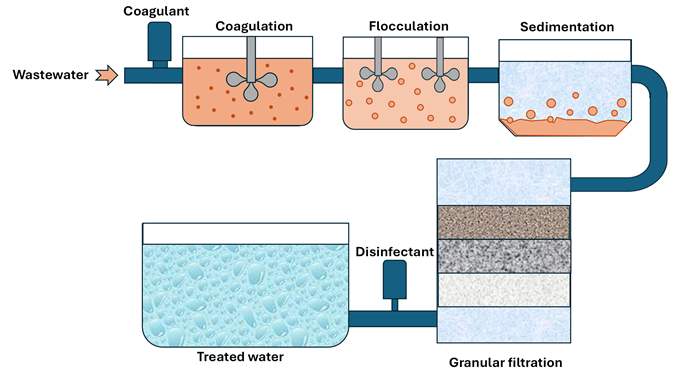
Naturally existing and manufactured nanomaterials (NMs) are increasingly used for domestic and industrial applications due to their excellent properties. These NMs end up being nanocontaminants in municipal and industrial wastewater through different ways, which include domestic drainage systems, industrial effluent, and surface runoff from soils. Most of the NMs have a negative effect on the environment and impose threats to human life due to their toxicity. Treatment methods have been established, and some are still being developed to remove NMs from wastewater. Generally, this review highlights the origins of NMs, their deposition into municipal and industrial wastewater and their removal from wastewater by conventional filtration and membrane techniques. It further indicates the improvements in water filtration in terms of removal of NMs using conventional filtration and the current membrane filtration techniques. The conventional filtration methods, which include coagulation, flocculation, sedimentation, and granular filtration, exhibit lower removal efficiency of NMs compared with hybrid membranes systems, which are more advanced.
Citation: Lloyd N. Ndlovu, Mokgadi F. Bopape, Maurice S. Onyango. A review on nanomaterial contaminants and their removal from industrial and municipal wastewater by conventional filtration and ultrafiltration membrane techniques[J]. AIMS Materials Science, 2025, 12(2): 336-362. doi: 10.3934/matersci.2025018
Naturally existing and manufactured nanomaterials (NMs) are increasingly used for domestic and industrial applications due to their excellent properties. These NMs end up being nanocontaminants in municipal and industrial wastewater through different ways, which include domestic drainage systems, industrial effluent, and surface runoff from soils. Most of the NMs have a negative effect on the environment and impose threats to human life due to their toxicity. Treatment methods have been established, and some are still being developed to remove NMs from wastewater. Generally, this review highlights the origins of NMs, their deposition into municipal and industrial wastewater and their removal from wastewater by conventional filtration and membrane techniques. It further indicates the improvements in water filtration in terms of removal of NMs using conventional filtration and the current membrane filtration techniques. The conventional filtration methods, which include coagulation, flocculation, sedimentation, and granular filtration, exhibit lower removal efficiency of NMs compared with hybrid membranes systems, which are more advanced.

| [1] |
Research and markets (2021) Global nanomaterials market (2021 to 2029)-featuring BASF, Bayer and Chasm Technologies. Focus Catal 2021: 3. https://doi.org/10.1016/j.focat.2021.06.007 doi: 10.1016/j.focat.2021.06.007

|
| [2] |
Dhall S, Nigam A, Harshavardhan M, et al. (2024) A comprehensive overview of methods involved in nanomaterial production and waste disposal from research labs and industries and existing regulatory guidelines for handling engineered nanomaterials. Environ Chem Ecotoxicol 6: 269–282. https://doi.org/10.1016/j.enceco.2024.06.002 doi: 10.1016/j.enceco.2024.06.002
|
| [3] |
Saleem H, Zaidi SJ (2020) Developments in the application of nanomaterials for water treatment and their impact on the environment. Nanomaterials 10: 1764. https://doi.org/10.3390/nano10091764 doi: 10.3390/nano10091764
|
| [4] |
Zhang Y, Poon K, Masonsong GSP, et al. (2023) Sustainable nanomaterials for biomedical applications. Pharmaceutics 15: 922. https://doi.org/10.3390/pharmaceutics15030922 doi: 10.3390/pharmaceutics15030922
|
| [5] |
Salieri B, Turner DA, Nowack B, et al. (2018) Life cycle assessment of manufactured nanomaterials: Where are we? NanoImpact 10: 108–120. https://doi.org/10.1016/j.impact.2017.12.003 doi: 10.1016/j.impact.2017.12.003
|
| [6] |
Hischier R, Walser T (2012) Life cycle assessment of engineered nanomaterials: State of the art and strategies to overcome existing gaps. Sci Total Environ 425: 271–282. https://doi.org/10.1016/j.scitotenv.2012.03.001 doi: 10.1016/j.scitotenv.2012.03.001
|
| [7] |
El-Kalliny AS, Abdel-Wahed MS, El-Zahhar AA, et al. (2023) Nanomaterials: A review of emerging contaminants with potential health or environmental impact. Discover Nano 18: 68. https://doi.org/10.1186/s11671-023-03787-8 doi: 10.1186/s11671-023-03787-8
|
| [8] |
Murali M, Gowtham HG, Singh SB, et al. (2022) Fate, bioaccumulation and toxicity of engineered nanomaterials in plants: Current challenges and future prospects. Sci Total Environ 811: 152249. https://doi.org/10.1016/j.scitotenv.2021.152249 doi: 10.1016/j.scitotenv.2021.152249
|
| [9] |
Mitra S, Chakraborty AJ, Tareq AM, et al. (2022) Impact of heavy metals on the environment and human health: Novel therapeutic insights to counter the toxicity. J King Saud Univ Sci 34: 101865. https://doi.org/10.1016/j.jksus.2022.101865 doi: 10.1016/j.jksus.2022.101865
|
| [10] |
Singh G, Thakur N, Kumar R (2024) Nanoparticles in drinking water: Assessing health risks and regulatory challenges. Sci Total Environ 949: 174940. https://doi.org/10.1016/j.scitotenv.2024.174940 doi: 10.1016/j.scitotenv.2024.174940
|
| [11] |
Joseph TM, Al-Hazmi HE, Śniatała B, et al. (2023) Nanoparticles and nanofiltration for wastewater treatment: From polluted to fresh water. Environ Res 238: 117114. https://doi.org/10.1016/j.envres.2023.117114 doi: 10.1016/j.envres.2023.117114
|
| [12] |
Altowayti WAH, Shahir S, Othman N, et al. (2022) The role of conventional methods and artificial intelligence in the wastewater treatment: A comprehensive review. Processes 10: 1832. https://doi.org/10.3390/pr10091832 doi: 10.3390/pr10091832
|
| [13] | Zinicovscaia I (2016) Conventional methods of wastewater treatment, In: Zinicovscaia I, Cepoi L, Cyanobacteria for Bioremediation of Wastewaters, Cham: Springer International Publishing, 17–25. |
| [14] |
Obotey Ezugbe E, Rathilal S (2020) Membrane technologies in wastewater treatment: A review. Membranes 10: 89. https://doi.org/10.3390/membranes10050089 doi: 10.3390/membranes10050089
|
| [15] |
Maher A, Sadeghi M, Moheb A (2014) Heavy metal elimination from drinking water using nanofiltration membrane technology and process optimization using response surface methodology. Desalination 352: 166–173. https://doi.org/10.1016/j.desal.2014.08.023 doi: 10.1016/j.desal.2014.08.023
|
| [16] |
Abdullah N, Yusof N, Lau WJ, et al. (2019) Recent trends of heavy metal removal from water/wastewater by membrane technologies. J Ind Eng Chem 76: 17–38. https://doi.org/10.1016/j.jiec.2019.03.029 doi: 10.1016/j.jiec.2019.03.029
|
| [17] |
Pervez MN, Balakrishnan M, Hasan SW, et al. (2020) A critical review on nanomaterials membrane bioreactor (NMs-MBR) for wastewater treatment. npj Clean Water 3: 43. https://doi.org/10.1038/s41545-020-00090-2 doi: 10.1038/s41545-020-00090-2
|
| [18] | Pokropivny V, Lohmus R, Hussainova I, et al. (2007) Introduction to Nanomaterials and Nanotechnologyi, Tartu: Tartu University Press. |
| [19] | Cao G (2004) Nanostructures and Nanomaterials: Synthesis, Properties and Applications, London: Imperial College Press. |
| [20] |
Colvin VL (2003) The potential environmental impact of engineered nanomaterials. Nat Biotechnol 21: 1166–1170. https://doi.org/10.1038/nbt875 doi: 10.1038/nbt875
|
| [21] |
Tijani JO, Fatoba OO, Babajide OO, et al. (2016) Pharmaceuticals, endocrine disruptors, personal care products, nanomaterials and perfluorinated pollutants: A review. Environ Chem Lett 14: 27–49. https://doi.org/10.1007/s10311-015-0537-z doi: 10.1007/s10311-015-0537-z
|
| [22] |
Nowack B, Bucheli TD (2007) Occurrence, behavior and effects of nanoparticles in the environment. Environ Pollut 150: 5–22. https://doi.org/10.1016/j.envpol.2007.06.006 doi: 10.1016/j.envpol.2007.06.006
|
| [23] |
Kabir E, Kumar V, Kim KH, et al. (2018) Environmental impacts of nanomaterials. J Environ Manage 225: 261–271. https://doi.org/10.1016/j.jenvman.2018.07.087 doi: 10.1016/j.jenvman.2018.07.087
|
| [24] |
Kumar P, Robins A, Vardoulakis S, et al. (2010) A review of the characteristics of nanoparticles in the urban atmosphere and the prospects for developing regulatory controls. Atmos Environ 44: 5035–5052. https://doi.org/10.1016/j.atmosenv.2010.08.016 doi: 10.1016/j.atmosenv.2010.08.016
|
| [25] |
Kumar P, Fennell P, Robins A (2010) Comparison of the behaviour of manufactured and other airborne nanoparticles and the consequences for prioritising research and regulation activities. J Nanopart Res 12: 1523–1530. https://doi.org/10.1007/s11051-010-9893-6 doi: 10.1007/s11051-010-9893-6
|
| [26] |
Peralta-Videa JR, Zhao L, Lopez-Moreno ML, et al. (2011) Nanomaterials and the environment: A review for the biennium 2008–2010. J Hazard Mater 186: 1–15. https://doi.org/10.1016/j.jhazmat.2010.11.020 doi: 10.1016/j.jhazmat.2010.11.020
|
| [27] |
Azarmi F, Kumar P, Mulheron M (2014) The exposure to coarse, fine and ultrafine particle emissions from concrete mixing, drilling and cutting activities. J Hazard Mater 279: 268–279. https://doi.org/10.1016/j.jhazmat.2014.07.003 doi: 10.1016/j.jhazmat.2014.07.003
|
| [28] |
Kumar P, Pirjola L, Ketzel M, et al. (2013) Nanoparticle emissions from 11 non-vehicle exhaust sources—A review. Atmos Environ 67: 252–277. https://doi.org/10.1016/j.atmosenv.2012.11.011 doi: 10.1016/j.atmosenv.2012.11.011
|
| [29] |
Kumar P, Kumar A, Lead JR (2012) Nanoparticles in the Indian environment: known, unknowns and awareness. Environ Sci Technol 46: 7071–7072. https://doi.org/10.1021/es302308h doi: 10.1021/es302308h
|
| [30] |
Smita S, Gupta SK, Bartonova A, et al. (2012) Nanoparticles in the environment: Assessment using the causal diagram approach. Environ Health 11: 1–11. https://doi.org/10.1186/1476-069X-11-S1-S13 doi: 10.1186/1476-069X-11-S1-S13
|
| [31] |
Wagner AL, Cooper S, Riedlinger M (2005) Natural nanotubes enhance biodegradable and biocompatible nanocomposites; nanotubes in halloysite clay may provide increased strength and new capabilities for consumer product, packaging, medical, and other applications. Ind Biotechnol 1: 190–193. https://doi.org/10.1089/ind.2005.1.190 doi: 10.1089/ind.2005.1.190
|
| [32] |
Griffin S, Masood M, Nasim M, et al. (2017) Natural nanoparticles: A particular matter inspired by nature. Antioxidants 7: 3. https://doi.org/10.3390/antiox7010003 doi: 10.3390/antiox7010003
|
| [33] | Strambeanu N, Demetrovici L, Dragos D (2014) Natural sources of nanoparticles, In: Lungu M, Neculae A, Bunoiu M, et al. Nanoparticles' Promises and Risks: Characterization, Manipulation, and Potential Hazards to Humanity and the Environment, Cham: Springer, 9–19. https://doi.org/10.1007/978-3-319-11728-7_2 |
| [34] |
Sadik OA (2013) Anthropogenic nanoparticles in the environment. Environ Sci: Processes Impacts 15: 19–20. https://doi.org/10.1039/C2EM90063G doi: 10.1039/C2EM90063G
|
| [35] |
Rogers F, Arnott P, Zielinska B, et al. (2005) Real-time measurements of jet aircraft engine exhaust. J Air Waste Manage Assoc 55: 583–593. https://doi.org/10.1080/10473289.2005.10464651 doi: 10.1080/10473289.2005.10464651
|
| [36] |
Seames WS, Fernandez A, Wendt JO (2002) A study of fine particulate emissions from combustion of treated pulverized municipal sewage sludge. Environ Sci Technol 36: 2772–2776. https://doi.org/10.1021/es0113091 doi: 10.1021/es0113091
|
| [37] |
Linak WP, Miller CA, Wendt JO (2000) Comparison of particle size distributions and elemental partitioning from the combustion of pulverized coal and residual fuel oil. J Air Waste Manage Assoc 50: 1532–1544. https://doi.org/10.1080/10473289.2000.10464171 doi: 10.1080/10473289.2000.10464171
|
| [38] |
Saleh T (2016) Nanomaterials for pharmaceuticals determination. Bioenergetics 5: 1–6. https://doi.org/10.4172/2167-7662.1000226 doi: 10.4172/2167-7662.1000226
|
| [39] |
Cha C, Shin SR, Annabi N, et al. (2013) Carbon-based nanomaterials: multifunctional materials for biomedical engineering. ACS Nano 7: 2891–2897. https://doi.org/10.1021/nn401196a doi: 10.1021/nn401196a
|
| [40] |
Tourinho PS, Van Gestel CA, Lofts S, et al. (2012) Metal‐based nanoparticles in soil: Fate, behavior, and effects on soil invertebrates. Environ Toxicol Chem 31: 1679–1692. https://doi.org/10.1002/etc.1880 doi: 10.1002/etc.1880
|
| [41] |
Abbasi E, Aval SF, Akbarzadeh A, et al. (2014) Dendrimers: Synthesis, applications, and properties. Nanoscale Res Lett 9: 247. https://doi.org/10.1186/1556-276X-9-247 doi: 10.1186/1556-276X-9-247
|
| [42] |
Palmerston Mendes L, Pan J, Torchilin VP (2017) Dendrimers as nanocarriers for nucleic acid and drug delivery in cancer therapy. Molecules 22: 1401. https://doi.org/10.3390/molecules22091401 doi: 10.3390/molecules22091401
|
| [43] |
Sahay R, Reddy VJ, Ramakrishna S (2014) Synthesis and applications of multifunctional composite nanomaterials. Int J Mech Mater Eng 9: 25. https://doi.org/10.1186/s40712-014-0025-4 doi: 10.1186/s40712-014-0025-4
|
| [44] |
Tiwari JN, Tiwari RN, Kim KS (2012) Zero-dimensional, one-dimensional, two-dimensional and three-dimensional nanostructured materials for advanced electrochemical energy devices. Prog Mater Sci 57: 724–803. https://doi.org/10.1016/j.pmatsci.2011.08.003 doi: 10.1016/j.pmatsci.2011.08.003
|
| [45] |
Singh NB, Kumar B, Usman UL, et al. (2024) Nano revolution: Exploring the frontiers of nanomaterials in science, technology, and society. Nano-Struct Nano-Objects 39: 101299. https://doi.org/10.1016/j.nanoso.2024.101299 doi: 10.1016/j.nanoso.2024.101299
|
| [46] |
Akhavan O, Ghaderi E, Akhavan A (2012) Size-dependent genotoxicity of graphene nanoplatelets in human stem cells. Biomaterials 33: 8017–8025. https://doi.org/10.1016/j.biomaterials.2012.07.040 doi: 10.1016/j.biomaterials.2012.07.040
|
| [47] |
De Matteis V (2017) Exposure to inorganic nanoparticles: Routes of entry, immune response, biodistribution and in vitro/in vivo toxicity evaluation. Toxics 5: 29. https://doi.org/10.3390/toxics5040029 doi: 10.3390/toxics5040029
|
| [48] |
Ferdous Z, Nemmar A (2020) Health impact of silver nanoparticles: A review of the biodistribution and toxicity following various routes of exposure. Int J Mol Sci 21: 2375. https://doi.org/10.3390/ijms21072375 doi: 10.3390/ijms21072375
|
| [49] |
Ganguly P, Breen A, Pillai SC (2018) Toxicity of nanomaterials: exposure, pathways, assessment, and recent advances. ACS Biomater Sci Eng 4: 2237–2275. https://doi.org/10.1021/acsbiomaterials.8b00068 doi: 10.1021/acsbiomaterials.8b00068
|
| [50] |
Chichiriccò G, Poma A (2015) Penetration and toxicity of nanomaterials in higher plants. Nanomaterials 5: 851–873. https://doi.org/10.3390/nano5020851 doi: 10.3390/nano5020851
|
| [51] |
Meng Y, Xiang C, Huo J, et al. (2023) Toxicity effects of zinc supply on growth revealed by physiological and transcriptomic evidences in sweet potato (Ipomoea batatas (L.) Lam). Sci Rep 13: 19203. https://doi.org/10.1038/s41598-023-46504-2 doi: 10.1038/s41598-023-46504-2
|
| [52] |
Genchi G, Sinicropi MS, Lauria G, et al. (2020) The effects of cadmium toxicity. Int J Env Res Public Health 17: 3782. https://doi.org/10.3390/ijerph17113782 doi: 10.3390/ijerph17113782
|
| [53] |
Haider Fu, Liqun C, Coulter JA, et al. (2021) Cadmium toxicity in plants: Impacts and remediation strategies. Ecotoxicol Environ Saf 211: 111887. https://doi.org/10.1016/j.ecoenv.2020.111887 doi: 10.1016/j.ecoenv.2020.111887
|
| [54] | Donga C, Mishra SB, Abd-El-Aziz AS, et al. (2022) (3-Aminopropyl) triethoxysilane (APTES) functionalized magnetic nanosilica graphene oxide (MGO) nanocomposite for the comparative adsorption of the heavy metal[Pb(Ⅱ), Cd(Ⅱ) and Ni(Ⅱ)] ions from aqueous solution. J Inorg Organomet Polym Mater 32: 2235–2248. https://doi.org/10.1007/s10904-022-02287-z |
| [55] |
Mohammed Abdul KS, Jayasinghe SS, Chandana EPS, et al. (2015) Arsenic and human health effects: A review. Environ Toxicol Pharmacol 40: 828–846. https://doi.org/10.1016/j.etap.2015.09.016 doi: 10.1016/j.etap.2015.09.016
|
| [56] |
Kandhol N, Aggarwal B, Bansal R, et al. (2022) Nanoparticles as a potential protective agent for arsenic toxicity alleviation in plants. Environ Pollut 300: 118887. https://doi.org/10.1016/j.envpol.2022.118887 doi: 10.1016/j.envpol.2022.118887
|
| [57] |
Bonfiglio R, Scimeca M, Mauriello A (2023) The impact of aluminum exposure on human health. Arch Toxicol 97: 2997–2998. https://doi.org/10.1007/s00204-023-03581-6 doi: 10.1007/s00204-023-03581-6
|
| [58] |
Ofoe R, Thomas RH, Asiedu SK, et al. (2023) Aluminum in plant: Benefits, toxicity and tolerance mechanisms. Front Plant Sci 13: 1085998. https://doi.org/10.3389/fpls.2022.1085998 doi: 10.3389/fpls.2022.1085998
|
| [59] |
Drake PL, Hazelwood KJ (2005) Exposure-related health effects of silver and silver compounds: A review. Ann Occup Hyg 49: 575–585. https://doi.org/10.1093/annhyg/mei019 doi: 10.1093/annhyg/mei019
|
| [60] |
Li F, Li R, Lu F, et al. (2023) Adverse effects of silver nanoparticles on aquatic plants and zooplankton: A review. Chemosphere 338: 139459. https://doi.org/10.1016/j.chemosphere.2023.139459 doi: 10.1016/j.chemosphere.2023.139459
|
| [61] |
Manzoor Q, Sajid A, Ali Z, et al. (2024) Toxicity spectrum and detrimental effects of titanium dioxide nanoparticles as an emerging pollutant: A review. Desalin Water Treat 317: 100025. https://doi.org/10.1016/j.dwt.2024.100025 doi: 10.1016/j.dwt.2024.100025
|
| [62] |
Chavan S, Sarangdhar V, Nadanathangam V (2020) Toxicological effects of TiO2 nanoparticles on plant growth promoting soil bacteria. Emerg Contam 6: 87–92. https://doi.org/10.1016/j.emcon.2020.01.003 doi: 10.1016/j.emcon.2020.01.003
|
| [63] |
Buxton S, Garman E, Heim KE, et al. (2019) Concise review of nickel human health toxicology and ecotoxicology. Inorganics 7: 89. https://doi.org/10.3390/inorganics7070089 doi: 10.3390/inorganics7070089
|
| [64] |
Hassan MU, Chattha MU, Khan I, et al. (2019) Nickel toxicity in plants: reasons, toxic effects, tolerance mechanisms, and remediation possibilities—A review. Environ Sci Pollut Res 26: 12673–12688. https://doi.org/10.1007/s11356-019-04892-x doi: 10.1007/s11356-019-04892-x
|
| [65] |
Awasthi S, Srivastava A, Kumar D, et al. (2024) An insight into the toxicological impacts of carbon nanotubes (CNTs) on human health: A review. Environ Adv 18: 100601. https://doi.org/10.1016/j.envadv.2024.100601 doi: 10.1016/j.envadv.2024.100601
|
| [66] |
Zaytseva O, Neumann G (2016) Carbon nanomaterials: Production, impact on plant development, agricultural and environmental applications. Chem Biol Technol Agric 3: 17. https://doi.org/10.1186/s40538-016-0070-8 doi: 10.1186/s40538-016-0070-8
|
| [67] |
Maiti S, Fournier I, Brar SK, et al. (2014) Nanomaterials in surface water and sediments: Fate and analytical challenges. J Hazard Toxic Radioact Waste 20: B4014004. https://doi.org/10.1061/(ASCE)HZ.2153-5515.0000264 doi: 10.1061/(ASCE)HZ.2153-5515.0000264
|
| [68] |
Iavicoli I, Leso V, Ricciardi W, et al. (2014) Opportunities and challenges of nanotechnology in the green economy. Environ Health 13: 78. https://doi.org/10.1186/1476-069X-13-78 doi: 10.1186/1476-069X-13-78
|
| [69] |
Brar SK, Verma M, Tyagi R, et al. (2010) Engineered nanoparticles in wastewater and wastewater sludge—Evidence and impacts. Waste Manag 30: 504–520. https://doi.org/10.1016/j.wasman.2009.10.012 doi: 10.1016/j.wasman.2009.10.012
|
| [70] |
Arora A, Padua GW (2010) Review: Nanocomposites in food packaging. J Food Sci 75: R43–R49. https://doi.org/10.1111/j.1750-3841.2009.01456.x doi: 10.1111/j.1750-3841.2009.01456.x
|
| [71] |
Bouwmeester H, Dekkers S, Noordam MY, et al. (2009) Review of health safety aspects of nanotechnologies in food production. Regul Toxicol Pharmacol 53: 52–62. https://doi.org/10.1016/j.yrtph.2008.10.008 doi: 10.1016/j.yrtph.2008.10.008
|
| [72] |
Nowack B, Ranville JF, Diamond S, et al. (2012) Potential scenarios for nanomaterial release and subsequent alteration in the environment. Environ Toxicol Chem 31: 50–59. https://doi.org/10.1002/etc.726 doi: 10.1002/etc.726
|
| [73] |
Mueller NC, Nowack B (2008) Exposure modeling of engineered nanoparticles in the environment. Environ Sci Technol 42: 4447–4453. https://doi.org/10.1021/es7029637 doi: 10.1021/es7029637
|
| [74] |
Lorenz C, Hagendorfer H, von Goetz N, et al. (2011) Nanosized aerosols from consumer sprays: Experimental analysis and exposure modeling for four commercial products. J Nanopart Res 13: 3377–3391. https://doi.org/10.1007/s11051-011-0256-8 doi: 10.1007/s11051-011-0256-8
|
| [75] |
Benn T, Cavanagh B, Hristovski K, et al. (2010) The release of nanosilver from consumer products used in the home. J Environ Qual 39: 1875–1882. https://doi.org/10.2134/jeq2009.0363 doi: 10.2134/jeq2009.0363
|
| [76] |
Geranio L, Heuberger M, Nowack B (2009) The behavior of silver nanotextiles during washing. Environ Sci Technol 43: 8113–8118. https://doi.org/10.1021/es9018332 doi: 10.1021/es9018332
|
| [77] | Casman EA, Lowry GV, Wiesner MR (2009) Rethinking environmental risk assessment for nanomaterials. American Chemical Society. |
| [78] |
Kägi R, Ulrich A, Sinnet B, et al. (2008) Synthetic TiO2 nanoparticle emission from exterior facades into the aquatic environment. Environ Pollut 156: 233–239. https://doi.org/10.1016/j.envpol.2008.08.004 doi: 10.1016/j.envpol.2008.08.004
|
| [79] |
Benn TM, Westerhoff P, Herckes P (2011) Detection of fullerenes (C60 and C70) in commercial cosmetics. Environ Pollut 159: 1334–1342. https://doi.org/10.1016/j.envpol.2011.01.018 doi: 10.1016/j.envpol.2011.01.018
|
| [80] | Madeła M, Neczaj E, Grosser A (2016) Fate of engineered nanoparticles in wastewater treatment plant. Eng Prot 19: 577–587. http://dx.doi.org/10.17512%Fios.2016.4.11 |
| [81] | Zouboulis A, Moussas P, Tzoupanos N (2009) Coagulation-flocculation processes applied in water or wastewater treatment, 6th Iasme/Wseas International Conference On Heat Transfer, Thermal Engineering And Environment (THE'08) Rhodes, Greece, 289–324. |
| [82] |
Jiang JQ (2015) The role of coagulation in water treatment. Curr Opin Chem Eng 8: 36–44. https://doi.org/10.1016/j.coche.2015.01.008 doi: 10.1016/j.coche.2015.01.008
|
| [83] |
Hyung H, Kim JH (2009) Dispersion of C60 in natural water and removal by conventional drinking water treatment processes. Water Res 43: 2463–2470. https://doi.org/10.1016/j.watres.2009.03.011 doi: 10.1016/j.watres.2009.03.011
|
| [84] |
Ma-Hock L, Gamer A, Landsiedel R, et al. (2007) Generation and characterization of test atmospheres with nanomaterials. Inhal Toxicol 19: 833–848. https://doi.org/10.1080/08958370701479190 doi: 10.1080/08958370701479190
|
| [85] |
Gimbert LJ, Hamon RE, Casey PS, et al. (2007) Partitioning and stability of engineered ZnO nanoparticles in soil suspensions using flow field-flow fractionation. Environ Chem 4: 8–10. https://doi.org/10.1071/EN06072 doi: 10.1071/EN06072
|
| [86] |
Feng X, Johnson DW (2015) Aggregated nanoparticle morphology effects on membrane filtration. Chem Eng Commun 202: 1000–1010. https://doi.org/10.1080/00986445.2014.891508 doi: 10.1080/00986445.2014.891508
|
| [87] | binti Saharudin NFA, Nithyanandam R (2014) Wastewater treatment by using natural coagulant. 2nd Eureca 4: 213–217. |
| [88] |
Renault F, Sancey B, Badot PM, et al. (2009) Chitosan for coagulation/flocculation processes—An eco-friendly approach. Eur Polym J 45: 1337–1348. https://doi.org/10.1016/j.eurpolymj.2008.12.027 doi: 10.1016/j.eurpolymj.2008.12.027
|
| [89] |
Duan J, Gregory J (2003) Coagulation by hydrolysing metal salts. Adv Colloid Interface Sci 100–102: 475–502. https://doi.org/10.1016/S0001-8686(02)00067-2 doi: 10.1016/S0001-8686(02)00067-2
|
| [90] |
Gregory J, Duan J (2001) Hydrolyzing metal salts as coagulants. Pure Appl Chem 73: 2017–2026. https://doi.org/10.1351/pac200173122017 doi: 10.1351/pac200173122017
|
| [91] | Zhang J, Xin S, Li F (2013) Removal of SiO2 nanoparticles from aqueous phase by using polymer aluminum chloride (PAC). Fresenius Environ Bull 22: 890–894. https://cabidigitallibrary.org/doi/full/10.5555/20133163936 |
| [92] |
Wang Y, Xue N, Chu Y, et al. (2015) CuO nanoparticle–humic acid (CuONP–HA) composite contaminant removal by coagulation/ultrafiltration process: The application of sodium alginate as coagulant aid. Desalination 367: 265–271. https://doi.org/10.1016/j.desal.2015.04.018 doi: 10.1016/j.desal.2015.04.018
|
| [93] |
Sun Q, Li Y, Tang T, et al. (2013) Removal of silver nanoparticles by coagulation processes. J Hazard Mater 261: 414–420. https://doi.org/10.1016/j.jhazmat.2013.07.066 doi: 10.1016/j.jhazmat.2013.07.066
|
| [94] |
Honda RJ, Keene V, Daniels L, et al. (2014) Removal of TiO2 nanoparticles during primary water treatment: Role of coagulant type, dose, and nanoparticle concentration. Environ Eng Sci 31: 127–134. https://doi.org/10.1089/ees.2013.0269 doi: 10.1089/ees.2013.0269
|
| [95] |
Liu N, Liu C, Zhang J, et al. (2012) Removal of dispersant-stabilized carbon nanotubes by regular coagulants. J Environ Sci 24: 1364–1370. https://doi.org/10.1016/S1001-0742(11)60933-9 doi: 10.1016/S1001-0742(11)60933-9
|
| [96] |
Muruganandam L, Saravana Kumar MP, Jena A, et al. (2017) Treatment of waste water by coagulation and flocculation using biomaterials. IOP Conf Ser Mater Sci Eng 263: 032006. https://doi.org/10.1088/1757-899X/263/3/032006 doi: 10.1088/1757-899X/263/3/032006
|
| [97] | Spellman FR (2008) Handbook of Water and Wastewater Treatment Plant Operations, Boca Raton: CRC press. |
| [98] |
Fortner J, Lyon D, Sayes C, et al. (2005) C60 in water: Nanocrystal formation and microbial response. Environ Sci Technol 39: 4307–4316. https://doi.org/10.1021/es048099n doi: 10.1021/es048099n
|
| [99] |
Gitis V, Rubinstein I, Livshits M, et al. (2010) Deep-bed filtration model with multistage deposition kinetics. Chem Eng J 163: 78–85. https://doi.org/10.1016/j.cej.2010.07.044 doi: 10.1016/j.cej.2010.07.044
|
| [100] |
Tufenkji N, Elimelech M (2004) Correlation equation for predicting single-collector efficiency in physicochemical filtration in saturated porous media. Environ Sci Technol 38: 529–536. https://doi.org/10.1021/es034049r doi: 10.1021/es034049r
|
| [101] |
Yao KM, Habibian MT, O'Melia CR (1971) Water and waste water filtration. Concepts and applications. Environ Sci Technol 5: 1105–1112. https://doi.org/10.1021/es60058a005 doi: 10.1021/es60058a005
|
| [102] | Vigneswaran S, Jegatheesan V, Keir G (2009) Deep bed filtration: modeling theory and practice, In: Vigneswaran S, Jegatheesan V, Keir G, Waste Water Treatment Technologies, Cardiff: EOLSS Publishers. |
| [103] |
Zamani A, Maini B (2009) Flow of dispersed particles through porous media—Deep bed filtration. J Pet Sci Eng 69: 71–88. https://doi.org/10.1016/j.petrol.2009.06.016 doi: 10.1016/j.petrol.2009.06.016
|
| [104] |
Jegatheesan V, Vigneswaran S (2005) Deep bed filtration: Mathematical models and observations. Crit Rev Environ Sci Technol 35: 515–569. https://doi.org/10.1080/10643380500326432 doi: 10.1080/10643380500326432
|
| [105] |
Hofman-Caris CHM, Bäuerlein PS, Siegers WG, et al. (2022) Removal of nanoparticles (both inorganic nanoparticles and nanoplastics) in drinking water treatment–coagulation/flocculation/sedimentation, and sand/granular activated carbon filtration. Environ Sci: Water Res Technol 8: 1675–1686. https://doi.org/10.1039/D2EW00226D doi: 10.1039/D2EW00226D
|
| [106] |
Ramirez Arenas L, Ramseier Gentile S, Zimmermann S, et al. (2022) Fate and removal efficiency of polystyrene nanoplastics in a pilot drinking water treatment plant. Sci Total Environ 813: 152623. https://doi.org/10.1016/j.scitotenv.2021.152623 doi: 10.1016/j.scitotenv.2021.152623
|
| [107] |
He L, Rong H, Wu D, et al. (2020) Influence of biofilm on the transport and deposition behaviors of nano- and micro-plastic particles in quartz sand. Water Res 178: 115808. https://doi.org/10.1016/j.watres.2020.115808 doi: 10.1016/j.watres.2020.115808
|
| [108] |
Tong M, He L, Rong H, et al. (2020) Transport behaviors of plastic particles in saturated quartz sand without and with biochar/Fe3O4-biochar amendment. Water Res 169: 115284. https://doi.org/10.1016/j.watres.2019.115284 doi: 10.1016/j.watres.2019.115284
|
| [109] |
Piplai T, Kumar A, Alappat BJ (2018) Removal of ZnO and CuO nanoparticles from water using an activated carbon column. J Environ Eng 144: 04017113. https://doi.org/10.1061/(ASCE)EE.1943-7870.0001331 doi: 10.1061/(ASCE)EE.1943-7870.0001331
|
| [110] |
Elimelech M, Phillip WA (2011) The future of seawater desalination: Energy, technology, and the environment. Science 333: 712–717. https://doi.org/10.1126/science.1200488 doi: 10.1126/science.1200488
|
| [111] |
Chang IS, Kim SN (2005) Wastewater treatment using membrane filtration—effect of biosolids concentration on cake resistance. Process Biochem 40: 1307–1314. https://doi.org/10.1016/j.procbio.2004.06.019 doi: 10.1016/j.procbio.2004.06.019
|
| [112] |
Shi W, He B, Ding J, et al. (2010) Preparation and characterization of the organic–inorganic hybrid membrane for biodiesel production. Bioresour Technol 101: 1501–1505. https://doi.org/10.1016/j.biortech.2009.07.014 doi: 10.1016/j.biortech.2009.07.014
|
| [113] |
Van der Bruggen B, Vandecasteele C, Van Gestel T, et al. (2003) A review of pressure‐driven membrane processes in wastewater treatment and drinking water production. Environ Prog 22: 46–56. https://doi.org/10.1002/ep.670220116 doi: 10.1002/ep.670220116
|
| [114] | Ladewig B, Al-Shaeli MNZ (2017) Fundamentals of membrane processes, In: Ladewig B, Al-Shaeli MNZ, Fundamentals of Membrane Bioreactors, Singapore: Springer, 13–37. https://doi.org/10.1007/978-981-10-2014-8_2 |
| [115] | Scott K, Hughes R (2012) Industrial Membrane Separation Technology, Dordrecht: Springer Dordrecht. https://doi.org/10.1007/978-94-011-0627-6 |
| [116] |
Blöcher C, Dorda J, Mavrov V, et al. (2003) Hybrid flotation–membrane filtration process for the removal of heavy metal ions from wastewater. Water Res 37: 4018–4026. https://doi.org/10.1016/S0043-1354(03)00314-2 doi: 10.1016/S0043-1354(03)00314-2
|
| [117] |
Kim J, Van der Bruggen B (2010) The use of nanoparticles in polymeric and ceramic membrane structures: Review of manufacturing procedures and performance improvement for water treatment. Environ Pollut 158: 2335–2349. https://doi.org/10.1016/j.envpol.2010.03.024 doi: 10.1016/j.envpol.2010.03.024
|
| [118] |
Yin J, Deng B (2015) Polymer-matrix nanocomposite membranes for water treatment. J Membr Sci 479: 256–275. https://doi.org/10.1016/j.memsci.2014.11.019 doi: 10.1016/j.memsci.2014.11.019
|
| [119] |
Qu X, Alvarez PJ, Li Q (2013) Applications of nanotechnology in water and wastewater treatment. Water Res 47: 3931–3946. https://doi.org/10.1016/j.watres.2012.09.058 doi: 10.1016/j.watres.2012.09.058
|
| [120] | Chowdhury T, Chowdhury H, Miskat MI, et al. (2021) Membrane-based technologies for industrial wastewater treatment and resource recovery, In: Shah MP, Rodriguez-Couto S, Membrane-Based Hybrid Processes for Wastewater Treatment, Amsterdam: Elsevier, 403–421. https://doi.org/10.1016/B978-0-12-823804-2.00005-7 |
| [121] | Nghiem LD, Fujioka T (2016) Removal of emerging contaminants for water reuse by membrane technology, In: Hankins NP, Singh R, Emerging Membrane Technology for Sustainable Water Treatment, Amsterdam: Elsevier, 217–247. https://doi.org/10.1016/B978-0-444-63312-5.00009-7 |
| [122] |
Huang RM, He JY, Zhao J, et al. (2011) Fenton–biological treatment of reverse osmosis membrane concentrate from a metal plating wastewater recycle system. Environ Technol 32: 515–522. https://doi.org/10.1080/09593330.2010.504747 doi: 10.1080/09593330.2010.504747
|
| [123] | Caetano A, Pinho MN, Drioli E, et al. (1995) Membrane Technology: Applications to Industrial Wastewater Treatment, Dordrecht: Springer Dordrecht. https://doi.org/10.1007/978-94-011-0211-7 |
| [124] |
Zulu E, Ramasamy S, Khoabane Sikhwivhilu K, et al. (2025) A comprehensive review of recent advances in membrane innovations for efficient heavy metal removal from mine effluents. Sci Afr 27: e02510. https://doi.org/10.1016/j.sciaf.2024.e02510 doi: 10.1016/j.sciaf.2024.e02510
|
| [125] |
El Batouti M, Alharby NF, Elewa MM (2022) Review of new approaches for fouling mitigation in membrane separation processes in water treatment applications. Separations 9: 1. https://doi.org/10.3390/separations9010001 doi: 10.3390/separations9010001
|
| [126] |
Sadare OO, Daramola MO (2021) Blended polysulfone/polyethersulfone (PSF/PES) membrane with enhanced antifouling property for separation of succinate from organic acids from fermentation broth. ACS Sustain Chem Eng 9: 13068–13083. https://doi.org/10.1021/acssuschemeng.1c05059 doi: 10.1021/acssuschemeng.1c05059
|
| [127] |
Elsaid K, Olabi AG, Abdel-Wahab A, et al. (2023) Membrane processes for environmental remediation of nanomaterials: Potentials and challenges. Sci Total Environ 879: 162569. https://doi.org/10.1016/j.scitotenv.2023.162569 doi: 10.1016/j.scitotenv.2023.162569
|
| [128] |
Ojajuni O, Saroj D, Cavalli G (2015) Removal of organic micropollutants using membrane-assisted processes: A review of recent progress. Environ Technol Rev 4: 17–37. https://doi.org/10.1080/21622515.2015.1036788 doi: 10.1080/21622515.2015.1036788
|
| [129] |
Alpatova A, Verbych S, Bryk M, et al. (2004) Ultrafiltration of water containing natural organic matter: heavy metal removing in the hybrid complexation–ultrafiltration process. Sep Purif Technol 40: 155–162. https://doi.org/10.1016/j.seppur.2004.02.003 doi: 10.1016/j.seppur.2004.02.003
|
| [130] |
Korus I, Bodzek M, Loska K (1999) Removal of zinc and nickel ions from aqueous solutions by means of the hybrid complexation–ultrafiltration process. Sep Purif Technol 17: 111–116. https://doi.org/10.1016/S1383-5866(99)00033-7 doi: 10.1016/S1383-5866(99)00033-7
|
| [131] |
Bodzek M, Korus I, Loska K (1999) Application of the hybrid complexation-ultrafiltration process for removal of metal ions from galvanic wastewater. Desalination 121: 117–121. https://doi.org/10.1016/S0011-9164(99)00012-0 doi: 10.1016/S0011-9164(99)00012-0
|
| [132] |
Vieira M, Tavares CR, Bergamasco R, et al. (2001) Application of ultrafiltration-complexation process for metal removal from pulp and paper industry wastewater. J Membr Sci 194: 273–276. https://doi.org/10.1016/S0376-7388(01)00525-7 doi: 10.1016/S0376-7388(01)00525-7
|
| [133] |
Petrov S, Nenov V (2004) Removal and recovery of copper from wastewater by a complexation-ultrafiltration process. Desalination 162: 201–209. https://doi.org/10.1016/S0011-9164(04)00043-8 doi: 10.1016/S0011-9164(04)00043-8
|
| [134] |
Trivunac K, Stevanovic S (2006) Removal of heavy metal ions from water by complexation-assisted ultrafiltration. Chemosphere 64: 486–491. https://doi.org/10.1016/j.chemosphere.2005.11.073 doi: 10.1016/j.chemosphere.2005.11.073
|
| [135] |
Huang Y, Feng X (2019) Polymer-enhanced ultrafiltration: Fundamentals, applications and recent developments. J Membr Sci 586: 53–83. https://doi.org/10.1016/j.memsci.2019.05.037 doi: 10.1016/j.memsci.2019.05.037
|
| [136] |
Barakat MA, Schmidt E (2010) Polymer-enhanced ultrafiltration process for heavy metals removal from industrial wastewater. Desalination 256: 90–93. https://doi.org/10.1016/j.desal.2010.02.008 doi: 10.1016/j.desal.2010.02.008
|
| [137] |
Jiang J, Ni N, Xiao W, et al. (2021) Robust ceramic nanofibrous membranes with ultra-high water flux and nanoparticle rejection for self-standing ultrafiltration. J Eur Ceram Soc 41: 4264–4272. https://doi.org/10.1016/j.jeurceramsoc.2021.02.012 doi: 10.1016/j.jeurceramsoc.2021.02.012
|
| [138] |
Chalew TEA, Ajmani GS, Huang H, et al. (2013) Evaluating nanoparticle breakthrough during drinking water treatment. Environ Health Perspect 121: 1161–1166. https://doi.org/10.1289/ehp.1306574 doi: 10.1289/ehp.1306574
|
| [139] |
Floris R, Nijmeijer K, Cornelissen ER (2016) Removal of aqueous nC60 fullerene from water by low pressure membrane filtration. Water Res 91: 115–125. https://doi.org/10.1016/j.watres.2015.10.014 doi: 10.1016/j.watres.2015.10.014
|
| [140] |
Lee H, Segets D, Süß S, et al. (2018) Retention mechanisms of 1.7 nm ZnS quantum dots and sub-20 nm Au nanoparticles in ultrafiltration membranes. J Membr Sci 567: 58–67. https://doi.org/10.1016/j.memsci.2018.09.033 doi: 10.1016/j.memsci.2018.09.033
|
| [141] |
Springer F, Laborie S, Guigui C (2013) Removal of SiO2 nanoparticles from industry wastewaters and subsurface waters by ultrafiltration: Investigation of process efficiency, deposit properties and fouling mechanism. Sep Purif Technol 108: 6–14. https://doi.org/10.1016/j.seppur.2013.01.043 doi: 10.1016/j.seppur.2013.01.043
|
| [142] |
Li J, Mubashar M, Zulekha R, et al. (2025) Applications of coagulation-sedimentation and ultrafiltration for the removal of nanoparticles from water. Sep Purif Technol 357: 129920. https://doi.org/10.1016/j.seppur.2024.129920 doi: 10.1016/j.seppur.2024.129920
|
| [143] |
Cervantes-Avilés P, Huang Y, Keller AA (2019) Incidence and persistence of silver nanoparticles throughout the wastewater treatment process. Water Res 156: 188–198. https://doi.org/10.1016/j.watres.2019.03.031 doi: 10.1016/j.watres.2019.03.031
|
| [144] |
Zou Z, Gu Y, Yang W, et al. (2021) A modified coagulation-ultrafiltration process for silver nanoparticles removal and membrane fouling mitigation: The role of laminarin. Int J Biol Macromol 172: 241–249. https://doi.org/10.1016/j.ijbiomac.2021.01.034 doi: 10.1016/j.ijbiomac.2021.01.034
|
| [145] |
Alele N, Streubel R, Gamrad L, et al. (2016) Ultrafiltration membrane-based purification of bioconjugated gold nanoparticle dispersions. Sep Purif Technol 157: 120–130. https://doi.org/10.1016/j.seppur.2015.11.033 doi: 10.1016/j.seppur.2015.11.033
|
| [146] |
Mehta N, Basu S, Kumar A (2015) Separation of zinc oxide nanoparticles in water stream by membrane filtration. J Water Reuse Desal 6: 148–155. https://doi.org/10.2166/wrd.2015.069 doi: 10.2166/wrd.2015.069
|
| [147] |
Olabarrieta J, Monzón O, Belaustegui Y, et al. (2018) Removal of TiO2 nanoparticles from water by low pressure pilot plant filtration. Sci Total Environ 618: 551–560. https://doi.org/10.1016/j.scitotenv.2017.11.003 doi: 10.1016/j.scitotenv.2017.11.003
|
| [148] |
Molina S, Ocañ a-Biedma H, Rodríguez-Sáez L, et al. (2023) Experimental evaluation of the process performance of MF and UF membranes for the removal of nanoplastics. Membranes 13: 683. https://doi.org/10.3390/membranes13070683 doi: 10.3390/membranes13070683
|
| [149] |
Konsowa AH, Eloffy MG, Ibrahim WA, et al. (2019) Use of coagulation-ultrafiltration membrane continuous system for treatment of wastewater containing silica nanoparticles. Desalin Water Treat 148: 60–69. https://doi.org/10.5004/dwt.2019.23793 doi: 10.5004/dwt.2019.23793
|
| [150] |
Fazal S, Zhang B, Zhong Z, et al. (2015) Industrial wastewater treatment by using MBR (Membrane Bioreactor) review study. J Environ Prot 6: 15. http://dx.doi.org/10.4236/jep.2015.66053 doi: 10.4236/jep.2015.66053
|
| [151] | Ranade VV, Bhandari VM (2014) Industrial Wastewater Treatment, Recycling and Reuse, Oxford: Butterworth-Heinemann. https://doi.org/10.1016/C2012-0-06975-X |
| [152] |
Visvanathan C, Aim RB, Parameshwaran K (2000) Membrane separation bioreactors for wastewater treatment. Crit Rev Environ Sci Technol 30: 1–48. https://doi.org/10.1080/10643380091184165 doi: 10.1080/10643380091184165
|
| [153] |
Mei X, Wang Z, Zheng X, et al. (2014) Soluble microbial products in membrane bioreactors in the presence of ZnO nanoparticles. J Membr Sci 451: 169–176. https://doi.org/10.1016/j.memsci.2013.10.008 doi: 10.1016/j.memsci.2013.10.008
|
| [154] | Dapson RW (2018) Amyloid from a histochemical perspective. A review of the structure, properties and types of amyloid, and a proposed staining mechanism for Congo red staining. Biotech Histochem 93: 543–556. https://doi.org/10.1080/10520295.2018.1528385 |
| [155] |
Ahmed FN, Lan CQ (2012) Treatment of landfill leachate using membrane bioreactors: A review. Desalination 287: 41–54. https://doi.org/10.1016/j.desal.2011.12.012 doi: 10.1016/j.desal.2011.12.012
|
| [156] | Wu Y (2018) A preliminary study on application of MBR + NF/RO (membrane bio-reactor + nanofiltration/reverse osmosis) combination process for landfill leachate treatment in China. IOP Conf Ser Earth Environ Sci 182: 012010. https://doi.org/10.1088/1755-1315/182/1/012010 |
| [157] |
Tan M, Qiu G, Ting YP (2015) Effects of ZnO nanoparticles on wastewater treatment and their removal behavior in a membrane bioreactor. Bioresour Technol 185: 125–133. https://doi.org/10.1016/j.biortech.2015.02.094 doi: 10.1016/j.biortech.2015.02.094
|
| [158] |
Pompa-Pernía A, Molina S, Cherta L, et al. (2024) Treatment of synthetic wastewater containing polystyrene (PS) nanoplastics by membrane bioreactor (MBR): Study of the effects on microbial community and membrane fouling. Membranes 14: 174. https://doi.org/10.3390/membranes14080174 doi: 10.3390/membranes14080174
|
| [159] |
Yuan ZH, Yang X, Hu A, et al. (2016) Assessment of the fate of silver nanoparticles in the A2O-MBR system. Sci Total Environ 544: 901–907. https://doi.org/10.1016/j.scitotenv.2015.11.158 doi: 10.1016/j.scitotenv.2015.11.158
|
Figures(3) / Tables(5)

Lloyd N. Ndlovu, Mokgadi F. Bopape, Maurice S. Onyango. A review on nanomaterial contaminants and their removal from industrial and municipal wastewater by conventional filtration and ultrafiltration membrane techniques[J]. AIMS Materials Science, 2025, 12(2): 336-362. doi: 10.3934/matersci.2025018





 DownLoad: