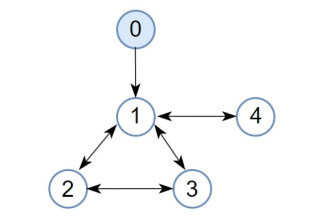
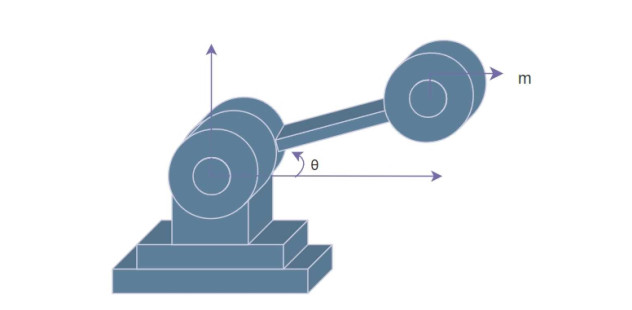
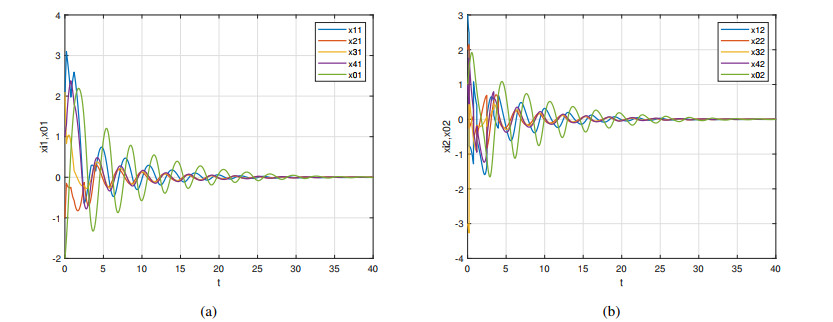
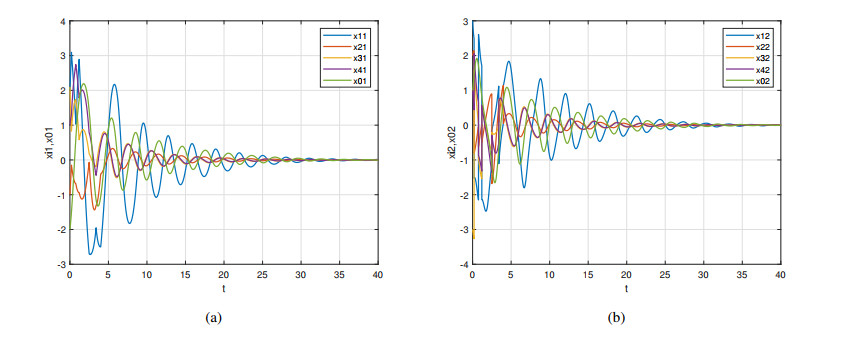
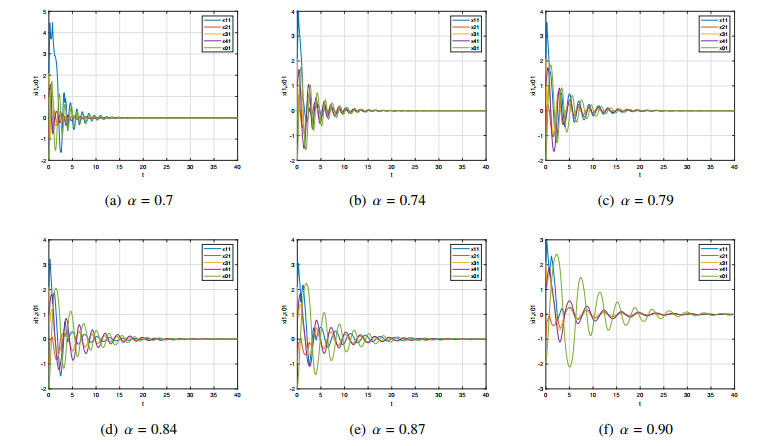
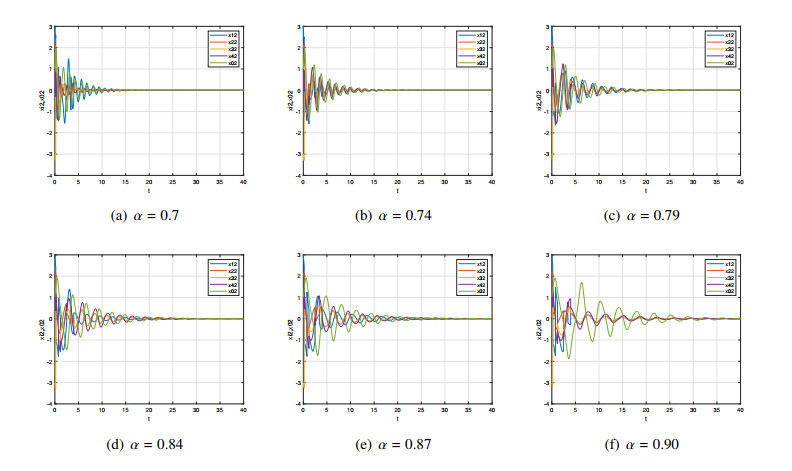
In this paper, a new type of fractional-order multi-agent systems (FOMASs) with parameter uncertainties and Takagi-Sugeno (T-S) membership functions is developed on a directed communication topology graph. Unlike existing results that either adopt fixed-gain impulsive control or deal with fractional-order consensus without simultaneously considering communication efficiency and parameter uncertainties, we propose a codesigned T-S fuzzy (TSF) impulsive control framework. By collecting instantaneous local information, leader-following and leaderless distributed TSF impulsive controllers are designed to realize the exponential consensus for the proposed FOMASs, where the impulsive gain is dynamically adjusted by the same set of fuzzy rules describing the system. In addition, some sufficient conditions with regard to the exponential consensus of FOMASs are addressed in terms of linear matrix inequalities (LMIs). Compared with the traditional impulsive controllers with the fixed gain, the designed TSF impulsive controller has faster convergence speed to achieve the exponential consensus of FOMASs with uncertainty, and it has lower energy consumption. We then present an application example in a single-link manipulator to validate the practical efficacy for the proposed theoretical findings.
Citation: Cancan Zhang, Huaiqin Wu, Lifei Wang. Exponential consensus for uncertain fractional-order multi-agent systems via T-S fuzzy impulsive control strategy[J]. Electronic Research Archive, 2026, 34(4): 2112-2135. doi: 10.3934/era.2026095
In this paper, a new type of fractional-order multi-agent systems (FOMASs) with parameter uncertainties and Takagi-Sugeno (T-S) membership functions is developed on a directed communication topology graph. Unlike existing results that either adopt fixed-gain impulsive control or deal with fractional-order consensus without simultaneously considering communication efficiency and parameter uncertainties, we propose a codesigned T-S fuzzy (TSF) impulsive control framework. By collecting instantaneous local information, leader-following and leaderless distributed TSF impulsive controllers are designed to realize the exponential consensus for the proposed FOMASs, where the impulsive gain is dynamically adjusted by the same set of fuzzy rules describing the system. In addition, some sufficient conditions with regard to the exponential consensus of FOMASs are addressed in terms of linear matrix inequalities (LMIs). Compared with the traditional impulsive controllers with the fixed gain, the designed TSF impulsive controller has faster convergence speed to achieve the exponential consensus of FOMASs with uncertainty, and it has lower energy consumption. We then present an application example in a single-link manipulator to validate the practical efficacy for the proposed theoretical findings.

| [1] |
J. A. Guerrero, G. Romero, D. Olivares, L. M. Romero-Cruz, Forced multi-agent bipartite consensus control: Application to quadrotor formation flying, IEEE Access, 12 (2024), 163654–163670. https://doi.org/10.1109/ACCESS.2024.3489422 doi: 10.1109/ACCESS.2024.3489422

|
| [2] |
S. N. Campos-Martínez, O. Hernández-González, M. E. Guerrero-Sánchez, G. Valencia-Palomo, B. Targui, F. R. López-Estrada, Consensus tracking control of multiple unmanned aerial vehicles subject to distinct unknown delays, Machines, 12 (2024), 337. https://doi.org/10.3390/machines12050337 doi: 10.3390/machines12050337
|
| [3] |
C. Yu, X. Wang, X. Xu, M. Zhang, H. Ge, J. Ren, et al., Distributed multiagent coordinated learning for autonomous driving in highways based on dynamic coordination graphs, IEEE Trans. Intell. Transp. Syst., 21 (2019), 735–748. https://doi.org/10.1109/TITS.2019.2893683 doi: 10.1109/TITS.2019.2893683
|
| [4] |
Y. Zhao, G. Guo, Distributed tracking control of mobile sensor networks with intermittent communications, J. Franklin Inst., 354 (2017), 3634–3647. https://doi.org/10.1016/j.jfranklin.2017.03.003 doi: 10.1016/j.jfranklin.2017.03.003
|
| [5] |
F. R. López-Estrada, H. Darias, V. Puig, G. Valencia-Palomo, J. Domínguez-Zenteno, M. E. Guerrero-Sánchez, Cooperative convex control of multiagent systems applied to differential drive robots, Int. J. Appl. Math. Comput. Sci., 34 (2024), 199–210. https://doi.org/10.61822/amcs-2024-0014 doi: 10.61822/amcs-2024-0014
|
| [6] |
X. Hou, H. Wu, J. Cao, Practical finite-time synchronization for Lur'e systems with performance constraint and actuator faults: A memory-based quantized dynamic event-triggered control strategy, Appl. Math. Comput., 487 (2025), 129108. https://doi.org/10.1016/j.amc.2024.129108 doi: 10.1016/j.amc.2024.129108
|
| [7] |
H. Wu, X. Zhao, L. Wang, J. Cao, Observer-based fixed-time topology identification and synchronization for complex networks via quantized pinning control strategy, Appl. Math. Comput., 507 (2025), 129568. https://doi.org/10.1016/j.amc.2025.129568 doi: 10.1016/j.amc.2025.129568
|
| [8] |
X. Zhao, H. Wu, J. Cao, L. Wang, Prescribed-time synchronization for complex dynamic networks of piecewise smooth systems: A hybrid event-triggering control approach, Qual. Theory Dyn. Syst., 24 (2025), 11. https://doi.org/10.1007/s12346-024-01166-x doi: 10.1007/s12346-024-01166-x
|
| [9] |
J. A. V. Trejo, J. C. Ponsart, M. Adam-Medina, G. Valencia-Palomo, Fault-tolerant observer-based leader-following consensus control for LPV multi-agent systems using virtual actuators, Int. J. Syst. Sci., 56 (2025), 1816–1833. https://doi.org/10.1080/00207721.2024.2434895 doi: 10.1080/00207721.2024.2434895
|
| [10] |
L. Cai, B. Zhang, M. Xing, H. Mo, X. Zhou, Consensus control of multi-agent systems by intermittent brownian noise stabilization scheme, IEEE Access, 12 (2024), 8526–8535. https://doi.org/10.1109/ACCESS.2024.3352441 doi: 10.1109/ACCESS.2024.3352441
|
| [11] |
T. Chen, F. Wang, C. Xia, Z. Chen, Leader-following consensus of second-order multi-agent systems with intermittent communication via persistent-hold control, Neurocomputing, 471 (2022), 183–193. https://doi.org/10.1016/j.neucom.2021.10.111 doi: 10.1016/j.neucom.2021.10.111
|
| [12] |
Y. Xin, H. Lyu, H. Tuo, Z. Cheng, Event-based consensus for third-order nonlinear multi-agent systems, Chaos Solitons Fractals, 169 (2023), 113269. https://doi.org/10.1016/j.chaos.2023.113269 doi: 10.1016/j.chaos.2023.113269
|
| [13] |
J. Dai, C. Yang, X. Yan, J. Wang, K. Zhu, C. Yang, Leaderless consensus control of nonlinear PIDE-type multi-agent systems with time delays, IEEE Access, 10 (2022), 21211–21218. https://doi.org/10.1109/ACCESS.2022.3153078 doi: 10.1109/ACCESS.2022.3153078
|
| [14] |
W. Zhu, B. Chen, J. Yang, Consensus of fractional-order multi-agent systems with input time delay, Fract. Calc. Appl. Anal., 20 (2017), 52–70. https://doi.org/10.1515/fca-2017-0003 doi: 10.1515/fca-2017-0003
|
| [15] |
Z. Yu, H. Jiang, C. Hu, J. Yu, Necessary and sufficient conditions for consensus of fractional-order multiagent systems via sampled-data control, IEEE Trans. Cybern., 47 (2017), 1892–1901. https://doi.org/10.1109/TCYB.2017.2681718 doi: 10.1109/TCYB.2017.2681718
|
| [16] |
P. Xiao, Z. Gu, Adaptive event-triggered consensus of fractional-order nonlinear multi-agent systems, IEEE Access, 10 (2021), 213–220. https://doi.org/10.1109/ACCESS.2021.3136892 doi: 10.1109/ACCESS.2021.3136892
|
| [17] |
P. Gong, W. Lan, Adaptive robust tracking control for uncertain nonlinear fractional-order multi-agent systems with directed topologies, Automatica, 92 (2018), 92–99. https://doi.org/10.1016/j.automatica.2018.02.010 doi: 10.1016/j.automatica.2018.02.010
|
| [18] |
X. Wang, H. Wu, J. Cao, Global leader-following consensus in finite time for fractional-order multi-agent systems with discontinuous inherent dynamics subject to nonlinear growth, Nonlinear Anal. Hybrid Syst., 37 (2020), 100888. https://doi.org/10.1016/j.nahs.2020.100888 doi: 10.1016/j.nahs.2020.100888
|
| [19] |
G. Ren, Y. Yu, Consensus of fractional multi-agent systems using distributed adaptive protocols, Asian J. Control, 19 (2017), 2076–2084. https://doi.org/10.1002/asjc.1589 doi: 10.1002/asjc.1589
|
| [20] |
X. Su, F. Xia, J. Liu, L. Wu, Event-triggered fuzzy control of nonlinear systems with its application to inverted pendulum systems, Automatica, 94 (2018), 236–248. https://doi.org/10.1016/j.automatica.2018.04.025 doi: 10.1016/j.automatica.2018.04.025
|
| [21] |
D. Saifia, M. Chadli, H. R. Karimi, S. Labiod, Fuzzy control for electric power steering system with assist motor current input constraints, J. Franklin Inst., 352 (2015), 562–576. https://doi.org/10.1016/j.jfranklin.2014.05.007 doi: 10.1016/j.jfranklin.2014.05.007
|
| [22] |
D. J. Singh, N. K. Verma, A. K. Ghosh, A. Malagaudanavar, An application of interval type-2 fuzzy model based control system for generic aircraft, Appl. Soft Comput., 121 (2022), 108721. https://doi.org/10.1016/j.asoc.2022.108721 doi: 10.1016/j.asoc.2022.108721
|
| [23] |
J. Li, Z. Jin, Y. Zhang, Optimal output agreement for TS fuzzy multi-agent systems: an adaptive distributed approach, Int. J. Fuzzy Syst., 25 (2023), 2453–2463. https://doi.org/10.1007/s40815-023-01493-2 doi: 10.1007/s40815-023-01493-2
|
| [24] |
Y. Cheng, T. Hu, Y. Li, X. Zhang, S. Zhong, Delay-dependent consensus criteria for fractional-order Takagi-Sugeno fuzzy multi-agent systems with time delay, Inf. Sci., 560 (2021), 456–475. https://doi.org/10.1016/j.ins.2021.01.074 doi: 10.1016/j.ins.2021.01.074
|
| [25] |
T. Ma, Z. Zhang, B. Cui, Impulsive consensus of nonlinear fuzzy multi-agent systems under DoS attack, Nonlinear Anal. Hybrid Syst., 44 (2022), 101155. https://doi.org/10.1016/j.nahs.2022.101155 doi: 10.1016/j.nahs.2022.101155
|
| [26] |
G. He, J. Zhao, Leader-following output consensus of T-S fuzzy switched multi-agent systems under bumpless transfer control and event-triggered communication, Neurocomputing, 506 (2022), 252–264. https://doi.org/10.1016/j.neucom.2022.07.064 doi: 10.1016/j.neucom.2022.07.064
|
| [27] |
T. Hu, Z. He, X. Zhang, S. Zhong, Event-triggered consensus strategy for uncertain topological fractional-order multiagent systems based on Takagi-Sugeno fuzzy models, Inf. Sci., 551 (2021), 304–323. https://doi.org/10.1016/j.ins.2020.11.005 doi: 10.1016/j.ins.2020.11.005
|
| [28] |
Z. Hu, X. Mu, J. Mu, Finite-time impulsive control for stochastic T-S fuzzy systems: A waiting-time-based event-triggered method, Fuzzy Sets Syst., 464 (2023), 108428. https://doi.org/10.1016/j.fss.2022.10.020 doi: 10.1016/j.fss.2022.10.020
|
| [29] |
G. Narayanan, M. S. Ali, H. Alsulami, G. Stamov, I. Stamova, B. Ahmad, Impulsive security control for fractional-order delayed multi-agent systems with uncertain parameters and switching topology under DoS attack, Inf. Sci., 618 (2022), 169–190. https://doi.org/10.1016/j.ins.2022.10.123 doi: 10.1016/j.ins.2022.10.123
|
| [30] |
Z. Gao, H. Zhang, Y. Wang, K. Zhang, Leader-following consensus conditions for fractional-order descriptor uncertain multi-agent systems with $0 < \alpha < 2$ via output feedback control, J. Franklin Inst., 357 (2020), 2263–2281. https://doi.org/10.1016/j.jfranklin.2019.11.047 doi: 10.1016/j.jfranklin.2019.11.047
|
| [31] |
F. Wang, Y. Yang, Leader-following exponential consensus of fractional order nonlinear multi-agents system with hybrid time-varying delay: A heterogeneous impulsive method, Physica A, 482 (2017), 158–172. https://doi.org/10.1016/j.physa.2017.04.049 doi: 10.1016/j.physa.2017.04.049
|
| [32] |
S. Dong, K. Shi, X. Xie, M. Yu, H. Yan, X. Cai, Fuzzy-based synchronization control for coupled neural networks under cyber attacks via intelligent impulsive algorithm, IEEE Trans. Autom. Sci. Eng., 22 (2025), 10574–10585. https://doi.org/10.1109/TASE.2025.3525658 doi: 10.1109/TASE.2025.3525658
|
| [33] |
S. Yang, W. Zhang, D. Ruan, T. Yang, Y. Li, Fast fixed-time impulsive bipartite synchronization of T-S fuzzy complex networks with signed graphs, Nonlinear Anal. Hybrid Syst., 48 (2023), 101325. https://doi.org/10.1016/j.nahs.2022.101325 doi: 10.1016/j.nahs.2022.101325
|
| [34] |
M. Hu, J. H. Park, Y. Wang, Stabilization of positive systems with time delay via the Takagi-Sugeno fuzzy impulsive control, IEEE Trans. Cybern., 52 (2020), 4275–4285. https://doi.org/10.1109/TCYB.2020.3025639 doi: 10.1109/TCYB.2020.3025639
|
| [35] |
B. Hu, Z. Guan, X. Yu, Q. Luo, Multisynchronization of interconnected memristor-based impulsive neural networks with fuzzy hybrid control, IEEE Trans. Fuzzy Syst., 26 (2018), 3069–3084. https://doi.org/10.1109/TFUZZ.2018.2797952 doi: 10.1109/TFUZZ.2018.2797952
|
| [36] |
H. Nie, Y. Zhang, Finite-time cluster synchronization of multi-weighted fractional-order coupled neural networks with and without impulsive effects, Neural Networks, 180 (2024), 106646. https://doi.org/10.1016/j.neunet.2024.106646 doi: 10.1016/j.neunet.2024.106646
|
| [37] |
S. Yang, C. Hu, J. Yu, H. Jiang, Exponential stability of fractional-order impulsive control systems with applications in synchronization, IEEE Trans. Cybern., 50 (2019), 3157–3168. https://doi.org/10.1109/TCYB.2019.2906497 doi: 10.1109/TCYB.2019.2906497
|
| [38] |
M. Yao, G. Wei, Dynamic event-triggered control of continuous-time systems with random impulses, IEEE/CAA J. Autom. Sin., 10 (2023), 2292–2299. https://doi.org/10.1109/JAS.2023.123534 doi: 10.1109/JAS.2023.123534
|
| [39] |
I. Stamova, J. Henderson, Practical stability analysis of fractional-order impulsive control systems, ISA Trans., 64 (2016), 77–85. https://doi.org/10.1016/j.isatra.2016.05.012 doi: 10.1016/j.isatra.2016.05.012
|
Figures(8) / Tables(2)
Cancan Zhang, Huaiqin Wu, Lifei Wang. Exponential consensus for uncertain fractional-order multi-agent systems via T-S fuzzy impulsive control strategy[J]. Electronic Research Archive, 2026, 34(4): 2112-2135. doi: 10.3934/era.2026095





 DownLoad: