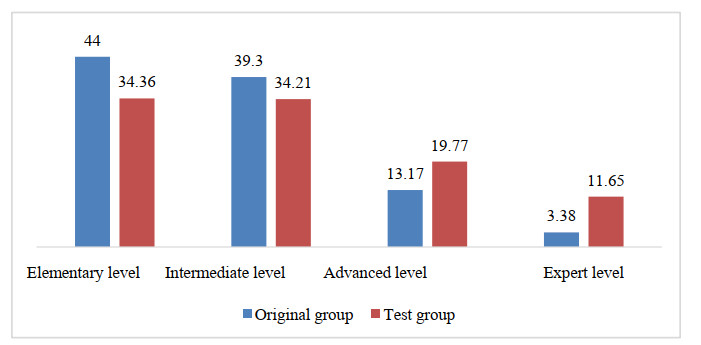
This study examined the key factors supporting the development of scientific competence among secondary school students in biology. A theoretical analysis identified three core components of scientific competence: theoretical knowledge, practical skills, and analytical abilities. An experimental study conducted at M. Lomonosov Secondary School No. 5 in Taldykorgan, Zhetysu Region, Republic of Kazakhstan, assessed the effectiveness of selected pedagogical conditions in supporting these components. Following the introduction of changes to the learning environment, the experimental group showed improvements across all three components. The proportion of students demonstrating a basic level of theoretical knowledge decreased from 45.65% to 32.20%, while the proportion attaining a very high level increased from 1.49% to 12.70%. The proportion demonstrating very high practical skills rose from 4.67% to 12.47%, and the corresponding proportion for analytical abilities increased from 2.36% to 9.79%. These changes suggest that the revised pedagogical practices supported students' understanding of biological concepts, application of practical skills, and analytical thinking. The findings highlight the potential of targeted pedagogical approaches to strengthen scientific competence in secondary school biology education.
Citation: Kuanysh Tokpayev, Zylikha Kanayeva, Olga Yaroshenko. Developing students' scientific competence in biology education[J]. STEM Education, 2026, 6(6): 1167-1183. doi: 10.3934/steme.2026048
This study examined the key factors supporting the development of scientific competence among secondary school students in biology. A theoretical analysis identified three core components of scientific competence: theoretical knowledge, practical skills, and analytical abilities. An experimental study conducted at M. Lomonosov Secondary School No. 5 in Taldykorgan, Zhetysu Region, Republic of Kazakhstan, assessed the effectiveness of selected pedagogical conditions in supporting these components. Following the introduction of changes to the learning environment, the experimental group showed improvements across all three components. The proportion of students demonstrating a basic level of theoretical knowledge decreased from 45.65% to 32.20%, while the proportion attaining a very high level increased from 1.49% to 12.70%. The proportion demonstrating very high practical skills rose from 4.67% to 12.47%, and the corresponding proportion for analytical abilities increased from 2.36% to 9.79%. These changes suggest that the revised pedagogical practices supported students' understanding of biological concepts, application of practical skills, and analytical thinking. The findings highlight the potential of targeted pedagogical approaches to strengthen scientific competence in secondary school biology education.

| [1] |
Giroux, H.A., Critical theory and educational practice. In The Critical Pedagogy Reader, A. Darder, K. Hernandez, K.D. Lam and M. Baltodano, Eds., 2023, 50‒74. https://doi.org/10.4324/9781003286080 |
| [2] |
Susetyarini, E. and Fauzi, A., Trend of critical thinking skill researches in biology education journals across Indonesia: From research design to data analysis. International Journal of Instruction, 2020, 13(1): 535‒550. https://doi.org/10.29333/iji.2020.13135a doi: 10.29333/iji.2020.13135a
|
| [3] |
Manishimwe, H., Shivoga, W.A. and Nsengimana, V., Enhancing students' achievement in biology using inquiry-based learning in Rwanda. International Journal of Evaluation and Research in Education, 2023, 12(2): 809‒817. https://doi.org/10.11591/ijere.v12i2.23375 doi: 10.11591/ijere.v12i2.23375
|
| [4] |
Kervinen, A., Uitto, A. and Juuti, K., How fieldwork-oriented biology teachers establish formal outdoor education practices. Journal of Biological Education, 2020, 54(2): 115‒128. https://doi.org/10.1080/00219266.2018.1546762 doi: 10.1080/00219266.2018.1546762
|
| [5] |
Mohzana, M., Murcahyanto, H., Fahrurrozi, M. and Supriadi, Y.N., Optimization of management of laboratory facilities in the process of learning science at high school. Journal of Science Education Research, 2023, 9(10): 8226‒8234. https://doi.org/10.29303/jppipa.v9i10.5249 doi: 10.29303/jppipa.v9i10.5249
|
| [6] |
Županec, V., Lazarevic, T., Sekulic, V. and Pribicevic, T., The effectiveness of an interdisciplinary approach in biology teaching in primary school: A comparison with monodisciplinary approach. International Journal of Educational Methodology, 2023, 9(1): 169‒182. https://doi.org/10.12973/ijem.9.1.169 doi: 10.12973/ijem.9.1.169
|
| [7] |
Toma, R.B., Elementary school students' interests and attitudes towards biology and physics. Journal of Biological Education, 2024, 58(4): 972‒983. https://doi.org/10.1080/00219266.2022.2147208 doi: 10.1080/00219266.2022.2147208
|
| [8] |
Alvarez, K.S., Using virtual simulations in online laboratory instruction and active learning exercises as a response to instructional challenges during COVID-19. Journal of Microbiology & Biology Education, 2021, 22(1): 10‒1128. https://doi.org/10.1128/jmbe.v22i1.2503 doi: 10.1128/jmbe.v22i1.2503
|
| [9] |
Gamage, K.A., Wijesuriya, D.I., Ekanayake, S.Y., Rennie, A.E., Lambert, C.G. and Gunawardhana, N., Online delivery of teaching and laboratory practices: Continuity of university programmes during COVID-19 pandemic. Education Sciences, 2020, 10(10): 291. https://doi.org/10.3390/educsci10100291 doi: 10.3390/educsci10100291
|
| [10] |
Caughman, A.M. and Weigel, E.G., Biology students' math and computer science task values are closely linked. CBE—Life Sciences Education, 2022, 21(3): ar43. https://doi.org/10.1187/cbe.21-07-0180 doi: 10.1187/cbe.21-07-0180
|
| [11] |
Sullivan, J.V., Learning and embodied cognition: A review and proposal. Psychology Learning & Teaching, 2018, 17(2): 128‒143. https://doi.org/10.1177/1475725717752550 doi: 10.1177/1475725717752550
|
| [12] |
Shapiro, L. and Stolz, S.A., Embodied cognition and its significance for education. Theory and Research in Education, 2019, 17(1): 19‒39. https://doi.org/10.1177/1477878518822149 doi: 10.1177/1477878518822149
|
| [13] |
Sukhova, A.V. and Zhanburshinova, G.K., The concept of hybrid and blended learning in the educational process. In "Innova-2023": Proceedings of the International Scientific and Methodological Conference, S. Aitkuzhinova, Ed., 2023,141‒145. Availabe from: https://ksu.edu.kz/images/page/ksu/nauka-i-innovacii/sbornik_innova_2023.pdf#page = 141. |
| [14] |
Iminova, N.Z. and Abdimanapov, B.S., Personality-oriented learning in education, 2023. Available from: https://repo.kspi.kz/handle/123456789/6482. |
| [15] |
Muller, S.G., Experience of using information and communication technologies in the educational practice of elementary school, 2023. Available from: https://repo.kspi.kz/handle/123456789/6358. |
| [16] |
Pantiuk, T., Nevmerzhytska, O., Horodyska, V., Sharan, O. and Bereza, S., Formation of independence of children of senior preschool age by means of problem tasks. Society. Integration. Education. Proceedings of the International Scientific Conference, 2023, 2: 15‒24. https://doi.org/10.17770/sie2023vol2.7067 doi: 10.17770/sie2023vol2.7067
|
| [17] |
Nazira, I., Factors of successful group activities and application of multimedia technologies in teaching foreign language. Mental Enlightenment Scientific-Methodological Journal, 2020, 2: 110‒119. |
| [18] |
Murillo-Zamorano, L.R., López Sánchez, J.Á., Godoy-Caballero, A.L. and Bueno Muñoz, C., Gamification and active learning in higher education: Is it possible to match digital society, academia and students' interests? International Journal of Educational Technology in Higher Education, 2021, 18(1): 1‒27. https://doi.org/10.1186/s41239-021-00249-y doi: 10.1186/s41239-021-00249-y
|
| [19] |
Toshpolatovich, Y.O., The importance of using non-standard test tasks in monitoring student knowledge. Open Access Repository, 2022, 9(11): 44‒53. https://doi.org/10.17605/OSF.IO/XA76V doi: 10.17605/OSF.IO/XA76V
|
| [20] |
Colomer, J., Serra, T., Cañabate, D. and Bubnys, R., Reflective learning in higher education: Active methodologies for transformative practices. Sustainability, 2020, 12(9): 3827. https://doi.org/10.3390/su12093827 doi: 10.3390/su12093827
|
| [21] |
Yell, M.L., Collins, J., Kumpiene, G. and Bateman, D., The individualized education program: Procedural and substantive requirements. Teaching Exceptional Children, 2020, 52(5): 304‒318. https://doi.org/10.1177/0040059920906592 doi: 10.1177/0040059920906592
|
| [22] |
Yusuf, I. and Widyaningsih, S.W., Implementing e-learning-based virtual laboratory media to students' metacognitive skills. International Journal of Emerging Technologies in Learning, 2020, 15(5): 63‒74. https://doi.org/10.3991/ijet.v15i05.12029 doi: 10.3991/ijet.v15i05.12029
|
| [23] |
Salybekova, N., Issayev, G., Abdrassulova, Z., Bostanova, A., Dairabaev, R. and Erdenov, M., Pupils' research skills development through project-based learning in biology. Cypriot Journal of Educational Sciences, 2021, 16(3): 1106‒1121. https://doi.org/10.18844/cjes.v16i3.5829 doi: 10.18844/cjes.v16i3.5829
|
| [24] |
Amin, S., Utaya, S., Bachri, S., Sumarmi, S. and Susilo, S., Effect of problem-based learning on critical thinking skill and enviromental attitude. Journal for the Education of Gifted Young Scientists, 2020, 8(2): 743‒755. https://doi.org/10.17478/jegys.650344 doi: 10.17478/jegys.650344
|
| [25] |
Matanıarı, R., Wıllıson, J., Hasıbuan, M.E., Sulıstıyo, U. and Dewı, F., Portraying students' critical thinking skills through research skill development (RSD) framework: A case of a biology course in an Indonesian university. Journal of Turkish Science Education, 2020, 17(2): 302‒314. https://doi.org/10.36681/tused.2020.28 doi: 10.36681/tused.2020.28
|
| [26] |
Sharpe, R. and Abrahams, I., Secondary school students' attitudes to practical work in biology, chemistry and physics in England. Research in Science & Technological Education, 2020, 38(1): 84‒104. https://doi.org/10.1080/02635143.2019.1597696 doi: 10.1080/02635143.2019.1597696
|
| [27] |
Irwan, I., Arnadi, A. and Aslan, A., Developing critical thinking skills of primary school students through independent curriculum learning. Indonesian Journal of Education, 2024, 4(3): 788‒803. |
| [28] |
Hendriarto, P., Mursidi, A., Kalbuana, N., Aini, N. and Aslan, A., Understanding the implications of research skills development framework for Indonesian academic outcomes improvement. Iqra' Journal: Educational Science Studies, 2021, 6(2): 51‒60. https://doi.org/10.25217/ji.v6i2.1405 doi: 10.25217/ji.v6i2.1405
|
| [29] |
Shen, J., Wu, H., Reeves, P., Zheng, Y., Ryan, L. and Anderson, D., The association between teacher leadership and student achievement: A meta-analysis. Educational Research Review, 2020, 31: 100357. https://doi.org/10.1016/j.edurev.2020.100357 doi: 10.1016/j.edurev.2020.100357
|
| [30] |
Karpova, L., Shtefan, L., Kovalska, V., Ionova, O. and Luparenko, S., Information-educational environment as a condition of formation of gifted children's informational-digital competence. Postmodern Openings, 2020, 11(2): 60‒78. https://doi.org/10.18662/po/11.2Sup1/179 doi: 10.18662/po/11.2Sup1/179
|
| [31] |
Komalasari, R.N.A., Ibrohim, I. and Listyorini, D., Creativity in biology: The impact of Problem-Oriented Project Based Learning on high school students. Indonesian Journal of Biology Education, 2024, 10(2): 555‒562. https://doi.org/10.22219/jpbi.v10i2.32497 doi: 10.22219/jpbi.v10i2.32497
|
| [32] |
Rafiola, R., Setyosari, P., Radjah, C. and Ramli, M., The effect of learning motivation, self-efficacy, and blended learning on students' achievement in the industrial revolution 4.0. International Journal of Emerging Technologies in Learning, 2020, 15(8): 71‒82. https://doi.org/10.3991/ijet.v15i08.12525 doi: 10.3991/ijet.v15i08.12525
|
| [33] |
Pratiwi, E.D., Masykuri, M. and Ramli, M., Active learning strategy on higher education biology learning: A systematic review. Tadris: Journal of Teaching and Islamic Education, 2021, 6(1): 75‒86. https://doi.org/10.24042/tadris.v6i1.7345 doi: 10.24042/tadris.v6i1.7345
|
| [34] |
Zhang, F., Markopoulos, P. and Bekker, T., Children's emotions in design-based learning: A systematic review. Journal of Science Education and Technology, 2020, 29(5): 459‒481. https://doi.org/10.1007/s10956-020-09830-y doi: 10.1007/s10956-020-09830-y
|
| [35] |
Francisco, R., Ibrohim, I. and Susilo, H., The influence of Problem-Oriented Project-Based Learning (POPBL) on students' creative thinking skills. BIOEDUKASI, 2024, 22(1): 146‒151. Available from: https://garuda.kemdiktisaintek.go.id/documents/detail/4309327 |
| [36] |
Funa, A. and Talaue, F., Constructivist learning amid the COVID-19 pandemic: Investigating students' perceptions of biology self-learning modules. International Journal of Learning, Teaching and Educational Research, 2021, 20(3): 250‒264. https://doi.org/10.26803/ijlter.20.3.15 doi: 10.26803/ijlter.20.3.15
|
Figures(2) / Tables(3)
Kuanysh Tokpayev, Zylikha Kanayeva, Olga Yaroshenko. Developing students' scientific competence in biology education[J]. STEM Education, 2026, 6(6): 1167-1183. doi: 10.3934/steme.2026048

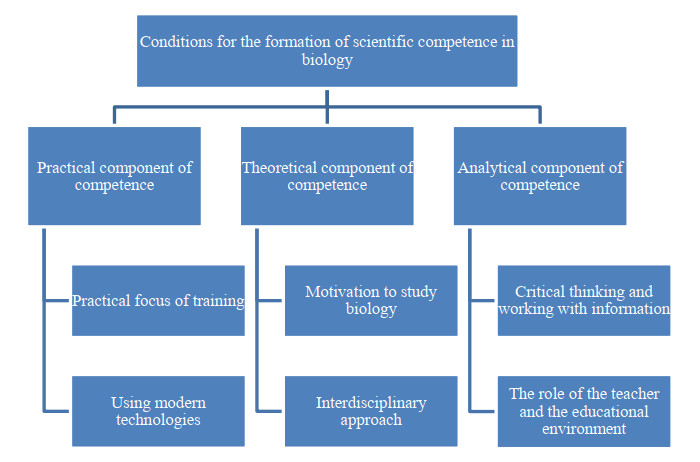
Key conditions for the successful development of scientific competence in the study of biology
Dynamics of changes in the level of scientific competence as a result of changes in the educational process



 DownLoad: