This paper presents a development of the mathematical theory of swarms towards a systems approach to behavioral dynamics of social and economical systems. The modeling approach accounts for the ability of social entities are to develop a specific strategy which is heterogeneously distributed by interactions which are nonlinearly additive. A detailed application to the modeling of the dynamics of prices in the interaction between buyers and sellers is developed to describe the predictive ability of the model.
Citation: Nicola Bellomo, Sarah De Nigris, Damián Knopoff, Matteo Morini, Pietro Terna. Swarms dynamics approach to behavioral economy: Theoretical tools and price sequences[J]. Networks and Heterogeneous Media, 2020, 15(3): 353-368. doi: 10.3934/nhm.2020022
This paper presents a development of the mathematical theory of swarms towards a systems approach to behavioral dynamics of social and economical systems. The modeling approach accounts for the ability of social entities are to develop a specific strategy which is heterogeneously distributed by interactions which are nonlinearly additive. A detailed application to the modeling of the dynamics of prices in the interaction between buyers and sellers is developed to describe the predictive ability of the model.

| [1] |
Emergence and persistence of inefficient states. Journal of European Economic Association (2011) 9: 177-208. 
|
| [2] |
Application of flocking mechanisms to the modeling of stochastic volatily. Math. Models Methods Appl. Sci. (2013) 23: 1603-1628.
|
| [3] |
Towards a mathematical theory of complex socio-economical systems by functional subsystems representation. Kinetic & Related Models (2008) 1: 249-278.
|
| [4] |
Stochastic evolutionary differential games toward a systems theory of behavioral social dynamics. Math. Models Methods Appl. Sci. (2016) 26: 1051-1093.
|
| [5] |
Traffic, crowds, and swarms: From kinetic theory and multiscale methods to applications and research perspectives. Math. Models Methods Appl. Sci. (2019) 29: 1901-2005.
|
| [6] | Recent advances in opinion modeling: Control and social influence. Active Particles, Advances in Theory, Models, and Applications, Model. Simul. Sci. Eng. Technol., Birkhäuser/Springer, Cham (2017) 1: 49-98. |
| [7] |
A particle model for herding phenomena induced by dynamic market signals. Journal of Statistical Physics (2019) 177: 365-398.
|
| [8] |
A kinetic description for the herding behavior in financial market. Journal of Statistical Physics (2019) 176: 398-424.
|
| [9] | (1994) Sociology and New Systems Theory - Toward a Theoretical Syntesis. Suny Press. |
| [10] |
P. Ball, Why Society is a Complex Matter, Springer-Verlag, 2012. |
| [11] |
Interaction ruling animal collective behavior depends on topological rather than metric distance: Evidence from a field study. Proceedings of the Natural Academy of Sciences USA (2008) 105: 1232-1237.
|
| [12] |
N. Bellomo, A. Bellouquid, L. Gibelli and N. Outada, A Quest Towards a Mathematical Theory of Living Systems, Modeling and Simulation in Science, Engineering and Technology, Birkhäuser/Springer, Cham, 2017. |
| [13] |
From a systems theory of sociology to modeling the onset and evolution of criminality. Netw. Heterog. Media (2015) 10: 421-441.
|
| [14] |
From particles to firms: on the kinetic theory of climbing up evolutionary landscapes. Math. Models Methods Appl. Sci. (2020) 30: 1441-14060.
|
| [15] |
A quest toward a mathematical theory of the dynamics of swarms. Math. Models Methods Appl. Sci. (2017) 27: 745-770.
|
| [16] |
On the dynamics of social conflicts: Looking for the black swan. Kinet. Relat. Models (2013) 6: 459-479.
|
| [17] |
On the difficult interplay between life "complexity" and mathematical sciences. Math. Models Methods Appl. Sci. (2013) 23: 1861-1913.
|
| [18] |
J. Bissell, C. C. S. Caiado, M. Goldstein and B. Straughan, Tipping Points: Modelling Social Problems and Health, Wiley, London, 2015. |
| [19] |
R. Boero, M. Morini, M. Sonnessa and P. Terna, Agent-based Models of the Economy From Theories to Applications, Palgrave Macmillan, 2015. |
| [20] |
P. Bonacich and P. Lu, Introduction to Mathematical Sociology Princeton University Press, Princeton, NJ, 2012. |
| [21] |
Retrospectives: Friedrich hayek and the market algorithm. Journal of Economic Perspectives (2017) 31: 215-230.
|
| [22] |
C. Brugna and G. Toscani, Kinetic models of opinion formation in the presence of personal conviction, Physical Review E, 92 (2015), 052818. |
| [23] |
Boltzmann-type models for price formation in the presence of behavioral aspects. Netw. Heterog. Media (2015) 10: 543-557.
|
| [24] |
Kinetic models for goods exchange in a multi-agent market. Physica A (2018) 499: 362-375.
|
| [25] | Stochastic differential "nonlinear" games modeling collective learning dynamics. Physics of Life Reviews (2016) 16: 123-139. |
| [26] | A kinetic theory approach to the modeling of complex living systems. Active Particles, Advances in Theory, Models, and Applications, Model. Simul. Sci. Eng. Technol., Birkhäuser/Springer, Cham (2017) 1: 229-258. |
| [27] |
Emergent behavior in flocks. IEEE Transactions on Automatic Control (2007) 52: 853-862.
|
| [28] |
Measuring and understanding behavior, welfare, and poverty. American Economic Review (2016) 106: 1221-1243.
|
| [29] |
Modeling altruism and selfishness in welfare dynamics: The role of nonlinear interactions. Mathematical Models and Methods in Applied Sciences (2014) 24: 2361-2381.
|
| [30] |
Modeling opinion dynamics: How the network enhances consensus. Netw. Heterog. Media (2015) 10: 877-896.
|
| [31] | Modeling human behaviour in economics and social science. Physics of Life Reviews (2017) 22: 1-21. |
| [32] |
Escaping the trap of 'blocking': A kinetic model linking economic development and political competition. Kinet. Relat. Models (2017) 10: 423-443.
|
| [33] |
Fokker-Planck equations in the modeling of socio-economic phenomena. Math. Models Methods Appl. Sci. (2017) 27: 115-158.
|
| [34] | Intrinsic honesty and the prevalence of rule violations across societies. Nature (2017) 531(7595): 496-499. |
| [35] |
S. Galam, Sociophysics. A Physicist's Modeling of Psycho-Political Phenomena, Understanding Complex Systems, Springer, New York, 2012. |
| [36] | The abundance effect: Unethical behavior in the presence of wealth. Organizational Behavior and Human Decision Processes (2009) 109: 142-155. |
| [37] |
H. Gintis, Game Theory Evolving, Second edition, Princeton University Press, Princeton NJ, 2009. |
| [38] |
R. Hegselmann, Thomas C. Shelling and James M. Sakoda: The intellectual, technical and social history of a model, Journal of Artificial Societies and Social Simulation, 20 (2017). |
| [39] |
Opinion dynamics under the influence of radical groups, charismatic and leaders, and other constant signals: A simple unifying model. Netw. Heterog. Media (2015) 10: 477-509.
|
| [40] |
Evolutionary game dynamics. Bull. Amer. Math. Soc. (N.S.) (2003) 40: 479-519.
|
| [41] |
A. Kirman, Complex Economics: Individual and Collective Rationality, Routledge, London, 2011. |
| [42] |
A. P. Kirman and J. B. Zimmermann, Economics with Heterogeneous Interacting Agents, Lecture Notes in Economics and Mathematical Systems, 503. Springer-Verlag, Berlin, 2001. |
| [43] |
On the modeling of migration phenomena on small networks. Math. Models Methods Appl. Sci. (2013) 23: 541-563.
|
| [44] |
On a mathematical theory of complex systems on networks with application to opinion formation. Math. Models Methods Appl. Sci. (2014) 24: 405-426.
|
| [45] |
(2019) Rethinking Macroeconomics with Endogenous Market Structure. Cambridge University Press.
|
| [46] |
Social dynamics models with time-varying influence. Math. Models Methods Appl. Sci. (2019) 29: 681-716.
|
| [47] |
M. Nieddu, Brownian and More Complex Agents to Explain Markets Behavior, Master's thesis, University of Torino, 2018, https://terna.to.it/tesi/nieddu.pdf. |
| [48] |
M. A. Nowak, Evolutionary Dynamics. Exploring the Equations of Life, The Belknap Press of Harvard University Press, Cambridge, MA, 2006. |
| [49] |
L. Pareschi and G. Toscani, Interacting Multiagent Systems: Kinetic Equations and Monte Carlo Methods, Oxford University Press, Oxford, 2013. |
| [50] |
L. Pareschi and G. Toscani, Wealth distribution and collective knowledge: A Boltzmann approach, Philos. Trans. R. Soc. Lond. Ser. A Math. Phys. Eng. Sci., 372 (2014), 20130396, 15 pp. |
| [51] |
Sparse control of Hegselmann-Krause models: Black hole and declustering. SIAM Journal on Control and Optimization (2019) 57: 2628-2659.
|
| [52] |
Higher social class predicts increased unethical behavior. Proceedings of the Natural Academy of Sciences USA (2014) 109: 4086-4091.
|
| [53] | Corruption corrupts: Society-level rule violations affect individuals' intrinsic honesty. Nature (2016) 53: 456-457. |
| [54] |
F. Schweitzer, Brownian Agents and Active Particles: Collective Dynamics in the Natural and Social Sciences, Springer Series in Synergetics, Springer-Verlag, Berlin, 2003. |
| [55] |
K. Sigmund, The Calculus of Selfishness, Princeton Series in Theoretical and Computational Biology, Princeton University Press, Princeton, NJ, 2010. |
| [56] |
Information and the change in the paradigm in economics. The American Economic Review (2009) 92: 460-501.
|
| [57] |
N. N. Taleb, The Black Swan: The Impact of the Highly Improbable, Random House, New York City, 2007. |
| [58] |
R. H. Thaler, Misbehaving: The Making of Behavioral Economics, W. W. Norton & Company, New York, 2015. |
| [59] | Behavioral economics: Past, present, and future. The American Economic Review (2016) 106: 1577-1600. |
| [60] |
T. A. Weber, Price theory in economics, in Ö. Özer, and R. Phillips, The Oxford Handbook of Pricing Management, (2012), 281–340. |
| [61] |
Price theory. Journal of Economic Literature (2019) 57: 329-384.
|


Figures(5)
Nicola Bellomo, Sarah De Nigris, Damián Knopoff, Matteo Morini, Pietro Terna. Swarms dynamics approach to behavioral economy: Theoretical tools and price sequences[J]. Networks and Heterogeneous Media, 2020, 15(3): 353-368. doi: 10.3934/nhm.2020022

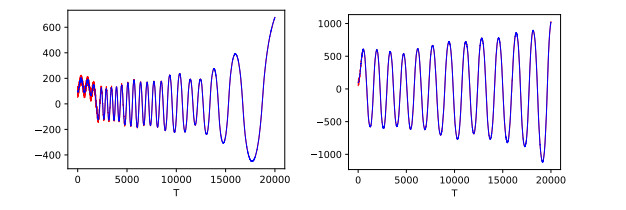
1.0, 5.0 ratios: 10/50 buyers (red) and 10/10 sellers (blue), mean price sequences; blue line hides in large part the red one
1.0, 5.0 ratio: 10/50 buyers (red) and 10/10 sellers (blue), zoom on individual price sequences. Y axes do not share the same scale
1.0, 5.0 ratio: 10/50 buyers (red) and 10/10 sellers (blue), standard deviation of mean prices within buyers and within sellers over time
Buyers
Sellers



 DownLoad: