The Molniya orbit is a highly elliptical orbit with an orbital period of several hours. A satellite in this orbit projects a large portion of its orbital time onto a specific area of the Earth, a phenomenon known as the "apogee dwell". These types of orbits are named after the Russian-Soviet Molniya series of communications satellites, which were launched starting in the mid-1960s. Possible applications of this type of orbit include communications and Antarctic weather monitoring. The original project was implemented during the development of Pehuensat-2, which was put on standby due to a lack of funding. Finally, as a preliminary implementation, it is proposed to use a 3U cubesat in a polar low earth orbit (LEO) orbit, which we will call Pehuensat-4, to test the deployment of the boom in flight, its degree of stability, the camera for taking images, its processing, and sending to the receiving station.
Citation: Jorge Lassig. Molniya-type orbits with possible application in Argentina[J]. Metascience in Aerospace, 2026, 3(3): 97-110. doi: 10.3934/mina.2026007
The Molniya orbit is a highly elliptical orbit with an orbital period of several hours. A satellite in this orbit projects a large portion of its orbital time onto a specific area of the Earth, a phenomenon known as the "apogee dwell". These types of orbits are named after the Russian-Soviet Molniya series of communications satellites, which were launched starting in the mid-1960s. Possible applications of this type of orbit include communications and Antarctic weather monitoring. The original project was implemented during the development of Pehuensat-2, which was put on standby due to a lack of funding. Finally, as a preliminary implementation, it is proposed to use a 3U cubesat in a polar low earth orbit (LEO) orbit, which we will call Pehuensat-4, to test the deployment of the boom in flight, its degree of stability, the camera for taking images, its processing, and sending to the receiving station.

| [1] |
Chatters EP, Eberhardt B, Warner MS (2009) Chapter 6: Orbital Mechanics; the book AU-18 Space Primer, Air University Press Maxwell Air Force Base, Alabama; ISBN 978-1-58566-194. |
| [2] |
Encyclopedia Wikipedia. Available from: https://en.wikipedia.org/wiki/Molniya_orbit. |
| [3] |
Zadunaiski P (1998) Introducción a la Astrodinámica - Parte 1, Comisión Nacional de Actividades Espaciales, San Miguel, Argentina. Available from: https://www.argentina.gob.ar/ciencia/conae/publicaciones/introduccion-la-astrodinamica-teoria-y-metodos-numericos. |
| [4] |
Millanao GE, Meliñir D, Canal C (2015), Transmisión de Imágenes Utilizando Protocolo Can; VIII Congreso Argentino de Tecnología Espacial. Buenos Aires, Argentina. Available from: https://aate.org/CATE_2015/CATE_2015_Trabajos.pdf. |
| [5] |
Cuevas Mujica SA (2015) Control de Foco en una Cámara de Video, para Naves Aeroespaciales; VIII Congreso Argentino de Tecnología Espacial. Buenos Aires, Argentina. Available from: https://aate.org/CATE_2015/CATE_2015_Trabajos.pdf. |
| [6] |
Simone D, Araoz M, Meroi C (2015) Protocolo de Comunicación para Enlace de Datos Satelital de Alta Velocidad; VIII Congreso Argentino de Tecnología Espacial. Buenos Aires, Argentina. Available from: https://aate.org/CATE_2015/CATE_2015_Trabajos.pdf. |
| [7] |
Riquelme JL, Meroi Matinez C, Simone D, et al. (2014) Cálculo del enlace descendente en banda S y antena patch para el nanosatélite Pehuensat Ⅱ, 2014 IEEE Biennial Congress of Argentina (ARGENCON), Bariloche, Argentina, 411–416. Available from: https://ieeexplore.ieee.org/document/6868528. |
| [8] |
Quiroga JJ, Lassig J, Mendieta D (2013) Pehuensat-1: Development and Flight Test of a Nano Satellite. Int J Space Technol Manage Innov 3: 47–77. Available from: https://www.irma-international.org/article/pehuensat-1/99690/. |
| [9] |
Uribe G (2011) Prediseño Estructural del Pehuensat-2; VI Congreso Argentino de Tecnología Espacial, San Luis, Argentina. |
| [10] |
Lassig J, Garcilazo F, Robles A, et al. (2024) Desarrollo de un CubeSat como enseñanza extra curricular en Ingeniería, Parte 1: desarrollo mecánico. Actas del Congreso Argentino de Enseñanza en Ingeniería, San Juan, Argentina, Septiembre, 138–147. Available from: https://confedi.org.ar/cadi/cadi-caedi-2024/. |
| [11] |
Hughes PC (1986) Spacecraft Attitude Dynamics. John Wiley and Sons, Inc., New York, 297. |
| [12] |
De León P (2003) Metodología de integración del proyecto PADE a bordo del transbordador espacial de la NASA; Revista latinoamericana de ciencia y tecnología espacial; Volumen 2 N°1. 1–9. Available from: https://www.aate.org/proyectos/pade/. |
| [13] |
Lassig J, Quiroga J, Keil G (2007) Pehuensat-1: Final Configuration and Results of the First Month in Orbit; IAC-07-B4.1. 08; 58th IAC Congress, Hyderabad, India. Available from: https://www.proceedings.com/content/002/002817webtoc.pdf. |
Figures(15) / Tables(4)
Jorge Lassig. Molniya-type orbits with possible application in Argentina[J]. Metascience in Aerospace, 2026, 3(3): 97-110. doi: 10.3934/mina.2026007

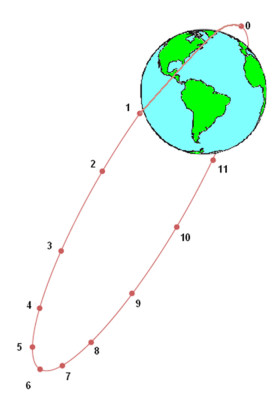
Molniya orbit for the Southern Hemisphere, where the numbers indicate the relative time
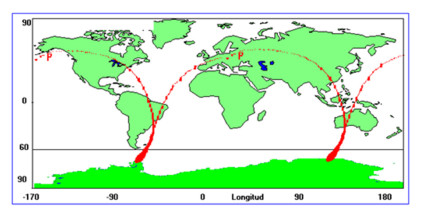
Molniya orbit of 12 hours, in one day it has two apogees and two perigees
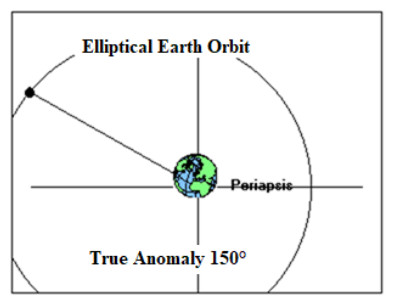
Orbital position given by the true anomaly
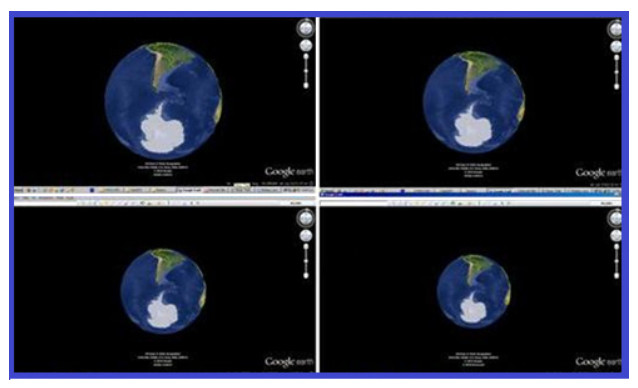
Satellite coverage from a Molniya orbit centered its apogee over the Antarctic Peninsula, from top to bottom, the heights correspond to 23,000, 28,500, 34,000 and 40,000 Km
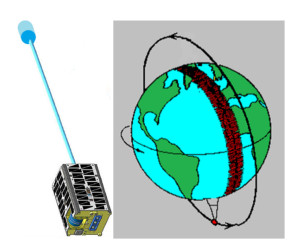
Phase A: Pehuensat-4, will be a 3U CubeSat in Polar orbit at 800 Km
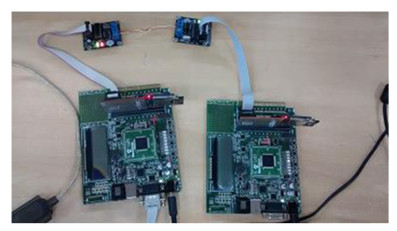
Explorer16 boards with CAN boards
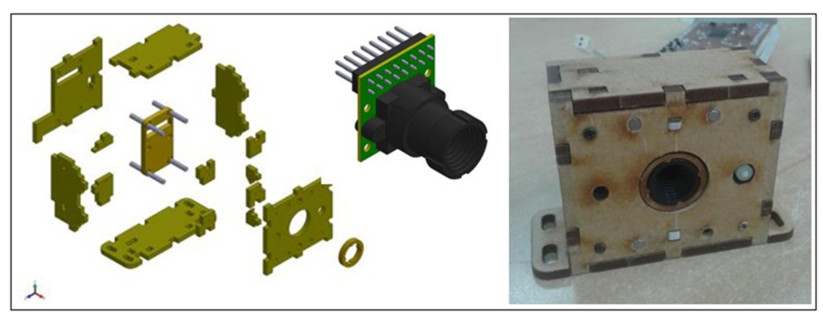
Tested prototype for focus control. Camera (center), with the detail of the mechanical support assembly (left), and the focus system with the camera mounted inside (right)
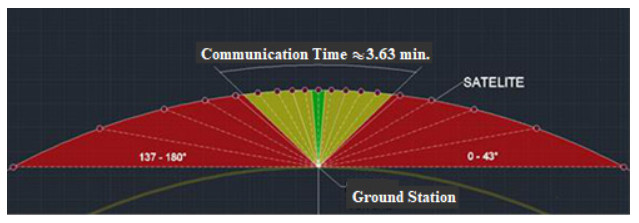
Satellite coverage over our image receiving station
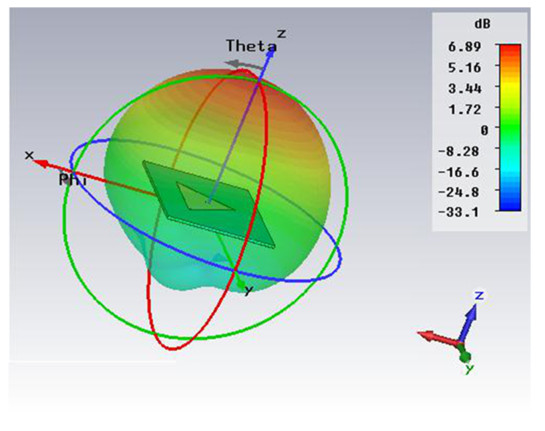
Antenna gain simulation
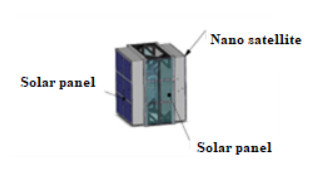
Preliminary structure of Pehuensat-2
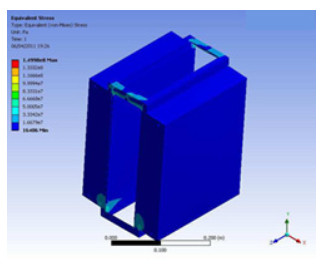
Equivalent voltage calculated using the Von Mises criterion. Unit: [Pa]
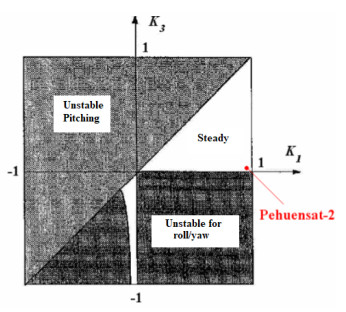
Diagram of stable regions by gravity gradient for low circular orbit satellites
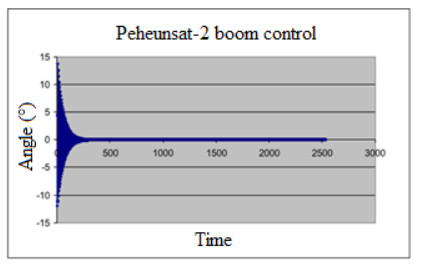
Boom response time, to vertically stabilize the satellite, after being deployed
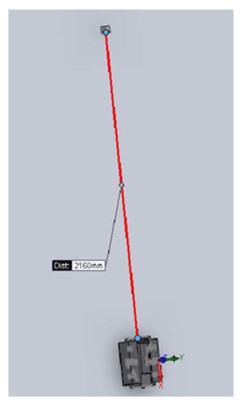
Pehuensat-2 with its extended boom
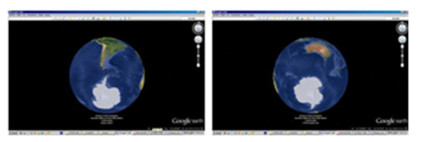
View from both apogees



 DownLoad: