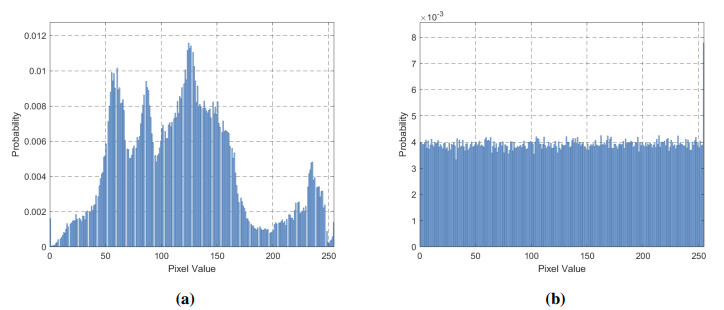
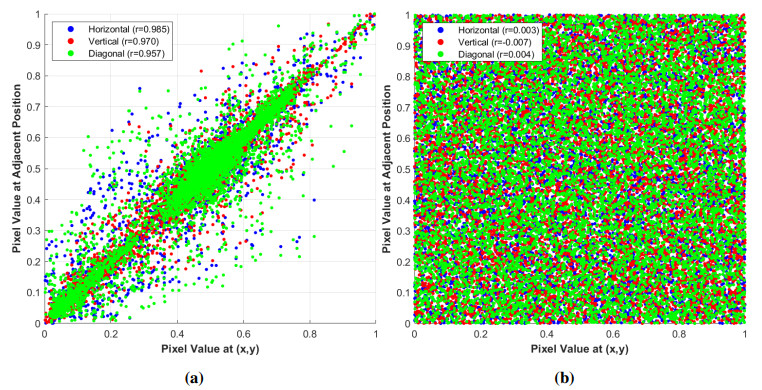
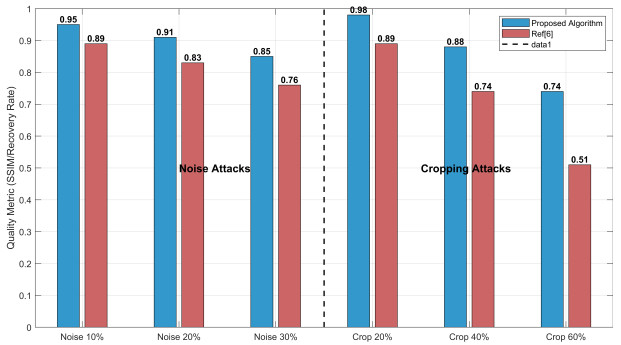
In response to the critical challenges of securing multi-image transmissions in cloud and 5G/6G networks, this paper proposes an innovative encryption algorithm that synergistically combines hybrid chaotic maps with computer-generated holography (CGH). The authors introduce three groundbreaking contributions: (1) A novel integrated chaotic system (NICS) fusing logistic, sinus, and tent mappings through modular arithmetic to achieve full-range chaos with a $ 10^{84} $ key space and 40% higher Lyapunov exponents; (2) An enhanced Gerchberg Saxton algorithm incorporating adaptive feedback to accelerate convergence by 35% while enabling parallel encryption of eight $ 512\times512 $ images; (3) A dynamic secure hash algorithm 256 (SHA-256) bits based key binding mechanism that resists chosen plaintext attacks. Extensive experiments validate the exceptional performance metrics: Information entropy approaching the theoretical maximum (7.992±0.005), near-zero adjacent pixel correlation (< 0.004), and robust resistance to noise (20%) and cropping attacks (60% recovery at 60% loss). The algorithm's practical superiority is demonstrated through 2.3× faster processing speeds compared with conventional methods, along with successful deployments in medical imaging and military communication systems, establishing a new benchmark for secure multi-image transmission in next-generation networks.
Citation: Yingfang Zhu, Erxi Zhu. A multi-image encryption algorithm based on hybrid chaotic map and computer-generated holography[J]. AIMS Mathematics, 2025, 10(9): 21209-21239. doi: 10.3934/math.2025947
In response to the critical challenges of securing multi-image transmissions in cloud and 5G/6G networks, this paper proposes an innovative encryption algorithm that synergistically combines hybrid chaotic maps with computer-generated holography (CGH). The authors introduce three groundbreaking contributions: (1) A novel integrated chaotic system (NICS) fusing logistic, sinus, and tent mappings through modular arithmetic to achieve full-range chaos with a $ 10^{84} $ key space and 40% higher Lyapunov exponents; (2) An enhanced Gerchberg Saxton algorithm incorporating adaptive feedback to accelerate convergence by 35% while enabling parallel encryption of eight $ 512\times512 $ images; (3) A dynamic secure hash algorithm 256 (SHA-256) bits based key binding mechanism that resists chosen plaintext attacks. Extensive experiments validate the exceptional performance metrics: Information entropy approaching the theoretical maximum (7.992±0.005), near-zero adjacent pixel correlation (< 0.004), and robust resistance to noise (20%) and cropping attacks (60% recovery at 60% loss). The algorithm's practical superiority is demonstrated through 2.3× faster processing speeds compared with conventional methods, along with successful deployments in medical imaging and military communication systems, establishing a new benchmark for secure multi-image transmission in next-generation networks.

| [1] |
K. V. Oskolok, O. V. Monogarova, A. V. Garmay, V. S. Milkina, One- and two-component digital image HDR-colorimetry: Technical challenges and analytical capabilities, Talanta, 288 (2025), 127736. https://doi.org/10.1016/j.talanta.2025.127736 doi: 10.1016/j.talanta.2025.127736

|
| [2] |
M. Nadeem, O. A. Arqub, Soliton solutions and stability analysis to the Hirota-bilinear-like model using the unified Riccati equation expansion approach, Modern Phys. Lett. B, 39 (2025), 2550138. https://doi.org/10.1142/S0217984925501386 doi: 10.1142/S0217984925501386
|
| [3] | F. Yu, S. He, W. Yao, S. Cai, Q. Xu, Bursting firings in memristive hopfield neural network with image encryption and hardware implementation, In: IEEE transactions on computer-aided design of integrated circuits and systems, IEEE, 2025, 1. https://doi.org/10.1109/TCAD.2025.3567878 |
| [4] |
S. M. U. Din, T. Shah, F. Alblehai, S. Nooh, S. S. Jamal, Publisher correction: A combinatory approach of non-chain ring and henon map for image encryption application, Sci. Rep., 15 (2025), 7882. https://doi.org/10.1038/s41598-025-92489-5 doi: 10.1038/s41598-025-92489-5
|
| [5] |
H. Lin, S. Yu, W. Feng, Y. Chen, J. Zhang, Z. Qin, et al., Exploiting dynamic vector-level operations and a 2D-enhanced logistic modular map for efficient chaotic image encryption, Entropy, 25 (2023), 1147. https://doi.org/10.3390/e25081147 doi: 10.3390/e25081147
|
| [6] |
J. Zeng, X. Chen, L. Wei, D. Li, Bifurcation analysis of a fractional-order eco-epidemiological system with two delays, Nonlinear Dyn., 112 (2024), 22505–22527. https://doi.org/10.1007/s11071-024-10184-y doi: 10.1007/s11071-024-10184-y
|
| [7] |
Y. Yuan, F. Yu, B. Tan, Y. Huang, W. Yao, S. Cai, et al., A class of n-D Hamiltonian conservative chaotic systems with three-terminal memristor: Modeling, dynamical analysis, and FPGA implementation, Chaos, 35 (2025), 013121. https://doi.org/10.1063/5.0238893 doi: 10.1063/5.0238893
|
| [8] |
W. Feng, J. Zhang, Y. Chen, Z. Qin, Y. Zhang, M. Ahmad, et al., Exploiting robust quadratic polynomial hyperchaotic map and pixel fusion strategy for efficient image encryption, Expert Syst. Appl., 246 (2024), 123190. https://doi.org/10.1016/j.eswa.2024.123190 doi: 10.1016/j.eswa.2024.123190
|
| [9] |
B. Gleb, J. Simon, Choquet integral optimisation with constraints and the buoyancy property for fuzzy measures, Inform. Sci., 578 (2021), 22–36. https://doi.org/10.1016/j.ins.2021.07.032 doi: 10.1016/j.ins.2021.07.032
|
| [10] |
Y. Cao, Z. Li, S. He, Complex hidden dynamics in a memristive map with delta connection and its application in image encryption, Nonlinear Dyn., 112 (2024), 7597–7613. https://doi.org/10.1007/s11071-024-09344-x doi: 10.1007/s11071-024-09344-x
|
| [11] |
A. Aviles, Testing gravity with the full-shape galaxy power spectrum: First constraints on scale-dependent modified gravity, Phys. Rev. D, 111 (2025), L021301. https://doi.org/10.1103/PhysRevD.111.L021301 doi: 10.1103/PhysRevD.111.L021301
|
| [12] |
P. Refregier, B. Javidi, Optical image encryption based on input plane and Fourier plane random encoding, Opt. Lett., 20 (1995), 767–769. https://doi.org/10.1364/OL.20.000767 doi: 10.1364/OL.20.000767
|
| [13] |
Q. Wang, A. Ge, X. Chen, J. Wu, S. Liu, D. Zhu, Text information security protection method based on computer-generated holograms, Appl. Optics, 63 (2024), 4165–4174. https://doi.org/10.1364/AO.523616 doi: 10.1364/AO.523616
|
| [14] |
Y. Su, Z. Wang, Y. Wang, R. Xue, B. Wang, W. Zhong, et al., Multiple-image encryption based on authenticable phase and phase retrieval under structured light illumination, Opt. Commun., 564 (2024), 130603. https://doi.org/10.1016/j.optcom.2024.130603 doi: 10.1016/j.optcom.2024.130603
|
| [15] |
K. P. Zhai, X. Y. Zhang, S. Zhu, Y. Liu, H. S. Wen, N. H. Zhu, Secure optical communication system based on polarization regulation of the data fragmentation multipath transmission technology, Opt. Lett., 49 (2024), 3226–3229. https://doi.org/10.1364/OL.524408 doi: 10.1364/OL.524408
|
| [16] |
W. Feng, Z, Qin, J. Zhang, M. Ahmad, Cryptanalysis and improvement of the image encryption scheme based on Feistel network and dynamic DNA encoding, IEEE Access, 9 (2021), 145459–145470. https://doi.org/10.1109/ACCESS.2021.3123571 doi: 10.1109/ACCESS.2021.3123571
|
| [17] |
W. Feng, Y. He, H. Li, C. Li, Cryptanalysis and improvement of the image encryption scheme based on 2D logistic-adjusted-sine map, IEEE Access, 7 (2019), 12584–12597. https://doi.org/10.1109/ACCESS.2019.2893760 doi: 10.1109/ACCESS.2019.2893760
|
| [18] |
W. Feng, J. Zhang, Y. Chen, Z. Qin, Y. Zhang, M. Ahmad, et al., Exploiting robust quadratic polynomial hyperchaotic map and pixel fusion strategy for efficient image encryption, Expert Syst. Appl., 246 (2024), 123190. https://doi.org/10.1016/j.eswa.2024.123190 doi: 10.1016/j.eswa.2024.123190
|
| [19] |
W. Feng, K. Zhang, J. Zhang, X. Zhao, Y. Chen, B. Cai, et al., Integrating fractional-order hopfield neural network with differentiated encryption: Achieving high-performance privacy protection for medical images, Fractal Fract., 9 (2025), 426. https://doi.org/10.3390/fractalfract9070426 doi: 10.3390/fractalfract9070426
|
| [20] |
A. Wang, C. Shen, J. Pan, C. Zhang, H. Cheng, S. Wei, Research on multiple-image encryption method using modified gerchberg–saxton algorithm and chaotic systems, Opt. Eng., 62 (2023), 098103. https://doi.org/10.1117/1.OE.62.9.098103 doi: 10.1117/1.OE.62.9.098103
|
| [21] |
A. Kumar, P. Singh, K. A. K. Patro, B. Acharya, High-throughput and area-efficient architectures for image encryption using PRINCE cipher, Integration, 90 (2023), 224–235. https://doi.org/10.1016/j.vlsi.2023.01.011 doi: 10.1016/j.vlsi.2023.01.011
|
| [22] |
M. Abdel-Basset, R. Mohamed, M. Jameel, M. Abouhawwash, Nutcracker optimizer: A novel nature-inspired metaheuristic algorithm for global optimization and engineering design problems, Knowl. Based Syst., 262 (2023), 110248. https://doi.org/10.1016/j.knosys.2022.110248 doi: 10.1016/j.knosys.2022.110248
|
| [23] |
P. K. Pal, D. Kumar, Zirili map-based image encryption method for healthcare, military, and personal data security, Phys. Scr., 99 (2024), 125228. https://doi.org/10.1088/1402-4896/ad8d47 doi: 10.1088/1402-4896/ad8d47
|
| [24] |
E. Zhu, M. Xu, D. Pi, Anti-control of Hopf bifurcation for high-dimensional chaotic system with coexisting attractors, Nonlinear Dyn., 110 (2022), 1867–1877. https://doi.org/10.1007/s11071-022-07723-w doi: 10.1007/s11071-022-07723-w
|
| [25] |
Q. Dong, Y. Bai, K. Zhu, A 5-D memristive hyperchaotic system with extreme multistability and its application in image encryption, Phys. Scr., 99 (2024), 035253. https://doi.org/10.1088/1402-4896/ad2963 doi: 10.1088/1402-4896/ad2963
|
| [26] |
F. Yu, Y. Yuan, C. Wu, W. Yao, C. Xu, S. Cai, et al., Modeling and hardware implementation of a class of Hamiltonian conservative chaotic systems with transient quasi-period and multistability, Nonlinear Dyn., 112 (2024), 2331–2347. https://doi.org/10.1007/s11071-023-09148-5 doi: 10.1007/s11071-023-09148-5
|
| [27] |
Q. Wang, L. Wang, W. Wen, Y. Li, G. Zhang, Dynamical analysis and preassigned-time intermittent control of memristive chaotic system via T–S fuzzy method, Chaos, 35 (2025), 023102. https://doi.org/10.1063/5.0221159 doi: 10.1063/5.0221159
|
| [28] |
W. Szumiński, A new model of variable-length coupled pendulums: From hyperchaos to superintegrability, Nonlinear Dyn., 112 (2024), 4117–4145. https://doi.org/10.1007/s11071-023-09253-5 doi: 10.1007/s11071-023-09253-5
|
| [29] |
K. Hayashi, Chaotic nature of the electroencephalogram during shallow and deep anesthesia: From analysis of the Lyapunov exponent, Neuroscience, 557 (2024), 116–123. https://doi.org/10.1016/j.neuroscience.2024.08.016 doi: 10.1016/j.neuroscience.2024.08.016
|
| [30] |
E. Zhu, M. Xu, D. Pi, Hopf bifurcation and stability of the double-delay lorenz system, Int. J. Bifurcat. Chaos, 33 (2023), 2350015. https://doi.org/10.1142/S0218127423500153 doi: 10.1142/S0218127423500153
|
| [31] |
E. Zhu, Time-delayed feedback control for chaotic systems with coexisting attractors, AIMS Mathematics, 9 (2024), 1088–1102. https://doi.org/10.3934/math.2024053 doi: 10.3934/math.2024053
|
| [32] |
M. V. Breugel, F. Bongers, N. Norden, J. A. Meave, L. Amissah, W. Chanthorn, et al., Feedback loops drive ecological succession: Towards a unified conceptual framework, Biol. Rev., 99 (2024), 928–949. https://doi.org/10.1111/brv.13051 doi: 10.1111/brv.13051
|
| [33] |
C. Kaspers, Y. Zhou, The number of almost perfect nonlinear functions grows exponentially, J. Cryptol., 34 (2021), 4. https://doi.org/10.1007/s00145-020-09373-w doi: 10.1007/s00145-020-09373-w
|
| [34] |
M. J. S. Onglao, P. F. Almoro, Accelerated phase retrieval using adaptive support and statistical fringe processing of phase estimates, Opt. Lett., 49 (2024), 3158–3161. https://doi.org/10.1364/OL.522321 doi: 10.1364/OL.522321
|
| [35] |
Y. Su, Z. Wang, Y. Wang, R. Xue, B. Wang, W. Zhong, et al., Multiple-image encryption based on authenticable phase and phase retrieval under structured light illumination, Opt. Commun., 564 (2024), 130603. https://doi.org/10.1016/j.optcom.2024.130603 doi: 10.1016/j.optcom.2024.130603
|
| [36] |
L. Ma, W. Zhang, X. Dai, Generation of the flat-top beam using convolutional neural networks and Gerchberg-Saxton algorithm, Phys. Scr., 99 (2024), 126007. https://doi.org/10.1088/1402-4896/ad8d21 doi: 10.1088/1402-4896/ad8d21
|
| [37] |
H. Chen, N. Wang, Y. Huang, C. Wu, Y. Rong, Generation of multi-focus shaping with high uniformity based on an improved Gerchberg–Saxton algorithm, Appl. Opt., 63 (2024), 3283–3289. https://doi.org/10.1364/AO.516663 doi: 10.1364/AO.516663
|
| [38] |
B. He, X. Yuan, A class of ADMM-based algorithms for three-block separable convex programming, Comput. Optim. Appl., 70 (2018), 791–826. https://doi.org/10.1007/s10589-018-9994-1 doi: 10.1007/s10589-018-9994-1
|
| [39] |
L. Xue, C. Ai, Z. Ge, Multi-image authentication, encryption and compression scheme based on double random phase encoding and compressive sensing, Phys. Scr., 100 (2025), 035539. https://doi.org/10.1088/1402-4896/adb35b doi: 10.1088/1402-4896/adb35b
|
| [40] |
K. Bi, G. Zhang, J. Zhang, G. Diao, B. Xing, M. Cui, et al., Reprogrammable metasurface holographic image encryption technology based on a three-dimensional discrete hyperchaotic system, Opt. Express, 32 (2024), 38703–38719. https://doi.org/10.1364/OE.538326 doi: 10.1364/OE.538326
|
| [41] |
S. Kumar, D. Sharma, Image scrambling encryption using chaotic map and genetic algorithm: a hybrid approach for enhanced security, Nonlinear Dyn., 112 (2024), 12537–12564. https://doi.org/10.1007/s11071-024-09670-0 doi: 10.1007/s11071-024-09670-0
|
| [42] |
R. Manekar, E. Negrini, M. Pham, D. Jacobs, J. Srivastava, S. J. Osher, Low-light phase retrieval with implicit generative priors, IEEE Trans. Image Process., 33 (2024), 4728–4737. https://doi.org/10.1109/TIP.2024.3445739 doi: 10.1109/TIP.2024.3445739
|
| [43] |
Y. Liu, L. Teng, An image encryption algorithm based on a new Sine-Logistic chaotic system and block dynamic Josephus scrambling, Eur. Phys. J. Plus, 139 (2024), 554. https://doi.org/10.1140/epjp/s13360-024-05349-y doi: 10.1140/epjp/s13360-024-05349-y
|
| [44] |
X. Yang, Z. Qiao, Y. Zhou, Ipad: iterative, parallel, and diffusion-based network for scene text recognition, Int. J. Comput. Vis., 133 (2025), 5589–5609. https://doi.org/10.1007/s11263-025-02443-1 doi: 10.1007/s11263-025-02443-1
|
| [45] |
V. Agafonov, V. Bryksin, G. Erokhin, A. Ronzhin, Stochastic acquisition systems based on RTH method, J. Appl. Geophys., 230 (2024), 105520. https://doi.org/10.1016/j.jappgeo.2024.105520 doi: 10.1016/j.jappgeo.2024.105520
|
| [46] |
J. Lee, W. Kim, J. H. Kim, A programmable crypto-processor for national institute of standards and technology post-quantum cryptography standardization based on the RISC-V architecture, Sensors, 23 (2023), 9408. https://doi.org/10.3390/s23239408 doi: 10.3390/s23239408
|
| [47] |
M. M. Wang, X. G. Song, N. R. Zhou, S. H. Liu, Novel 1-D enhanced log-logistic chaotic map and asymmetric generalized gaussian apertured FrFT for image encryption, Chaos Solitons Fract., 187 (2024), 115443. https://doi.org/10.1016/j.chaos.2024.115443 doi: 10.1016/j.chaos.2024.115443
|
| [48] |
Z. Huang, F. Zhang, L. Kou, Q. Yuan, Y. Liu, A real-time image encryption algorithm for a distributed energy system based on the 13-D complex chaotic sequence, IEEE Multimedia, 30 (2023), 71–81. https://doi.org/10.1109/MMUL.2023.3317322 doi: 10.1109/MMUL.2023.3317322
|
| [49] |
N. V. Cuong, Y. W. P. Hong, J. P. Sheu, UAV-enabled image capture and wireless delivery for on-demand surveillance tasks, IEEE Trans. Wirel. Commun., 23 (2024), 12995–13010. https://doi.org/10.1109/TWC.2024.3397951 doi: 10.1109/TWC.2024.3397951
|
| [50] |
P. Ding, W. Hu, P. Geng, J. Zhang, J. Zhu, A new multi-wing hyperchaotic system and its application in image encryption, J. Supercomput., 81 (2025), 1201. https://doi.org/10.1007/s11227-025-07670-4 doi: 10.1007/s11227-025-07670-4
|
Figures(8) / Tables(13)

Yingfang Zhu, Erxi Zhu. A multi-image encryption algorithm based on hybrid chaotic map and computer-generated holography[J]. AIMS Mathematics, 2025, 10(9): 21209-21239. doi: 10.3934/math.2025947





 DownLoad: