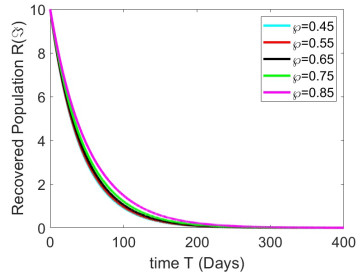
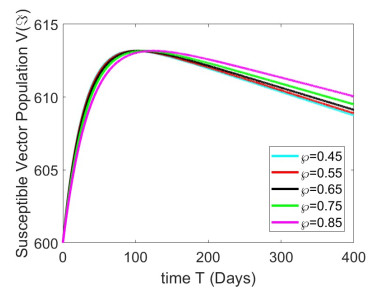
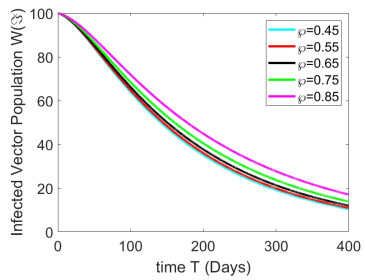
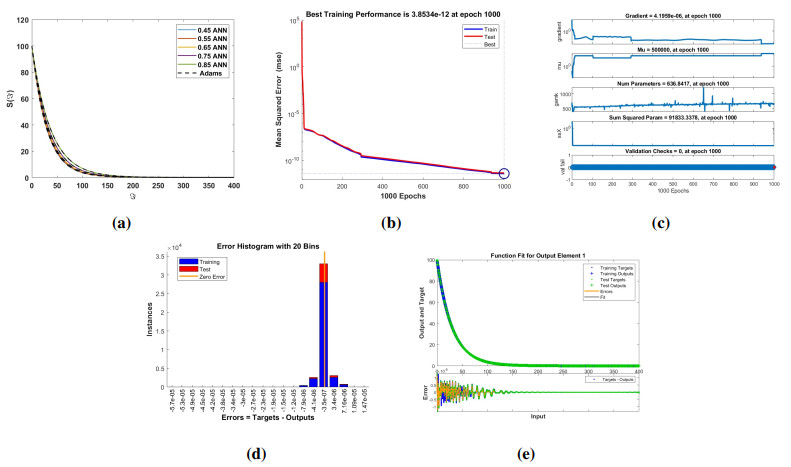
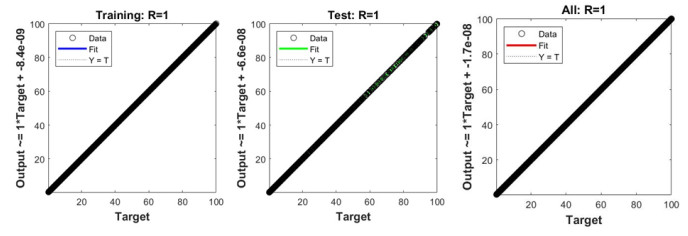
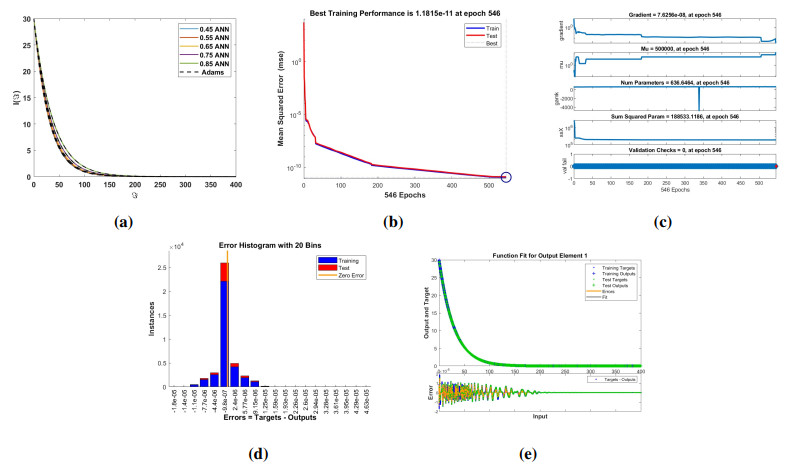
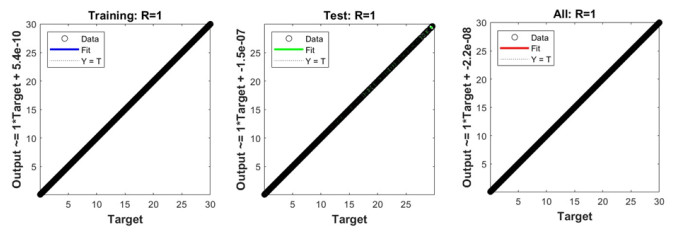
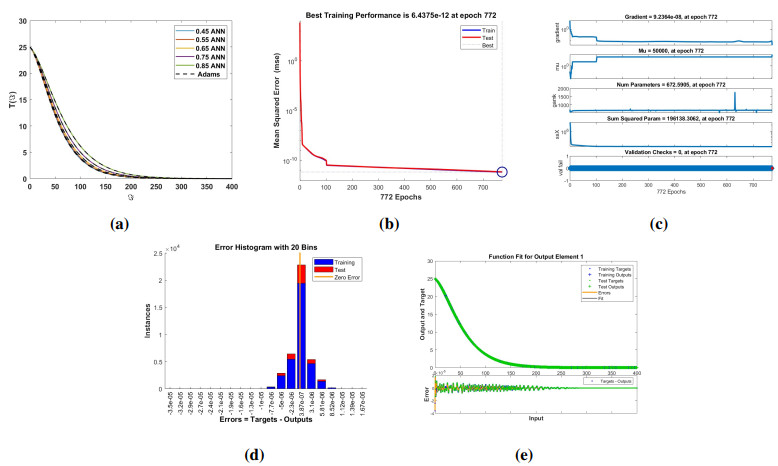
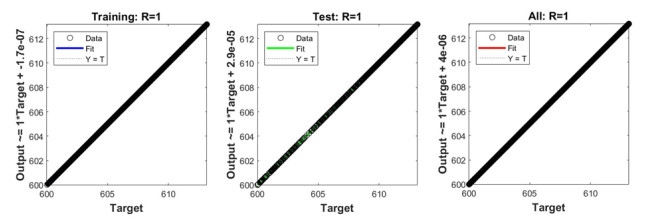
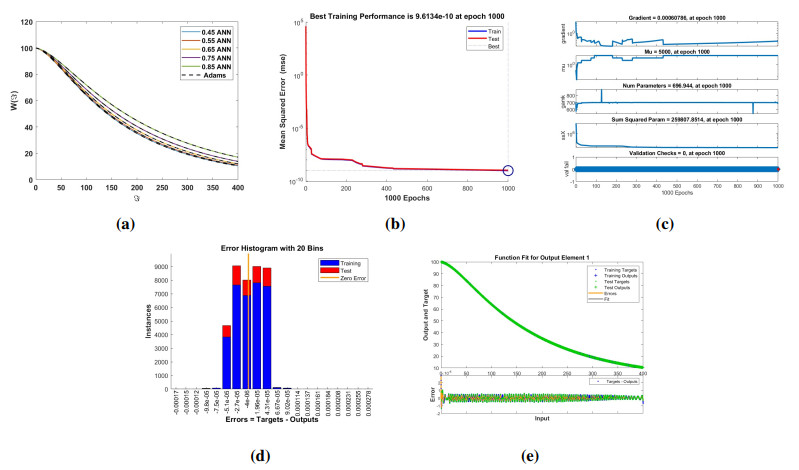
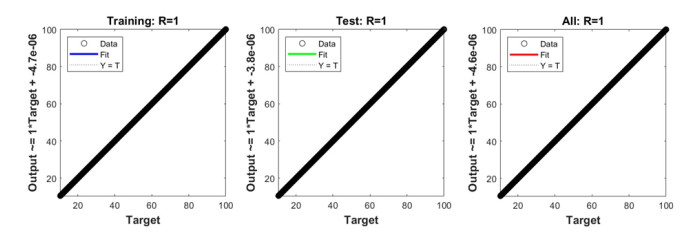
This work enhanced the mathematical modeling of vector-borne infections involving vertical transmission and treatment effects within a targeted population by incorporating fractional calculus techniques that account for nonlocal properties and non-singular fading memory behavior. This work investigated a fractional-order mathematical model for poliomyelitis governed by the Mittag-Leffler kernel. By employing fixed point theory, we qualitatively analyzed the model and confirmd the existence and uniqueness of solutions. Additionally, Ulam's type stability is examined through nonlinear analytical methods. To approximate the solution, a fractional Adams-Bashforth numerical scheme is utilized. The model was simulated under various fractional orders and different control scenarios. Results indicate that all compartments exhibit convergence and long-term stability. Notably, lower fractional orders tend to reach stability more rapidly. Furthermore, Artificial Neural Networks were applied, with the dataset partitioned into training, validation, and testing subsets. A comprehensive assessment was carried out for each dataset partition.
Citation: Ateq Alsaadi. Fractional modeling of vector-borne disease dynamics using ABC operators and neural networks[J]. AIMS Mathematics, 2025, 10(7): 15841-15866. doi: 10.3934/math.2025710
This work enhanced the mathematical modeling of vector-borne infections involving vertical transmission and treatment effects within a targeted population by incorporating fractional calculus techniques that account for nonlocal properties and non-singular fading memory behavior. This work investigated a fractional-order mathematical model for poliomyelitis governed by the Mittag-Leffler kernel. By employing fixed point theory, we qualitatively analyzed the model and confirmd the existence and uniqueness of solutions. Additionally, Ulam's type stability is examined through nonlinear analytical methods. To approximate the solution, a fractional Adams-Bashforth numerical scheme is utilized. The model was simulated under various fractional orders and different control scenarios. Results indicate that all compartments exhibit convergence and long-term stability. Notably, lower fractional orders tend to reach stability more rapidly. Furthermore, Artificial Neural Networks were applied, with the dataset partitioned into training, validation, and testing subsets. A comprehensive assessment was carried out for each dataset partition.

| [1] | M. W. Service, Blood-sucking insects: vectors of disease, London: Edward Arnold, 1986. |
| [2] |
Q. Hou, Z. Jin, S. Ruan, Dynamics of rabies epidemics and the impact of control efforts in Guangdong Province, China, J. Theoret. Biol., 300 (2012), 39–47. https://doi.org/10.1016/j.jtbi.2012.01.006 doi: 10.1016/j.jtbi.2012.01.006

|
| [3] |
R. M. Anderson, H. C. Jackson, R. M. May, A. M. Smith, Population dynamics of fox rabies in Europe, Nature, 289 (1981), 765–771. https://doi.org/10.1038/289765a0 doi: 10.1038/289765a0
|
| [4] |
D. L. Smith, B. Lucey, L. A. Waller, J. E. Childs, L. A. Real, Predicting the spatial dynamics of rabies epidemics on heterogeneous landscapes, Proc. National Acad. Sci., 99 (2002), 3668–3672. https://doi.org/10.1073/pnas.042400799 doi: 10.1073/pnas.042400799
|
| [5] |
C. A. Russell, D. L. Smith, J. E. Childs, L. A. Real, Predictive spatial dynamics and strategic planning for raccoon rabies emergence in Ohio, PLoS Biol., 3 (2005), e88. https://doi.org/10.1371/journal.pbio.0030088 doi: 10.1371/journal.pbio.0030088
|
| [6] |
E. Asano, L. J. Gross, S. Lenhart, L. A. Real, Optimal control of vaccine distribution in a rabies metapopulation model, Math. Biosci. Eng., 5 (2008), 219–238. https://doi.org/10.3934/mbe.2008.5.219 doi: 10.3934/mbe.2008.5.219
|
| [7] |
M. Goyal, H. M. Baskonus, A. Prakash, An efficient technique for a time fractional model of lassa hemorrhagic fever spreading in pregnant women, Eur. Phys. J. Plus, 134 (2019), 482. https://doi.org/10.1140/epjp/i2019-12854-0 doi: 10.1140/epjp/i2019-12854-0
|
| [8] |
W. Gao, P. Veeresha, D. G. Prakasha, H. M. Baskonus, G. Yel, New approach for the model describing the deathly disease in pregnant women using Mittag-Leffler function, Chaos Solitons Fract., 134 (2020), 109696. https://doi.org/10.1016/j.chaos.2020.109696 doi: 10.1016/j.chaos.2020.109696
|
| [9] |
J. Zhang, Z. Jin, G. Q. Sun, T. Zhou, S. Ruan, Analysis of rabies in China: transmission dynamics and control, PLoS One, 6 (2011), e20891. https://doi.org/10.1371/journal.pone.0020891 doi: 10.1371/journal.pone.0020891
|
| [10] |
M. Farman, A. Akgül, A. Ahmad, D. Baleanu, M. U. Saleem, Dynamical transmission of coronavirus model with analysis and simulation, Comput. Model. Eng. Sci., 127 (2021), 753–769. https://doi.org/10.32604/cmes.2021.014882 doi: 10.32604/cmes.2021.014882
|
| [11] |
M. Javidi, B. Ahmad, A study of a fractional-order cholera model, Appl. Math. Inform. Sci., 8 (2014), 2195. https://doi.org/10.12785/amis/080513 doi: 10.12785/amis/080513
|
| [12] |
V. S. Ertürk, G. Zaman, S. Momani, A numeric-analytic method for approximating a giving up smoking model containing fractional derivatives, Comput. Math. Appl., 64 (2012), 3065–3074. https://doi.org/10.1016/j.camwa.2012.02.002 doi: 10.1016/j.camwa.2012.02.002
|
| [13] |
J. Singh, D. Kumar, M. A. Qurashi, D. Baleanu, A new fractional model for giving up smoking dynamics, Adv. Differ. Equ., 2017 (2017), 88. https://doi.org/10.1186/s13662-017-1139-9 doi: 10.1186/s13662-017-1139-9
|
| [14] |
K. Abuasbeh, R. Shafqat, A. Alsinai, M. Awadalla, Analysis of the mathematical modelling of COVID-19 by using mild solution with delay Caputo operator, Symmetry, 15 (2023), 286. https://doi.org/10.3390/sym15020286 doi: 10.3390/sym15020286
|
| [15] |
A. Moumen, R. Shafqat, A. Alsinai, H. Boulares, M. Cancan, M. B. Jeelani, Analysis of fractional stochastic evolution equations by using Hilfer derivative of finite approximate controllability, AIMS Math., 8 (2023), 16094–16114. https://doi.org/10.3934/math.2023821 doi: 10.3934/math.2023821
|
| [16] |
H. Khan, Y. Li, A. Khan, A. Khan, Existence of solution for a fractional‐order Lotka‐Volterra reaction‐diffusion model with Mittag‐Leffler kernel, Math. Meth. Appl. Sci., 42 (2019), 3377–3387. https://doi.org/10.1002/mma.5590 doi: 10.1002/mma.5590
|
| [17] | R. A. Khan, K. Shah, Existence and uniqueness of solutions to fractional order multi-point boundary value problems, Commun. Appl. Anal., 19 (2015), 515–525. |
| [18] |
T. Khan, F. A. Rihan, Q. M. Al-Mdallal, An epidemiological model for analysing pandemic trends of novel coronavirus transmission with optimal control, J. Biol. Dyn., 18 (2024), 2299001. https://doi.org/10.1080/17513758.2023.2299001 doi: 10.1080/17513758.2023.2299001
|
| [19] | T. Khan, Z. S. Qian, R. Ullah, B. A. Alwan, G. Zaman, Q. M. Al-Mdallal, et al., The transmission dynamics of hepatitis B virus via the fractional‐order epidemiological model, Complexity, 2021, (2021), 8752161. https://doi.org/10.1155/2021/8752161 |
| [20] |
D. Baleanu, A. Fernandez, A. Akgül, On a fractional operator combining proportional and classical differintegrals, Mathematics, 8 (2020), 360. https://doi.org/10.3390/math8030360 doi: 10.3390/math8030360
|
| [21] |
M. Caputo, M. Fabrizio, A new definition of fractional derivative without singular kernel, Progr. Fract. Differ. Appl., 1 (2015), 73–85. https://doi.org/10.12785/pfda/010201 doi: 10.12785/pfda/010201
|
| [22] | A. Atangana, D. Baleanu, New fractional derivatives with nonlocal and non-singular kernel: theory and application to heat transfer model, preprint paper, 2016. https://doi.org/10.48550/arXiv.1602.03408 |
| [23] |
A. Turab, R. Shafqat, S. Muhammad, M. Shuaib, M. F. Khan, M. Kamal, Predictive modeling of hepatitis B viral dynamics: a caputo derivative-based approach using artificial neural networks, Sci. Rep., 14 (2024), 21853. https://doi.org/10.1038/s41598-024-70788-7 doi: 10.1038/s41598-024-70788-7
|
| [24] |
H. Liu, M. Liu, D. Li, W. Zheng, L. Yin, R. Wang, Recent advances in pulse-coupled neural networks with applications in image processing, Electronics, 11 (2022), 3264. https://doi.org/10.3390/electronics11203264 doi: 10.3390/electronics11203264
|
| [25] |
R. Shafqat, A. Alsaadi, Artificial neural networks for stability analysis and simulation of delayed rabies spread models, AIMS Math., 9 (2024), 33495–33531. https://doi.org/10.3934/math.20241599 doi: 10.3934/math.20241599
|
Figures(19) / Tables(1)

Ateq Alsaadi. Fractional modeling of vector-borne disease dynamics using ABC operators and neural networks[J]. AIMS Mathematics, 2025, 10(7): 15841-15866. doi: 10.3934/math.2025710





 DownLoad: