Under decarbonization pressure, green investment has become a strategic choice for ocean shipping companies amid service competition across shipping supply chains. However, it remains unclear how green investment decisions shape service investment strategies. This paper investigates green investment strategies adopted by ocean shipping companies under service competition between shipping supply chains. A Stackelberg game model is established within two competing shipping supply chains, where each chain contains one ocean shipping company and one freight forwarder. Three scenarios are examined: neither ocean shipping company makes green investment, only one ocean shipping company makes green investment, and both ocean shipping companies make green investment simultaneously. Our main findings are as follows: (ⅰ) green investment can improve the service quality of the green ocean shipping company, which further increases the transport demand for its affiliated freight forwarder and enhances the profitability of both firms within the corresponding shipping supply chain; (ⅱ) green investment effectively cuts overall carbon emissions when the carbon emission reduction coefficient stays at a moderate to high level; and (ⅲ) the equilibrium strategy for both competing ocean shipping companies is simultaneous green investment. Nevertheless, a prisoner's dilemma emerges when the service cost coefficient remains low or the green investment cost coefficient is low.
Citation: Huawei Sun, Jing Xu, Yang Lu, Zhuanzhuan Ren. Game-theoretic analysis of green investment decisions under service competition in shipping supply chains[J]. Journal of Industrial and Management Optimization, 2026, 22(12): 6559-6592. doi: 10.3934/jimo.2026220
Under decarbonization pressure, green investment has become a strategic choice for ocean shipping companies amid service competition across shipping supply chains. However, it remains unclear how green investment decisions shape service investment strategies. This paper investigates green investment strategies adopted by ocean shipping companies under service competition between shipping supply chains. A Stackelberg game model is established within two competing shipping supply chains, where each chain contains one ocean shipping company and one freight forwarder. Three scenarios are examined: neither ocean shipping company makes green investment, only one ocean shipping company makes green investment, and both ocean shipping companies make green investment simultaneously. Our main findings are as follows: (ⅰ) green investment can improve the service quality of the green ocean shipping company, which further increases the transport demand for its affiliated freight forwarder and enhances the profitability of both firms within the corresponding shipping supply chain; (ⅱ) green investment effectively cuts overall carbon emissions when the carbon emission reduction coefficient stays at a moderate to high level; and (ⅲ) the equilibrium strategy for both competing ocean shipping companies is simultaneous green investment. Nevertheless, a prisoner's dilemma emerges when the service cost coefficient remains low or the green investment cost coefficient is low.

| [1] |
J. Wang, J. Liu, X. Zhang, Service purchasing and market-entry problems in a shipping supply chain, Transp. Res. Part E Logist. Transp. Rev., 136 (2020), 101895. http://doi.org/10.1016/j.tre.2020.101895 doi: 10.1016/j.tre.2020.101895
|
| [2] |
K. Wang, L. Cong, Z. Jing, Z. Li, Y. Wang, Y. Chi, et al., Artificial intelligence and machine learning for green and intelligent shipping: Methods, applications and challenges, Comput. Ind. Eng., 211 (2026), 111647. https://doi.org/10.1016/j.cie.2025.111647 doi: 10.1016/j.cie.2025.111647
|
| [3] |
C. Wang, Y. Jiao, Shipping companies' choice of low sulfur fuel oil with government subsidy and different maritime supply chain power structures, Marit. Policy Manag., 49 (2022), 323–346. https://doi.org/10.1080/03088839.2021.1950860 doi: 10.1080/03088839.2021.1950860
|
| [4] |
C. P. Garg, V. Kashav, J. S. L. Lam, Evaluation of value creating factors in green shipping corridors, Transp. Res. Part D Transp. Environ., 145 (2025), 104790. https://doi.org/10.1016/j.trd.2025.104790 doi: 10.1016/j.trd.2025.104790
|
| [5] |
Boston Consulting Group, The Real Cost of Decarbonizing in the Shipping Industry, 2024. Available from: https://www.bcg.com/publications/2024/real-cost-of-shipping-decarbonization |
| [6] |
State Post Bureau of the People's Republic of China, Maersk provides eco-friendly transportation solutions for Lenovo Group, 2022. Available from: https://www.spb.gov.cn/gjyzj/c200007/202207/4a624bbdf743473881de75940cc4a627.shtml |
| [7] |
X. Zhang, L. Zhang, H. Xi, Z. Shao, M. G. H. Bellg, Shore power adoption strategies of shipping companies and pricing decisions of the port under subsidies and carbon taxes: A game theoretical analysis, Transp. Res. Part E Logist. Transp. Rev., 205 (2026), 104490. https://doi.org/10.1016/j.tre.2025.104490 doi: 10.1016/j.tre.2025.104490
|
| [8] |
J. Xu, J. Chen, J. Li, J. Shi, H. Jiang, Q. Mei, et al., Transitioning to clean energy in global shipping: Country-based differences and industrial chain collaboration, Ocean Coast. Manag., 269 (2025), 107752. https://doi.org/10.1016/j.ocecoaman.2025.107752 doi: 10.1016/j.ocecoaman.2025.107752
|
| [9] |
H. Taghavifar, L. P. Perera, Life cycle emission and cost assessment for LNG-retrofitted vessels: the risk and sensitivity analyses under fuel property and load variations, Ocean Eng., 282 (2023), 114940. https://doi.org/10.1016/j.oceaneng.2023.114940 doi: 10.1016/j.oceaneng.2023.114940
|
| [10] |
H. Sun, L. Geng, Y. Gao, C. Qu, Cooperation and coordination strategy of the online container supply chain considering service quality competition, Res. Transp. Bus. Manag., 59 (2025), 101297. https://doi.org/10.1016/j.rtbm.2025.101297 doi: 10.1016/j.rtbm.2025.101297
|
| [11] |
J. Wang, J. Liu, Vertical contract selection under chain-to-chain service competition in shipping supply chain, Transp. Policy, 81 (2019), 184–196. https://doi.org/10.1016/j.tranpol.2019.06.013 doi: 10.1016/j.tranpol.2019.06.013
|
| [12] |
M. Yu, R. Yang, Z. Yi, X. Cong, Contracting in Ocean Shipping Market Under Asymmetric Information, Asia-Pac. J. Oper. Res., 37 (2020), 1–24. https://doi.org/10.1142/S0217595920500062 doi: 10.1142/S0217595920500062
|
| [13] |
W. Xing, J. Li, S. Zhou, W. Jiang, J. Chen, Acquisition or platform? Optimal entry strategies for a carrier in shipping logistics supply chains, Ocean Coast. Manag., 277 (2026), 108192. https://doi.org/10.1016/j.ocecoaman.2026.108192 doi: 10.1016/j.ocecoaman.2026.108192
|
| [14] |
Y. He, H. Wang, C. Wang, Automatic identification system construction of shipping supply chain under uncertainty, Ocean Coast. Manag., 276 (2026), 108179. https://doi.org/10.1016/j.ocecoaman.2026.108179 doi: 10.1016/j.ocecoaman.2026.108179
|
| [15] |
S. Li, C. Zhang, L. H. Zhang, The interaction of upstream encroachment and blockchain technology application in a shipping supply chain, Comput. Ind. Eng., 194 (2024), 110350. https://doi.org/10.1016/j.cie.2024.110350 doi: 10.1016/j.cie.2024.110350
|
| [16] |
P. Chen, R. Zhao, Y. Lan, E-commerce platform canvassing and service upgrade in an ocean shipping supply chain, Transp. Res. Part E Logist. Transp. Rev., 158 (2022), 102597. https://doi.org/10.1016/j.tre.2021.102597 doi: 10.1016/j.tre.2021.102597
|
| [17] |
Q. Peng, C. Wang, Dynamic evolutionary game and simulation with embedded pricing model for channel selection in shipping supply chain, Appl. Soft Comput., 144 (2023), 110519. https://doi.org/10.1016/j.asoc.2023.110519 doi: 10.1016/j.asoc.2023.110519
|
| [18] |
G. Lyu, M. Zhao, Q. Ji, X. Lin, Improving resilience via capacity allocation and strategic pricing: Co-opetition in a shipping supply chain, Ocean Coast. Manag., 244 (2023), 106779. https://doi.org/10.1016/j.ocecoaman.2023.106779 doi: 10.1016/j.ocecoaman.2023.106779
|
| [19] |
X. Xin, M. Liu, X. Wang, H. Chen, K. Chen, Investment strategy for blockchain technology in a shipping supply chain, Ocean Coast. Manag., 226 (2022), 106263. https://doi.org/10.1016/j.ocecoaman.2022.106263 doi: 10.1016/j.ocecoaman.2022.106263
|
| [20] |
P. Xu, X. Zhao, T. Xiao, Entry accommodation strategies in a shipping supply chain with corporate social responsibility, Comput. Ind. Eng., 190 (2024), 110062. https://doi.org/10.1016/j.cie.2024.110062 doi: 10.1016/j.cie.2024.110062
|
| [21] |
F. Wang, X. Zhuo, B. Niu, J. He, Who canvasses for cargos? Incentive analysis and channel structure in a shipping supply chain, Transp. Res. Part B Methodol., 97 (2017), 78–101. http://dx.doi.org/10.1016/j.trb.2016.11.007 doi: 10.1016/j.trb.2016.11.007
|
| [22] |
J. Liu, J. Wang, Carrier alliance incentive analysis and coordination in a maritime transport chain based on service competition, Transp. Res. Part E Logist. Transp. Rev., 128 (2019), 333–355. http://dx.doi.org/10.1016/j.tre.2019.06.009 doi: 10.1016/j.tre.2019.06.009
|
| [23] |
W. Xing, L. Yan, S. Zhou, Strategic logistics service procurement in shipping supply chains, Ocean Coast. Manag., 242 (2023), 106714. https://doi.org/10.1016/j.ocecoaman.2023.106714 doi: 10.1016/j.ocecoaman.2023.106714
|
| [24] |
J. Wang, B. Zhang, Q. Dai, Y. Kong, Vertical structure selection and evolution in shipping supply chains under bilateral bargaining, Expert Syst. Appl., 238 (2024), 122032. https://doi.org/10.1016/j.eswa.2023.122032 doi: 10.1016/j.eswa.2023.122032
|
| [25] |
L. H. Zhang, C. Liu, C. Zhang, S. Wang, Upstream encroachment and downstream outsourcing in competing shipping supply chains, Int. J. Prod. Econ., 255 (2023), 108655. https://doi.org/10.1016/j.ijpe.2022.108655 doi: 10.1016/j.ijpe.2022.108655
|
| [26] |
S. Du, C. Huang, X. Yan, W. Tang, Voluntary green technology adoption: The effects of regulatory uncertainty and competition, Eur. J. Oper. Res., 315 (2024), 528–540. https://doi.org/10.1016/j.ejor.2023.11.042 doi: 10.1016/j.ejor.2023.11.042
|
| [27] |
L. Zhou, Z. Wang, H. Zhang, G. Wei, Q. Gao, Digital skills and knowledge as enablers: understanding farmers' adoption of agricultural green production technologies, J. Innov. Knowl., 16 (2026), 101074. https://doi.org/10.1016/j.jik.2026.101074 doi: 10.1016/j.jik.2026.101074
|
| [28] |
Z. Li, Y. Pan, W. Yang, J. Ma, M. Zhou, Effects of government subsidies on green technology investment and green marketing coordination of supply chain under the cap-and-trade mechanism, Energy Econ., 101 (2021), 105426. https://doi.org/10.1016/j.eneco.2021.105426 doi: 10.1016/j.eneco.2021.105426
|
| [29] |
D. Wu, H. Ding, W. Wang, Y. Cheng, Green technology investment and supply chain coordination strategies considering marketing efforts and risk aversion under carbon tax policy, J. Ind. Manag. Optim., 21 (2025), 418–453. https://doi.org/10.3934/jimo.2024089 doi: 10.3934/jimo.2024089
|
| [30] |
T. Zhou, C. Liu, K. Li, B. Liu, Pricing and green investment decisions of green supply chain considering equity financing under different government subsidy policies, Expert Syst. Appl., 322 (2026), 132314. https://doi.org/10.1016/j.eswa.2026.132314 doi: 10.1016/j.eswa.2026.132314
|
| [31] |
L. Shi, W. Chen, J. Jia, Green technology operation subsidy vs. investment subsidy in agricultural outsourcing services: The impact of power structures, Int. J. Prod. Econ., 293 (2026), 109917. https://doi.org/10.1016/j.ijpe.2026.109917 doi: 10.1016/j.ijpe.2026.109917
|
| [32] |
C. Liao, Q. Lu, S. Ghamat, H. H. Cai, Blockchain adoption and coordination strategies for green supply chains considering consumer privacy concern, Eur. J. Oper. Res., 323 (2025), 525–539. https://doi.org/10.1016/j.ejor.2024.12.022 doi: 10.1016/j.ejor.2024.12.022
|
| [33] |
D. Katariya, K. Shukla, N. Abhangi, S. Bhatt, Controllable deterioration rate and green investment decisions in vendor-managed chemical product inventory supply chain relationship, J. Appl. Res. Ind. Eng., 13 (2026), 106–126. https://doi.org/10.22105/jarie.2025.489477.1710 doi: 10.22105/jarie.2025.489477.1710
|
| [34] |
S. Wang, L. Liu, J. Wen, Product pricing, green effort decisions and coordination in a dynamic three-echelon green supply chain, J. Ind. Manag. Optim., 20 (2024), 2906–2933. https://doi.org/10.3934/jimo.2024033 doi: 10.3934/jimo.2024033
|
| [35] |
W. Shang, Z. Han, W. Wei, T. Li, Competition and cooperation between green and non-green supply chains under Government's subsidy and carbon tax to consumers, Comput. Ind. Eng., 203 (2025), 110957. https://doi.org/10.1016/j.cie.2025.110957 doi: 10.1016/j.cie.2025.110957
|
| [36] |
J. Wang, M. Chen, J. Liu, X. Zhang, The impact of subsidy policy on competitive landscape in the shipping fuel market, Transp. Policy, 184 (2026), 104200. https://doi.org/10.1016/j.tranpol.2026.104200 doi: 10.1016/j.tranpol.2026.104200
|
| [37] |
Y. Zhang, H. Kuang, M. Wan, M. Zhang, J. Li, Research on government subsidy strategy of green shipping supply chain considering corporate social responsibility, Res. Transp. Bus. Manag., 60 (2025), 101368. https://doi.org/10.1016/j.rtbm.2025.101368 doi: 10.1016/j.rtbm.2025.101368
|
| [38] |
B. Lu, L. Fan, J. J. Wang, Y. Li, Does the EU ETS promote shipping decarbonization? Green investment and sustainability strategies of shipping alliances, Transp. Res. Part A Policy Pract., 199 (2025), 104569. https://doi.org/10.1016/j.tra.2025.104569 doi: 10.1016/j.tra.2025.104569
|
| [39] |
X. Lyu, J. G. Jin, Z. Wang, Towards net-zero shipping: A multi-level optimization model for green maritime corridors integrating bunker network, ship routes, and fleet deployment, Transp. Res. Part E Logist. Transp. Rev., 206 (2026), 104595. https://doi.org/10.1016/j.tre.2025.104595 doi: 10.1016/j.tre.2025.104595
|
| [40] |
L. Xu, Y. Yin, S. H. Lee, Emission tax policies in a port-shipping supply chain competition with environmental corporate social responsibility, Res. Transp. Econ., 118 (2026), 101804. https://doi.org/10.1016/j.retrec.2026.101804 doi: 10.1016/j.retrec.2026.101804
|
| [41] |
G. Zhang, J. Xu, Z. Zhang, W. Chen, Optimal decision-making and coordination of the shipping logistics service supply chain cooperation mode under the carbon quota and trading mechanism, Ocean Coast. Manag., 255 (2024), 107240. https://doi.org/10.1016/j.ocecoaman.2024.107240 doi: 10.1016/j.ocecoaman.2024.107240
|
| [42] |
C. Yin, J. Ji, Z. Huang, Examining the technological collaboration network for green shipping technologies in sustainable transition: Insights from a global patent analysis, Res. Transp. Bus. Manag., 65 (2026), 101586. http://doi.org/10.1016/j.rtbm.2025.101586 doi: 10.1016/j.rtbm.2025.101586
|
| [43] |
Y. Xue, K. Lai, C. Wang, How to invest decarbonization technology in shipping operations? Evidence from a game-theoretic investigation, Ocean Coast. Manag., 251 (2024), 107076. http://doi.org/10.1016/j.ocecoaman.2024.107076 doi: 10.1016/j.ocecoaman.2024.107076
|
| [44] |
C. Wang, L. Wang, Green investment and vertical alliances in the maritime supply chain, Environ. Dev. Sustain., 25 (2023), 6657–6687. https://doi.org/10.1007/s10668-022-02322-6 doi: 10.1007/s10668-022-02322-6
|
| [45] |
T. Shang, H. Wu, K. Wang, D. Yang, C. Jiang, H. Yang, Would the shipping alliance promote or discourage green shipping investment?, Transp. Res. Part D Transp. Environ., 128 (2024), 104102. https://doi.org/10.1016/j.trd.2024.104102 doi: 10.1016/j.trd.2024.104102
|
| [46] |
J. Liu, H. Xu, Y. Lyu, Emission reduction technologies for shipping supply chains under carbon tax with knowledge sharing, Ocean Coast. Manag., 246 (2023), 106869. https://doi.org/10.1016/j.ocecoaman.2023.106869 doi: 10.1016/j.ocecoaman.2023.106869
|
| [47] |
Y. Zhao, X. Sheng, D. Wang, Emission reduction in shipping supply chain: Game-theoretic analysis of shippers' dual preferences, Transp. Res. Part D Transp. Environ., 155 (2026), 105341. https://doi.org/10.1016/j.trd.2026.105341 doi: 10.1016/j.trd.2026.105341
|
| [48] |
S. Yu, C. Guo, Service design under asymmetric service provider competition: Applications of AI services, Transp. Res. Part E Logist. Transp. Rev., 182 (2024), 103424. https://doi.org/10.1016/j.tre.2024.103424 doi: 10.1016/j.tre.2024.103424
|
| [49] |
D. Feng, X. Zhang, Y. Zhang, Collection decisions and coordination in a closed-loop supply chain under recovery price and service competition, J. Ind. Manag. Optim., 18 (2022), 3365–3392. https://doi.org/10.3934/jimo.2021117 doi: 10.3934/jimo.2021117
|
| [50] |
Y. Ding, X. Gao, C. Huang, J. Shu, D. Yang, Service competition in an online duopoly market, Omega, 77 (2018), 58–72. http://dx.doi.org/10.1016/j.omega.2017.05.007 doi: 10.1016/j.omega.2017.05.007
|
| [51] |
B. Dan, S. Zhang, M. Zhou, Strategies for warranty service in a dual-channel supply chain with value-added service competition, Int. J. Prod. Res., 56 (2018), 5677–5699. https://doi.org/10.1080/00207543.2017.1377355 doi: 10.1080/00207543.2017.1377355
|
| [52] |
R. Sui, X. Zhang, B. Dan, H. Zhang, Y. Liu, Bilateral value-added service investment in platform competition with cross-side network effects under multihoming, Eur. J. Oper. Res., 304 (2023), 952–963. https://doi.org/10.1016/j.ejor.2022.04.041 doi: 10.1016/j.ejor.2022.04.041
|
| [53] |
H. Sun, Q. Zeng, J. S. L. Lam, S. Pu, C. Qu, Sales strategy selection for liner companies under shipping e-commerce considering canvassing ability competition, Eur. J. Oper. Res., 320 (2025), 85–100. https://doi.org/10.1016/j.ejor.2024.07.027 doi: 10.1016/j.ejor.2024.07.027
|
| [54] |
L. Xu, J. Shi, J. Chen, Platform encroachment with price matching: Introducing a self-constructing online platform into the sea-cargo market, Comput. Ind. Eng., 156 (2021), 107266. https://doi.org/10.1016/j.cie.2021.107266 doi: 10.1016/j.cie.2021.107266
|
| [55] |
S. Du, J. Zhu, H. Jiao, W. Ye, Game-theoretical analysis for supply chain with consumer preference to low carbon, Int. J. Prod. Res., 53 (2015), 3753–3768. http://doi.org/10.1080/00207543.2014.988888 doi: 10.1080/00207543.2014.988888
|
| [56] |
Y. Huang, Z. Yang, Y. Liu, X. Yang, Optimal service investment models in global supply chain considering tariffs and exchange rates, Expert Syst. Appl., 326 (2026), 132668. https://doi.org/10.1016/j.eswa.2026.132668 doi: 10.1016/j.eswa.2026.132668
|
| [57] |
S. Yang, J. Chai, Z. Qian, Green innovation strategies for circular express packaging, J. Ind. Manag. Optim., 22 (2026), 3480–3503. https://doi.org/10.3934/jimo.2026127 doi: 10.3934/jimo.2026127
|
| [58] |
L. H. Zhang, Y. G. Zhang, S. S. Wang, Ocean shipping company's encroachment with outsourcing competition, Transp. Res. Part E Logist. Transp. Rev., 167 (2022), 102910. https://doi.org/10.1016/j.tre.2022.102910 doi: 10.1016/j.tre.2022.102910
|
| [59] |
J. Wu, J. Liu, J. Wang, G. Zhang, Green investment under route disruptions and the European Union emissions trading system, Transp. Res. Part D Transp. Environ., 153 (2026), 105200. https://doi.org/10.1016/j.trd.2025.105200 doi: 10.1016/j.trd.2025.105200
|
 jimo-22-12-220-s001.pdf |
 |

Figures(12) / Tables(2)
Huawei Sun, Jing Xu, Yang Lu, Zhuanzhuan Ren. Game-theoretic analysis of green investment decisions under service competition in shipping supply chains[J]. Journal of Industrial and Management Optimization, 2026, 22(12): 6559-6592. doi: 10.3934/jimo.2026220

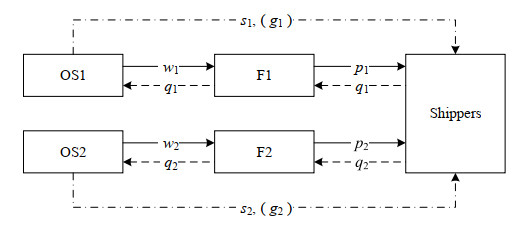
The structure of the shipping supply chain system
Event sequence
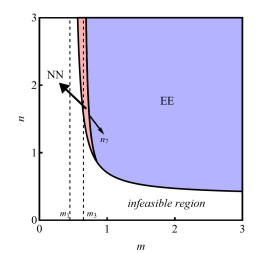
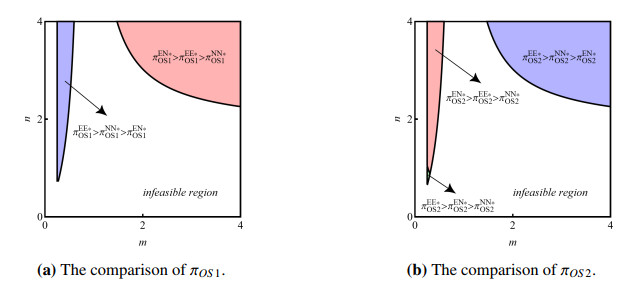
The profit comparison of ocean shipping companies in scenarios NN and EE
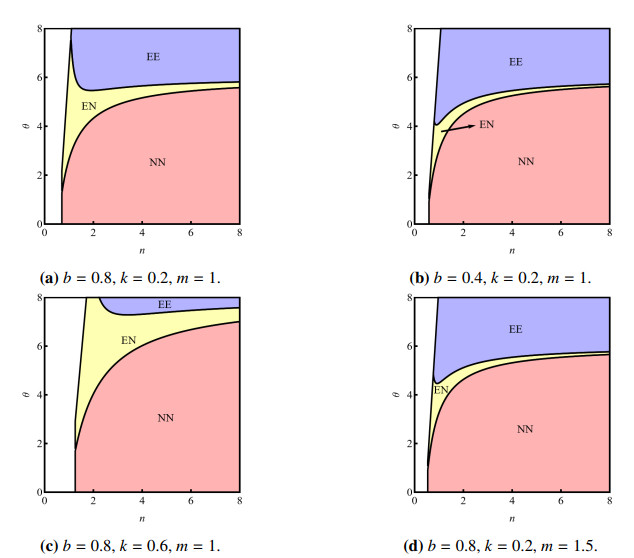
The comparison of total carbon emissions
The comparison of shipper surplus
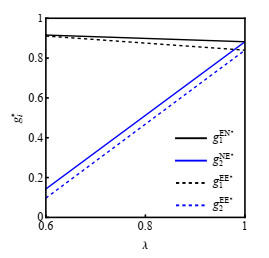
The effects of $ \lambda $ on the shipping greenness level
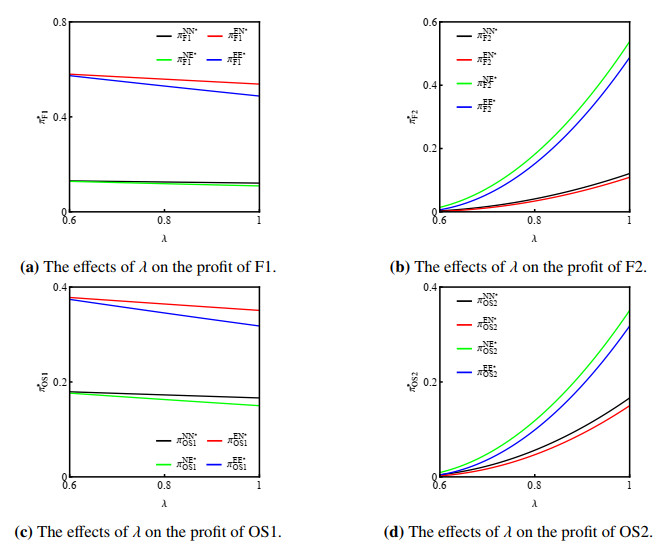
The effects of $ \lambda $ on the profits of shipping supply chain members
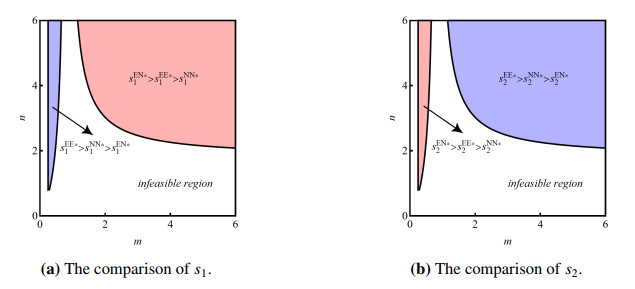
The comparison of service levels
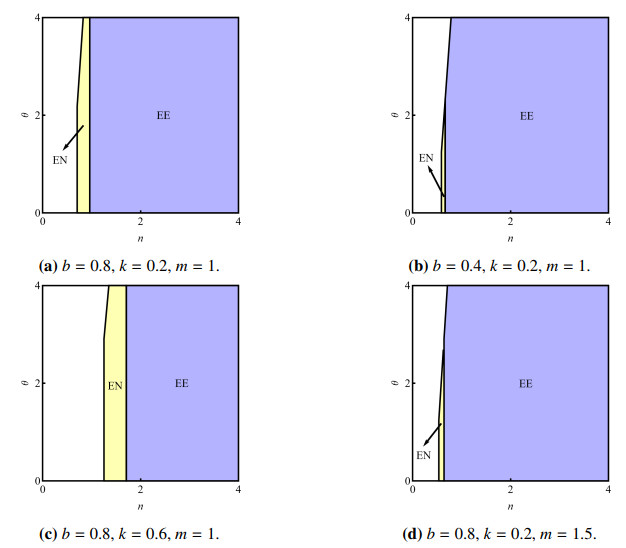
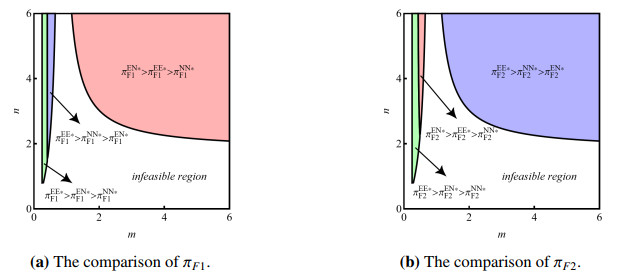
The comparison of the freight forwarder's profit
The comparison of the ocean shipping company's profit
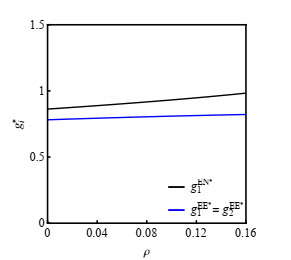
The effects of $ \rho $ on the shipping greenness level
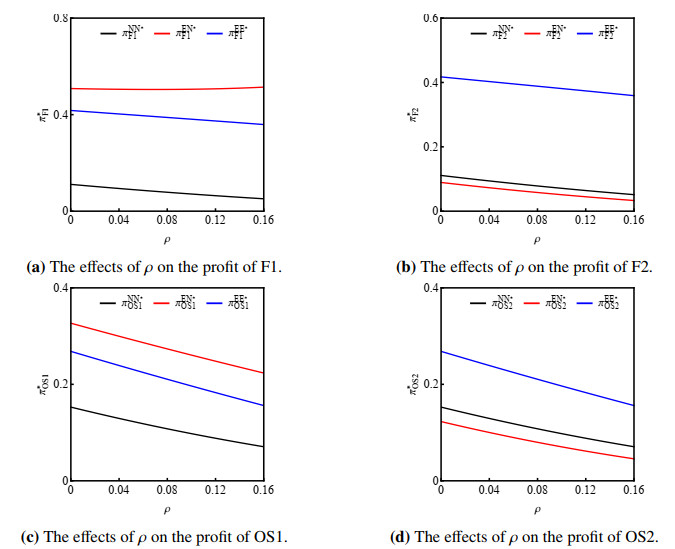
The effects of $ \rho $ on the profits of shipping supply chain members



 DownLoad: