The wedge-flow configuration has particular significance in engineering applications because it provides a fundamental model for boundary-layer flow over inclined or tapered surfaces, where the imposed pressure gradient strongly influences boundary-layer development, wall shear stress, and heat transfer. Understanding and controlling these characteristics is crucial in many practical engineering applications. Existing studies, however, have mainly considered the effects of individual physical parameters, while the systematic identification of the dominant parameters governing skin-friction behavior and their subsequent use for flow prediction remains limited. Motivated by this gap, the present study aimed to analyze the flow of a non-Newtonian Eyring-Powell fluid over a wedge in the presence of magnetohydrodynamics, thermal radiation, and chemical reaction phenomena, with particular emphasis on sensitivity analysis of the flow parameters using analysis of variance to identify the dominant factors and an ANN model for rapid prediction of the flow behavior. The proposed methodology integrates numerical simulation, response surface methodology, analysis of variance-based sensitivity analysis, and a feedforward artificial neural network trained using the Levenberg-Marquardt algorithm. The magnetic field parameter was found to be the most influential factor affecting the skin friction coefficient, followed by the Eyring-Powell parameter and the wedge parameter, according to the sensitivity analysis. The skin friction coefficient was found to range from 0.9094 to 1.1642. The ANOVA model achieved $ {R}^{2} = 100\% $, adjusted - $ {R}^{2} = 100\% $, and predicted $ {R}^{2} = 99\% $, with an overall $ p < 0.005 $. Moreover, the Levenberg-Marquardt artificial neural network yielded regression values ranging from 0.999 to 0.9999 and MSE values on the order of $ {10}^{-9} $ for the Eyring-Powell parameters, indicating highly accurate predictions of the numerical results. The research provides useful insights into the behavior of non-Newtonian flows over wedge surfaces, as well as a practical framework for thermal-fluid analysis in high-performance aerospace, industrial, and thermal-management applications.
Citation: Muhammad Ramzan, Talal Taha, Ziwen Xu, Unai Fernandez-Gamiz, Yanhong Chen, Abdulrahman A. Almehizia. Design of Eyring-Powell fluid over a moving wedge using an artificial neural network: Statistical-based sensitivity with applications in aerodynamics[J]. Electronic Research Archive, 2026, 34(12): 9267-9292. doi: 10.3934/era.2026390
The wedge-flow configuration has particular significance in engineering applications because it provides a fundamental model for boundary-layer flow over inclined or tapered surfaces, where the imposed pressure gradient strongly influences boundary-layer development, wall shear stress, and heat transfer. Understanding and controlling these characteristics is crucial in many practical engineering applications. Existing studies, however, have mainly considered the effects of individual physical parameters, while the systematic identification of the dominant parameters governing skin-friction behavior and their subsequent use for flow prediction remains limited. Motivated by this gap, the present study aimed to analyze the flow of a non-Newtonian Eyring-Powell fluid over a wedge in the presence of magnetohydrodynamics, thermal radiation, and chemical reaction phenomena, with particular emphasis on sensitivity analysis of the flow parameters using analysis of variance to identify the dominant factors and an ANN model for rapid prediction of the flow behavior. The proposed methodology integrates numerical simulation, response surface methodology, analysis of variance-based sensitivity analysis, and a feedforward artificial neural network trained using the Levenberg-Marquardt algorithm. The magnetic field parameter was found to be the most influential factor affecting the skin friction coefficient, followed by the Eyring-Powell parameter and the wedge parameter, according to the sensitivity analysis. The skin friction coefficient was found to range from 0.9094 to 1.1642. The ANOVA model achieved $ {R}^{2} = 100\% $, adjusted - $ {R}^{2} = 100\% $, and predicted $ {R}^{2} = 99\% $, with an overall $ p < 0.005 $. Moreover, the Levenberg-Marquardt artificial neural network yielded regression values ranging from 0.999 to 0.9999 and MSE values on the order of $ {10}^{-9} $ for the Eyring-Powell parameters, indicating highly accurate predictions of the numerical results. The research provides useful insights into the behavior of non-Newtonian flows over wedge surfaces, as well as a practical framework for thermal-fluid analysis in high-performance aerospace, industrial, and thermal-management applications.

| [1] |
I. E. Lagaris, A. Likas, D. I. Fotiadis, Artificial neural networks for solving ordinary and partial differential equations, IEEE Trans. Neural Networks, 9 (1998), 987-1000. https://doi.org/10.1109/72.712178 doi: 10.1109/72.712178
|
| [2] |
J. Ahmed, A. Shahzad, A. Begum, R. Ali, N. Siddiqui, Effects of inclined Lorentz forces on boundary layer flow of Sisko fluid over a radially stretching sheet with radiative heat transfer, J. Braz. Soc. Mech. Sci. Eng., 39 (2017), 3039-3050. https://doi.org/10.1007/s40430-017-0759-z doi: 10.1007/s40430-017-0759-z
|
| [3] |
T. Taha, Y. Fazeel, P. Kumam, T. Seangwattana, Intelligent modeling of nanoparticle transport in a permeable substrate with memory effects for cooling and heat exchange technologies, Int. Commun. Heat Mass Transfer, 178 (2026), 111628. https://doi.org/10.1016/j.icheatmasstransfer.2026.111628 doi: 10.1016/j.icheatmasstransfer.2026.111628
|
| [4] |
N. Ijaz, A. Zeeshan, T. Taha, A. F. Hashem, Controlled AI for flow forecasting in Lorentz force dominance over power-index in streamline: Applications in catalytic cooling systems, Int. Commun. Heat Mass Transfer, 176 (2026), 111366. https://doi.org/10.1016/j.icheatmasstransfer.2026.111366 doi: 10.1016/j.icheatmasstransfer.2026.111366
|
| [5] |
A. Zeeshan, M. I. Khan, R. Ellahi, Z. Asghar, Artificial neural network simulation and sensitivity analysis for optimal thermal transport of magnetic viscous fluid over shrinking wedge via RSM, Int. J. Numer. Methods Heat Fluid Flow, 33 (2023), 3492-3518. https://doi.org/10.1108/HFF-03-2023-0135 doi: 10.1108/HFF-03-2023-0135
|
| [6] |
A. Zeeshan, N. Khalid, R. Ellahi, M. I. Khan, S. Z. Alamri, Analysis of nonlinear complex heat transfer MHD flow of Jeffrey nanofluid over an exponentially stretching sheet via three phase artificial intelligence and machine learning techniques, Chaos, solitons Fractals, 189 (2024), 115600. https://doi.org/10.1016/j.chaos.2024.115600 doi: 10.1016/j.chaos.2024.115600
|
| [7] |
P. B. A. Reddy, R. Das, Estimation of MHD boundary layer slip flow over a permeable stretching cylinder in the presence of chemical reaction through numerical and artificial neural network modeling, Eng. Sci. Technol. Int. J., 19 (2016), 1108-1116. https://doi.org/10.1016/j.jestch.2015.12.013 doi: 10.1016/j.jestch.2015.12.013
|
| [8] |
N. Islam, M. K. Abdalrahem, Z. Shah, B. S. Haji, A. A. Pasha, A. M. Minhas, et al., Intelligent mathematical modeling of non-Newtonian MHD nanofluid flow in Eyring-Powell systems for advanced thermal applications, Chem. Eng. J. Adv., 27 (2026), 101376. https://doi.org/10.1016/j.ceja.2026.101376 doi: 10.1016/j.ceja.2026.101376
|
| [9] |
S. S. Ali, R. Ellahi, A. Zeeshan, S. M. Sait, M. I. Khan, Computational investigation of MHD Eyring-Powell nanofluid boundary layer flow and heat transfer over a porous cylinder, Int. J. Numer. Methods Heat Fluid Flow, 2026 (2026. https://doi.org/10.1108/HFF-06-2026-0756 |
| [10] |
A. ur Rehman, Z. Asghar, A. Zeeshan, Optimal analysis of electro-osmotic peristaltic flow of Newtonian fluid through non-Darcy porous media via RSM and ANNs, J. Porous Media, 29 (2025). https://doi.org/10.1615/JPorMedia.2025056377 |
| [11] |
U. Naeem, M. Sohail, M. A. Sherani, F. Sultan, T. Taha, I. Mahariq, Cattaneo-Christov heat and mass fluxes impact on three-dimensional Williamson nanofluid flow over a stretching sheet utilizing artificial neural network analysis, Multiscale Multidiscip. Model. Exp. Des., 8 (2025), 392. https://doi.org/10.1007/s41939-025-00980-3 doi: 10.1007/s41939-025-00980-3
|
| [12] |
R. Ali, N. Khalid, T. Taha, A. Mitalipova, A. Kurbanaliev, Polynomial degree impact on prediction accuracy in Casson-Williamson fluid with Cattaneo-Christov, Results Eng., 26 (2025), 105068. https://doi.org/10.1016/j.rineng.2025.105068 doi: 10.1016/j.rineng.2025.105068
|
| [13] |
N. Fatima, N. Ijaz, A. Zeeshan, T. Taha, N. Saleem, A. A. Hassaballa, Closed-loop AI control of nanoparticle transport under mixed convection: application to electromagnetic propulsion power generation, Int. J. Mech. Mater. Des., 22 (2026), 132. https://doi.org/10.1007/s10999-026-09954-w doi: 10.1007/s10999-026-09954-w
|
| [14] |
F. Wang, R. Parveen, S. Rehman, A. Farooq, H. Alhazmi, A. F. Aljohani, et al., Artificial neural computing and statistical analysis of heat and mass transport of nanofluid flow with melting heat and thermal stratification, Case Stud. Therm. Eng., 60 (2024), 104563. https://doi.org/10.1016/j.csite.2024.104563 doi: 10.1016/j.csite.2024.104563
|
| [15] |
F. Wang, M. I. Asjad, M. Zahid, A. Iqbal, H. Ahmad, M. D. Alsulami, Unsteady thermal transport flow of Casson nanofluids with generalized Mittag-Leffler kernel of Prabhakar's type, J. Mater. Res. Technol., 14 (2021), 1292-1300. https://doi.org/10.1016/j.jmrt.2021.07.029 |
| [16] |
F. Wang, S. Rehman, M. H. Shah, M. A. El Yamani, S. Farooq, A. Farooq, Numerical computation of cross nanofluid model using neural network and adaptive neuro-fuzzy inference system with statistical insights for enhanced flow optimization, Expert Syst. Appl., 263 (2025), 125721. https://doi.org/10.1016/j.eswa.2024.125721 doi: 10.1016/j.eswa.2024.125721
|
| [17] |
J. A. Jugnoo, A. ur Rehman, T. Taha, Non-Newtonian fluid flow with bioconvection: The role of Rayleigh number and buoyancy over a sheet, J. Innovative Res. Math. Comput. Sci., 3 (2024), 91-107. https://doi.org/10.62270/jirmcs.v3i1.31 doi: 10.62270/jirmcs.v3i1.31
|
| [18] |
F. Sultan, M. Awais, M. Sohail, I. Mahariq, MHD and thermal effects on three-dimensional non-Newtonian Williamson fluid flow over a stretching sheet via numerical scheme, ZAMM J. Appl. Math. Mech., 105 (2025), e70174. https://doi.org/10.1002/zamm.70174 doi: 10.1002/zamm.70174
|
| [19] |
M. Sohail, M. A. Sherani, K. Abodayeh, S. T. Abbas, Three-dimensional boundary layer dynamics of couple-stress non-Newtonian fluids: MHD effects and generalized flux analysis via OHAM, ZAMM J. Appl. Math. Mech., 105 (2025), e70048. https://doi.org/10.1002/zamm.70048 doi: 10.1002/zamm.70048
|
| [20] |
A. S. Alqahtani, A. ur Rehman, Z. Asghar, A. Zeeshan, M. Y. Malik, Optimal analysis of MHD peristaltic flow of viscoplastic nanofluid with chemical reaction and electro-osmotic effect via artificial neural networks and response surface methodology, Phys. Scr., 2024 (2024). https://doi.org/10.1088/1402-4896/ada18a |
| [21] |
S. Ravikumar, B. Reddappa, O. D. Makinde, Understanding the chemical reaction, mixed convection, and thermo-diffusion features of non-Newtonian fluid (Prandtl fluid) driven by electroosmosis activity via wavy tapered microfluidic system, Heat Transfer, 54 (2025), 2305-2325. https://doi.org/10.1002/htj.23290 doi: 10.1002/htj.23290
|
| [22] |
S. S. Zafar, U. Khan, F. Ali, S. M. Eldin, A. M. Saeed, A. Zaib, et al., Irreversibility analysis of radiative flow of Prandtl nanofluid over a stretched surface in Darcy-Forchheimer medium with activation energy and chemical reaction, Heliyon, 9 (2023), e14877. https://doi.org/10.1016/j.heliyon.2023.e14877 doi: 10.1016/j.heliyon.2023.e14877
|
| [23] |
A. Zeeshan, Z. Asghar, A. U. Rehaman, AI based optimal analysis of electro-osmotic peristaltic motion of non-Newtonian fluid with chemical reaction using artificial neural networks and response surface methodology, Int. J. Numer. Methods Heat Fluid Flow, 34 (2024), 2345-2375. https://doi.org/10.1108/HFF-01-2024-0016 doi: 10.1108/HFF-01-2024-0016
|
| [24] |
S. Samal, S. Ontela, S. Enamul, Optimization and sensitivity analysis in time-dependent magneto-hydrodynamic squeezing flow of radiative Eyring-Powell hybrid nanofluid with gyrotactic microorganisms: Entropy analysis, ZAMM J. Appl. Math. Mech., 105 (2025), e70236. https://doi.org/10.1002/zamm.70236 doi: 10.1002/zamm.70236
|
| [25] |
M. M. Bhatti, A. Zeeshan, R. Ellahi, G. C. Shit, Mathematical modeling of heat and mass transfer effects on MHD peristaltic propulsion of two-phase flow through a Darcy-Brinkman-Forchheimer porous medium, Adv. Powder Technol., 29 (2018), 1189–1197. https://doi.org/10.1016/j.apt.2018.02.010 doi: 10.1016/j.apt.2018.02.010
|
| [26] |
A. ur Rehman, Z. Asghar, A. Zeeshan, Investigating the role of porous medium for frictional forces in peristaltic flow dynamics using ANN and RSM, J. Porous Media, 29 (2026), 1–24. https://doi.org/10.1615/JPorMedia.2025056377 doi: 10.1615/JPorMedia.2025056377
|
| [27] |
S. Shafique, A. ur Rehman, A. Zeeshan, A. B. Mann, A. S. Alqahtani, M. Y. Malik, Empirical modeling and sensitivity analysis of thermal irreversibility and pressure rise in peristaltic flow using neural networks and response surface methodology, Heat Transfer, 55 (2026), 2600–2620. https://doi.org/10.1002/htj.70214 doi: 10.1002/htj.70214
|
| [28] |
C. R. Mirza, Z. Shah, H. Iqbal, M. Jawaid, B. Dammak, Y. El Touati, et al., AI-RNN approach for radiative dissipative bioconvective flow of Eyring–Powell hybrid and ternary nanofluids, Alex. Eng. J., 149 (2026), 113–128. https://doi.org/10.1016/j.aej.2026.06.022 doi: 10.1016/j.aej.2026.06.022
|
| [29] |
S. S. Ali, R. Ellahi, A. Zeeshan, S. M. Sait, M. I. Khan, Computational investigation of MHD Eyring–Powell nanofluid boundary layer flow and heat transfer over a porous cylinder, Int. J. Numer. Methods Heat Fluid Flow, 2026 (2026), 1–28. https://doi.org/10.1108/HFF-06-2026-0756 doi: 10.1108/HFF-06-2026-0756
|
| [30] |
C. N. Raju, C. S. Reddy, M. A. Alyami, S. M. Eldin, Adnan, K. K. Asogwa, et al., MHD Eyring–Powell nanofluid flow across a wedge with convective and thermal radiation, Front. Energy Res., 10 (2022), 1021491. https://doi.org/10.3389/fenrg.2022.1021491 doi: 10.3389/fenrg.2022.1021491
|
| [31] |
I. Ullah, S. Shafie, I. Khan, K. L. Hsiao, Brownian diffusion and thermophoresis mechanisms in Casson fluid over a moving wedge, Results Phys., 9 (2018), 183–194. https://doi.org/10.1016/j.rinp.2018.02.021 doi: 10.1016/j.rinp.2018.02.021
|
| [32] |
C. S. K. Raju, M. M. Hoque, T. Sivasankar, Radiative flow of Casson fluid over a moving wedge filled with gyrotactic microorganisms, Adv. Powder Technol., 28 (2017), 575–583. https://doi.org/10.1016/j.apt.2016.10.026 doi: 10.1016/j.apt.2016.10.026
|
Figures(11) / Tables(7)
Muhammad Ramzan, Talal Taha, Ziwen Xu, Unai Fernandez-Gamiz, Yanhong Chen, Abdulrahman A. Almehizia. Design of Eyring-Powell fluid over a moving wedge using an artificial neural network: Statistical-based sensitivity with applications in aerodynamics[J]. Electronic Research Archive, 2026, 34(12): 9267-9292. doi: 10.3934/era.2026390

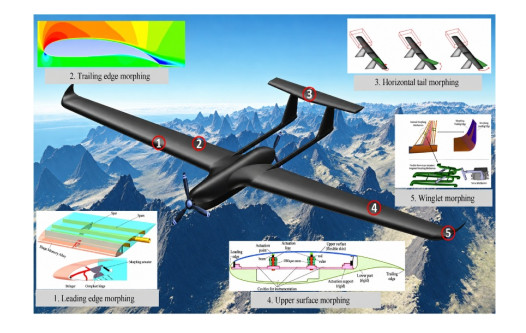
Physical applications of the wedge flow
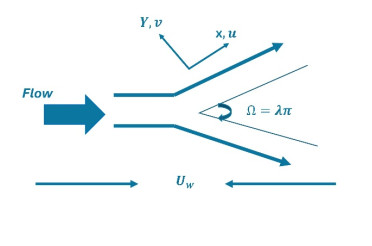
Flow geometry of the present work
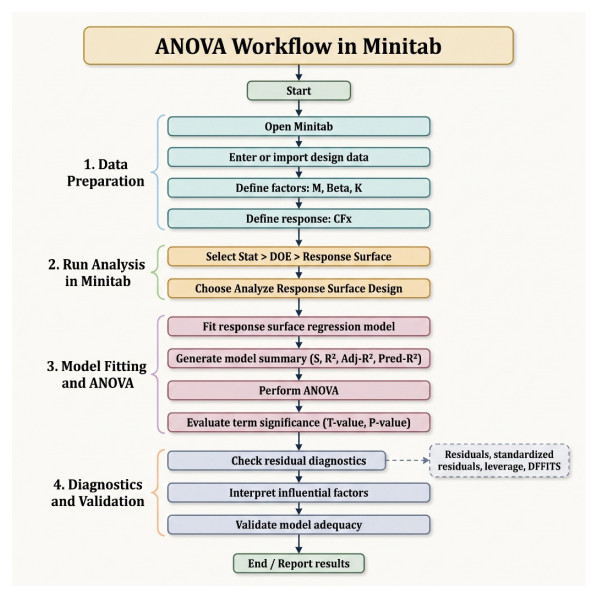
Workflow of ANOVA-based sensitivity analysis
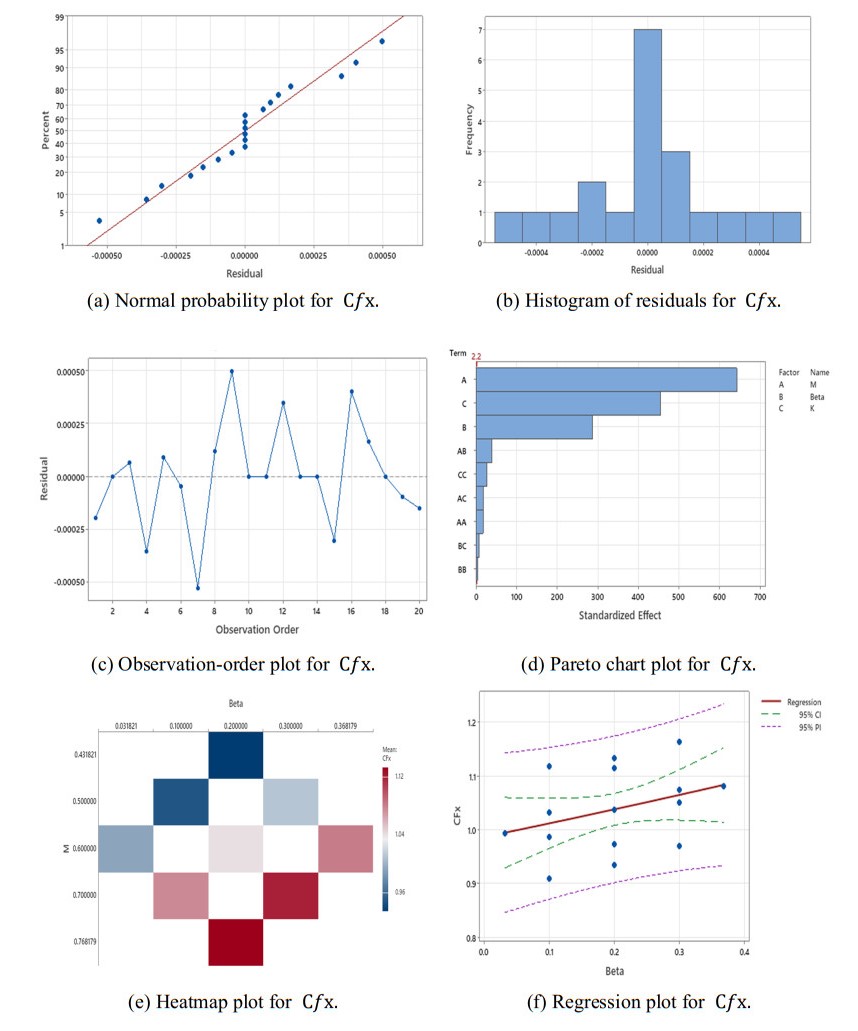
Statistical diagnostics and sensitivity analysis of the skin friction coefficient ($ \mathrm{C}f\mathrm{x}) $ using response surface methodology (RSM)
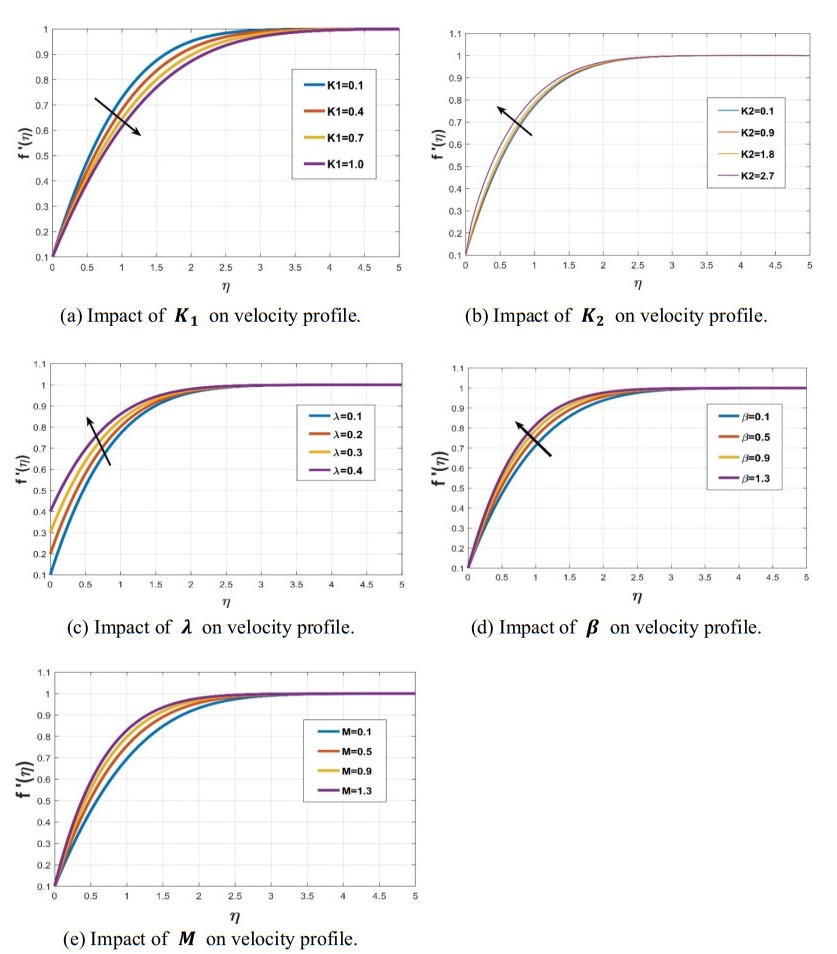
Effects of various physical parameters on the velocity profile $ \left(f{'}\right(\eta \left)\right) $
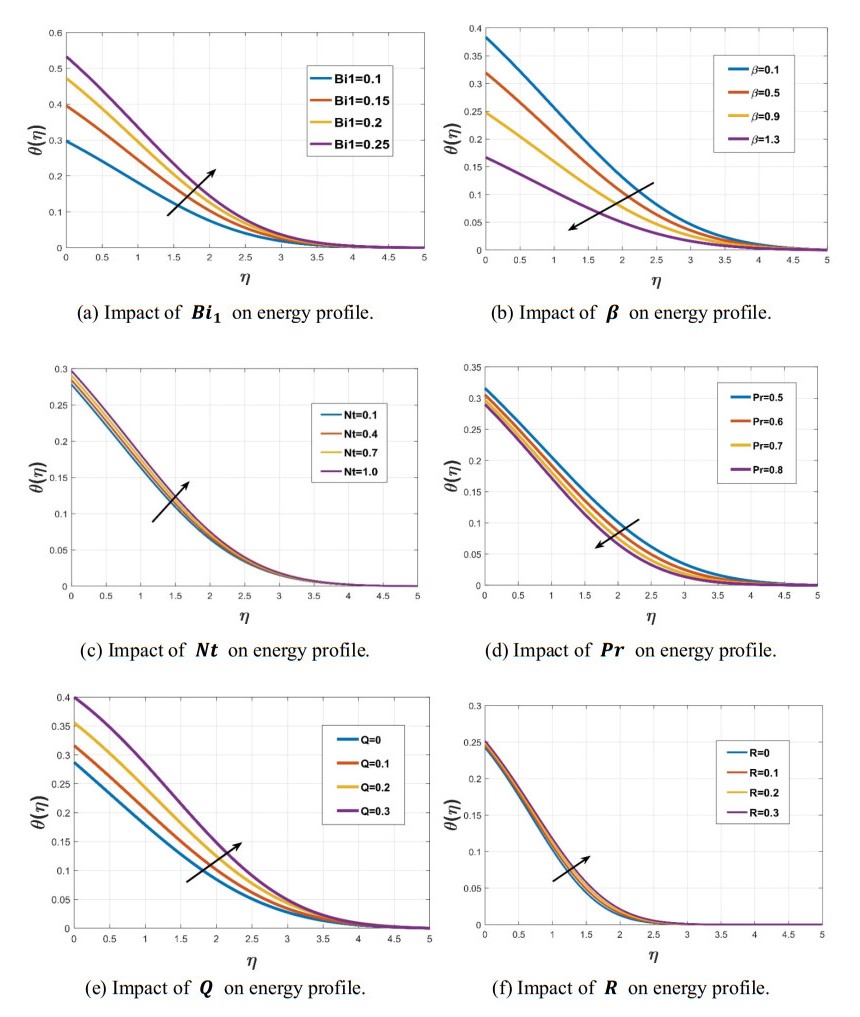
Effects of various physical parameters on the temperature profile $ \left(\theta \right(\eta \left)\right) $
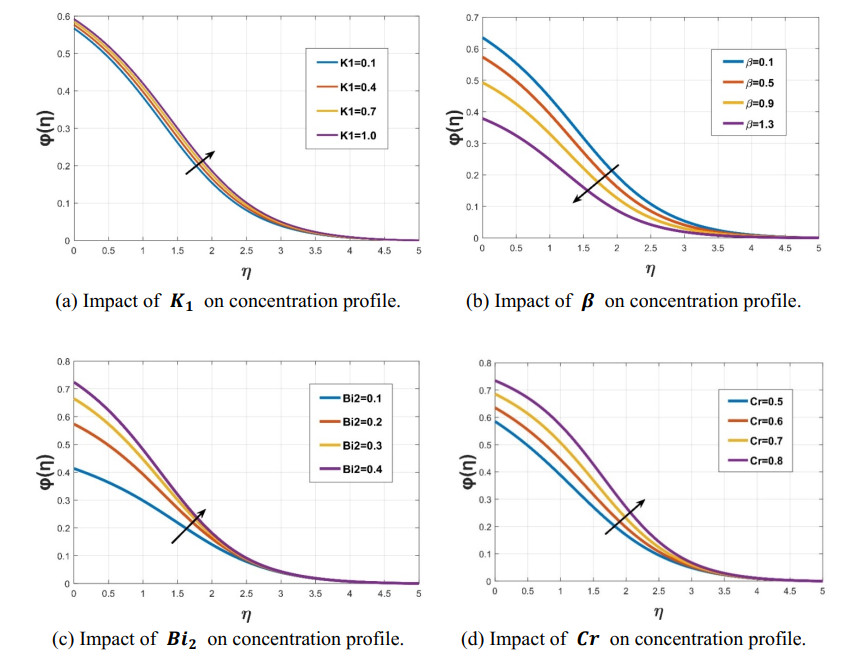
Effects of various physical parameters on the concentration profile $ \left(\varphi \right(\eta \left)\right) $
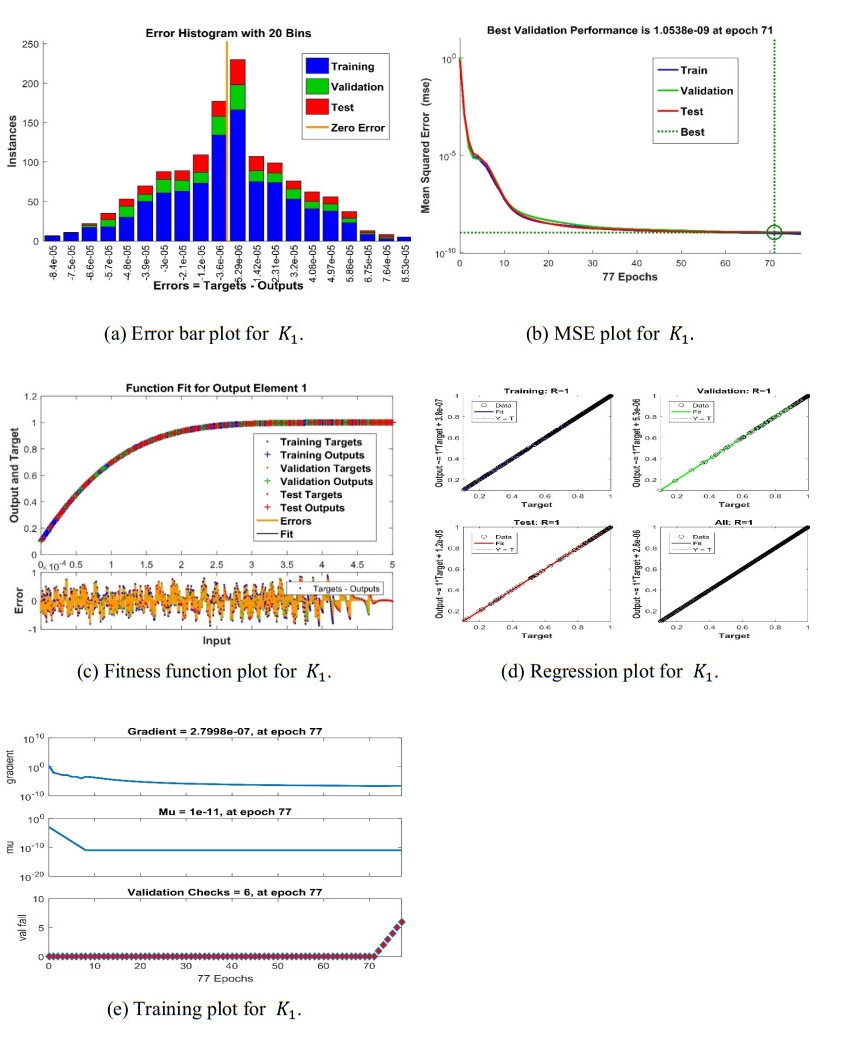
Artificial neural network performance evaluation for $ \left({K}_{1}\right) $ : (a) error histogram, (b) mean squared error (MSE), (c) fitness function, (d) regression analysis, and (e) training performance
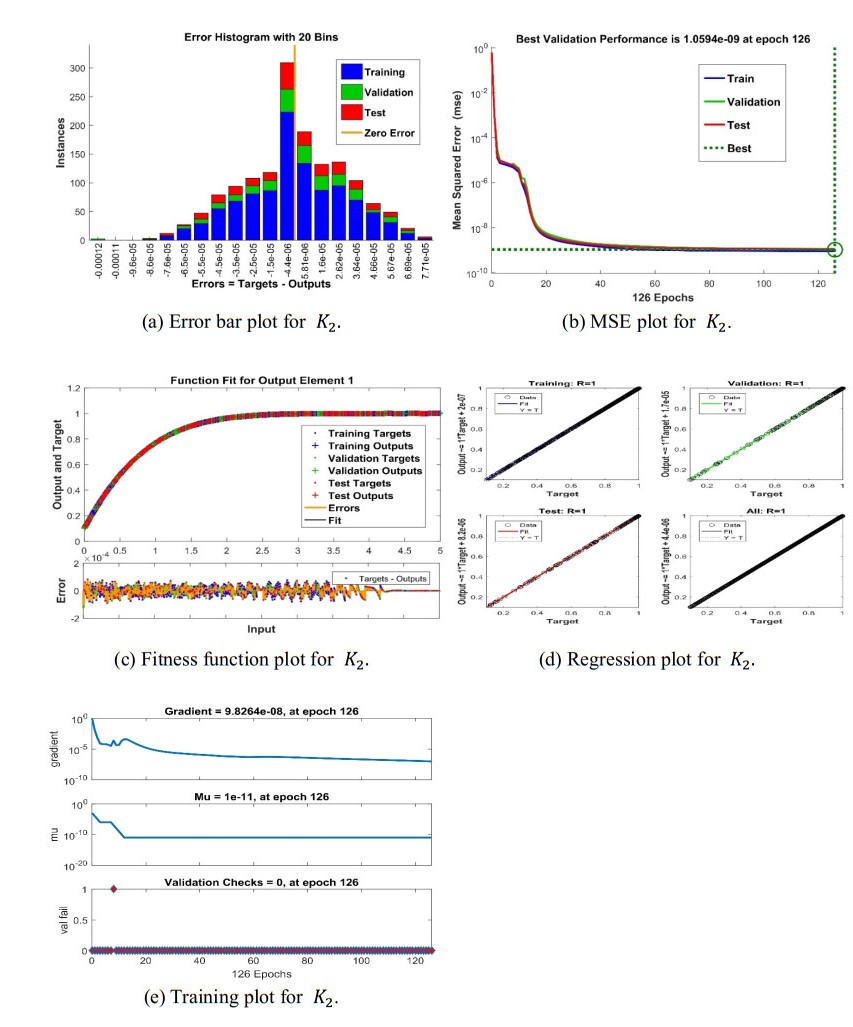
Artificial neural network performance evaluation for $ \left({K}_{2}\right) $ : (a) error histogram, (b) mean squared error (MSE), (c) fitness function, (d) regression analysis, and (e) training performance
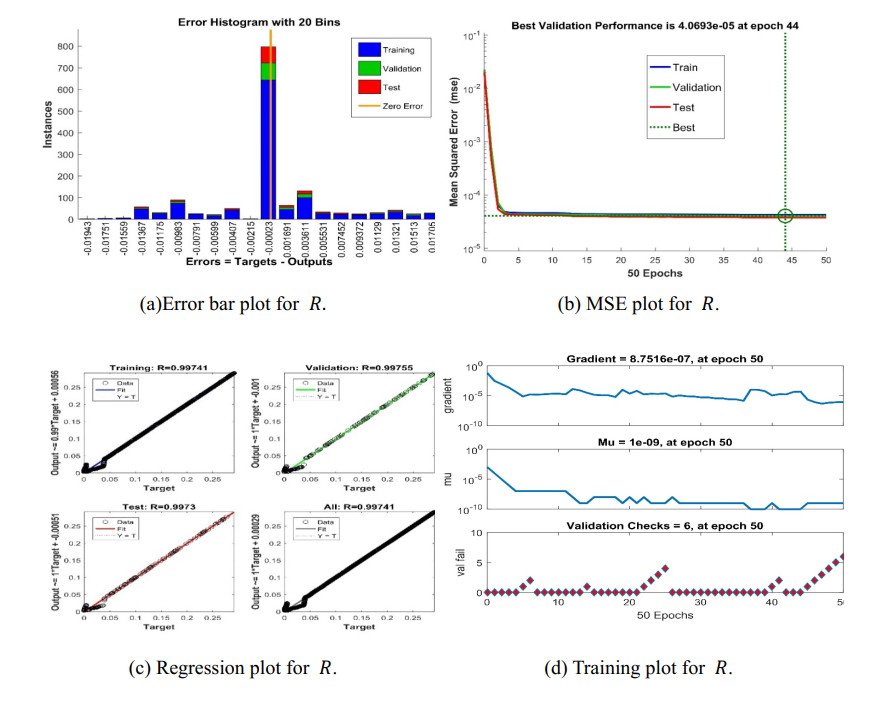
Artificial neural network performance evaluation for $ \left(R\right) $ : (a) error histogram, (b) mean squared error (MSE), (c) regression analysis, and (d) training performance
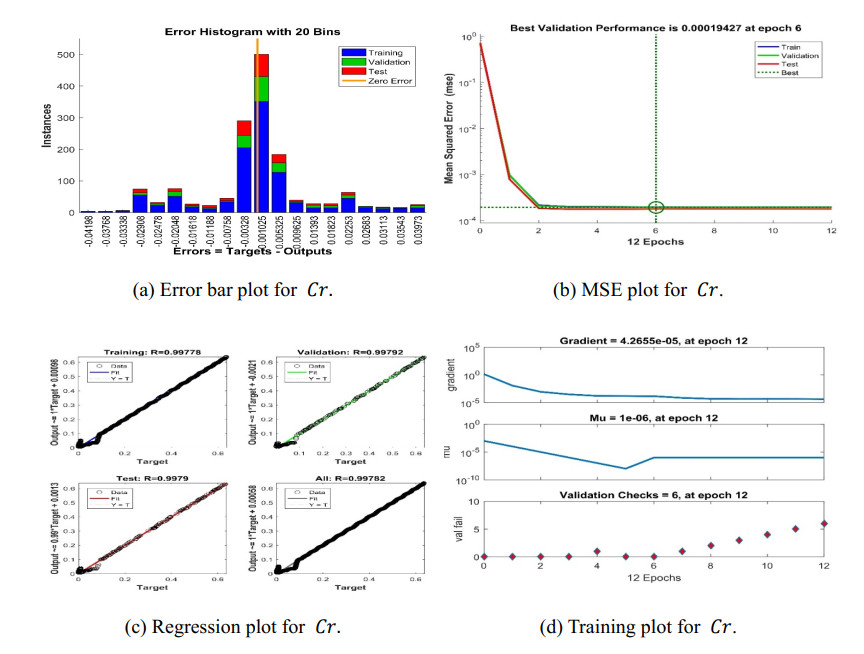
Artificial neural network performance evaluation for $ \left(Cr\right) $ : (a) error histogram, (b) mean squared error (MSE), (c) regression analysis, and (d) training performance




 DownLoad: