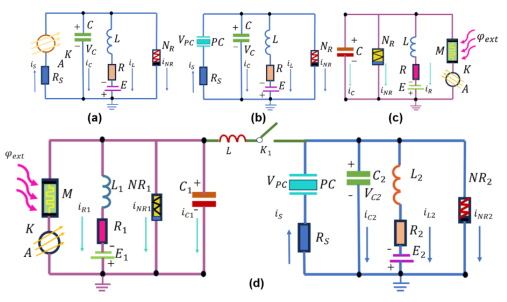
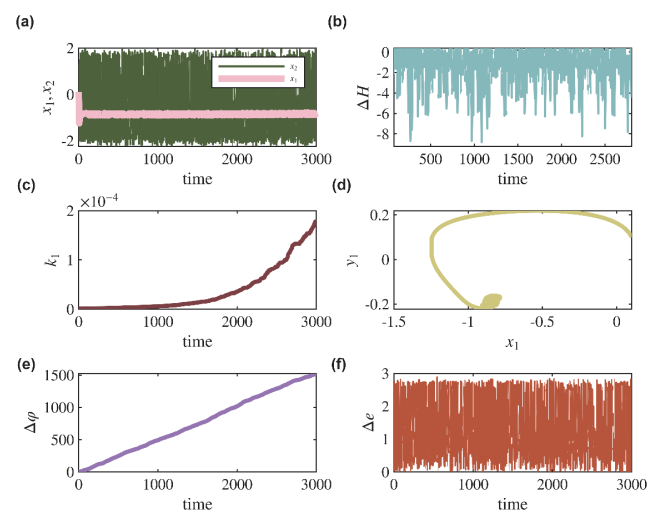
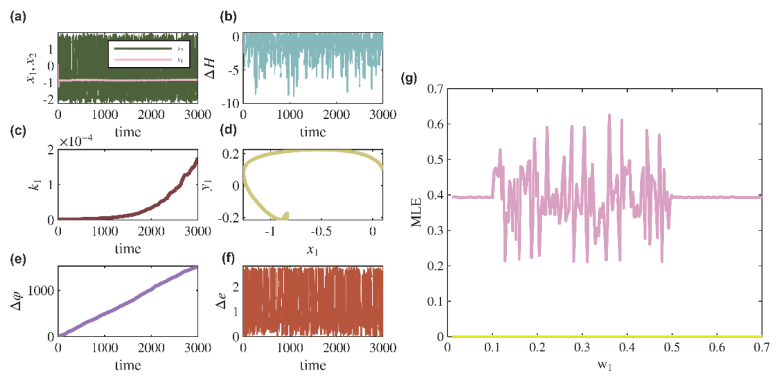
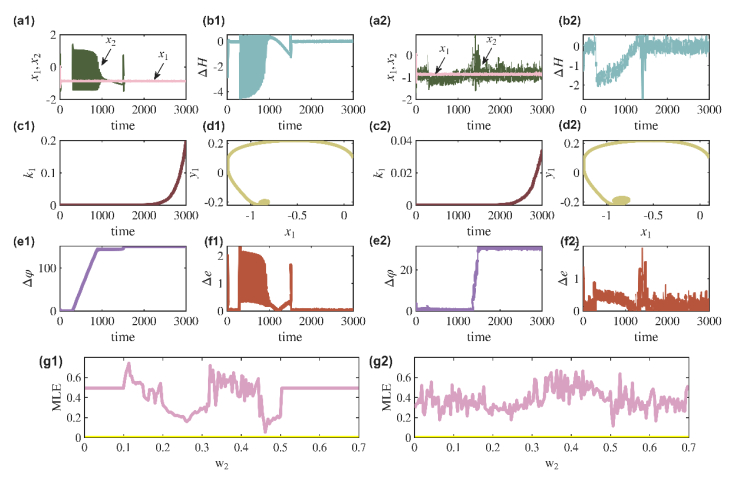
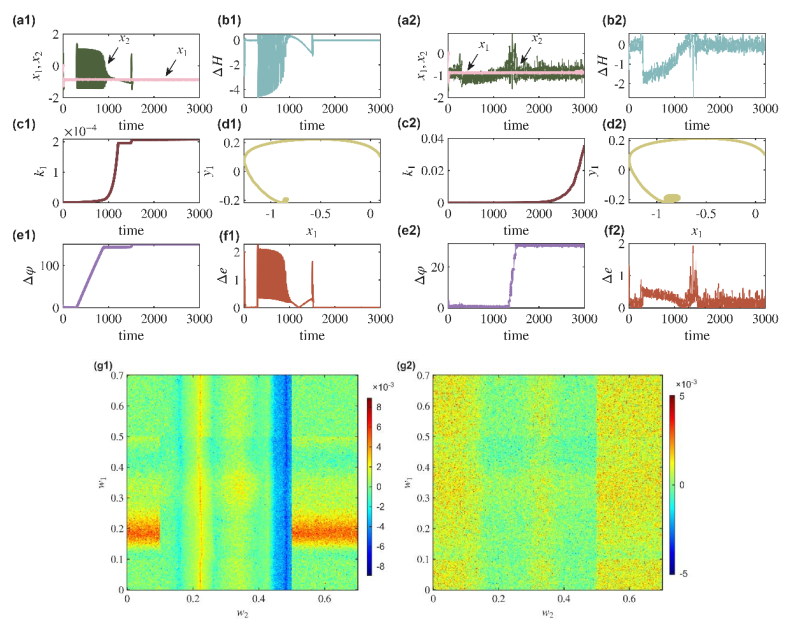
The frequency-selective response of the nervous system bears a strong resemblance to filtering mechanisms. However, how concurrent cross-modal filtering influences neuronal synchronization remains unclear. This study constructed a coupled photosensitive-auditory neuron model incorporating flux-controlled memristors. Through inductive coil connections, we investigated its synchronous dynamics under frequency-swept signal excitation. The key innovation lies in simultaneously applying swept chirp excitation to both light and sound inputs, achieving biophysically plausible bandpass filtering based on the intrinsic frequency tuning of sensory pathways, while employing an adaptive coupling strategy based on Hamiltonian energy differences. Results demonstrate that bimodal filtering significantly enhances frequency-dependent synchronization. When the sweeping signal traverses the dual passbands, the system exhibits robust synchronization characterized by phase locking and energy minimization, significantly outperforming unfiltered or unimodal conditions. This study reveals cross-modal collaborative filtering as a fundamental mechanism for neural synchronization, providing a computational framework for multisensory integration. It offers significant implications for developing novel neural prostheses synchronized by photoacoustic cues.
Citation: Jingjing Yang, Suyuan Huang, Yuan Chai, Shunmin Yao, Rui Zhu. Filtering regulation of synchronization and energy balance in functional memristor networks[J]. Electronic Research Archive, 2026, 34(5): 3289-3314. doi: 10.3934/era.2026148
The frequency-selective response of the nervous system bears a strong resemblance to filtering mechanisms. However, how concurrent cross-modal filtering influences neuronal synchronization remains unclear. This study constructed a coupled photosensitive-auditory neuron model incorporating flux-controlled memristors. Through inductive coil connections, we investigated its synchronous dynamics under frequency-swept signal excitation. The key innovation lies in simultaneously applying swept chirp excitation to both light and sound inputs, achieving biophysically plausible bandpass filtering based on the intrinsic frequency tuning of sensory pathways, while employing an adaptive coupling strategy based on Hamiltonian energy differences. Results demonstrate that bimodal filtering significantly enhances frequency-dependent synchronization. When the sweeping signal traverses the dual passbands, the system exhibits robust synchronization characterized by phase locking and energy minimization, significantly outperforming unfiltered or unimodal conditions. This study reveals cross-modal collaborative filtering as a fundamental mechanism for neural synchronization, providing a computational framework for multisensory integration. It offers significant implications for developing novel neural prostheses synchronized by photoacoustic cues.

| [1] |
D. Hansel, G. Mato, C. Meunier, Phase dynamics for weakly coupled Hodgkin-Huxley neurons, Europhys. Lett., 23 (1993), 367–372. https://doi.org/10.1209/0295-5075/23/5/011 doi: 10.1209/0295-5075/23/5/011

|
| [2] |
Y. Wang, D. T. W. Chik, Z. D. Wang, Coherence resonance and noise-induced synchronization in globally coupled Hodgkin-Huxley neurons, Phys. Rev. E, 61 (2000), 740–746. https://doi.org/10.1103/PhysRevE.61.740 doi: 10.1103/PhysRevE.61.740
|
| [3] |
S. Lee, S. Kim, Parameter dependence of stochastic resonance in the stochastic Hodgkin-Huxley neuron, Phys. Rev. E, 60 (1999), 826–830. https://doi.org/10.1103/PhysRevE.60.826 doi: 10.1103/PhysRevE.60.826
|
| [4] |
F. G. C. Cabarle, Thinking about spiking neural P systems: Some theories, tools, and research topics, J. Membr. Comput., 6 (2024), 148–167. https://doi.org/10.1007/s41965-024-00147-y doi: 10.1007/s41965-024-00147-y
|
| [5] |
P. Pietrzak, S. Szczęsny, D. Huderek, Ł. Przyborowski, Overview of spiking neural network learning approaches and their computational complexities, Sensors, 23 (2023), 3037. https://doi.org/10.3390/s23063037 doi: 10.3390/s23063037
|
| [6] |
S. Yang, D. Li, J. Feng, B. Gong, Q. Song, Y. Wang, et al., Secondary order RC sensor neuron circuit for direct input encoding in spiking neural network, Adv. Electron. Mater., 10 (2024), 2400075. https://doi.org/10.1002/aelm.202400075 doi: 10.1002/aelm.202400075
|
| [7] |
Q. Xu, X. Chen, B. Chen, H. Wu, Z. Li, H. Bao, Dynamical analysis of an improved FitzHugh-Nagumo neuron model with multiplier-free implementation, Nonlinear Dyn., 111 (2023), 8737–8749. https://doi.org/10.1007/s11071-023-08274-4 doi: 10.1007/s11071-023-08274-4
|
| [8] |
X. Zhang, F. Min, Y. Dou, Y. Xu, Bifurcation analysis of a modified FitzHugh-Nagumo neuron with electric field, Chaos Solitons Fractals, 170 (2023), 113415. https://doi.org/10.1016/j.chaos.2023.113415 doi: 10.1016/j.chaos.2023.113415
|
| [9] |
S. Zhou, G. Huang, R. Zhu, Y. Wang, Y. Chai, Research on the synchronization of a controllable memristive photosensitive FitHugh-Nagumo model, Opt. Laser Technol., 175 (2024), 110736. https://doi.org/10.1016/j.optlastec.2024.110736 doi: 10.1016/j.optlastec.2024.110736
|
| [10] |
F. Yang, J. Ma, A controllable photosensitive neuron model and its application, Opt. Laser Technol., 163 (2023), 109335. https://doi.org/10.1016/j.optlastec.2023.109335 doi: 10.1016/j.optlastec.2023.109335
|
| [11] |
F. Yang, J. Ma, Synchronization and energy balance of star network composed of photosensitive neurons, Eur. Phys. J. Spec. Top., 231 (2022), 4025–4035. https://doi.org/10.1140/epjs/s11734-022-00698-0 doi: 10.1140/epjs/s11734-022-00698-0
|
| [12] |
G. Huang, S. Zhou, R. Zhu, Y. Wang, Y. Chai, Effect of internal and external chaotic stimuli on synchronization of piezoelectric auditory neurons in coupled time-delay systems, Cogn. Neurodyn., 18 (2024), 2111–2126. https://doi.org/10.1007/s11571-023-10042-4 doi: 10.1007/s11571-023-10042-4
|
| [13] |
Y. Xu, J. Ma, Control of firing activities in thermosensitive neuron by activating excitatory autapse, Chin. Phys. B, 30 (2021), 100501. https://doi.org/10.1088/1674-1056/abeeef doi: 10.1088/1674-1056/abeeef
|
| [14] |
G. Sun, Y. Xu, W. Jin, G. Ren, Energy balance regulates synchronization of photosensitive neural network, Phys. A Stat. Mech. Appl., 625 (2023), 129003. https://doi.org/10.1016/j.physa.2023.129003 doi: 10.1016/j.physa.2023.129003
|
| [15] |
L. Zhang, L. Xiong, X. An, Q. Shi, Hamilton energy balance and synchronization behaviors of two functional neurons, Cogn. Neurodyn., 17 (2023), 1683–1702. https://doi.org/10.1007/s11571-022-09908-w doi: 10.1007/s11571-022-09908-w
|
| [16] |
Y. Xie, J. Ma, How to discern external acoustic waves in a piezoelectric neuron under noise? J. Biol. Phys., 48 (2022), 339–353. https://doi.org/10.1007/s10867-022-09611-1 doi: 10.1007/s10867-022-09611-1
|
| [17] |
Y. Guo, C. Wang, Z. Yao, Y. Xu, Desynchronization of thermosensitive neurons by using energy pumping, Phys. A Stat. Mech. Appl., 602 (2022), 127644. https://doi.org/10.1016/j.physa.2022.127644 doi: 10.1016/j.physa.2022.127644
|
| [18] |
Y. Xu, J. Ma, Pattern formation in a thermosensitive neural network, Commun. Nonlinear Sci. Numer. Simul., 111 (2022), 106426. https://doi.org/10.1016/j.cnsns.2022.106426 doi: 10.1016/j.cnsns.2022.106426
|
| [19] |
Q. Shi, L. Zhang, X. An, L. Xiong, F. Yang, Dynamic exploration of a controllable thermosensitive neuron model and its applications, Int. J. Bifurcation Chaos, 32 (2022), 2250198. https://doi.org/10.1142/S021812742250198X doi: 10.1142/S021812742250198X
|
| [20] |
Q. Shi, S. Qu, X. An, X. Du, A novel coupled functional neuron model and its application in medical image encryption, Nonlinear Dyn., 112 (2024), 11447–11470. https://doi.org/10.1007/s11071-024-09634-4 doi: 10.1007/s11071-024-09634-4
|
| [21] |
X. An, L. Jiang, L. Xiong, J. Zhang, X. Li, Synchronization behavior and energy evolution in physical neuron and network, Nonlinear Dyn., 112 (2024), 16389–16407. https://doi.org/10.1007/s11071-024-09882-4 doi: 10.1007/s11071-024-09882-4
|
| [22] |
Y. Xie, P. Zhou, J. Ma, Energy balance and synchronization via inductive-coupling in functional neural circuits, Appl. Math. Model., 113 (2023), 175–187. https://doi.org/10.1016/j.apm.2022.09.015 doi: 10.1016/j.apm.2022.09.015
|
| [23] |
Y. Wang, F. Min, Y. Cheng, Y. Dou, Dynamical analysis in dual-memristor-based FitzHugh-Nagumo circuit and its coupling finite-time synchronization, Eur. Phys. J. Spec. Top., 230 (2021), 1751–1762. https://doi.org/10.1140/epjs/s11734-021-00121-0 doi: 10.1140/epjs/s11734-021-00121-0
|
| [24] |
F. Yang, Z. Han, G. Ren, Q. Guo, J. Ma, Enhance controllability of a memristive neuron under magnetic field and circuit approach, Eur. Phys. J. Plus, 139 (2024), 534. https://doi.org/10.1140/epjp/s13360-024-05364-z doi: 10.1140/epjp/s13360-024-05364-z
|
| [25] |
M. Ge, K. Jia, X. Wang, Y. Liu, Y. Jiang, Researches on dynamics and noise effects of FHN neuron based on memristor-memcapacitor coupling, Nonlinear Dyn., 113 (2025), 26671–26693. https://doi.org/10.1007/s11071-025-11454-z doi: 10.1007/s11071-025-11454-z
|
| [26] |
X. Zhou, K. Sun, H. Wang, Z. Yao, Coexisting hyperchaos and multistability in a discrete memristor-coupled bi-neuron model, Nonlinear Dyn., 112 (2024), 9547–9561. https://doi.org/10.1007/s11071-024-09546-3 doi: 10.1007/s11071-024-09546-3
|
| [27] |
X. Li, W. Guo, Y. Du, Dynamical analysis and circuit implementation of HR-FHN neuron model coupled by locally active memristor, Int. J. Bifurcation Chaos, 34 (2024), 2430034. https://doi.org/10.1142/S0218127424300349 doi: 10.1142/S0218127424300349
|
| [28] |
X. Zhang, J. Ma, Wave filtering and firing modes in a light-sensitive neural circuit, J. Zhejiang Univ. Sci. A, 22 (2021), 707–720. https://doi.org/10.1631/jzus.A2100323 doi: 10.1631/jzus.A2100323
|
| [29] |
P. Zhou, J. Ma, Y. Xu, Phase synchronization between neurons under nonlinear coupling via hybrid synapse, Chaos Solitons Fractals, 169 (2023), 113238. https://doi.org/10.1016/j.chaos.2023.113238 doi: 10.1016/j.chaos.2023.113238
|
| [30] |
D. Yu, G. Wang, T. Li, Q. Ding, Y. Jia, Filtering properties of Hodgkin-Huxley neuron on different time-scale signals, Commun. Nonlinear Sci. Numer. Simul., 117 (2023), 106894. https://doi.org/10.1016/j.cnsns.2022.106894 doi: 10.1016/j.cnsns.2022.106894
|
| [31] |
A. Brughera, J. A. Ballestero, D. McAlpine, Sensitivity to envelope interaural time differences: Modeling auditory modulation filtering, J. Assoc. Res. Otolaryngol., 23 (2022), 35–57. https://doi.org/10.1007/s10162-021-00816-0 doi: 10.1007/s10162-021-00816-0
|
| [32] |
O. Abdalla, A. Y. Baran, N. Korkmaz, R. Kılıç, Investigation of synchronization control of the memristive/resistive-coupled neural network with noise effect, Int. J. Bifurcation Chaos, 34 (2024), 2450099. https://doi.org/10.1142/S0218127424500998 doi: 10.1142/S0218127424500998
|
| [33] |
S. Hariharan, R. Suresh, V. K. Chandrasekar, Heterogeneous noise-induced extreme events and synchronization in a globally coupled network of FitzHugh-Nagumo oscillators, Chaos Solitons Fractals, 203 (2026), 117652. https://doi.org/10.1016/j.chaos.2025.117652 doi: 10.1016/j.chaos.2025.117652
|
| [34] |
M. Akhmet, K. Başkan, C. Yeşil, Markovian noise-induced delta synchronization approach for Hindmarsh-Rose model, Chaos Solitons Fractals, 185 (2024), 115155. https://doi.org/10.1016/j.chaos.2024.115155 doi: 10.1016/j.chaos.2024.115155
|
| [35] |
J. Huang, C. Li, T. Huang, Q. Han, Lag quasisynchronization of coupled delayed systems with parameter mismatch by periodically intermittent control, Nonlinear Dyn., 71 (2013), 469–478. https://doi.org/10.1007/s11071-012-0673-y doi: 10.1007/s11071-012-0673-y
|
Figures(12)
Jingjing Yang, Suyuan Huang, Yuan Chai, Shunmin Yao, Rui Zhu. Filtering regulation of synchronization and energy balance in functional memristor networks[J]. Electronic Research Archive, 2026, 34(5): 3289-3314. doi: 10.3934/era.2026148





 DownLoad: