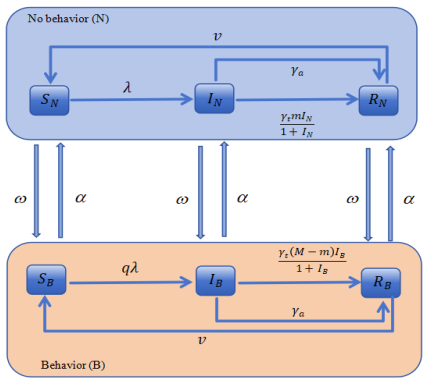
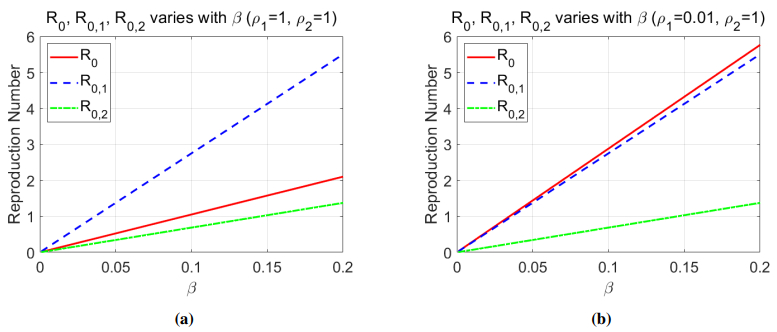
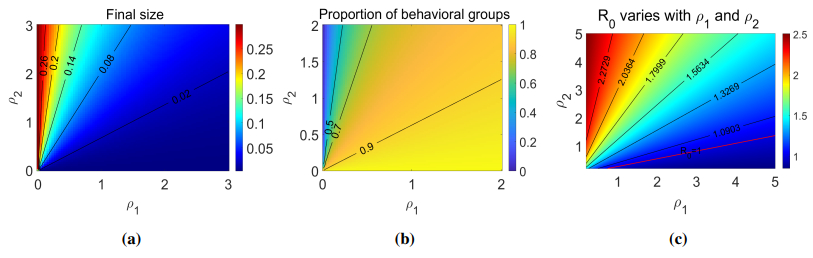
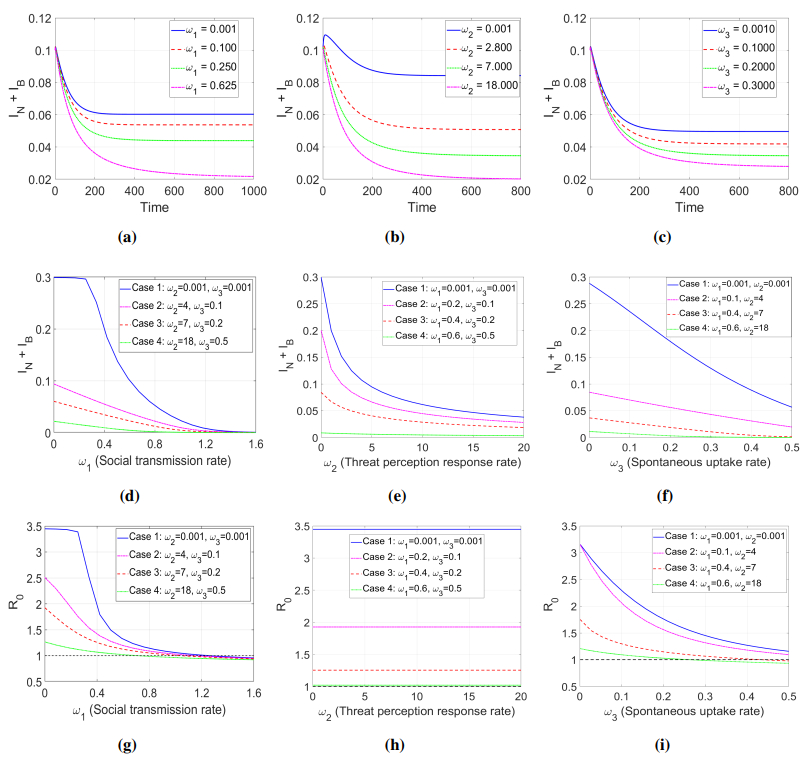
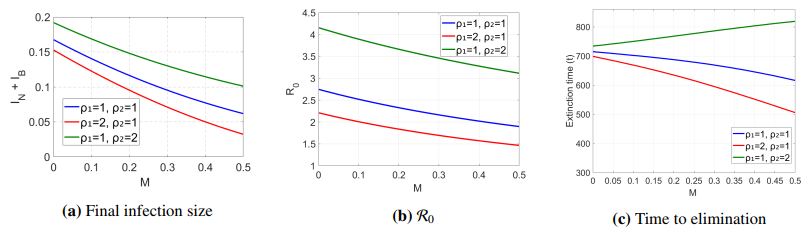
At the early stage of an emerging infectious disease outbreak, the interplay between individual protective behavior and therapeutic resources profoundly influences the effectiveness of epidemic control. By extending the classic behavior–disease coupling framework, this paper developed a dynamic model that concurrently incorporates heterogeneous behavioral adoption dynamics and saturation effects in treatment resources. Two behavioral regulation parameters were introduced to quantify their synergistic influence on transmission dynamics. Theoretical analysis yielded the basic reproduction number for both homogeneous and mixed systems, thereby establishing the threshold dynamics of the model. Numerical simulations demonstrated that increasing the intensity of behavioral adoption significantly reduces both the infection scale and transmission risk, and can even lower $ \mathcal{R}_0 $ below the epidemic. However, if the driving force for adoption is insufficient, transmission risk in the mixed system may exceed that in a system with no behavioral adoption, suggesting that ineffective interventions could exacerbate disease spread. Under resource constraints, our results indicate that large-scale, high-compliance behavioral interventions are essential for epidemic control. They further provides a mathematical basis for designing integrated strategies that balance "behavioral maintenance" and "resource allocation".
Citation: Xinru Li, Ning Wang, Shengqiang Liu. Dynamics of an emerging infectious disease with a behavior change and constrained treatment resources[J]. Electronic Research Archive, 2026, 34(5): 2732-2759. doi: 10.3934/era.2026125
At the early stage of an emerging infectious disease outbreak, the interplay between individual protective behavior and therapeutic resources profoundly influences the effectiveness of epidemic control. By extending the classic behavior–disease coupling framework, this paper developed a dynamic model that concurrently incorporates heterogeneous behavioral adoption dynamics and saturation effects in treatment resources. Two behavioral regulation parameters were introduced to quantify their synergistic influence on transmission dynamics. Theoretical analysis yielded the basic reproduction number for both homogeneous and mixed systems, thereby establishing the threshold dynamics of the model. Numerical simulations demonstrated that increasing the intensity of behavioral adoption significantly reduces both the infection scale and transmission risk, and can even lower $ \mathcal{R}_0 $ below the epidemic. However, if the driving force for adoption is insufficient, transmission risk in the mixed system may exceed that in a system with no behavioral adoption, suggesting that ineffective interventions could exacerbate disease spread. Under resource constraints, our results indicate that large-scale, high-compliance behavioral interventions are essential for epidemic control. They further provides a mathematical basis for designing integrated strategies that balance "behavioral maintenance" and "resource allocation".

| [1] |
D. M. Morens, G. K. Folkers, A. S. Fauci, The challenge of emerging and re-emerging infectious diseases, Nature, 430 (2004), 242–249. https://doi.org/10.1038/nature02759 doi: 10.1038/nature02759

|
| [2] |
K. E. Jones, N. G. Patel, M. A. Levy, A. Storeygard, D. Balk, J. L. Gittleman, et al., Global trends in emerging infectious diseases, Nature, 451 (2008), 990–993. https://doi.org/10.1038/nature06536 doi: 10.1038/nature06536
|
| [3] |
N. Wang, L. Qi, M. Bessane, M. Hao, Global Hopf bifurcation of a two-delay epidemic model with media coverage and asymptomatic infection, J. Differ. Equations, 369 (2023), 1–40. https://doi.org/10.1016/j.jde.2023.05.036 doi: 10.1016/j.jde.2023.05.036
|
| [4] |
N. Wang, L. Qi, G. Cheng, Dynamical analysis for the impact of asymptomatic infective and infection delay on disease transmission, Math. Comput. Simul., 200 (2022), 525–556. https://doi.org/10.1016/j.matcom.2022.04.029 doi: 10.1016/j.matcom.2022.04.029
|
| [5] |
P. P. Win, Z. Lin, M. Zhang, The final size and critical times of an SIVR epidemic model, Adv. Contin. Discrete Models, 2025 (2025), 31. https://doi.org/10.1186/s13662-025-03902-2 doi: 10.1186/s13662-025-03902-2
|
| [6] |
M. Jusup, P. Holme, K. Kanazawa, M. Takayasu, I. Romić, Z. Wang, et al., Social physics, Phys. Rep., 948 (2022), 1–148. https://doi.org/10.1016/j.physrep.2021.10.005 doi: 10.1016/j.physrep.2021.10.005
|
| [7] |
Y. Li, Y. Yao, M. Feng, T. P. Benko, M. Perc, J. Završnik, Epidemic dynamics in homes and destinations under recurrent mobility patterns, Chaos, Solitons Fractals, 195 (2025), 116273. https://doi.org/10.1016/j.chaos.2025.116273 doi: 10.1016/j.chaos.2025.116273
|
| [8] |
W. Wu, Q. Zhang, H. Wang, S. Liu, Cholera dynamics driven by human behavior change via a degenerate reaction-diffusion model, Z. Angew. Math. Phys., 76 (2025), 114. https://doi.org/10.1007/s00033-025-02495-w doi: 10.1007/s00033-025-02495-w
|
| [9] |
M. Ryan, E. Brindal, R. I. Hickson, Behavior and infection feedback loops inform early-stage behavior emergence and the efficacy of interventions, Math. Med. Life Sci., 2 (2025), 2452444. https://doi.org/10.1080/29937574.2025.2452444 doi: 10.1080/29937574.2025.2452444
|
| [10] |
G. Fan, J. Li, J. Belair, H. Zhu, Delayed model for the transmission and control of COVID-19 with Fangcang shelter hospitals, SIAM J. Appl. Math., 83 (2023), 276–301. https://doi.org/10.1137/21M146154X doi: 10.1137/21M146154X
|
| [11] |
S. Gao, P. Binod, C. W. Chukwu, T. Kwofie, S. Safdar, L. Newman, et al., A mathematical model to assess the impact of testing and isolation compliance on the transmission of COVID-19, Infect. Dis. Modell., 8 (2023), 427–444. https://doi.org/10.1016/j.idm.2023.04.005 doi: 10.1016/j.idm.2023.04.005
|
| [12] |
I. Ahmad, H. Seno, An epidemic dynamics model with limited isolation capacity, Theory Biosci., 142 (2023), 259–273. https://doi.org/10.1007/s12064-023-00399-9 doi: 10.1007/s12064-023-00399-9
|
| [13] |
Z. Fu, H. Seno, SIRI+Q model with a limited capacity of isolation, Theory Biosci., 144 (2025), 121–144. https://doi.org/10.1007/s12064-025-00437-8 doi: 10.1007/s12064-025-00437-8
|
| [14] |
H. Zhao, L. Wang, S. M. Oliva, H. Zhu, Modeling and dynamics analysis of Zika transmission with limited medical resources, Bull. Math. Biol., 82 (2020), 99. https://doi.org/10.1007/s11538-020-00776-1 doi: 10.1007/s11538-020-00776-1
|
| [15] |
J. Wang, S. Liu, B. Zheng, Y. Takeuchi, Qualitative and bifurcation analysis using an SIR model with a saturated treatment function, Math. Comput. Modell., 55 (2012), 710–722. https://doi.org/10.1016/j.mcm.2011.08.045 doi: 10.1016/j.mcm.2011.08.045
|
| [16] |
B. Tang, W. Zhou, X. Wang, H. Wu, Y. Xiao, Controlling multiple COVID-19 epidemic waves: an insight from a multi-scale model linking the behavior change dynamics to the disease transmission dynamics, Bull. Math. Biol., 84 (2022), 106. https://doi.org/10.1007/s11538-022-01061-z doi: 10.1007/s11538-022-01061-z
|
| [17] |
A. D. Becker, K. H. Grantz, S. T. Hegde, S. Bérubé, D. A. T. Cummings, A. Wesolowski, Development and dissemination of infectious disease dynamic transmission models during the COVID-19 pandemic: what can we learn from other pathogens and how can we move forward?, Lancet Digit. Health, 3 (2021), e41–e50. https://doi.org/10.1016/S2589-7500(20)30268-5 doi: 10.1016/S2589-7500(20)30268-5
|
| [18] |
J. Bedson, L. A. Skrip, D. Pedi, S. Abramowitz, S. Carter, M. F. Jalloh, et al., A review and agenda for integrated disease models including social and behavioral factors, Nat. Hum. Behav., 5 (2021), 834–846. https://doi.org/10.1038/s41562-021-01136-2 doi: 10.1038/s41562-021-01136-2
|
| [19] |
S. Funk, S. Bansal, C. T. Bauch, K. T. D. Eames, W. J. Edmunds, A. P. Galvani, et al., Nine challenges in incorporating the dynamics of behavior in infectious diseases models, Epidemics, 10 (2015), 21–25. https://doi.org/10.1016/j.epidem.2014.12.005 doi: 10.1016/j.epidem.2014.12.005
|
| [20] |
R. N. Shalan, R. Shireen, A. H. Lafta, Discrete an SIS model with immigrants and treatment, J. Interdiscip. Math., 24 (2020), 1201–1206. https://doi.org/10.1080/09720502.2020.1814496 doi: 10.1080/09720502.2020.1814496
|
| [21] |
W. O. Kermack, A. G. McKendrick, A contribution to the mathematical theory of epidemics, Proc. R. Soc. A, 115 (1927), 700–721. https://doi.org/10.1098/rspa.1927.0118 doi: 10.1098/rspa.1927.0118
|
| [22] |
D. P. Durham, E. A. Casman, Incorporating individual health-protective decisions into disease transmission models: a mathematical framework, J. R. Soc. Interface, 9 (2012), 562–570. https://doi.org/10.1098/rsif.2011.0325 doi: 10.1098/rsif.2011.0325
|
| [23] |
C. J. Fan, Y. Jin, L. A. Huo, C. Liu, Y. P. Yang, Y. Q. Wang, Effect of individual behavior on the interplay between awareness and disease spreading in multiplex networks, Physica A, 461 (2016), 523–530. https://doi.org/10.1016/j.physa.2016.06.050 doi: 10.1016/j.physa.2016.06.050
|
| [24] |
L. Hébert-Dufresne, D. Mistry, B. M. Althouse, Spread of infectious disease and social awareness as parasitic contagions on clustered networks, Phys. Rev. Res., 2 (2020), 033306. https://doi.org/10.1103/PhysRevResearch.2.033306 doi: 10.1103/PhysRevResearch.2.033306
|
| [25] |
N. Perra, D. Balcan, B. Gonçalves, A. Vespignani, Towards a characterization of behavior-disease models, PLoS One, 6 (2011), e23084. https://doi.org/10.1371/journal.pone.0023084 doi: 10.1371/journal.pone.0023084
|
| [26] |
J. M. Epstein, E. Hatna, J. Crodelle, Triple contagion: a two-fears epidemic model, J. R. Soc. Interface, 18 (2021), 20210186. https://doi.org/10.1098/rsif.2021.0186 doi: 10.1098/rsif.2021.0186
|
| [27] |
M. Ryan, E. Brindal, M. Roberts, R. I. Hickson, A behavior and disease transmission model: incorporating the Health Belief Model for human behavior into a simple transmission model, J. R. Soc. Interface, 21 (2024), 20240038. https://doi.org/10.1098/rsif.2024.0038 doi: 10.1098/rsif.2024.0038
|
| [28] | M. Ryan, R. I. Hickson, E. M. Hill, T. House, V. Isham, D. Zhang, et al., A behavior and disease model of testing and isolation, preprint, arXiv: 2504.02488. |
| [29] |
A. Kaur, R. C. Tyson, I. R. Moyles, The impact of fear and behavior response to established and novel diseases, SIAM J. Appl. Math., 85 (2025), 687–710. https://doi.org/10.1137/24M1670718 doi: 10.1137/24M1670718
|
| [30] |
G. O. Agaba, Y. N. Kyrychko, K. B. Blyuss, Mathematical model for the impact of awareness on the dynamics of infectious diseases, Math. Biosci., 286 (2017), 22–30. https://doi.org/10.1016/j.mbs.2017.01.009 doi: 10.1016/j.mbs.2017.01.009
|
| [31] |
Y. Shang, Global stability of disease-free equilibria in a two-group SI model with feedback control, Nonlinear Anal. Model. Control, 20 (2015), 501–508. https://doi.org/10.15388/NA.2015.4.3 doi: 10.15388/NA.2015.4.3
|
| [32] |
P. Van den Driessche, Reproduction numbers of infectious disease models, Infect. Dis. Modell., 2 (2017), 288–303. https://doi.org/10.1016/j.idm.2017.06.002 doi: 10.1016/j.idm.2017.06.002
|
| [33] |
O. Diekmann, J. A. P. Heesterbeek, J. A. J. Metz, On the definition and the computation of the basic reproduction ratio $R_0$ in models for infectious diseases in heterogeneous populations, J. Math. Biol., 28 (1990), 365–382. https://doi.org/10.1007/BF00178324 doi: 10.1007/BF00178324
|
| [34] |
Y. Bai, X. Wang, S. Guo, Global stability of a mumps transmission model with quarantine measure, Acta Math. Appl. Sin., 37 (2021), 665–672. https://doi.org/10.1007/s10255-021-1035-7 doi: 10.1007/s10255-021-1035-7
|
| [35] |
S. Guo, Y. Xue, M. He, J. Cui, Modeling and analysis of malaria transmission dynamics considering vaccination and vaccine failure, Acta Math. Appl. Sin., 47 (2024), 1–11. https://doi.org/10.20142/j.cnki.amas.202401001 doi: 10.20142/j.cnki.amas.202401001
|
| [36] | J. P. LaSalle, The Stability of Dynamical Systems, SIAM, 1976. https://doi.org/10.1137/1.9781611970432 |
| [37] |
M. Shen, Y. Xiao, G. Zhuang, Y. Li, L. Zhang, Mass testing–An underexplored strategy for COVID-19 control, Innovation, 2 (2021), 100114. https://doi.org/10.1016/j.xinn.2021.100114 doi: 10.1016/j.xinn.2021.100114
|
| [38] |
D. P. Oran, E. J. Topol, Prevalence of asymptomatic SARS-CoV-2 infection: a narrative review, Ann. Intern. Med., 173 (2020), 362–367. https://doi.org/10.7326/M20-3012 doi: 10.7326/M20-3012
|
Figures(7) / Tables(1)
Xinru Li, Ning Wang, Shengqiang Liu. Dynamics of an emerging infectious disease with a behavior change and constrained treatment resources[J]. Electronic Research Archive, 2026, 34(5): 2732-2759. doi: 10.3934/era.2026125





 DownLoad: