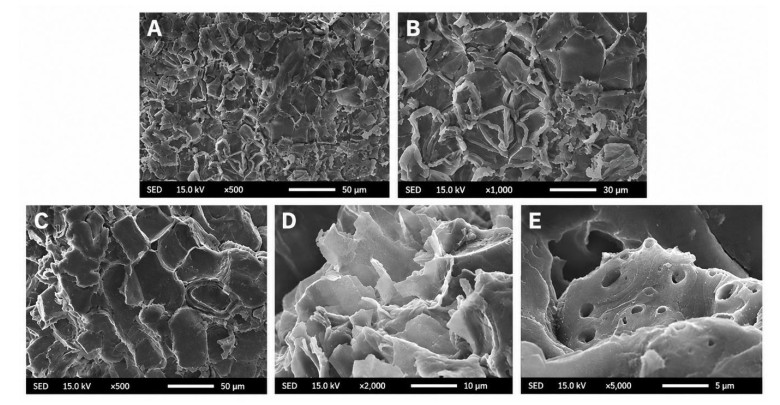
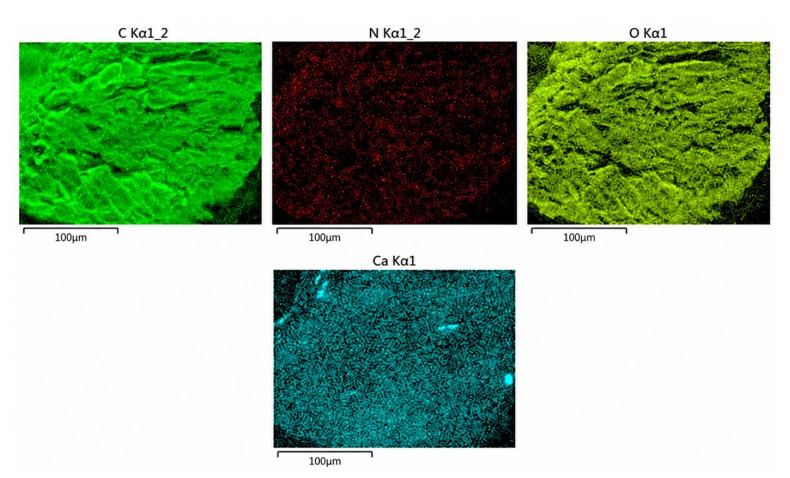
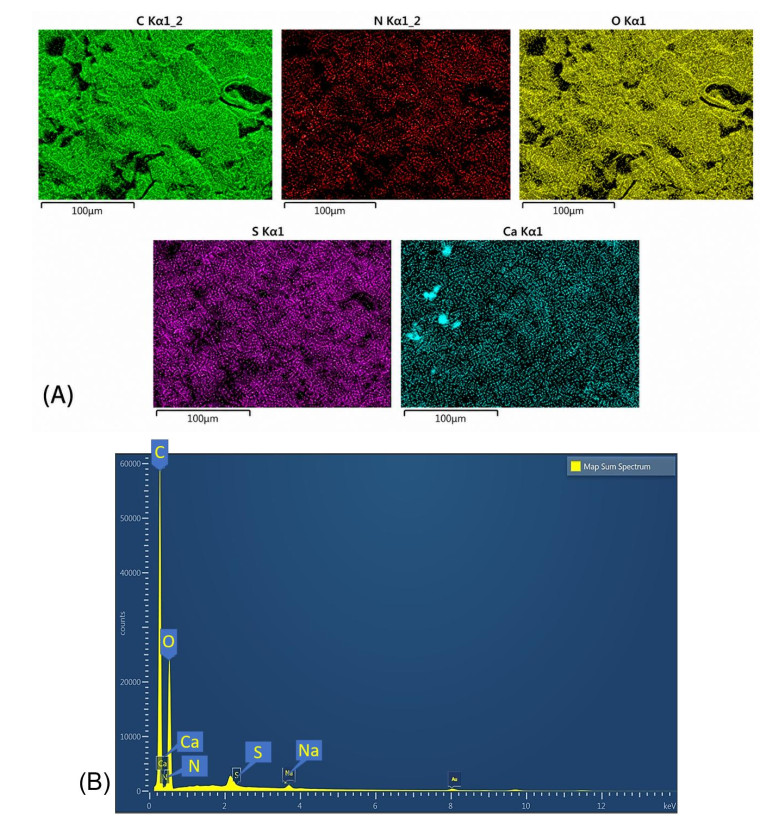
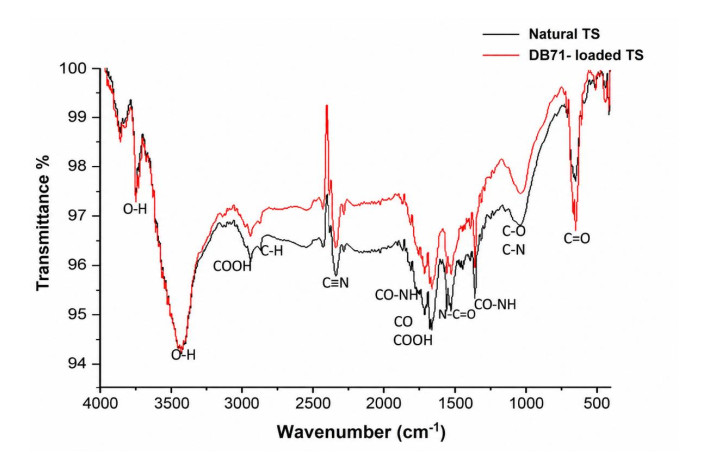
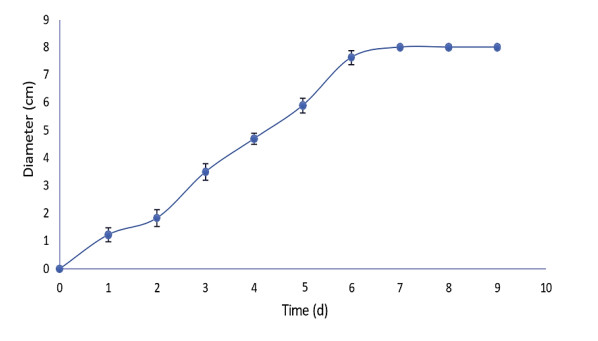
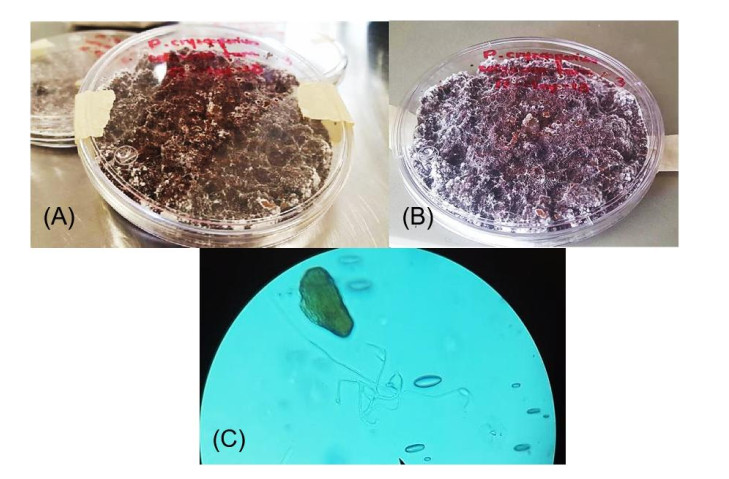
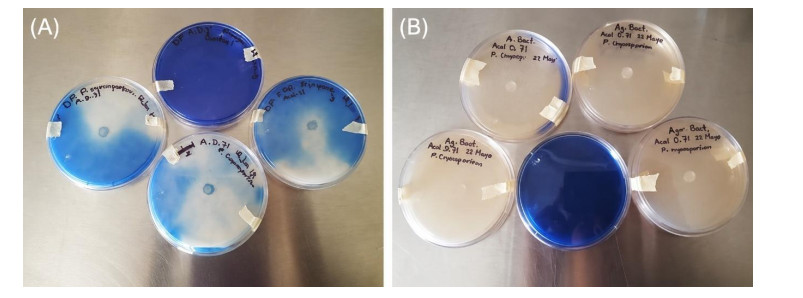
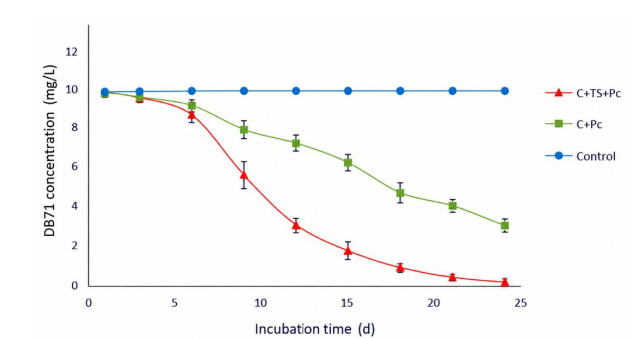
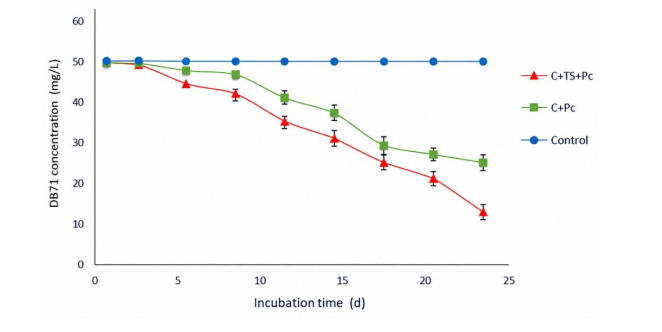
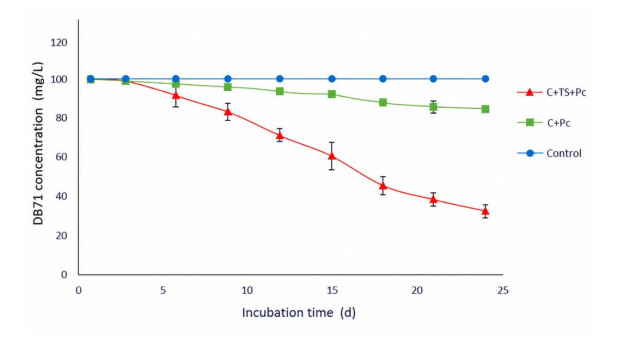
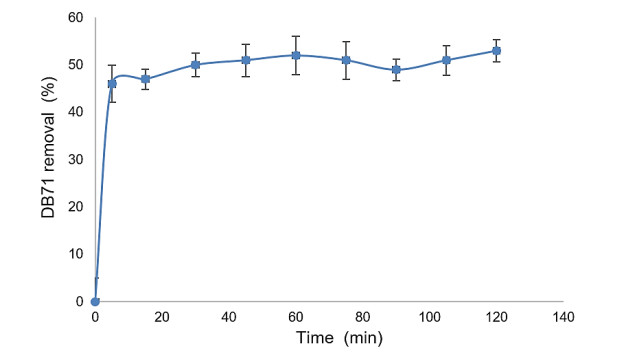
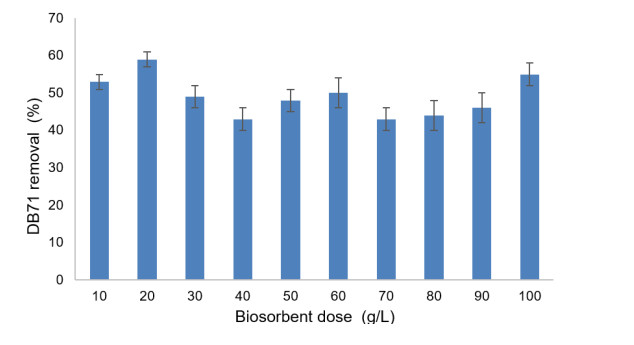
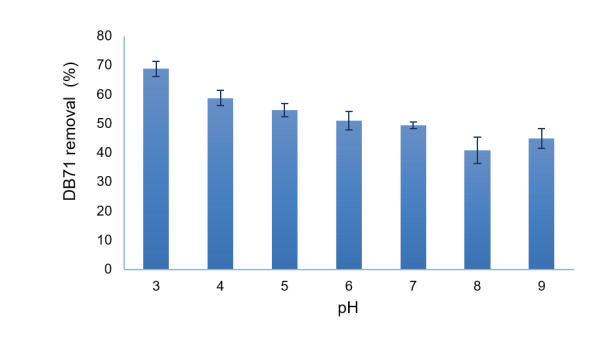
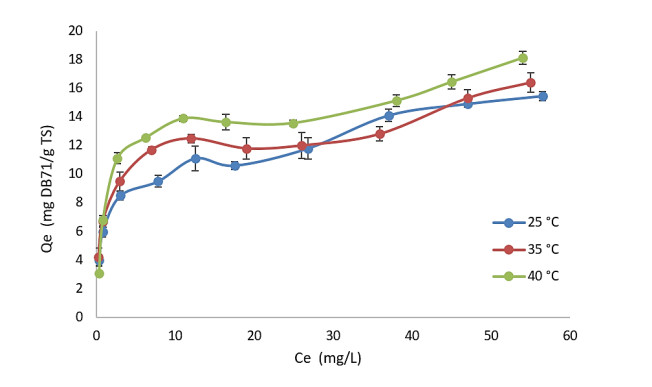
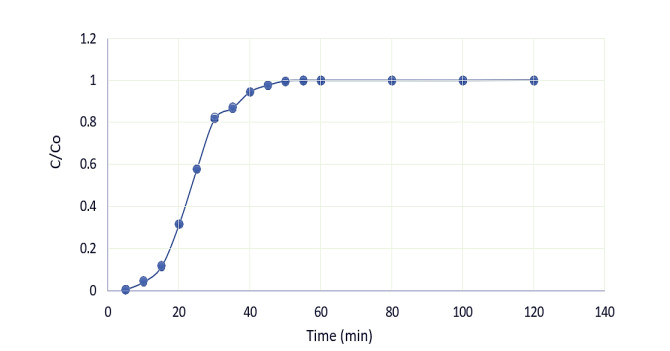
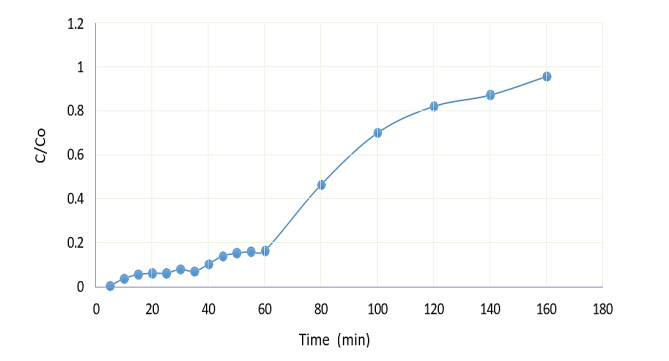
The increasing discharge of textile dyes into water bodies poses significant environmental and public health challenges. This study developed and evaluated a synergistic system to remove Direct Blue 71 (DB71), a recalcitrant triazo dye, from aqueous solutions by combining biosorption onto tamarind shell (Tamarindus indica, TS) with biodegradation by Phanerochaete chrysosporium (Pc) immobilized on TS. Both individual and combined systems (TS+Pc) were assessed in batch and continuous fixed-bed column configurations. FTIR and SEM-EDS analyses confirmed that TS has a porous, heterogeneous surface rich in hydroxyl, carboxyl, carbonyl, and amino functional groups; post-adsorption detection of sulfur, absent in the untreated material and attributable only to the dye's sulfonate groups, provided direct evidence of DB71 binding. The pseudo-second-order model best described biosorption kinetics. Maximum DB71 removal (69%) was achieved at pH 3 with a biosorbent dose of 20 g/L, with ~54% still removed at near-neutral pH 7, indicating effective operation without strong acidification. The equilibrium data in the concentration range studied were best fitted by the Freundlich model at 25 and 35 ℃ and by the Langmuir model at 40 ℃, in line with adsorption on an energetically heterogeneous surface. Since no saturation plateau was obtained, the fitted Langmuir Qo (13.66 mg/g at 25 ℃ and 15.73 mg/g at 40 ℃) represents an operational capacity for this range rather than a monolayer capacity. Thermodynamic analysis indicated a spontaneous process (ΔG° = −33.3 to −35.5 kJ/mol), with uptake increasing with temperature. P. chrysosporium successfully colonized TS within 6–7 days and decolorized DB71 on both nutrient-rich and nutrient-free solid media. In batch experiments, the TS+Pc system achieved decolorization efficiencies of 98%, 76%, and 67% at DB71 concentrations of 10, 50, and 100 mg/L, respectively, substantially outperforming the fungus alone (68%, 49%, and 16%). In fixed-bed columns, inoculation of TS with Pc extended the breakthrough time from 25 to 82 min and increased the bed capacity at breakthrough from 2.51 to 8.39 µg/g, a 3.3-fold gain, with the Yoon-Nelson model providing an adequate operational description of the column dynamics (R2 = 0.9928). These results demonstrate that tamarind shell functions simultaneously as a primary biosorbent and a nutrient-rich substrate that sustains fungal ligninolytic activity, yielding a synergistic, low-cost, and sustainable approach for treating azo dye–contaminated textile wastewater.
Citation: Ana Dilia Mota-Gutiérrez, Raúl Cortés-Martínez, Ruth Alfaro-Cuevas-Villanueva, Orlando Hernández-Cristóbal, Karla Gabriela Domínguez-González. Direct Blue 71 removal by tamarind shell-supported Phanerochaete chrysosporium: synergistic biosorption and biodegradation in batch and fixed-bed systems[J]. AIMS Environmental Science, 2026, 13(5): 828-864. doi: 10.3934/environsci.2026033
The increasing discharge of textile dyes into water bodies poses significant environmental and public health challenges. This study developed and evaluated a synergistic system to remove Direct Blue 71 (DB71), a recalcitrant triazo dye, from aqueous solutions by combining biosorption onto tamarind shell (Tamarindus indica, TS) with biodegradation by Phanerochaete chrysosporium (Pc) immobilized on TS. Both individual and combined systems (TS+Pc) were assessed in batch and continuous fixed-bed column configurations. FTIR and SEM-EDS analyses confirmed that TS has a porous, heterogeneous surface rich in hydroxyl, carboxyl, carbonyl, and amino functional groups; post-adsorption detection of sulfur, absent in the untreated material and attributable only to the dye's sulfonate groups, provided direct evidence of DB71 binding. The pseudo-second-order model best described biosorption kinetics. Maximum DB71 removal (69%) was achieved at pH 3 with a biosorbent dose of 20 g/L, with ~54% still removed at near-neutral pH 7, indicating effective operation without strong acidification. The equilibrium data in the concentration range studied were best fitted by the Freundlich model at 25 and 35 ℃ and by the Langmuir model at 40 ℃, in line with adsorption on an energetically heterogeneous surface. Since no saturation plateau was obtained, the fitted Langmuir Qo (13.66 mg/g at 25 ℃ and 15.73 mg/g at 40 ℃) represents an operational capacity for this range rather than a monolayer capacity. Thermodynamic analysis indicated a spontaneous process (ΔG° = −33.3 to −35.5 kJ/mol), with uptake increasing with temperature. P. chrysosporium successfully colonized TS within 6–7 days and decolorized DB71 on both nutrient-rich and nutrient-free solid media. In batch experiments, the TS+Pc system achieved decolorization efficiencies of 98%, 76%, and 67% at DB71 concentrations of 10, 50, and 100 mg/L, respectively, substantially outperforming the fungus alone (68%, 49%, and 16%). In fixed-bed columns, inoculation of TS with Pc extended the breakthrough time from 25 to 82 min and increased the bed capacity at breakthrough from 2.51 to 8.39 µg/g, a 3.3-fold gain, with the Yoon-Nelson model providing an adequate operational description of the column dynamics (R2 = 0.9928). These results demonstrate that tamarind shell functions simultaneously as a primary biosorbent and a nutrient-rich substrate that sustains fungal ligninolytic activity, yielding a synergistic, low-cost, and sustainable approach for treating azo dye–contaminated textile wastewater.

| [1] | Berradi M, Hsissou R, Khudhair M, et al. (2019) Textile finishing dyes and their impact on aquatic environs. Heliyon 5. |
| [2] |
Yaseen DA, Scholz M (2019) Textile dye wastewater characteristics and constituents of synthetic effluents: a critical review. Int J Environ Sci Technol 16: 1193–1226.https://doi.org/10.1007/s13762-018-2130-z doi: 10.1007/s13762-018-2130-z

|
| [3] |
Roy A, Adhikari B, Majumder SB (2013) Equilibrium, Kinetic, and Thermodynamic Studies of Azo Dye Adsorption from Aqueous Solution by Chemically Modified Lignocellulosic Jute Fiber. Ind Eng Chem Res 52: 6502–6512.https://doi.org/10.1021/ie400236s doi: 10.1021/ie400236s
|
| [4] |
Ertugay N, Acar FN (2017) Removal of COD and color from Direct Blue 71 azo dye wastewater by Fenton's oxidation: Kinetic study. Arab J Chem 10: S1158–S1163.https://doi.org/10.1016/j.arabjc.2013.02.009 doi: 10.1016/j.arabjc.2013.02.009
|
| [5] |
Maleki S, Ghorbani S, Monajemi P (2023) Decolorization of azo Direct Blue 71 dye in aqueous solutions using sequential upflow anaerobic sludge blanket reactor and UV/H2O2 process. Biochem Eng J 199: 109057.https://doi.org/10.1016/j.bej.2023.109057 doi: 10.1016/j.bej.2023.109057
|
| [6] |
Hamad HN, Idrus S (2022) Recent Developments in the Application of Bio-Waste-Derived Adsorbents for the Removal of Methylene Blue from Wastewater: A Review. Polymers 14.https://doi.org/10.3390/polym14040783 doi: 10.3390/polym14040783
|
| [7] |
Ali K, Zeidan H, Amar RB (2023) Evaluation of the use of agricultural waste materials as low-cost and eco-friendly sorbents to remove dyes from water: a review. Desalin Water Treat 302: 231–252.https://doi.org/10.5004/dwt.2023.29725 doi: 10.5004/dwt.2023.29725
|
| [8] |
Buhani, Putri HY, Nasution MhdAA, et al. (2025) Magnetite-coated and silanized carbon from rubber fruit shells for synthetic dye removal. Microchem J 219: 116125.https://doi.org/10.1016/j.microc.2025.116125 doi: 10.1016/j.microc.2025.116125
|
| [9] |
Lawrence NA, Siddiqui S, Isaac R, et al. (2026) Waste-to-resource approach: Sustainable synthesis and life cycle assessment of rice husk char-supported Mg–Al layered double hydroxide for dye biosorption. Sustain Chem Pharm 52: 102474.https://doi.org/10.1016/j.scp.2026.102474 doi: 10.1016/j.scp.2026.102474
|
| [10] |
Garcia-Amezquita LE, Tejada-Ortigoza V, Heredia-Olea E, et al. (2018) Differences in the dietary fiber content of fruits and their by-products quantified by conventional and integrated AOAC official methodologies. J Food Compos Anal 67: 77–85.https://doi.org/10.1016/j.jfca.2018.01.004 doi: 10.1016/j.jfca.2018.01.004
|
| [11] |
Amulani A, Nandanwar T, Baskaran K, et al. (2023) Characterization of tamarind biomass to substantiate the feasibility towards alternative fuel. Sustaina Energy Technol Assess 56: 103056.https://doi.org/10.1016/j.seta.2023.103056 doi: 10.1016/j.seta.2023.103056
|
| [12] | Costa FCR, Brito FSL, Grandi MJR de, et al. (2025) White Rot Fungi for Biodegradation of Dyes: Potential for Industrial Uses - A Review. J Braz Chem Soc 36: e. |
| [13] |
Liu S, Xu X, Kang Y, et al. (2020) Degradation and detoxification of azo dyes with recombinant ligninolytic enzymes from Aspergillus sp. with secretory overexpression in Pichia pastoris. R Soc Open Sci 7: 200688.https://doi.org/10.1098/rsos.200688 doi: 10.1098/rsos.200688
|
| [14] |
Santos ADO, Bandeira L, Silva GMM, et al. (2021) Use of Phanerochaete Chrysosporium in a Semibatch Reactor for Removal of Indigo Carmine from Synthetic Textile Wastewater. Braz arch biol technol 64: e21200503.https://doi.org/10.1590/1678-4324-2021200503 doi: 10.1590/1678-4324-2021200503
|
| [15] |
Bié J, Sepodes B, Fernandes PCB, et al. (2022) Enzyme Immobilization and Co-Immobilization: Main Framework, Advances and Some Applications. Processes 10.https://doi.org/10.3390/pr10030494 doi: 10.3390/pr10030494
|
| [16] |
Tapia-Quiroz GE, Valencia-Leal SA, Vázquez-Guerrero A, et al. (2025) Surfactant-Enhanced Guava Seed Biosorbent for Lead and Cadmium Removal: Kinetics, Thermodynamics, and Reusability Insights. Sustain Chem 6: 5.https://doi.org/10.3390/suschem6010005 doi: 10.3390/suschem6010005
|
| [17] |
Soury R, Teka S, Alenezi KM, et al. (2023) Characterization and application of ligno-cellulosic fibers derived from Robinia Pseudoacacia for the bio-sorption of methylene blue from water. Int J Phytoremediat 25: 1359–1370.https://doi.org/10.1080/15226514.2022.2158782 doi: 10.1080/15226514.2022.2158782
|
| [18] |
Mihai S, Bondarev A, Călin C, et al. (2024) Adsorbent Biomaterials Based on Natural Clays and Orange Peel Waste for the Removal of Anionic Dyes from Water. Processes 12.https://doi.org/10.3390/pr12051032 doi: 10.3390/pr12051032
|
| [19] |
Bulut Y, Gözübenli N, Aydın H (2007) Equilibrium and kinetics studies for adsorption of direct blue 71 from aqueous solution by wheat shells. J Hazard Mater 144: 300–306.https://doi.org/10.1016/j.jhazmat.2006.10.027 doi: 10.1016/j.jhazmat.2006.10.027
|
| [20] |
Chan K-T, Ong S-T, Ha S-T (2024) Adsorptive removal of Congo Red dye from its aqueous solutions by tetraethylenepentamine modified peanut husks composite beads. Desalin Water Treat 317: 100060.https://doi.org/10.1016/j.dwt.2024.100060 doi: 10.1016/j.dwt.2024.100060
|
| [21] | Broche Galindo MH, Rodríguez Rico IL, Coca Rives Y, et al. (2018) Caracterización de los residuos agrícolas de sorgo para su uso como material biosorbente de colorantes. Centro Azúcar 45: 64–75. |
| [22] |
Gaur B, Mittal J, Shah SAA, et al. (2024) Sequestration of an Azo Dye by a Potential Biosorbent: Characterization of Biosorbent, Adsorption Isotherm and Adsorption Kinetic Studies. Molecules 29.https://doi.org/10.3390/molecules29102387 doi: 10.3390/molecules29102387
|
| [23] |
Stark NM, Matuana LM (2007) Characterization of weathered wood–plastic composite surfaces using FTIR spectroscopy, contact angle, and XPS. Polym Degrad Stabil 92: 1883–1890.https://doi.org/10.1016/j.polymdegradstab.2007.06.017 doi: 10.1016/j.polymdegradstab.2007.06.017
|
| [24] |
Poletto M, Zattera AJ, Santana RMC (2012) Structural differences between wood species: Evidence from chemical composition, FTIR spectroscopy, and thermogravimetric analysis. J Appl Polym Sci 126: E337–E344.https://doi.org/10.1002/app.36991 doi: 10.1002/app.36991
|
| [25] |
Sun RC, Tomkinson J (2002) Characterization of hemicelluloses obtained by classical and ultrasonically assisted extractions from wheat straw. Carbohydr Polym 50: 263–271.https://doi.org/10.1016/S0144-8617(02)00037-1 doi: 10.1016/S0144-8617(02)00037-1
|
| [26] |
Sivaraj R, Namasivayam C, Kadirvelu K (2001) Orange peel as an adsorbent in the removal of Acid violet 17 (acid dye) from aqueous solutions. Waste Manage 21: 105–110.https://doi.org/10.1016/S0956-053X(00)00076-3 doi: 10.1016/S0956-053X(00)00076-3
|
| [27] | Kasbaji M, Mennani M, Grimi N, et al. (2023) Adsorption of cationic and anionic dyes onto coffee grounds cellulose/sodium alginate double-network hydrogel beads: Isotherm analysis and recyclability performance. Int J Biol Macromol 239: 124288.https://doi.org/10.1016/j.ijbiomac.2023.124288 |
| [28] |
Li Y, Du Q, Liu T, et al. (2013) Comparative study of methylene blue dye adsorption onto activated carbon, graphene oxide, and carbon nanotubes. Chemical Engineering Research and Design 91: 361–368.https://doi.org/10.1016/j.cherd.2012.07.007 doi: 10.1016/j.cherd.2012.07.007
|
| [29] |
Verma P, Madamwar D (2002) Production of ligninolytic enzymes for dye decolorization by cocultivation of white-rot fungi Pleurotus ostreatus and Phanerochaete chrysosporium under solid-state fermentation. Appl Biochem Biotechnol 102: 109–118.https://doi.org/10.1385/ABAB:102-103:1-6:109 doi: 10.1385/ABAB:102-103:1-6:109
|
| [30] | Villa Y, Espín N (2012) Determinación de la cinética de crecimiento del hongo Phanerochaete chrysosporium en residuos lignocelulósicos y determinación de la actividad ligninoperoxidásica. Revista Politécnica 31. |
| [31] |
Zhi Z, Wang H (2014) White-rot fungal pretreatment of wheat straw with Phanerochaete chrysosporium for biohydrogen production: simultaneous saccharification and fermentation. Bioprocess Biosyst Eng 37: 1447–1458.https://doi.org/10.1007/s00449-013-1117-x doi: 10.1007/s00449-013-1117-x
|
| [32] |
Mehmood A, Hussain A, Irshad M, et al. (2019) Cinnamic acid as an inhibitor of growth, flavonoids exudation and endophytic fungus colonization in maize root. Plant Physiol Biochem 135: 61–68.https://doi.org/10.1016/j.plaphy.2018.11.029 doi: 10.1016/j.plaphy.2018.11.029
|
| [33] |
Moreira MT, Feijoo G, Palma C, et al. (1997) Continuous production of manganese peroxidase by Phanerochaete chrysosporium immobilized on polyurethane foam in a pulsed packed-bed bioreactor. Biotechnol Bioeng 56: 130–137.https://doi.org/10.1002/(SICI)1097-0290(19971020)56:2<130::AID-BIT2>3.0.CO;2-Q doi: 10.1002/(SICI)1097-0290(19971020)56:2<130::AID-BIT2>3.0.CO;2-Q
|
| [34] |
Nilsson I, Möller A, Mattiasson B, et al. (2006) Decolorization of synthetic and real textile wastewater by the use of white-rot fungi. Enzyme Microb Technol 38: 94–100.https://doi.org/10.1016/j.enzmictec.2005.04.020 doi: 10.1016/j.enzmictec.2005.04.020
|
| [35] |
Aksu Z (2005) Application of biosorption for the removal of organic pollutants: a review. Process Biochem 40: 997–1026.https://doi.org/10.1016/j.procbio.2004.04.008 doi: 10.1016/j.procbio.2004.04.008
|
| [36] |
Ho YS, McKay G, Wase DAJ, et al. (2000) Study of the Sorption of Divalent Metal Ions on to Peat. Adsorpt Sci Technol 18: 639–650.https://doi.org/10.1260/0263617001493693 doi: 10.1260/0263617001493693
|
| [37] |
Low M. J. D. (1960). Kinetics of chemisorption of gases on solids. Chem Rev 60: 267–312.https://doi.org/10.1021/cr60205a003 doi: 10.1021/cr60205a003
|
| [38] | Lagergren S. (1898). Zur Theorie der sogenannten Adsorption gelöster Stoffe. Kungliga Svenska Vetenskapsakademiens Handlingar 24: 1–39 |
| [39] |
Tran HN, You S-J, Hosseini-Bandegharaei A, et al. (2017) Mistakes and inconsistencies regarding adsorption of contaminants from aqueous solutions: A critical review. Water Res 120: 88–116.https://doi.org/10.1016/j.watres.2017.04.014 doi: 10.1016/j.watres.2017.04.014
|
| [40] |
Simonin J-P (2016) On the comparison of pseudo-first order and pseudo-second order rate laws in the modeling of adsorption kinetics. Chem Eng J 300: 254–263.https://doi.org/10.1016/j.cej.2016.04.079 doi: 10.1016/j.cej.2016.04.079
|
| [41] |
Wu F-C, Tseng R-L, Juang R-S (2009) Characteristics of Elovich equation used for the analysis of adsorption kinetics in dye-chitosan systems. Chem Eng J 150: 366–373.https://doi.org/10.1016/j.cej.2009.01.014 doi: 10.1016/j.cej.2009.01.014
|
| [42] | Tang Y, Chen L, Wei X, et al. (2013) Removal of lead ions from aqueous solution by the dried aquatic plant, Lemna perpusilla Torr. J Hazard Mater 244–245: 603–612.https://doi.org/10.1016/j.jhazmat.2012.10.047 |
| [43] |
Overah LC (2020) Nonlinear Kinetic and Equilibrium Adsorption Isotherm Study of Cadmium (II) Sorption by Dacryodes edulis Biomass. Nigerian J Basic Appl Sci 28: 10–19.https://doi.org/10.4314/njbas.v28i2.2 doi: 10.4314/njbas.v28i2.2
|
| [44] |
Yadav M, Singh N, Annu, et al. (2024) Recent Advances in Utilizing Lignocellulosic Biomass Materials as Adsorbents for Textile Dye Removal: A Comprehensive Review. Polymers 16.https://doi.org/10.3390/polym16172417 doi: 10.3390/polym16172417
|
| [45] |
Mosoarca G, Vancea C, Popa S, et al. (2022) The Use of Bilberry Leaves (Vaccinium myrtillus L.) as an Efficient Adsorbent for Cationic Dye Removal from Aqueous Solutions. Polymers 14.https://doi.org/10.3390/polym14050978 doi: 10.3390/polym14050978
|
| [46] |
Kyzas GZ (2012) A Decolorization Technique with Spent "Greek Coffee" Grounds as Zero-Cost Adsorbents for Industrial Textile Wastewaters. Materials 5: 2069–2087.https://doi.org/10.3390/ma5112069 doi: 10.3390/ma5112069
|
| [47] |
Karishma S, Deivayanai VC, Thamarai P, et al. (2025) ANN-based modelling and isotherm–kinetic study of dye adsorption on acid-modified manila tamarind seed biomass. Chem Pap 79: 7079–7097.https://doi.org/10.1007/s11696-025-04247-6 doi: 10.1007/s11696-025-04247-6
|
| [48] |
Mihret T, Gabbiye N, Tegegne B, et al. (2025) Removal of reactive red 45 dye from aqueous solution using activated carbon developed from Catha edulis stem as a potential biosorbent. Sci Rep 15: 28195.https://doi.org/10.1038/s41598-025-09956-2 doi: 10.1038/s41598-025-09956-2
|
| [49] |
Wawrzkiewicz M, Bartczak P, Jesionowski T (2017) Enhanced removal of hazardous dye form aqueous solutions and real textile wastewater using bifunctional chitin/lignin biosorbent. Int J Biol Macromol 99: 754–764.https://doi.org/10.1016/j.ijbiomac.2017.03.023 doi: 10.1016/j.ijbiomac.2017.03.023
|
| [50] |
Khani R, Sobhani S, Beyki MH, et al. (2018) Application of magnetic ionomer for development of very fast and highly efficient uptake of triazo dye Direct Blue 71 form different water samples. Ecotox Environ Safe 150: 54–61.https://doi.org/10.1016/j.ecoenv.2017.12.018 doi: 10.1016/j.ecoenv.2017.12.018
|
| [51] |
Biglari H, Gonabad University of Medical Sciences, Gonabad, Iran, Javan N, et al. (2016) Direct Blue 71 Removal from Aqueous Solutions by Adsorption on Pistachio Hull Waste: Equilibrium, Kinetic and Thermodynamic Studies. Iran J Health Sci 4: 55–70.https://doi.org/10.18869/acadpub.jhs.4.2.55 doi: 10.18869/acadpub.jhs.4.2.55
|
| [52] |
Strebel A, Behringer M, Hilbig H, et al. (2024) Anionic azo dyes and their removal from textile wastewater through adsorption by various adsorbents: a critical review. Front Environ Eng 3.https://doi.org/10.3389/fenve.2024.1347981 doi: 10.3389/fenve.2024.1347981
|
| [53] |
Giles CH, D'Silva AP, Easton IA (1974) A general treatment and classification of the solute adsorption isotherm part. II. Experimental interpretation. J Colloid Interface Sci 47: 766–778.https://doi.org/10.1016/0021-9797(74)90253-7 doi: 10.1016/0021-9797(74)90253-7
|
| [54] |
Yu X, Zhang G, Xie C, et al. (2011) Equilibrium, kinetic, and thermodynamic studies of hazardous dye neutral red biosorption by spent corncob substrate. BioRes 6: 936–949.https://doi.org/10.15376/biores.6.2.936-949 doi: 10.15376/biores.6.2.936-949
|
| [55] |
Ouettar L, Guechi E-K, Hamdaoui O, et al. (2023) Biosorption of Triphenyl Methane Dyes (Malachite Green and Crystal Violet) from Aqueous Media by Alfa (Stipa tenacissima L.) Leaf Powder. Molecules 28.https://doi.org/10.3390/molecules28083313 doi: 10.3390/molecules28083313
|
| [56] |
Foo KY, Hameed BH (2010) Insights into the modeling of adsorption isotherm systems. Chem Eng J 156: 2–10.https://doi.org/10.1016/j.cej.2009.09.013 doi: 10.1016/j.cej.2009.09.013
|
| [57] |
Akpa OM, Unuabonah EI (2011) Small-Sample Corrected Akaike Information Criterion: An appropriate statistical tool for ranking of adsorption isotherm models. Desalination 272: 20–26.https://doi.org/10.1016/j.desal.2010.12.057 doi: 10.1016/j.desal.2010.12.057
|
| [58] |
Al-Zawahreh K, Al-Degs Y, Barral MT, et al. (2022) Optimization of Direct Blue 71 sorption by organic rich-compost following multilevel multifactor experimental design. Arab J Chem 15.https://doi.org/10.1016/j.arabjc.2021.103468 doi: 10.1016/j.arabjc.2021.103468
|
| [59] |
Mirzaei N, Mahvi AH, Hossini H (2018) Equilibrium and kinetics studies of Direct blue 71 adsorption from aqueous solutions using modified zeolite. Adsorpt Sci Technol 36: 80–94.https://doi.org/10.1177/0263617416684836 doi: 10.1177/0263617416684836
|
| [60] |
Reza Moradi (2018) Adsorption of Azo Dye Direct Blue 71 from Aqueous Solution Using NiFe2O4/CP Nanoparticles: Kinetic and Isotherm Model. Russ J Phys Chem 92: 2781–2789.https://doi.org/10.1134/S0036024418130277 doi: 10.1134/S0036024418130277
|
| [61] |
Abbasi M, Habibi MM (2016) Optimization and characterization of Direct Blue 71 removal using nanocomposite of Chitosan-MWCNTs: Central composite design modeling. J Taiwan Inst Chem Eng 62: 112–121.https://doi.org/10.1016/j.jtice.2016.01.019 doi: 10.1016/j.jtice.2016.01.019
|
| [62] |
Thirunavukkarasu A, Nithya R, Sivashankar R (2021) Continuous fixed-bed biosorption process: A review. Chem Eng J Adv 8: 100188.https://doi.org/10.1016/j.ceja.2021.100188 doi: 10.1016/j.ceja.2021.100188
|
| [63] |
Juela D, Vera M, Cruzat C, et al. (2021) Mathematical modeling and numerical simulation of sulfamethoxazole adsorption onto sugarcane bagasse in a fixed-bed column. Chemosphere 280: 130687.https://doi.org/10.1016/j.chemosphere.2021.130687 doi: 10.1016/j.chemosphere.2021.130687
|
| [64] |
Hussein FB, Mayer BK (2022) Fixed-bed column study of phosphate adsorption using immobilized phosphate-binding protein. Chemosphere 295: 133908.https://doi.org/10.1016/j.chemosphere.2022.133908 doi: 10.1016/j.chemosphere.2022.133908
|
 Environ-13-05-033-s001.pdf |
 |
Figures(16) / Tables(4)

Ana Dilia Mota-Gutiérrez, Raúl Cortés-Martínez, Ruth Alfaro-Cuevas-Villanueva, Orlando Hernández-Cristóbal, Karla Gabriela Domínguez-González. Direct Blue 71 removal by tamarind shell-supported Phanerochaete chrysosporium: synergistic biosorption and biodegradation in batch and fixed-bed systems[J]. AIMS Environmental Science, 2026, 13(5): 828-864. doi: 10.3934/environsci.2026033





 DownLoad: