Hydrogen-fueled spark-ignition engines represent a compelling technical pathway toward decarbonized transportation, combining zero-carbon tailpipe emissions with high thermodynamic efficiency and direct compatibility with existing manufacturing architectures. Among fuel-delivery methods, port fuel injection remains particularly useful because it is cost-effective, has low system complexity, and is easy to retrofit onto conventional gasoline platforms. Nevertheless, hydrogen's distinct physicochemical characteristics, namely its low minimum ignition energy, broad flammability range, high laminar burning velocity, low volumetric density, and rapid molecular diffusivity, fundamentally alter mixture homogenization, flame development, thermal efficiency, and emission profiles compared to those of conventional hydrocarbon fuels. This paper provides a critical, systematic review of the mechanisms governing mixture preparation and combustion behavior in PFI hydrogen SI engines. We thoroughly scrutinize key phenomena—including in-port mixing dynamics, in-cylinder flow fields, flame propagation kinetics, heat release rates, cyclic stability, abnormal combustion vulnerabilities (backfire, surface pre-ignition, and knock), and thermal NOx formation pathways. The review also comprehensively evaluates the operational impacts of primary control parameters, such as excess air ratio, spark phasing, compression ratio, injection strategy, engine load, engine speed, exhaust gas recirculation, and intake boosting. By synthesizing multidimensional computational fluid dynamics models, one-dimensional thermodynamic simulations, and bench-scale experimental data, this review identifies technological milestones and prevailing bottlenecks. Finally, unresolved technical barriers are outlined alongside prospective research trajectories, including optimized injection dynamics, intelligent closed-loop combustion control, dual-fuel synergies, and holistic system optimization, to accelerate the realization of high-efficiency, ultra-low-emission hydrogen powertrains for next-generation mobility.
Citation: Pham Van Trong, Nguyen Duy Vinh, Hoang Dinh Long. A comprehensive review of mixture formation and combustion mechanisms in port-fuel-injected hydrogen spark-ignition engines[J]. AIMS Energy, 2026, 14(6): 1299-1343. doi: 10.3934/energy.2026051
Hydrogen-fueled spark-ignition engines represent a compelling technical pathway toward decarbonized transportation, combining zero-carbon tailpipe emissions with high thermodynamic efficiency and direct compatibility with existing manufacturing architectures. Among fuel-delivery methods, port fuel injection remains particularly useful because it is cost-effective, has low system complexity, and is easy to retrofit onto conventional gasoline platforms. Nevertheless, hydrogen's distinct physicochemical characteristics, namely its low minimum ignition energy, broad flammability range, high laminar burning velocity, low volumetric density, and rapid molecular diffusivity, fundamentally alter mixture homogenization, flame development, thermal efficiency, and emission profiles compared to those of conventional hydrocarbon fuels. This paper provides a critical, systematic review of the mechanisms governing mixture preparation and combustion behavior in PFI hydrogen SI engines. We thoroughly scrutinize key phenomena—including in-port mixing dynamics, in-cylinder flow fields, flame propagation kinetics, heat release rates, cyclic stability, abnormal combustion vulnerabilities (backfire, surface pre-ignition, and knock), and thermal NOx formation pathways. The review also comprehensively evaluates the operational impacts of primary control parameters, such as excess air ratio, spark phasing, compression ratio, injection strategy, engine load, engine speed, exhaust gas recirculation, and intake boosting. By synthesizing multidimensional computational fluid dynamics models, one-dimensional thermodynamic simulations, and bench-scale experimental data, this review identifies technological milestones and prevailing bottlenecks. Finally, unresolved technical barriers are outlined alongside prospective research trajectories, including optimized injection dynamics, intelligent closed-loop combustion control, dual-fuel synergies, and holistic system optimization, to accelerate the realization of high-efficiency, ultra-low-emission hydrogen powertrains for next-generation mobility.

| [1] |
Sun Z, Hong J, Zhang T, et al. (2023) Hydrogen engine operation strategies: Recent progress, industrialization challenges, and perspectives. Int J Hydrogen Energy 48: 366–392. https://doi.org/10.1016/j.ijhydene.2022.09.256 doi: 10.1016/j.ijhydene.2022.09.256
|
| [2] |
Gao N, Geng Z, Zhao W, et al. (2025) Review on the combustion and emission characteristics of hydrogen engine. Int J Hydrogen Energy 143: 121–146. https://doi.org/10.1016/j.ijhydene.2025.05.321 doi: 10.1016/j.ijhydene.2025.05.321
|
| [3] |
Stępień Z (2021) A comprehensive overview of hydrogen-fueled internal combustion engines: Achievements and future challenges. Energies 14: 6504. https://doi.org/10.3390/en14206504 doi: 10.3390/en14206504
|
| [4] |
Musy F, Ortiz R, Ortiz I, et al. (2024) Hydrogen-fuelled internal combustion engines: Direct injection versus port-fuel injection. Int J Hydrogen Energy 137: 925–938. https://doi.org/10.1016/j.ijhydene.2024.07.136 doi: 10.1016/j.ijhydene.2024.07.136
|
| [5] |
Piano A, Quattrone G, Millo F, et al. (2024) Development and validation of a predictive combustion model for hydrogen-fuelled internal combustion engines. Int J Hydrogen Energy 89: 1310–1320. https://doi.org/10.1016/j.ijhydene.2024.09.407 doi: 10.1016/j.ijhydene.2024.09.407
|
| [6] |
Lei H, Zhang Y, Khandelwal B (2025) Numerical investigation of geometric design effect on micromix hydrogen combustion. Fuel 401: 135657. https://doi.org/10.1016/j.fuel.2025.135657 doi: 10.1016/j.fuel.2025.135657
|
| [7] |
Habib MA, Abdulrahman GAQ, Alquaity ABS, et al. (2024) Hydrogen combustion, production, and applications: A review. Alexandria Eng J 100: 182–207. https://doi.org/10.1016/j.aej.2024.05.030 doi: 10.1016/j.aej.2024.05.030
|
| [8] |
Chen Y, Lou D, Zhang Y, et al. (2024) An investigation on the H2O, unburned H2 and NO emission characteristics from a direct injection hydrogen engine. Int J Hydrogen Energy 81: 1181–1191. https://doi.org/10.1016/j.ijhydene.2024.07.368 doi: 10.1016/j.ijhydene.2024.07.368
|
| [9] |
Rueda-Vázquez JM, Serrano J, Jiménez-Espadafor FJ, et al. (2024) Experimental analysis of the effect of hydrogen as the main fuel on the performance and emissions of a modified compression ignition engine with water injection and compression ratio reduction. Appl Therm Eng 238: 121933. https://doi.org/10.1016/j.applthermaleng.2023.121933 doi: 10.1016/j.applthermaleng.2023.121933
|
| [10] |
Gao J, Wang X, Song P, et al. (2022) Review of the backfire occurrences and control strategies for port hydrogen injection internal combustion engines. Fuel 307: 121553. https://doi.org/10.1016/j.fuel.2021.121553 doi: 10.1016/j.fuel.2021.121553
|
| [11] |
Lu Y, Que J, Xia Y, et al. (2024) A comparative study of the effects of EGR on combustion and emission characteristics of port fuel injection and late direct injection in hydrogen internal combustion engine. Appl Energy 375: 123830. https://doi.org/10.1016/j.apenergy.2024.123830 doi: 10.1016/j.apenergy.2024.123830
|
| [12] |
Khalid AH, Muhamad Said MF, Veza I, et al. (2024) Hydrogen port fuel injection: Review of fuel injection control strategies to mitigate backfire in internal combustion engine fuelled with hydrogen. Int J Hydrogen Energy 66: 571–581. https://doi.org/10.1016/j.ijhydene.2024.04.087 doi: 10.1016/j.ijhydene.2024.04.087
|
| [13] |
Yun H, Bu Z, Yang Z, et al. (2023) Optimization of fuel injection timing and ignition timing of hydrogen fueled SI engine based on DOE-MPGA. Int J Hydrogen Energy 48: 9462–9473. https://doi.org/10.1016/j.ijhydene.2022.12.068 doi: 10.1016/j.ijhydene.2022.12.068
|
| [14] |
Liang Z, Xie F, Lai K, et al. (2024) Study of single and split injection strategies on combustion and emissions of hydrogen DISI engine. Int J Hydrogen Energy 49: 1087–1099. https://doi.org/10.1016/j.ijhydene.2023.10.060 doi: 10.1016/j.ijhydene.2023.10.060
|
| [15] |
Piano A, Pucillo F, Millo F, et al. (2025) Experimental investigation on the optimal injection and combustion phasing for a direct injection hydrogen-fuelled internal combustion engine for heavy-duty applications. Int J Hydrogen Energy 100: 398–406. https://doi.org/10.1016/j.ijhydene.2024.12.194 doi: 10.1016/j.ijhydene.2024.12.194
|
| [16] |
Mohamed M, Longo K, Zhao H, et al. (2024) Hydrogen engine insights: A comprehensive experimental examination of port fuel injection and direct injection. SAE Technical Papers. https://doi.org/10.4271/2024-01-2611 |
| [17] |
Zhou F, Wu C, Fu J, et al. (2025) Abnormal combustion and NOx emissions control strategies of hydrogen internal combustion engine. Renew Sustain Energy Rev 219: 115847. https://doi.org/10.1016/j.rser.2025.115847 doi: 10.1016/j.rser.2025.115847
|
| [18] |
Do TT, Tang Y, Dang ND, et al. (2025) Research on the implementation of hydrogen in small spark ignition engines. Vietnam J Agric Sci 8: 2385–2394. https://doi.org/10.31817/vjas.2025.8.1.04 doi: 10.31817/vjas.2025.8.1.04
|
| [19] |
Kumar V, Gupta D, Kumar N (2015) Hydrogen use in internal combustion engine: A review. Int J Adv Cult Technol 3: 87–99. https://doi.org/10.17703/IJACT.2015.3.2.87 doi: 10.17703/IJACT.2015.3.2.87
|
| [20] |
Gomes Antunes JM, Mikalsen R, Roskilly AP (2009) An experimental study of a direct injection compression ignition hydrogen engine. Int J Hydrogen Energy 34: 6516–6522. https://doi.org/10.1016/j.ijhydene.2009.05.142 doi: 10.1016/j.ijhydene.2009.05.142
|
| [21] |
Marwaha A, Subramanian KA (2024) Experimental investigation on backfire occurrence, duration and termination in a hydrogen-fueled automotive spark ignition engine. Process Saf Environ Prot 189: 322–342. https://doi.org/10.1016/j.psep.2024.06.091 doi: 10.1016/j.psep.2024.06.091
|
| [22] |
Kinkhabwala B, Krishna K, Reppert F, et al. (2025) An experimental and computational analysis of backfire initiation and propagation in a single-cylinder hydrogen port-fuel-injection engine. Automot Engine Technol 10: 16. https://doi.org/10.1007/s41104-025-00163-9 doi: 10.1007/s41104-025-00163-9
|
| [23] |
Lu Y, Que J, Liu M, et al. (2024) Study on backfire characteristics of port fuel injection single-cylinder hydrogen internal combustion engine. Appl Energy 364: 123110. https://doi.org/10.1016/j.apenergy.2024.123110 doi: 10.1016/j.apenergy.2024.123110
|
| [24] |
Rao X, Lou D, Zhang Y, et al. (2025) Experimental investigation and multi-objective optimization of combustion characteristics and performance in a port-fuel-injected hydrogen engine. Int J Hydrogen Energy 192: 152370. https://doi.org/10.1016/j.ijhydene.2025.152370 doi: 10.1016/j.ijhydene.2025.152370
|
| [25] |
Bayramoğlu K, Yılmaz S (2021) Emission and performance estimation in hydrogen injection strategies on diesel engines. Int J Hydrogen Energy 46: 29732–29744. https://doi.org/10.1016/j.ijhydene.2020.08.135 doi: 10.1016/j.ijhydene.2020.08.135
|
| [26] |
Wang Y, Verhelst S (2024) Comparative analysis and optimisation of hydrogen combustion mechanism for laminar burning velocity calculation in combustion engine modelling. Int J Hydrogen Energy 56: 880–893. https://doi.org/10.1016/j.ijhydene.2023.12.214 doi: 10.1016/j.ijhydene.2023.12.214
|
| [27] |
Zhao FC, Sun BG, Yuan S, et al. (2024) Experimental and modeling investigations to improve the performance of the near-zero NOx emissions direct-injection hydrogen engine by injection optimization. Int J Hydrogen Energy 49: 713–724. https://doi.org/10.1016/j.ijhydene.2023.09.039 doi: 10.1016/j.ijhydene.2023.09.039
|
| [28] |
Bao LZ, Sun BG, Luo QH, et al. (2022) Development of a turbocharged direct-injection hydrogen engine to achieve clean, efficient, and high-power performance. Fuel 324: 124713. https://doi.org/10.1016/j.fuel.2022.124713 doi: 10.1016/j.fuel.2022.124713
|
| [29] |
Qi Y, Liu W, Liu S, et al. (2023) A review on ammonia-hydrogen fueled internal combustion engines. ETransportation 18: 100288. https://doi.org/10.1016/j.etran.2023.100288 doi: 10.1016/j.etran.2023.100288
|
| [30] |
Wittek K, Cogo V, Prante G (2023) Development of a pneumatic actuated low-pressure direct injection gas injector for hydrogen-fueled internal combustion engines. Int J Hydrogen Energy 48: 10215–10234. https://doi.org/10.1016/j.ijhydene.2022.12.023 doi: 10.1016/j.ijhydene.2022.12.023
|
| [31] |
Hu Z, Yuan S, Wei H, et al. (2024) High-pressure injection or low-pressure injection for a direct injection hydrogen engine? Int J Hydrogen Energy 59: 383–389. https://doi.org/10.1016/j.ijhydene.2024.02.018 |
| [32] |
Pandey JK, Kumar GN (2022) Effect of variable compression ratio and equivalence ratio on performance, combustion and emission of hydrogen port injection SI engine. Energy 239: 122468. https://doi.org/10.1016/j.energy.2021.122468 doi: 10.1016/j.energy.2021.122468
|
| [33] |
Molina S, Novella R, Gomez-Soriano J, et al. (2024) Impact of medium-pressure direct injection in a spark-ignition engine fueled by hydrogen. Fuel 360: 130618. https://doi.org/10.1016/j.fuel.2023.130618 doi: 10.1016/j.fuel.2023.130618
|
| [34] |
Zhang SW, Sun BG, Lin SL, et al. (2024) Energy and exergy analysis for a turbocharged direct-injection hydrogen engine to achieve efficient and high-economy performances. Int J Hydrogen Energy 54: 601–612. https://doi.org/10.1016/j.ijhydene.2023.04.038 doi: 10.1016/j.ijhydene.2023.04.038
|
| [35] |
Qin Z, Zhang H, Liu F, et al. (2024) A coupled study of injection strategy on gas motion and heat transfer in a diesel ignition linear hydrogen engine. Int J Hydrogen Energy 82: 502–512. https://doi.org/10.1016/j.ijhydene.2024.07.444 doi: 10.1016/j.ijhydene.2024.07.444
|
| [36] |
Lu Y, Wang Q, Qin L, et al. (2025) Comparison between homogeneous combustion and stratified combustion caused by direct injection timing adjustment in lean-burn hydrogen internal combustion engine. Int J Hydrogen Energy 103: 1–11. https://doi.org/10.1016/j.ijhydene.2024.12.469 doi: 10.1016/j.ijhydene.2024.12.469
|
| [37] |
Houidi MB, Moreno-Cabezas K, Zaihi A, et al. (2024) Investigating hydrogen direct injection technology: A comparative analysis of nozzle geometries for enhanced mixing in internal combustion engines. Proc Combust Inst 40: 105631. https://doi.org/10.1016/j.proci.2024.105631 doi: 10.1016/j.proci.2024.105631
|
| [38] |
Babayev R, Andersson A, Serra Dalmau A, et al. (2022) Computational comparison of the conventional diesel and hydrogen direct-injection compression-ignition combustion engines. Fuel 307: 121909. https://doi.org/10.1016/j.fuel.2021.121909 doi: 10.1016/j.fuel.2021.121909
|
| [39] |
Chen Y, Raine R (2014) Engine knock in an SI engine with hydrogen supplementation under stoichiometric and lean conditions. SAE Int J Engines 7: 595–605. https://doi.org/10.4271/2014-01-1220 doi: 10.4271/2014-01-1220
|
| [40] |
Zhang H, Li G, Long Y, et al. (2023) Numerical study on combustion and emission characteristics of a spark-ignition ammonia engine added with hydrogen-rich gas from exhaust-fuel reforming. Fuel 332: 125939. https://doi.org/10.1016/j.fuel.2022.125939 doi: 10.1016/j.fuel.2022.125939
|
| [41] |
Ye Y, Gao W, Li Y, et al. (2020) Numerical study of the effect of injection timing on the knock combustion in a direct-injection hydrogen engine. Int J Hydrogen Energy 45: 27904–27919. https://doi.org/10.1016/j.ijhydene.2020.07.117 doi: 10.1016/j.ijhydene.2020.07.117
|
| [42] |
Duan YH, Sun BG, Li Q, et al. (2023) Combustion characteristics of a turbocharged direct-injection hydrogen engine. Energy Convers Manag 291: 117267. https://doi.org/10.1016/j.enconman.2023.117267 doi: 10.1016/j.enconman.2023.117267
|
| [43] |
Chen W, Lu C, Zuo Q, et al. (2024) Combustion characteristics analysis and performance evaluation of a hydrogen engine under direct injection plus lean burn mode. J Clean Prod 470: 143323. https://doi.org/10.1016/j.jclepro.2024.143323 doi: 10.1016/j.jclepro.2024.143323
|
| [44] |
Dhyani V, Subramanian KA (2021) Development of online control system for elimination of backfire in a hydrogen fuelled spark ignition engine. Int J Hydrogen Energy 46: 14757–14763. https://doi.org/10.1016/j.ijhydene.2020.08.148 doi: 10.1016/j.ijhydene.2020.08.148
|
| [45] |
Deist SO, Zepf A, Winkler D, et al. (2025) Endoscopic visualization of backfire behavior in a medium speed maritime hydrogen engine. Int J Hydrogen Energy 169: 150938. https://doi.org/10.1016/j.ijhydene.2025.150938 doi: 10.1016/j.ijhydene.2025.150938
|
| [46] |
Faizal M, Chuah LS, Lee C, et al. (2019) Review of hydrogen fuel for internal combustion engines. J Mech Eng Res Dev 42: 36–46. https://doi.org/10.26480/jmerd.03.2019.35.46 doi: 10.26480/jmerd.03.2019.35.46
|
| [47] |
Menaa A, Lounici MS, Amrouche F, et al. (2019) CFD analysis of hydrogen injection pressure and valve profile law effects on backfire and pre-ignition phenomena in hydrogen-diesel dual fuel engine. Int J Hydrogen Energy 44: 9408–9422. https://doi.org/10.1016/j.ijhydene.2019.02.123 doi: 10.1016/j.ijhydene.2019.02.123
|
| [48] |
Algayyim SJM, Saleh K, Wandel AP, et al. (2024) Influence of natural gas and hydrogen properties on internal combustion engine performance, combustion, and emissions: A review. Fuel 362: 130844. https://doi.org/10.1016/j.fuel.2023.130844 doi: 10.1016/j.fuel.2023.130844
|
| [49] |
Liang Z, Xie F, Guo Z, et al. (2024) Optimization and prediction of a novel preignition in hydrogen direct injection engines through experimentation and the random forest algorithms. Energy Convers Manag 313: 118602. https://doi.org/10.1016/j.enconman.2024.118602 doi: 10.1016/j.enconman.2024.118602
|
| [50] |
Guo S, Liu J, Zhao C, et al. (2024) Research on pre-ignition in hydrogen internal combustion engines based on characteristic parameters of hot spot. Int J Hydrogen Energy 65: 548–554. https://doi.org/10.1016/j.ijhydene.2024.03.375 doi: 10.1016/j.ijhydene.2024.03.375
|
| [51] |
Liang Y, Xing K, Huang H, et al. (2025) Investigation of knock combustion mechanism and injection angle optimization in a heavy-duty direct-injection hydrogen engine. Energy 335: 138041. https://doi.org/10.1016/j.energy.2025.138041 doi: 10.1016/j.energy.2025.138041
|
| [52] |
Lou D, Rao X, Zhang Y, et al. (2024) Investigation of impacts of hydrogen injection and spark strategy on knock in hydrogen engine. Int J Hydrogen Energy 82: 1252–1262. https://doi.org/10.1016/j.ijhydene.2024.08.052 doi: 10.1016/j.ijhydene.2024.08.052
|
| [53] |
Manzoor MU, Dou X, Yosri MR, et al. (2024) Capturing different modes of hydrogen combustion in a spark-ignition engine using numerical simulations. Fuel 375: 132343. https://doi.org/10.1016/j.fuel.2024.132343 doi: 10.1016/j.fuel.2024.132343
|
| [54] |
Sementa P, Tornatore C, Catapano F, et al. (2025) Impact of injection parameters on hydrogen combustion: Flame propagation and stability in ultra-lean mixtures. Int J Hydrogen Energy 143: 615–626. https://doi.org/10.1016/j.ijhydene.2025.04.091 doi: 10.1016/j.ijhydene.2025.04.091
|
| [55] |
Wei H, Hu Z, Ma J, et al. (2023) Experimental study of thermal efficiency and NOx emission of turbocharged direct injection hydrogen engine based on a high injection pressure. Int J Hydrogen Energy 48: 12905–12916. https://doi.org/10.1016/j.ijhydene.2022.12.031 doi: 10.1016/j.ijhydene.2022.12.031
|
| [56] |
Krishnan Unni J, Bhatia D, Dutta V, et al. (2017) Development of hydrogen fuelled low NOx engine with exhaust gas recirculation and exhaust after treatment. SAE Int J Engines 10: 46–54. https://doi.org/10.4271/2017-26-0074 doi: 10.4271/2017-26-0074
|
| [57] |
Bao LZ, Sun BG, Luo QH (2022) Optimal control strategy of the turbocharged direct-injection hydrogen engine to achieve near-zero emissions with large power and high brake thermal efficiency. Fuel 325: 124913. https://doi.org/10.1016/j.fuel.2022.124913 doi: 10.1016/j.fuel.2022.124913
|
| [58] |
Bibiloni-Ipata S, Martinez-Boggio S, Merola S, et al. (2026) Simulation analysis of a spark-ignition engine fueled with gasoline and hydrogen. Fire 9: 4. https://doi.org/10.3390/fire9010004 doi: 10.3390/fire9010004
|
| [59] |
Brancaleoni PP, Corti E, Ravaglioli V, et al. (2024) Innovative torque-based control strategy for hydrogen internal combustion engine. Int J Hydrogen Energy 73: 203–220. https://doi.org/10.1016/j.ijhydene.2024.05.481 doi: 10.1016/j.ijhydene.2024.05.481
|
| [60] |
Zuo Q, Yang D, Shen Z, et al. (2025) Effect of premixed ratio on combustion and emission characteristics in a spark ignition engine with hydrogen-ammonia direct injection. Fuel 393: 135051. https://doi.org/10.1016/j.fuel.2025.135051 doi: 10.1016/j.fuel.2025.135051
|
| [61] |
Saravanan N, Nagarajan G (2010) An experimental investigation on hydrogen fuel injection in intake port and manifold with different EGR rates. Int J Energy Environ 1: 221–248. https://api.semanticscholar.org/CorpusID: 231968026 |
| [62] |
Bao LZ, Sun BG, Luo QH, et al. (2020) Experimental study of the polytropic index of the compression stroke for a direct injection hydrogen engine. Int J Hydrogen Energy 45: 28196–28203. https://doi.org/10.1016/j.ijhydene.2020.03.006 doi: 10.1016/j.ijhydene.2020.03.006
|
| [63] |
Yang Z, Zhang F, Wang L, et al. (2018) Effects of injection mode on the mixture formation and combustion performance of the hydrogen internal combustion engine. Energy 147: 715–728. https://doi.org/10.1016/j.energy.2018.01.068 doi: 10.1016/j.energy.2018.01.068
|
| [64] |
Welch C, Erhard J, Shi H, et al. (2024) An experimental investigation of lean hydrogen flame instabilities in spark-ignition engines. Proc Combust Inst 40: 105391. https://doi.org/10.1016/j.proci.2024.105391 doi: 10.1016/j.proci.2024.105391
|
| [65] |
Boretti A (2024) A high-efficiency internal combustion engine using oxygen and hydrogen. Int J Hydrogen Energy 50: 847–856. https://doi.org/10.1016/j.ijhydene.2023.08.363 doi: 10.1016/j.ijhydene.2023.08.363
|
Figures(25) / Tables(5)

Pham Van Trong, Nguyen Duy Vinh, Hoang Dinh Long. A comprehensive review of mixture formation and combustion mechanisms in port-fuel-injected hydrogen spark-ignition engines[J]. AIMS Energy, 2026, 14(6): 1299-1343. doi: 10.3934/energy.2026051

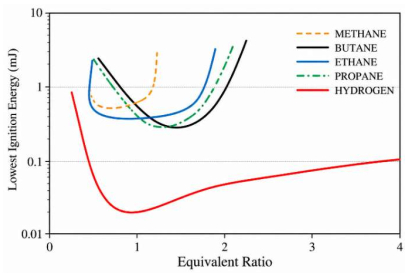
Minimum ignition energy versus equivalence ratio for different gas-air mixtures
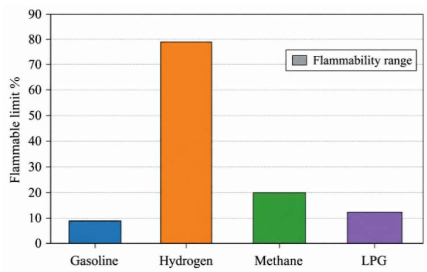
Flammability limit (%) for different fuels
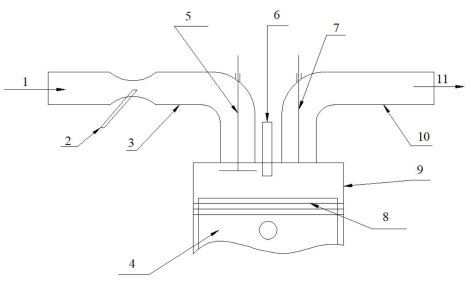
Fuel carburetion method [19]
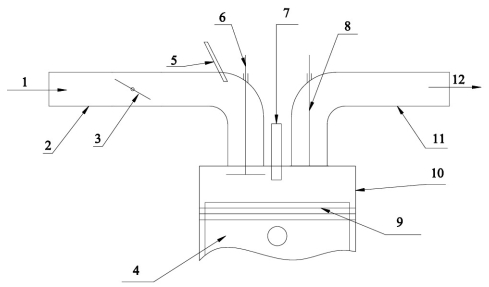
Inlet manifold and port injection [19]
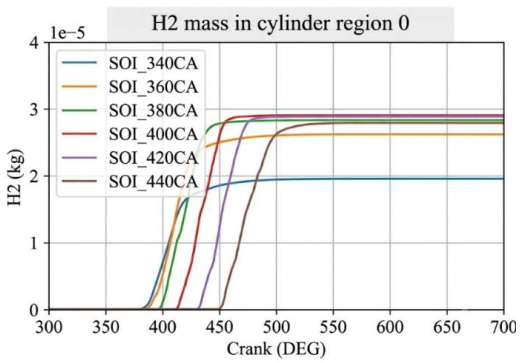
Hydrogen mass in key computational regions as a function of start of injection (SOI) timing [22]
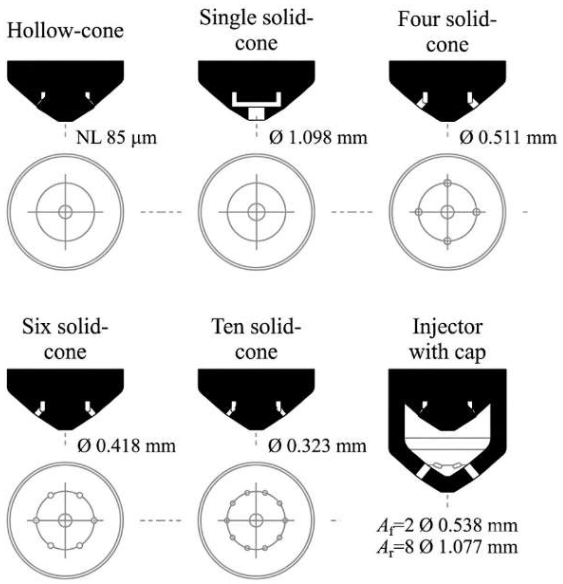
Injector geometry and hole size comparison [37]
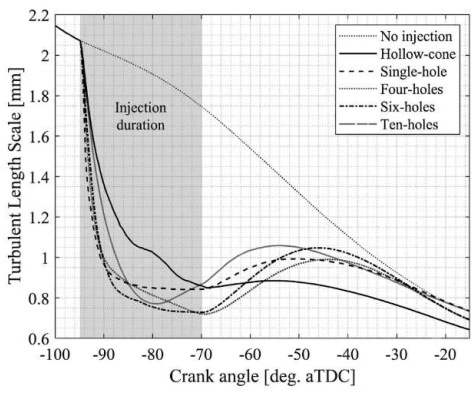
In-chamber turbulent length scale for different injector designs [37]
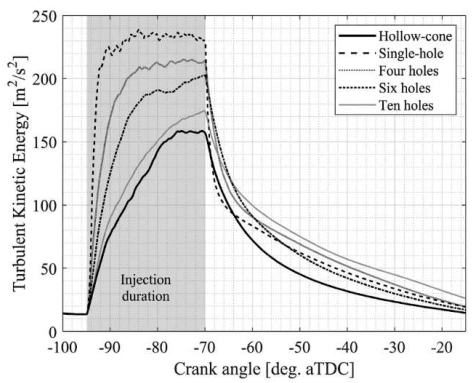
In-chamber turbulent kinetic energy for different injector designs [37]
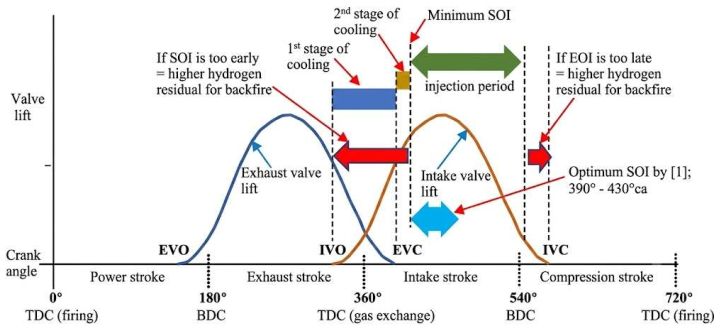
Backfire control strategy by adjusting hydrogen injection timing [12]
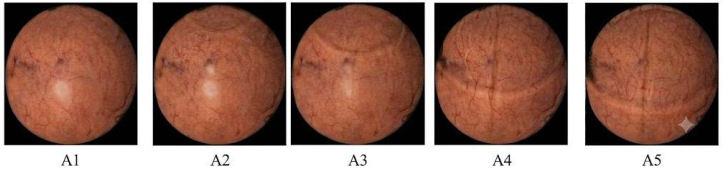
Partial schlieren image of a hydrogen-air mixture [17]
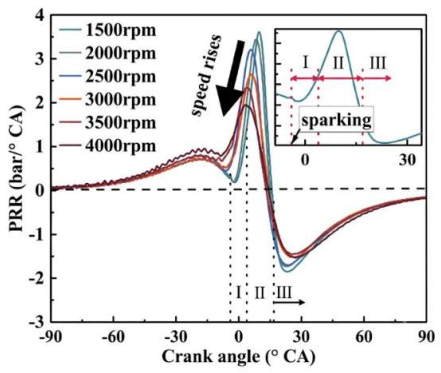
PRR with crank angle at different engine speeds at BMEP = 10 bar [42]
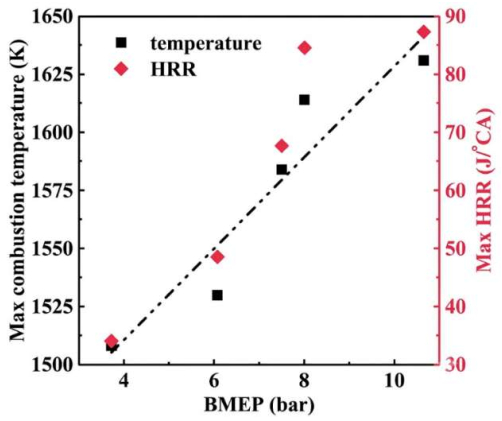
Maximum combustion temperature and maximum HRR with BMEP at 2000 rpm [42]
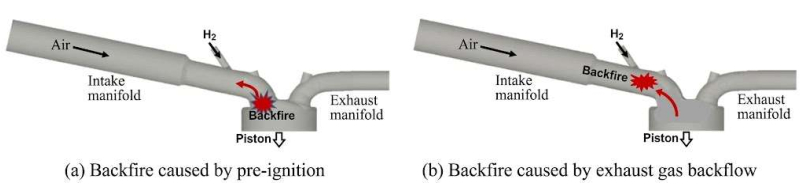
Backfire caused by pre-ignition and residual exhaust gas backflow, reproduced from [2]
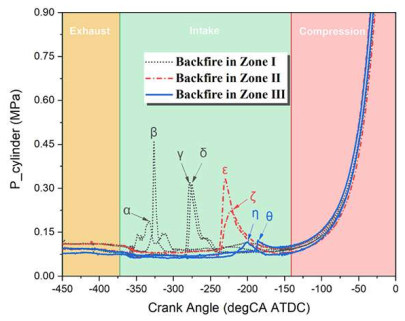
Cylinder transient pressure in different zones when backfire occurs [2]
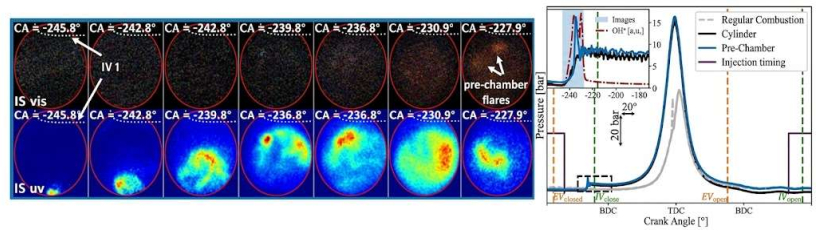
Early backfire during fully open intake valves [45]
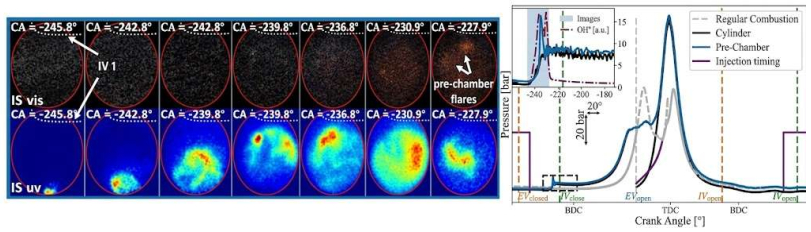
Late backfire while the intake valves are almost closed. Flame development in the OH* radical emissions spectrum [45]
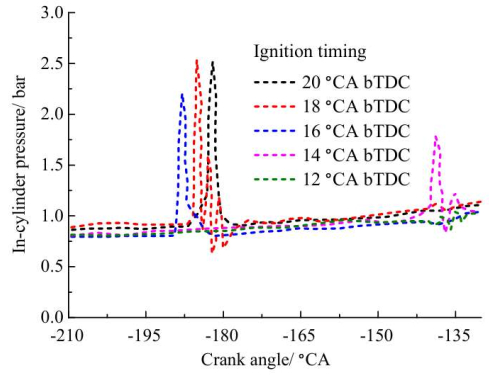
Backfire caused by improper ignition timing under the fuel-air equivalence ratio of 0.82. Hydrogen-air equivalence ratio, 0.82; intake valve opening, 3.5° CA BTDC; intake valve closing 81.5° CA aBDC; TDC, 180° CA [10]
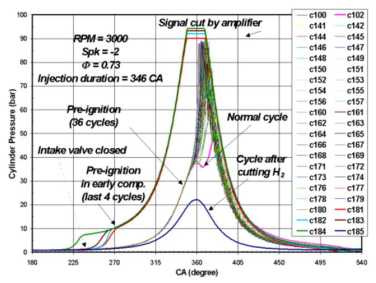
In-cylinder pressure of preignition on the Ford P2000 hydrogen engine [49]
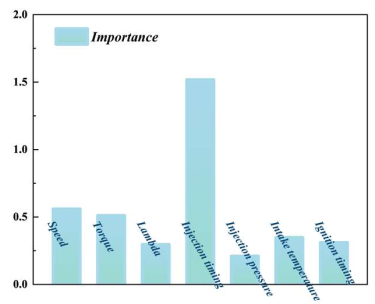
Importance of input features in PEMC events [48]
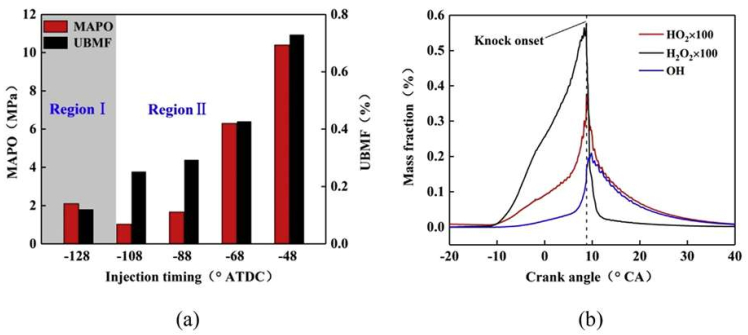
(a) MAPO and UBMF under different injection timings and (b) chemical species mass fraction during knock combustion under an SOI of −68° ATDC [41]
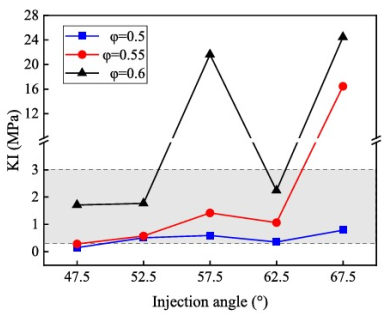
Variation of KI with injection angles at different equivalence ratios [50]
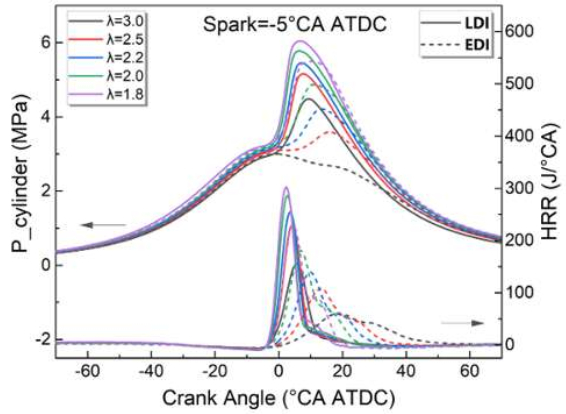
Cylinder pressure and HRR of LDI and EDI under different spark timing [36]
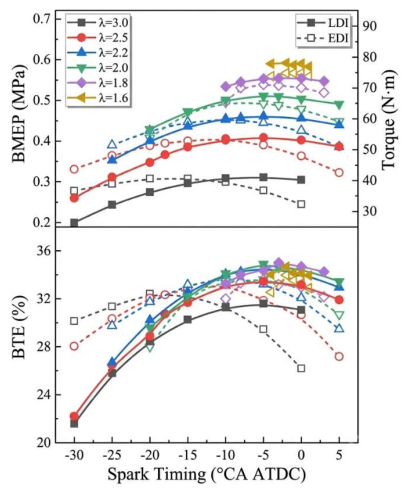
BMEP and BTE of LDI and EDI under different spark timings [36]
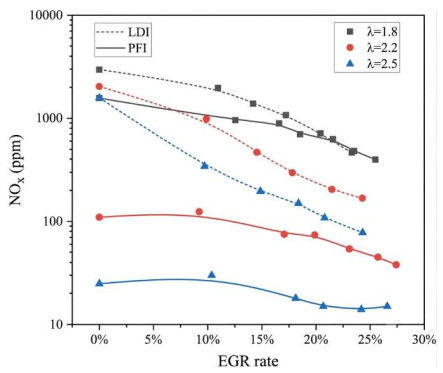
NOX under different EGR rates, λ, and injection strategies [11]
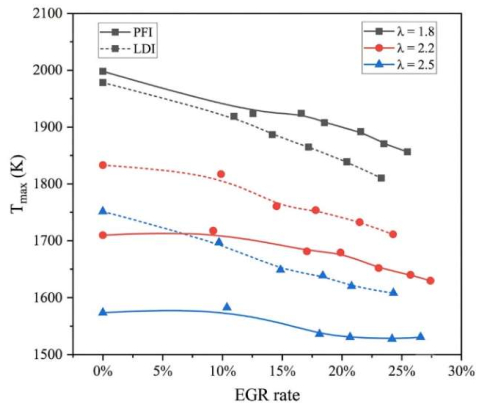
Tmax under different EGR rates, λ, and injection strategies [11]




 DownLoad: