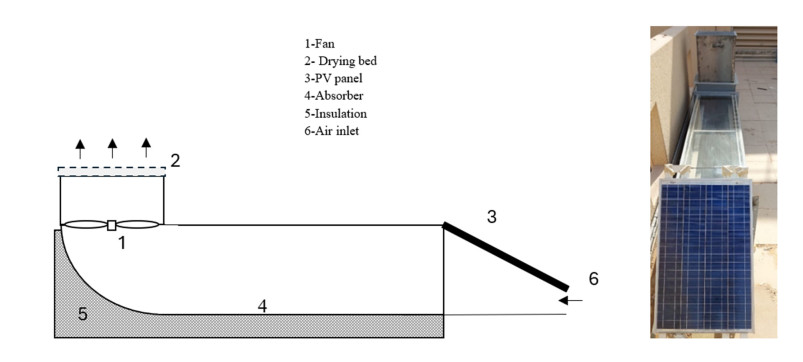
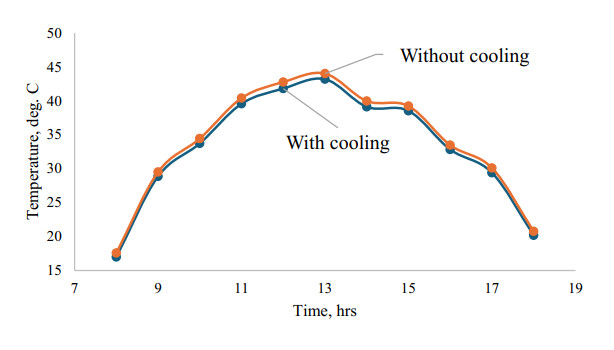
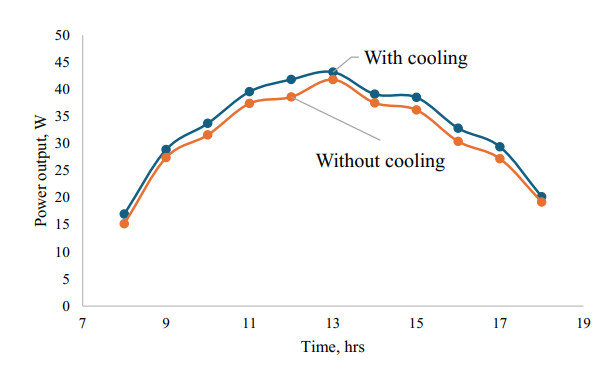
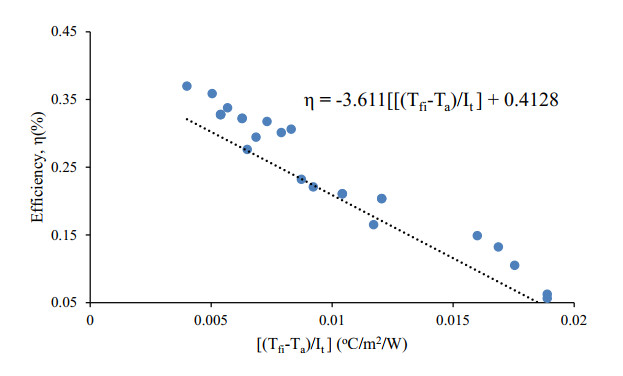
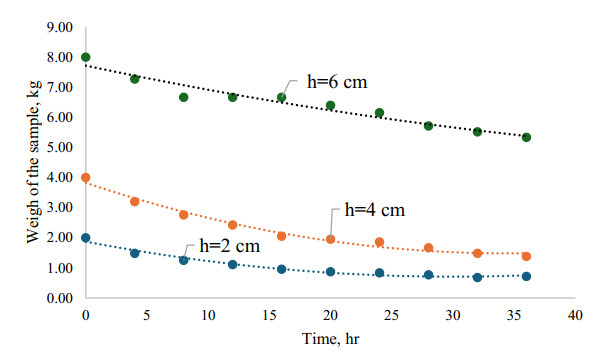
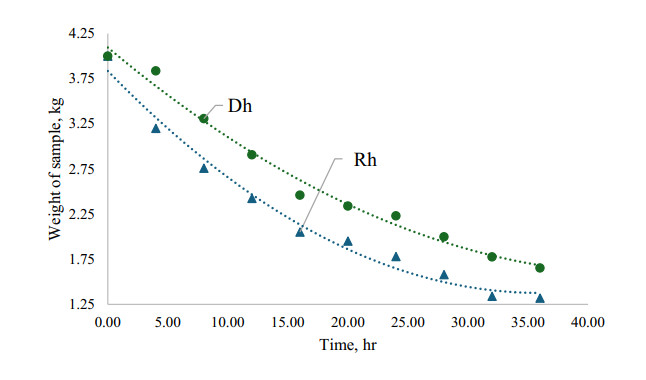
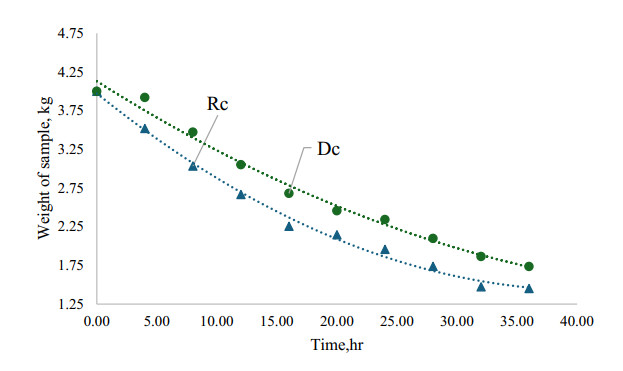
Incineration technologies for municipal solid waste have undergone many developments in terms of control equipment for efficient emissions and advanced combustion technologies such as fluidized bed combustion systems. Excessive moisture in the waste of organic materials has resulted in storage problems, pest and bacterial infections, odor, and difficulties in pre-processing before combustion. Size reduction of waste components is important for efficient combustion; however, moisture is a detriment to this process. The importance of drying the organic materials within waste was discovered and led to the creation of several drying methods, both using conventional and non-conventional energy sources. In this study, a totally grid independent photovoltaic thermal dryer with unity solar fraction was installed for municipal solid waste drying and the performance of functional components, namely, the photovoltaic system, the solar heater, and the drying chamber, were evaluated for arid desert climatic conditions for year-round performance. The photovoltaic system was used to energize the fan for the dryer air supply and panel cooling. The effect of air cooling on the photovoltaic panel power was evaluated. The solar air heater parameters, namely the heat removal factor and the overall loss coefficient were experimentally determined. Waste samples collected in the cities of Riyadh and Dammam under two climate conditions were tested to determine the drying rates and optimum drying bed thicknesses. The actual drying rates and its impact on the energy produced during waste combustion were determined. The results and economic analysis indicate that the overall gains achieved after implementing this drying method increase the economic performance of waste to energy systems.
Citation: Mohammed A. Alanazi, Zakariya Kaneesamkandi. Performance studies on PVT assisted solar drying of municipal solid waste for enhancement of heat generation during combustion[J]. AIMS Energy, 2025, 13(4): 922-937. doi: 10.3934/energy.2025034
Incineration technologies for municipal solid waste have undergone many developments in terms of control equipment for efficient emissions and advanced combustion technologies such as fluidized bed combustion systems. Excessive moisture in the waste of organic materials has resulted in storage problems, pest and bacterial infections, odor, and difficulties in pre-processing before combustion. Size reduction of waste components is important for efficient combustion; however, moisture is a detriment to this process. The importance of drying the organic materials within waste was discovered and led to the creation of several drying methods, both using conventional and non-conventional energy sources. In this study, a totally grid independent photovoltaic thermal dryer with unity solar fraction was installed for municipal solid waste drying and the performance of functional components, namely, the photovoltaic system, the solar heater, and the drying chamber, were evaluated for arid desert climatic conditions for year-round performance. The photovoltaic system was used to energize the fan for the dryer air supply and panel cooling. The effect of air cooling on the photovoltaic panel power was evaluated. The solar air heater parameters, namely the heat removal factor and the overall loss coefficient were experimentally determined. Waste samples collected in the cities of Riyadh and Dammam under two climate conditions were tested to determine the drying rates and optimum drying bed thicknesses. The actual drying rates and its impact on the energy produced during waste combustion were determined. The results and economic analysis indicate that the overall gains achieved after implementing this drying method increase the economic performance of waste to energy systems.

| [1] | Palacio JCE, Santos J, Renó M, et al. (2019) Municipal solid waste management and energy recovery. In Energy Conversion Current Technologies Future Trends, IntechOpen. http://dx.doi.org/10.5772/intechopen.79235 |
| [2] | Nowling U (2016) Waste to energy: An opportunity too good to waste, or a waste of time? Available from: http://www.powermag.com/waste-energy-opportunity-good-waste-waste-time/?pagenum = 1. |
| [3] |
Trindade AB, Palacio JCE, González AM, et al. (2018) Advanced exergy analysis and environmental assesment of the steam cycle of an incineration system of municipal solid waste with energy recovery. Energy Convers Manage 157: 195–214. https://doi.org/10.1016/j.enconman.2017.11.083 doi: 10.1016/j.enconman.2017.11.083

|
| [4] | National Waste Policy Action Plan. Available from: https://www.dcceew.gov.au/environment/protection/waste/publications/national-waste-policy-action-plan. |
| [5] | Holmes T, Baker B, Shoemaker L (2016) Materials for service in municipal waste- & biomass-fired power generation...a review of recent experience. In Association for Materials Protection and Performance, 1–15. https://doi.org/10.5006/C2016-07493 |
| [6] |
Varma VS, Kalamdhad AS (2014) Effects of leachate during vegetable waste composting using rotary drum composter. Environ Eng Res 4: 67–73. https://doi.org/10.4491/eer.2014.19.1.067 doi: 10.4491/eer.2014.19.1.067
|
| [7] |
Krause MJ, Eades W, Detwiler N, et al. (2023) Assessing moisture contributions from precipitation, waste, and leachate for active municipal solid waste landfills. J Environ Manage 344: 118–443. https://doi.org/10.1016/j.jenvman.2023.118443 doi: 10.1016/j.jenvman.2023.118443
|
| [8] |
Karimi S, Christopher AB (2021) The influence of moisture enhancement on solid waste biodegradation. Waste Manage 123: 131–141. https://doi.org/10.1016/j.wasman.2021.01.022 doi: 10.1016/j.wasman.2021.01.022
|
| [9] |
Jaya ST, Neal AY, Joshua JK (2021) Pilot-scale grinding and briquetting studies on variable moisture content municipal solid waste bales—Impact on physical properties, chemical composition, and calorific value. Waste Manage 125: 316–327. https://doi.org/10.1016/j.wasman.2021.02.013 doi: 10.1016/j.wasman.2021.02.013
|
| [10] |
Komilis D, Kissas K, Symeonidis A (2014) Effect of organic matter and moisture on the calorific value of solid wastes: An update of the Tanner diagram. Waste Manage 34: 249–255. https://doi.org/10.1016/j.wasman.2013.09.023 doi: 10.1016/j.wasman.2013.09.023
|
| [11] |
Sun R, Ismail TM, Ren XH, et al. (2016) Influence of simulated MSW sizes on the combustion process in a fixed bed: CFD and experimental approaches. Waste Manage 49: 272–286. https://doi.org/10.1016/j.wasman.2015.12.019 doi: 10.1016/j.wasman.2015.12.019
|
| [12] |
Zhou X, Zhou P, Zhao XQ, et al. (2021) Applicability of municipal solid waste incineration (MSWI) system integrated with pre-drying or torrefaction for flue gas waste heat recovery. Energy 224: 120157. https://doi.org/10.1016/j.energy.2021.120157 doi: 10.1016/j.energy.2021.120157
|
| [13] | Rada EC, Ragazzi M, Panaitescu V (2015) Energy from waste: The role of bio-drying. UPB Sci Bull Ser C: Electr Eng 67: 69–72. Available from: https://www.researchgate.net/publication/235771548. |
| [14] |
Huiliñir C, Pérez J (2017) A new model of batch biodrying of sewage sludge, Part 2: Model calibration and validation. Drying Technol 35: 666–679. https://doi.org/10.1080/07373937.2016.1206124 doi: 10.1080/07373937.2016.1206124
|
| [15] |
Tom AP, Pawels R, Haridas A (2016) Bio drying process: A sustainable technology for treatment of municipal solid waste with high moisture content. Waste Manage 49: 64–72. https://doi.org/10.1016/j.wasman.2016.01.004 doi: 10.1016/j.wasman.2016.01.004
|
| [16] | Negoi RM, Ragazzi M, Apostol T (2009) Bio drying of Romanian municipal solid waste: An analysis of its viability. UPB Sci Bull Ser C 71: 193–204. |
| [17] |
Ahmed EL-SHEIKHA, Mohamed RD, Rashad H, et al. (2024) Study the thermal performance of drying tomatoes using a solar energy system. Inmateh Agri Eng 23: 13–29. https://doi.org/10.35633/inmateh-73-01 doi: 10.35633/inmateh-73-01
|
| [18] |
Sugni M, Calcaterra E, Adani F (2005). Biostabilization and biodrying of municipal solid waste by inverting air-flow. Bioresour Technol 96: 1331–1337. https://doi.org/10.1016/j.biortech.2004.11.016 doi: 10.1016/j.biortech.2004.11.016
|
| [19] |
Kumar M, Sansaniwal SK, Khatak P (2016) Progress in solar dryers for drying various commodities. Renewable Sustainable Energy Rev 55: 346–360. https://doi.org/10.1016/j.rser.2015.10.158 doi: 10.1016/j.rser.2015.10.158
|
| [20] |
Bukhmirov VV, Kolibaba OB, Gabitov RN (2015) Experimental research of solid waste drying in the process of thermal processing. IOP Conf Ser: Mater Sci Eng 93: 1–5. http://dx.doi.org/10.1051/matecconf/20152301057 doi: 10.1051/matecconf/20152301057
|
| [21] |
Tun MM, Juchelková D (2018) Drying methods for municipal solid waste quality improvement in the developed and developing countries: A review. Environ Eng Res 24: 529–542. https://doi.org/10.4491/eer.2018.327 doi: 10.4491/eer.2018.327
|
| [22] |
Lingayat A, Zachariah R, Modi A (2022) Current status and prospect of integrating solar air heating systems for drying in various sectors and industries. Sustainable Energy Technol Assess 52: 1022–74. https://doi.org/10.1016/j.seta.2022.102274 doi: 10.1016/j.seta.2022.102274
|
| [23] |
Gupta A, Biswas A, Das B (2022) Development and testing of novel photovoltaic-thermal collector-based solar dryer for green tea drying application. Sol Energy 231: 1072–1091. https://doi.org/10.1016/j.solener.2021.12.030 doi: 10.1016/j.solener.2021.12.030
|
| [24] |
Gharakhani Siraki A, Pillay P (2012) Study of optimum tilt angles for solar panels in different latitudes for urban applications. Sol Energy 86: 1920–1928. https://doi.org/10.1016/j.solener.2012.02.030 doi: 10.1016/j.solener.2012.02.030
|
| [25] |
Triyanto A, Abdul RO, Aditya A (2023) Calculation array solar panel capacity of 50 kWP Pamulang University South Tangerang. Triyanto 10: 193–198. https://doi.org/10.33387/protk.v10i3.5795 doi: 10.33387/protk.v10i3.5795
|
| [26] |
Saidur R, Abdelaziz EA, Demirbas A, et al. (2011) A review on biomass as a fuel for boilers. Renewable Sustainable Energy Rev 15: 2262–2289. https://doi.org/10.1016/j.rser.2011.02.015 doi: 10.1016/j.rser.2011.02.015
|
| [27] |
Zhao N, Li BW, Ahmad R, et al. (2021) Dynamic relationships between real-time fuel moisture content and combustion-emission-performance characteristics of wood pellets in a top-lit updraft cookstove. Case Stud Thermal Eng 28: 101484. https://doi.org/10.1016/j.csite.2021.101484 doi: 10.1016/j.csite.2021.101484
|
| [28] |
Demirbas A (2007) Effects of moisture and hydrogen content on the heating value of fuels. Energy Sources, Part A 29: 649–655. https://doi.org/10.1080/009083190957801 doi: 10.1080/009083190957801
|
| [29] | Ujam AJ, Eboh F (2012) Thermal analysis of a small-scale municipal solid waste-fired steam generator: Case study of Enugu state, Nigeria. J Energy Technol Policy 2: 2327. Available from: https://www.iiste.org/Journals/index.php/JETP/article/view/2327/2327. |
| [30] | Obenberger, Thek IG (2010) The pellet handbook. IEA bioenergy. Earthscan LLC, Washington, DC. |
| [31] |
Clement AK, Iyiola OO, Omojola A, et al. (2019) Experimental investigation and thermal analysis of solar air heaters having rectangular rib roughness on the absorber plate. Case Stud Therm Eng 14: 100442. https://doi.org/10.1016/j.csite.2019.100442 doi: 10.1016/j.csite.2019.100442
|
| [32] | Sukhatme SP, Nayak JK (2018) Solar energy. Fourth Edition. Tata McGraHill Publishing Company, New Delhi. |
| [33] |
Symons JG (1984) Calculation of the transmittance-absorptance product for flat-plate collectors with convection suppression devices. Sol Energy 33: 637–640. https://doi.org/10.1016/0038-092X(84)90023-9 doi: 10.1016/0038-092X(84)90023-9
|
| [34] | Climate classification. Available from: https://en.wikipedia.org/wiki/Kö ppen_climate_classification. |
| [35] |
Boumanchar I, Chhiti Y, M'hamdi Alaoui FE (2019) Municipal solid waste higher heating value prediction from ultimate analysis using multiple regression and genetic programming techniques. Waste Manage Res 37: 578–589. https://doi.org/10.1177/0734242X18816797 doi: 10.1177/0734242X18816797
|
| [36] |
Phillips OA, Jehad S (2016) Feasibility of municipal solid waste (MSW) as energy sources for Saudi Arabia's future Reverse osmosis (RO) desalination plants. Polish J Chem Technol 18: 82–89. https://sciendo.com/article/10.1515/pjct-2016-0075 doi: 10.1515/pjct-2016-0075
|
| [37] |
Hegde VN, Hosur VS, Rathod SK, et al. (2015) Design, fabrication and performance evaluation of solar dryer for banana. Energy Sustain Soc 5: 15–52. https://doi.org/10.1186/s13705-015-0052-x doi: 10.1186/s13705-015-0052-x
|
| [38] |
Jangde K, Singh A, Arjunan TV (2022) Efficient solar drying techniques: A review. Environ Sci Pollut Res 29: 50970–50983. https://doi.org/10.1007/s11356-021-15792-4 doi: 10.1007/s11356-021-15792-4
|
| [39] |
Boonthum E, Sirichana S, Namkhet A (2024) Comparative study on performance of passive and active solar dryer. Key Eng Mater 978: 97–103. https://doi.org/10.4028/p-2GFc9W doi: 10.4028/p-2GFc9W
|
| [40] | Okta Arifianti QAM, Abidin MR, Nugrahani EF, et al. (2018) Experimental investigation of a solar greenhouse dryer using fiber plastic cover to reduce the moisture content of refuse derived fuel in an Indonesian cement industry. 2018 International Conference and Utility Exhibition on Green Energy for Sustainable Development (ICUE), Phuket, Thailand, 2018, 1–5. https://doi.org/10.23919/ICUE-GESD.2018.8635723 |
Figures(7) / Tables(2)

Mohammed A. Alanazi, Zakariya Kaneesamkandi. Performance studies on PVT assisted solar drying of municipal solid waste for enhancement of heat generation during combustion[J]. AIMS Energy, 2025, 13(4): 922-937. doi: 10.3934/energy.2025034





 DownLoad: