With the rapid expansion of low-altitude economy, unmanned aerial vehicles (UAVs) and electric vertical take-off and landing (eVTOL) aircrafts have triggered severe multi-dimensional environmental risks, including noise pollution, carbon emission accumulation, and ecological disturbance, which have become bottlenecks restricting its sustainable development. Researchers have mostly focused on physical/chemical governance methods and legal regulation, while the application potential of bioengineering technology in this field is seriously underexplored. In this paper, we conducted a quantitative analysis of environmental impacts based on multi-source empirical data from four typical pilot areas (Shanghai, Chengdu, Shenzhen, Hainan) during 2022–2025. The results showed that eVTOL operating noise exceeded the WHO safety threshold by 25–35 dB, and the cumulative growth rate of environmental complaints (263.5%) was 95.1 percentage points higher than that of registered UAVs (168.4%). Lithium-battery eVTOL emitted 18–22 kg CO2 per 100 km, 2.5 times that of new energy vehicles, with significant cumulative pollution potential. On this basis, we systematically evaluated the feasibility of four core bioengineering mitigation technologies through technical readiness level (TRL) and life cycle assessment (LCA) methods. A staged technical roadmap for bioengineering-led comprehensive environmental governance is proposed, which provides a new technical paradigm for the green development of low-altitude economy.
Citation: Weitao Meng, Yihan Zhang. Environmental risks of low-altitude economy and bioengineering-based mitigation strategies: a multi-dimensional empirical analysis[J]. AIMS Bioengineering, 2026, 13(3): 315-332. doi: 10.3934/bioeng.2026015
With the rapid expansion of low-altitude economy, unmanned aerial vehicles (UAVs) and electric vertical take-off and landing (eVTOL) aircrafts have triggered severe multi-dimensional environmental risks, including noise pollution, carbon emission accumulation, and ecological disturbance, which have become bottlenecks restricting its sustainable development. Researchers have mostly focused on physical/chemical governance methods and legal regulation, while the application potential of bioengineering technology in this field is seriously underexplored. In this paper, we conducted a quantitative analysis of environmental impacts based on multi-source empirical data from four typical pilot areas (Shanghai, Chengdu, Shenzhen, Hainan) during 2022–2025. The results showed that eVTOL operating noise exceeded the WHO safety threshold by 25–35 dB, and the cumulative growth rate of environmental complaints (263.5%) was 95.1 percentage points higher than that of registered UAVs (168.4%). Lithium-battery eVTOL emitted 18–22 kg CO2 per 100 km, 2.5 times that of new energy vehicles, with significant cumulative pollution potential. On this basis, we systematically evaluated the feasibility of four core bioengineering mitigation technologies through technical readiness level (TRL) and life cycle assessment (LCA) methods. A staged technical roadmap for bioengineering-led comprehensive environmental governance is proposed, which provides a new technical paradigm for the green development of low-altitude economy.

| [1] |
Aneesh EM, Anoopkumar AN, Madhavan A, et al. (2023) Inferences on bioengineering perspectives and circular economy to tackle the emerging pollutants. Environ Technol Innov 30: 103116. https://doi.org/10.1016/j.eti.2023.103116 
|
| [2] | Dabija D, Nastase C (2024) Exploring the evolution of sustainability paradigms: from linear to circular economy models. 18th International Conference on Business Excellence (ICBE) - Smart Solutions for a Sustainable Future . Bucharest, Romania: 754-769. |
| [3] | González-Piñero M, Cano EL, Villanueva MAM, et al. (2011) Knowledge management and open innovation in a bioengineering research case. 6th European Conference on Innovation and Entrepreneurship (ECIE) . Aberdeen, Scotland: 408-416. |
| [4] |
Liu H, Kumar V, Yadav V, et al. (2021) Bioengineered biochar as smart candidate for resource recovery toward circular bio-economy: a review. Bioengineered 12: 10269-10301. https://doi.org/10.1080/21655979.2021.1993536
|
| [5] |
Nonaka PN, Uriarte JJ, Campillo N, et al. (2016) Lung bioengineering: physical stimuli and stem/progenitor cell biology interplay towards biofabricating a functional organ. Respir Res 17: 161. https://doi.org/10.1186/s12931-016-0477-6
|
| [6] |
Show PL, Banat F, Chew KW (2024) Recent advances in bioengineering and biotechnology toward a circular economy. Environ Technol Innov 35: 103654. https://doi.org/10.1016/j.eti.2024.103654
|
| [7] |
Chen YM, Cui JW, Wang L, et al. (2026) A multi-parameter measuring machine for non-circular raceway bearings used in production lines and its calibration method. Measurement 260: 119830. https://doi.org/10.1016/j.measurement.2025.119830
|
| [8] |
Cheng K, Yi L, Tolba A, et al. (2026) Efficient cross-chain data transmission via satellite for nonterrestrial network-assisted internet of things. IEEE Internet Things J 13: 3676-3690. https://doi.org/10.1109/jiot.2025.3625400
|
| [9] |
Esbrí JM, Higueras PL, Martínez-Coronado A, et al. (2020) 4D dispersion of total gaseous mercury derived from a mining source: identification of criteria to assess risks related to high concentrations of atmospheric mercury. Atmos Chem Phys 20: 12995-13010. https://doi.org/10.5194/acp-20-12995-2020
|
| [10] | Feng SM, Zhang YY, Liu K, et al. (2025) Collaborative multi-agent trajectory optimization for unmanned aerial vehicles under low-altitude mixed-obstacle airspace. J Electron Inf Technol 47: 1291-1300. https://doi.org/10.11999/jeit250012 |
| [11] |
Gao YL, Ye ZQ, Lyu ZH, et al. (2026) Vision-aided ISAC in low-altitude economy networks via de-diffused visual priors. IEEE Trans Cogn Commun Netw 12: 3831-3845. https://doi.org/10.1109/tccn.2025.3633734
|
| [12] |
Jin CL, Shu Y, Han ZQ, et al. (2022) Lightning disaster risk zoning in Jiangsu Province of China based on the analytic hierarchy process and entropy weight method. Front Environ Sci 10: 943000. https://doi.org/10.3389/fenvs.2022.943000
|
| [13] |
Li YZ, Ma L, Li YM, et al. (2022) Exploration of the driving factors and distribution of fecal coliform in rivers under a traditional agro-pastoral economy in Kyrgyzstan, Central Asia. Chemosphere 286: 131700. https://doi.org/10.1016/j.chemosphere.2021.131700
|
| [14] |
Liang ZY, Liu N (2026) Belief updating in the low-altitude economy: safety information, presentation context, and willingness to pay. Case Stud Transp Policy 24: 101792. https://doi.org/10.1016/j.cstp.2026.101792
|
| [15] |
Liu B, Ni W, Liu RP, et al. (2026) Cooperation without compromise: securing UAV collaboration in the low-altitude economy. IEEE Wirel Commun 33: 80-88. https://doi.org/10.1109/mwc.2025.3631773
|
| [16] |
Liu Y, Wen Q, Chandio AA, et al. (2022) Investment risk analysis for green and sustainable planning of rural family: a case study of Tibetan region. Sustainability 14: 11822. https://doi.org/10.3390/su141911822
|
| [17] |
Öztas S (2025) Harnessing high-altitude advantages: sustainable data center site selection in ski resort regions for optimized energy efficiency. Sustainability 17: 3494. https://doi.org/10.3390/su17083494
|
| [18] |
Ostyn B, Uranw S, Bhattarai NR, et al. (2015) Transmission of Leishmania donovani in the hills of Eastern Nepal, an outbreak investigation in Okhaldhunga and Bhojpur districts. PLoS Negl Trop Dis 9: e0003966. https://doi.org/10.1371/journal.pntd.0003966
|
| [19] |
Qiao DH, Wang GS, Li XS, et al. (2020) Pollution, sources and environmental risk assessment of heavy metals in the surface AMD water, sediments and surface soils around unexploited Rona Cu deposit, Tibet, China. Chemosphere 248: 125988. https://doi.org/10.1016/j.chemosphere.2020.125988
|
| [20] |
Shao XL, Du J, Xia Y, et al. (2025) Efficient path-following for urban logistics: a fuzzy control strategy for consumer UAVs under disturbance constraints. IEEE Trans Consum Electron 71: 7117-7128. https://doi.org/10.1109/tce.2025.3564412
|
| [21] |
Tang B, Ren H, Qiu JA, et al. (2024) Evaluation of geo-hazard risks in the pearl river delta based on geographic information system and weighted informativeness approach. Front Environ Sci 12: 1406386. https://doi.org/10.3389/fenvs.2024.1406386
|
| [22] |
Wang B, Zhou Z, Yang SJ, et al. (2026) Eliminating stealthy backdoors via occupying and withdrawing for secure personalized federated learning in UAV swarms. IEEE Trans Cogn Commun Netw 12: 2965-2978. https://doi.org/10.1109/tccn.2025.3627915
|
| [23] | Wang K, Cao TL, Li XJ, et al. (2025) A survey on trajectory planning and resource allocation in unmanned aerial vehicle-assisted edge computing networks. J Electron Inf Technol 47: 1266-1281. https://doi.org/10.11999/jeit241071 |
| [24] |
Wang XW, Hu Y, Liang Q, et al. (2025) An improved YOLOv8s-based UAV target detection algorithm. PLoS One 20: e0327732. https://doi.org/10.1371/journal.pone.0327732
|
| [25] |
Xu MR, Sun YN, Wang HQ, et al. (2024) Altitude characteristics in the response of rain-on-snow flood risk to future climate change in a high-latitude water tower. J Environ Manag 369: 122292. https://doi.org/10.1016/j.jenvman.2024.122292
|
| [26] | Xue DB, Zhang QH, Feng XS, et al. (2025) Space weather and low-altitude drone economy. Space Weather 24: e2025SW004803. https://doi.org/10.1029/2025sw004803 |
| [27] | Zhang JR, Zhang Q, Wu J, et al. (2026) Optimizing redundancy of UAVs system by targeting risk-significant components for improved mission success probability. Reliab Eng Syst Saf 270: 1049. https://doi.org/10.1016/j.ress.2025.112131 |
| [28] |
Zhou HN, Zhu JY, Wang ZX, et al. (2025) A study on duopoly competition in the low-altitude economy based on the Hotelling model: analysis of air taxi advertising strategies and intercity service decisions. Systems 13: 1049. https://doi.org/10.3390/systems13121049
|
| [29] |
Zijian Q, Sujie L, Yudong C, et al. (2026) Risk assessment of muon single-event effects for low-altitude aircraft. Acta Phys Sin 75: 050201. https://doi.org/10.7498/aps.75.20251448
|
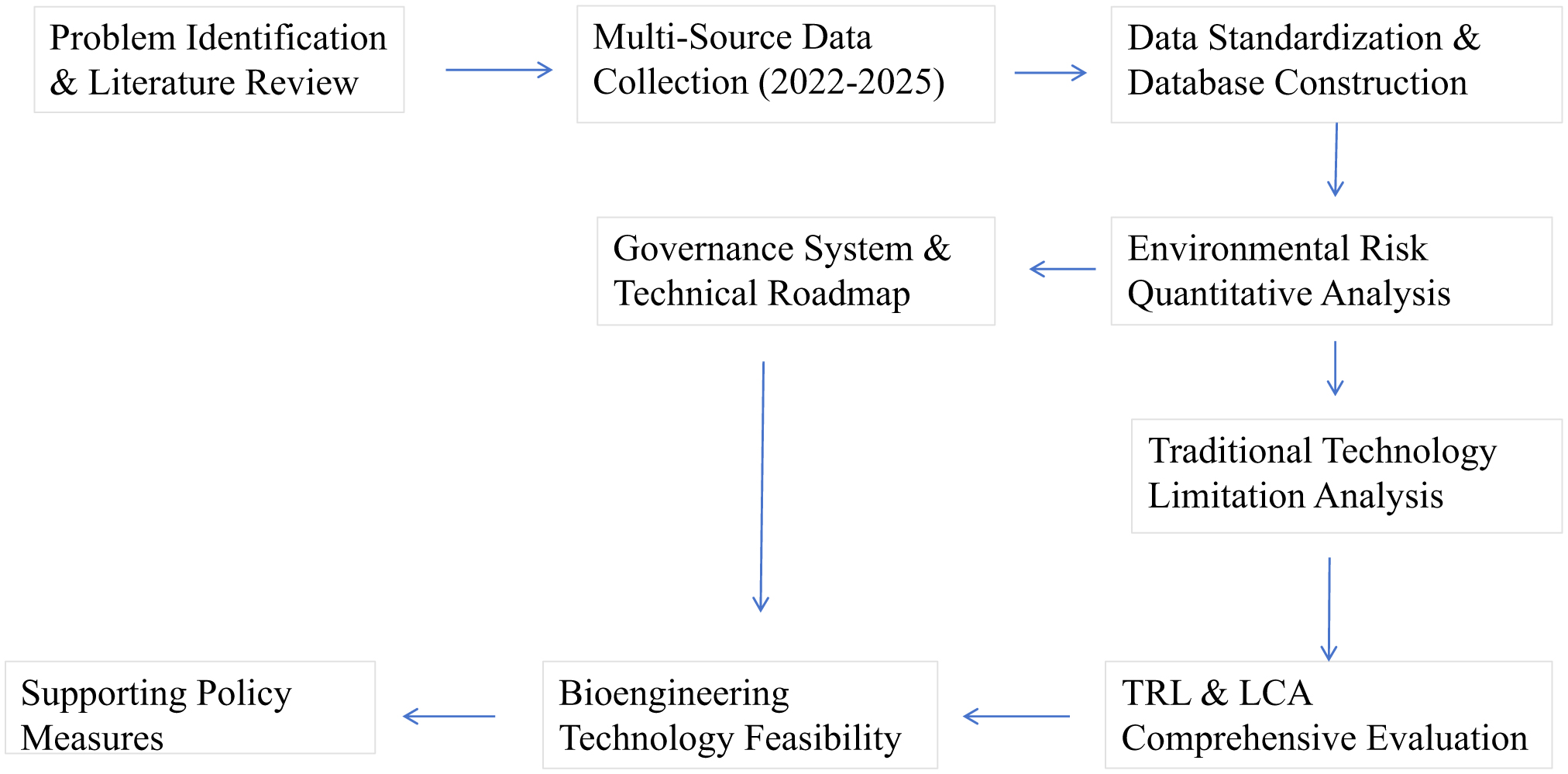
Figures(1) / Tables(12)

Weitao Meng, Yihan Zhang. Environmental risks of low-altitude economy and bioengineering-based mitigation strategies: a multi-dimensional empirical analysis[J]. AIMS Bioengineering, 2026, 13(3): 315-332. doi: 10.3934/bioeng.2026015




 DownLoad: