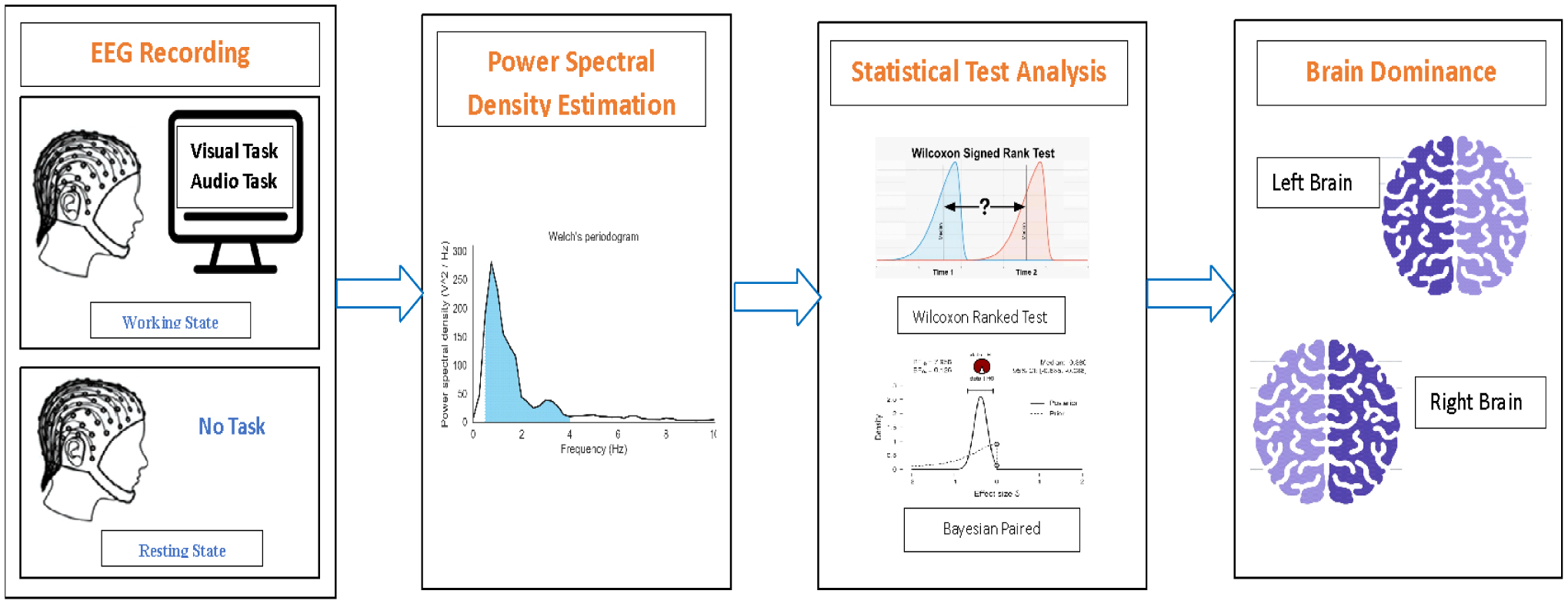
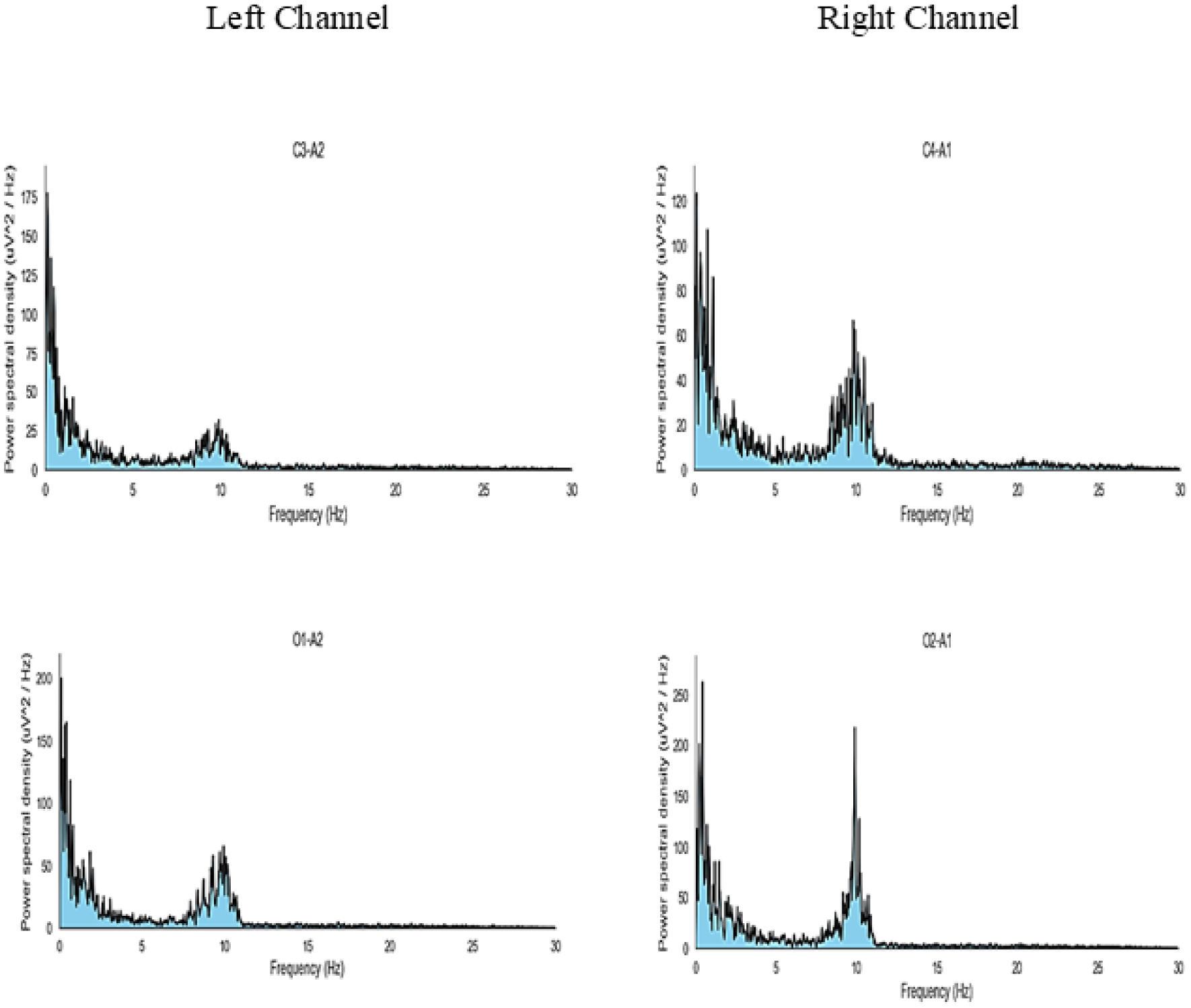
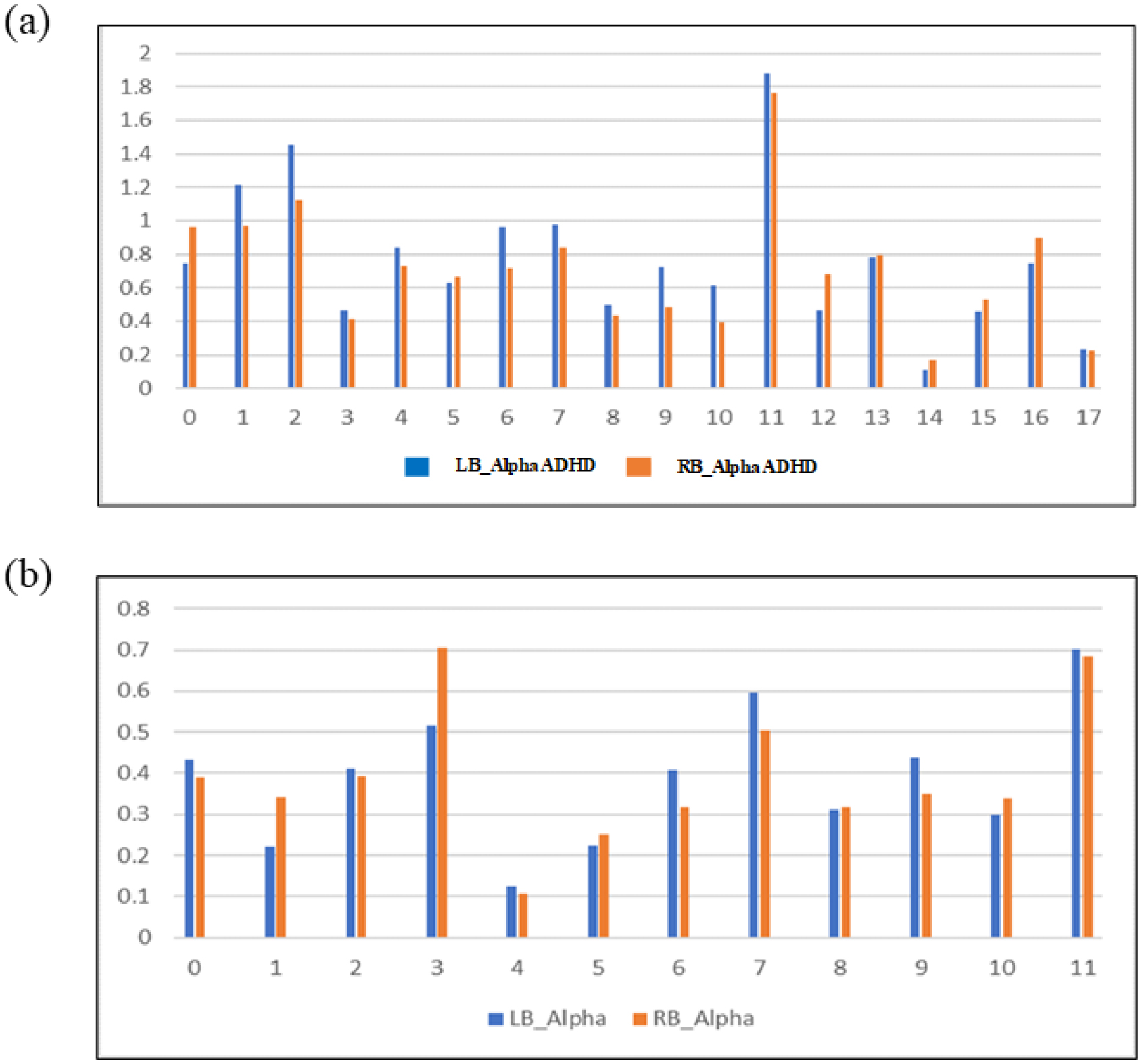
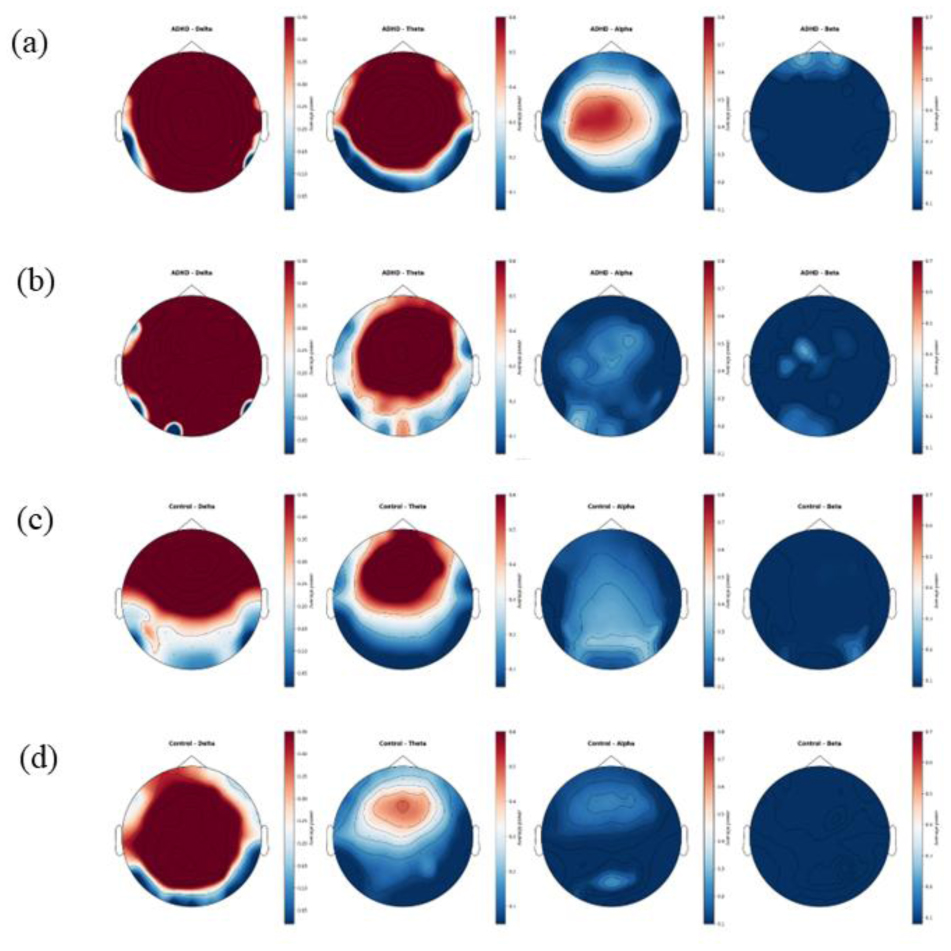
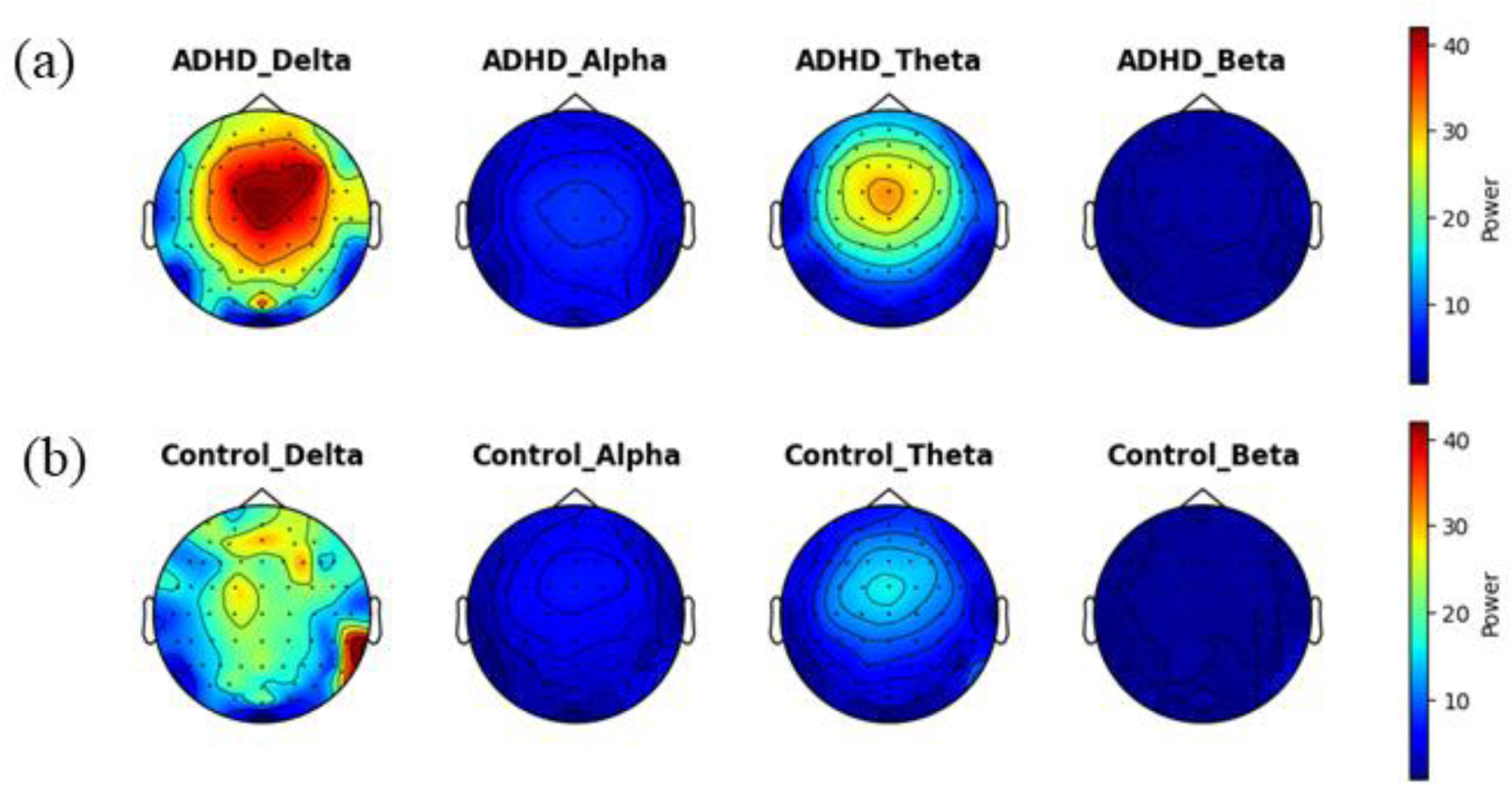
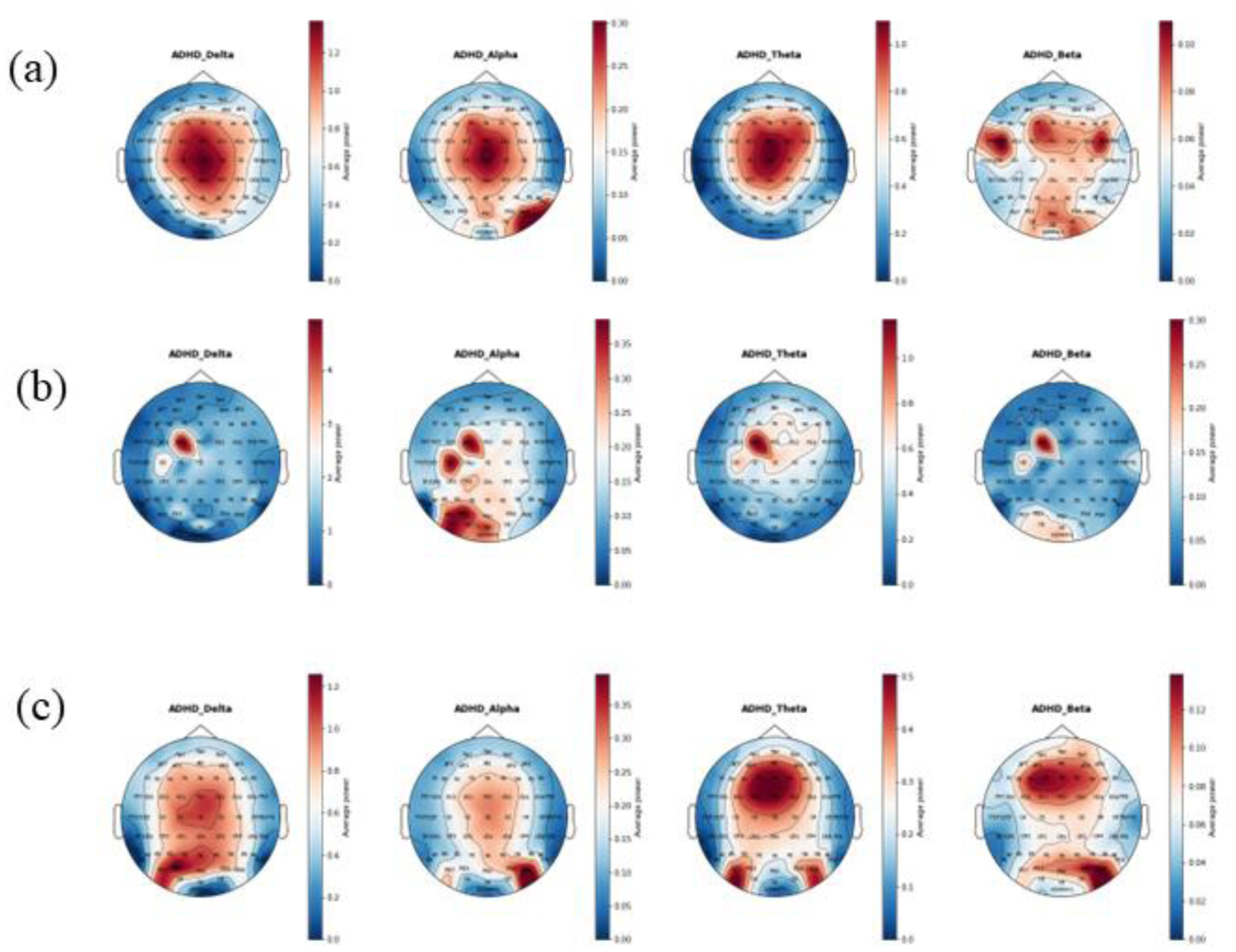
Attention Deficit Hyperactivity Disorder (ADHD) is a neurodevelopmental disorder that significantly impacts the cognitive functions and behaviour of individuals. It is characterized by abnormal brain lateralization in key brain regions linked to attention and cognitive control. This study aimed to explore and analyze the brainwave patterns linked to left and right brain dominance in ADHD, ADHD subtype, and control group using electroencephalography (EEG) spectral features, which have not been investigated in prior studies. Our study examined variations in alpha, beta, theta, and other frequency bands between the brain's left and right hemispheres, employing methodologies like EEG recordings with topographical views and statistical tests. The Asymmetric Index findings suggest a differential power spectrum density (PSD) pattern in ADHD subjects, with a higher average PSD in the right brain (RB) during working states and in the left brain (LB) during resting states. In addition, our corroborative study also uncovered that in ADHD subjects, theta and alpha waves are more dominant in the left hemispheric region, irrespective of the task state, and theta waves are notably prominent in the frontal region. The results of our novel study, supported by statistical analyses and topographical views, not only enhance our understanding of ADHD but also open avenues for more targeted and effective approaches in diagnosing and understanding the neurobiological underpinnings of ADHD and its subtypes.
Citation: Vandana Joshi, Nirali Nanavati. A comprehensive investigation into EEG spectral analysis for ADHD brain dominance[J]. AIMS Neuroscience, 2026, 13(3): 389-414. doi: 10.3934/Neuroscience.2026017
Attention Deficit Hyperactivity Disorder (ADHD) is a neurodevelopmental disorder that significantly impacts the cognitive functions and behaviour of individuals. It is characterized by abnormal brain lateralization in key brain regions linked to attention and cognitive control. This study aimed to explore and analyze the brainwave patterns linked to left and right brain dominance in ADHD, ADHD subtype, and control group using electroencephalography (EEG) spectral features, which have not been investigated in prior studies. Our study examined variations in alpha, beta, theta, and other frequency bands between the brain's left and right hemispheres, employing methodologies like EEG recordings with topographical views and statistical tests. The Asymmetric Index findings suggest a differential power spectrum density (PSD) pattern in ADHD subjects, with a higher average PSD in the right brain (RB) during working states and in the left brain (LB) during resting states. In addition, our corroborative study also uncovered that in ADHD subjects, theta and alpha waves are more dominant in the left hemispheric region, irrespective of the task state, and theta waves are notably prominent in the frontal region. The results of our novel study, supported by statistical analyses and topographical views, not only enhance our understanding of ADHD but also open avenues for more targeted and effective approaches in diagnosing and understanding the neurobiological underpinnings of ADHD and its subtypes.

| [1] |
Mohamed SMH, Butzbach M, Fuermaier ABM, et al. (2021) Basic and complex cognitive functions in adult ADHD. PLoS One 16: e0256228. https://doi.org/10.1371/journal.pone.0256228 
|
| [2] | Song Y (2015) Cognitive function in attention deficit hyperactivity. ADHD: New Dir Diagn Treat 2015: 179. https://doi.org/10.5772/60785 |
| [3] | Dade P Encyclopedia of child behavior and development (2011). |
| [4] | DG Chaudhary, I Technology.Investigate brain dominance with the help of EEG signal processing. Eur Chem Bull (2023) 12: 3718-3728. |
| [5] |
Zou H, Yang J (2021) Exploring the brain lateralization in ADHD based on variability of resting-state fMRI signal. J Atten Disord 25: 258-264. https://doi.org/10.1177/1087054718816170
|
| [6] | Pila-Nemutandani RG, Pillay BJ, Meyer A (2018) Lateralization in children with attention deficit hyperactivity disorder. Afr J Phys Activ Health Sci 24: 299-315. https://doi.org/10.17159/2310-3833/20l7/vol48n3a4 |
| [7] |
Mohamed SM, Börger NA, Geuze RH, et al. (2015) Brain lateralization and self-reported symptoms of ADHD in a population sample of adults: a dimensional approach. Front Psychol 6: 1418. https://doi.org/10.3389/fpsyg.2015.01418
|
| [8] |
Hale TS, Loo SK, Zaidel E, et al. (2009) Rethinking a right hemisphere deficit in ADHD. J Atten Disord 13: 3-17. https://doi.org/10.1177/1087054708323005
|
| [9] |
Douglas PK, Gutman B, Anderson A, et al. (2018) Hemispheric brain asymmetry differences in youths with attention-deficit/hyperactivity disorder. Neuroimage Clin 18: 744-752. https://doi.org/10.1016/j.nicl.2018.02.020
|
| [10] |
Ellis AJ, Kinzel C, Salgari GC, et al. (2017) Frontal alpha asymmetry predicts inhibitory processing in youth with attention deficit/hyperactivity disorder. Neuropsychologia 102: 45-51. https://doi.org/10.1016/j.neuropsychologia.2017.06.003
|
| [11] |
Hermens DF, Soei EX, Clarke SD, et al. (2005) Resting EEG theta activity predicts cognitive performance in attention-deficit hyperactivity disorder. Pediatr Neurol 32: 248-256. https://doi.org/10.1016/j.pediatrneurol.2004.11.009
|
| [12] |
Hale TS, Smalley SL, Dang J, et al. (2010) ADHD familial loading and abnormal EEG alpha asymmetry in children with ADHD. J Psychiatr Res 44: 605-615. https://doi.org/10.1016/j.jpsychires.2009.11.012
|
| [13] |
Hale TS, Smalley SL, Hanada G, et al. (2009) Atypical alpha asymmetry in adults with ADHD. Neuropsychologia 47: 2082-2088. https://doi.org/10.1016/j.neuropsychologia.2009.03.021
|
| [14] |
Fuad N, Taib MN, Isa RM, et al. (2013) Brain balancing pattern between left and right frontal using mean relative power ratio via three dimensional EEG model. Procedia Soc Behav Sci 97: 38-45. https://doi.org/10.1016/j.sbspro.2013.10.202
|
| [15] |
Robertson MM, Furlong S, Voytek B, et al. (2019) EEG power spectral slope differs by ADHD status and stimulant medication exposure in early childhood. J Neurophysiol 122: 2427-2437. https://doi.org/10.1152/jn.00388.2019
|
| [16] |
Enriquez-Geppert S, Smit D, Pimenta MG, et al. (2019) Neurofeedback as a Treatment Intervention in ADHD: Current Evidence and Practice. Curr Psychiatry Rep 21: 46. https://doi.org/10.1007/s11920-019-1021-4
|
| [17] |
Garcia Pimenta M, Brown T, Arns M, et al. (2021) Treatment efficacy and clinical effectiveness of EEG neurofeedback as a personalized and multimodal treatment in ADHD: A critical review. Neuropsychiatr Dis Treat 17: 637-648. https://doi.org/10.2147/NDT.S251547
|
| [18] | J Leung.Neurofeedback: Applications and efficacy in ADHD treatment. Neurosci Psych Open Access (2024) 7: 242-244. https://doi.org/10.47532/npoa.2024.7(4).242-244 |
| [19] |
Bernadotte A, Zinchenko O (2025) tDCS and neurofeedback in ADHD treatment. Front Syst Neurosci 19: 1444283. https://doi.org/10.3389/fnsys.2025.1444283
|
| [20] | Choi JW, Kim KH (2018) Computational EEG analysis. Biological and Medical Physics, Biomedical Engineering . Singapore: Springer. |
| [21] |
Xie W, Toll RT, Nelson CA (2022) EEG functional connectivity analysis in the source space. Dev Cogn Neurosci 56: 101119. https://doi.org/10.1016/j.dcn.2022.101119
|
| [22] |
Mateos DM, Krumm G, Arán Filippetti V, et al. (2022) Power spectrum and connectivity analysis in EEG recording during attention and creativity performance in children. NeuroSci 3: 347-365. https://doi.org/10.3390/neurosci3020025
|
| [23] |
Newson JJ, Thiagarajan TC (2019) EEG frequency bands in psychiatric disorders: a review of resting state studies. Front Hum Neurosci 12: 521. https://doi.org/10.3389/fnhum.2018.00521
|
| [24] |
Singh K, Malhotra J (2022) Predicting epileptic seizures from EEG spectral band features using convolutional neural network. Wirel Pers Commun 125: 2667-2684. https://doi.org/10.1007/s11277-022-09678-y
|
| [25] |
Kang JM, Cho SE, Moon JY, et al. (2022) Difference in spectral power density of sleep electroencephalography between individuals without insomnia and frequent hypnotic users with insomnia complaints. Sci Rep 12: 2117. https://doi.org/10.1038/s41598-022-05378-6
|
| [26] |
Dauwan M, Linszen MMJ, Lemstra AW, et al. (2018) EEG-based neurophysiological indicators of hallucinations in Alzheimer's disease: Comparison with dementia with Lewy bodies. Neurobiol Aging 67: 75-83. https://doi.org/10.1016/j.neurobiolaging.2018.03.013
|
| [27] | Marzbani H, Marateb HR, Mansourian M (2016) Neurofeedback: A comprehensive review on system design, methodology and clinical applications. Basic Clin Neurosci 7: 143-158. https://doi.org/10.15412/J.BCN.03070208 |
| [28] | Lim ZY, Sim KS, Tan SC (2020) An evaluation of left and right brain dominance using electroencephalogram signal. Eng Lett 28: EL_28_4_46. |
| [29] |
Roach BJ, Mathalon DH (2008) Event-related EEG time-frequency analysis: an overview of measures and an analysis of early gamma band phase locking in schizophrenia. Schizophr Bull 34: 907-926. https://doi.org/10.1093/schbul/sbn093
|
| [30] | Fathillah MS, Jaafar R, Chellappan K, et al. (2016) A study on EEG signals during eye-closed and eye-open using discrete wavelet transform. IEEE 2016: 674-678. https://doi.org/10.1109/IECBES.2016.7843535 |
| [31] |
Ieracitano C, Mammone N, Bramanti A, et al. (2019) A convolutional neural network approach for classification of dementia stages based on 2D-spectral representation of EEG recordings. Neurocomputing 323: 96-107. https://doi.org/10.1016/j.neucom.2018.09.071
|
| [32] | Li Hu, Zhang Zhiguo (2019) EEG signal processing and feature extraction. Springer Nature. https://doi.org/10.1007/978-981-13-9113-2 |
| [33] | Ameera A, Saidatul A, Ibrahim Z (2019) Analysis of EEG spectrum bands using power spectral density for pleasure and displeasure state. IOP Publishing 557: 012030. https://doi.org/10.1088/1757-899X/557/1/012030 |
| [34] |
Güntürkün O, Ströckens F, Ocklenburg S (2020) Brain lateralization: a comparative perspective. Physiol Rev 100: 1019-1063. https://doi.org/10.1152/physrev.00006.2019
|
| [35] |
Hartwigsen G, Bengio Y, Bzdok D (2021) How does hemispheric specialization contribute to human-defining cognition?. Neuron 109: 2075-2090. https://doi.org/10.1016/j.neuron.2021.04.024
|
| [36] |
Rogers LJ (2021) Brain lateralization and cognitive capacity. Animals (Basel) 11: 1996. https://doi.org/10.3390/ani11071996
|
| [37] |
Ribolsi M, Daskalakis ZJ, Siracusano A, et al. (2014) Abnormal asymmetry of brain connectivity in schizophrenia. Front Hum Neurosci 8: 1010. https://doi.org/10.3389/fnhum.2014.01010
|
| [38] |
Jouravlev O, Kell AJE, Mineroff Z, et al. (2020) Reduced language lateralization in autism and the broader autism phenotype as assessed with robust individual-subjects analyses. Autism Res 13: 1746-1761. https://doi.org/10.1002/aur.2393
|
| [39] |
Postema MC, Hoogman M, Ambrosino S, et al. (2021) Analysis of structural brain asymmetries in attention-deficit/hyperactivity disorder in 39 datasets. J Child Psychol Psychiatry 62: 1202-1219. https://doi.org/10.1111/jcpp.13396
|
| [40] |
Hehl M, Swinnen SP, Van Malderen S, et al. (2022) No evidence for a difference in lateralization and distinctiveness level of transcranial magnetic stimulation-derived cortical motor representations over the adult lifespan. Front Aging Neurosci 14: 971858. https://doi.org/10.3389/fnagi.2022.971858
|
| [41] |
Garcia-Sanz S, Ghotme KA, Hedmont D, et al. (2022) Use of transcranial magnetic stimulation for studying the neural basis of numerical cognition: A systematic review. J Neurosci Methods 369: 109485. https://doi.org/10.1016/j.jneumeth.2022.109485
|
| [42] |
McAssey M, Dowsett J, Kirsch V, et al. (2020) Different EEG brain activity in right and left handers during visually induced self-motion perception. J Neurol 267: 79-90. https://doi.org/10.1007/s00415-020-09915-z
|
| [43] |
Westerhausen R, Samuelsen F (2020) An optimal dichotic-listening paradigm for the assessment of hemispheric dominance for speech processing. PLoS One 15: e0234665. https://doi.org/10.1371/journal.pone.0234665
|
| [44] |
Hale TS, Smalley SL, Dang J, et al. (2010) ADHD familial loading and abnormal EEG alpha asymmetry in children with ADHD. J Psychiatr Res 44: 605-615. https://doi.org/10.1016/j.jpsychires.2009.11.012
|
| [45] | Unal C, Natapraja RBK, Nurhayati GE, et al. (2018) Right sided lateralization of gamma activity of EEG in young healthy males. J Res Med Dent Sci 6: 13-19. |
| [46] |
Hale TS, Smalley SL, Walshaw PD, et al. (2010) Atypical EEG beta asymmetry in adults with ADHD. Neuropsychologia 48: 3532-3539. https://doi.org/10.1016/j.neuropsychologia.2010.08.002
|
| [47] |
Holtmann M, Sonuga-Barke E, Cortese S, et al. (2014) Neurofeedback for ADHD: a review of current evidence. Child Adolesc Psychiatr Clin N Am 23: 789-806. https://doi.org/10.1016/j.chc.2014.05.006
|
| [48] |
Pereda E, García-Torres M, Melián-Batista B, et al. (2018) The blessing of dimensionality: feature selection outperforms functional connectivity-based feature transformation to classify ADHD subjects from EEG patterns of phase synchronisation. PLoS One 13: e0201660. https://doi.org/10.1371/journal.pone.0201660
|
| [49] |
Moghaddari M, Lighvan MZ, Danishvar S (2020) Diagnose ADHD disorder in children using convolutional neural network based on continuous mental task EEG. Comput Methods Programs Biomed 197: 105738. https://doi.org/10.1016/j.cmpb.2020.105738
|
| [50] |
Kwasa JA, Noyce AL, Torres LM, et al. (2023) Top-down auditory attention modulates neural responses more strongly in neurotypical than ADHD young adults. Brain Res 1798: 148144. https://doi.org/10.1016/j.brainres.2022.148144
|
| [51] |
Breitling-Ziegler C, Tegelbeckers J, Flechtner HH, et al. (2020) Economical assessment of working memory and response inhibition in ADHD using a combined n-back/nogo paradigm: an ERP study. Front Hum Neurosci 14: 322. https://doi.org/10.3389/fnhum.2020.00322
|
| [52] | B Beapdk, penelopepg Pbrainhack-school2020/ADHDsubtypes_project (2021). [cited 2026 March 31]. Available from: https://github.com/brainhack-school2020/ADHDsubtypes_project/tree/master |
| [53] |
Grabow JD, Aronson AE, Greene KL, et al. (1979) A comparison of EEG activity in the left and right cerebral hemispheres by power-spectrum analysis during language and non-language tasks. Electroencephalogr Clin Neurophysiol 47: 460-472. https://doi.org/10.1016/0013-4694(79)90162-7
|
| [54] |
Corballis MC (2014) Left brain, right brain: facts and fantasies. PLoS Biol 12: e1001767. https://doi.org/10.1371/journal.pbio.1001767
|
| [55] | Springer SL, Deutsch G (2000) Left brain, right brain: Perspectives from cognitive neuroscience. JOP 14: 50-52. https://doi.org/10.1027//0269-8803.14.1.50 |
| [56] |
White HA, Shah P (2006) Uninhibited imaginations: creativity in adults with attention-deficit/hyperactivity disorder. Pers Individ Differ 40: 1121-1131. https://doi.org/10.1016/j.paid.2005.11.007
|
| [57] |
Gonzalez-Carpio G, Serrano JP, Nieto M (2017) Creativity in children with attention déficit hyperactivity disorder (ADHD). Psychology 8: 319-334. https://doi.org/10.4236/psych.2017.83019
|
 neurosci-13-03-017-s001.pdf neurosci-13-03-017-s001.pdf |
 |
Figures(6) / Tables(18)

Vandana Joshi, Nirali Nanavati. A comprehensive investigation into EEG spectral analysis for ADHD brain dominance[J]. AIMS Neuroscience, 2026, 13(3): 389-414. doi: 10.3934/Neuroscience.2026017




 DownLoad: