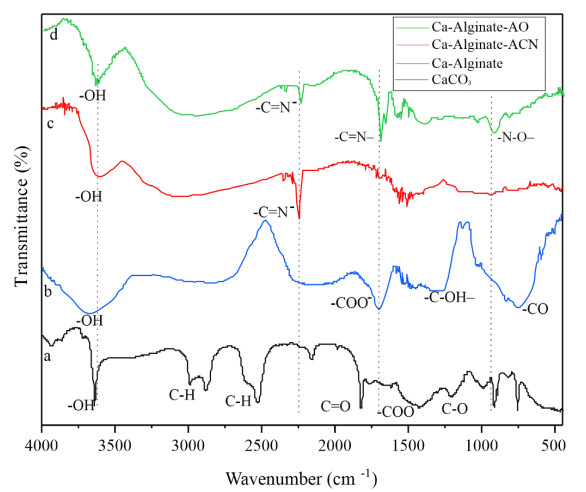
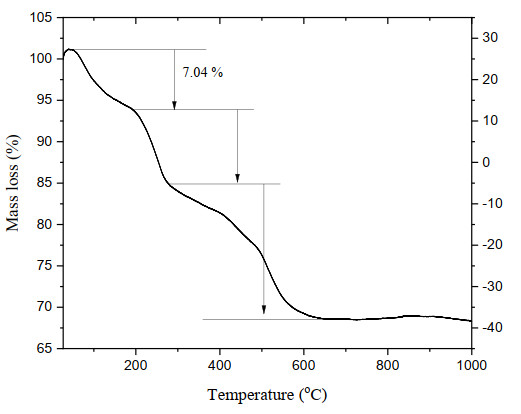
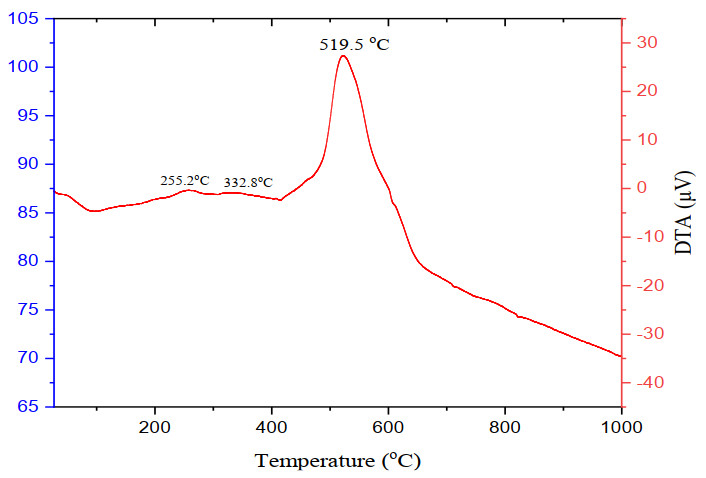
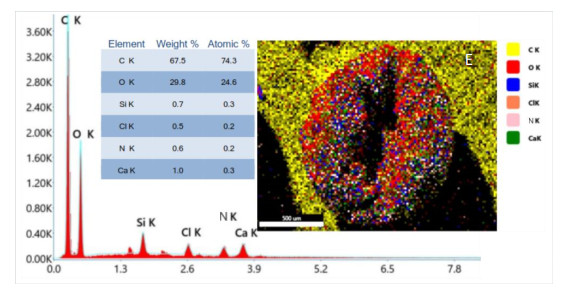
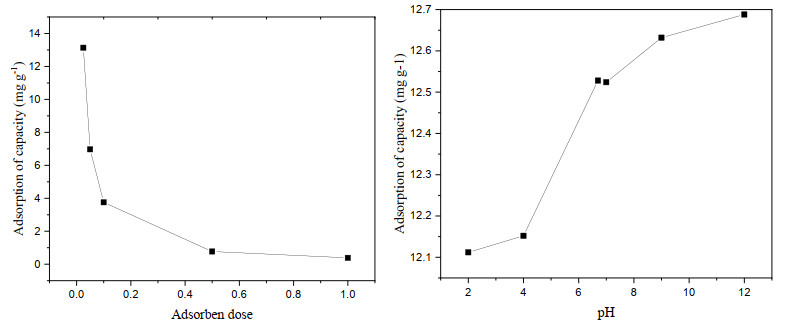
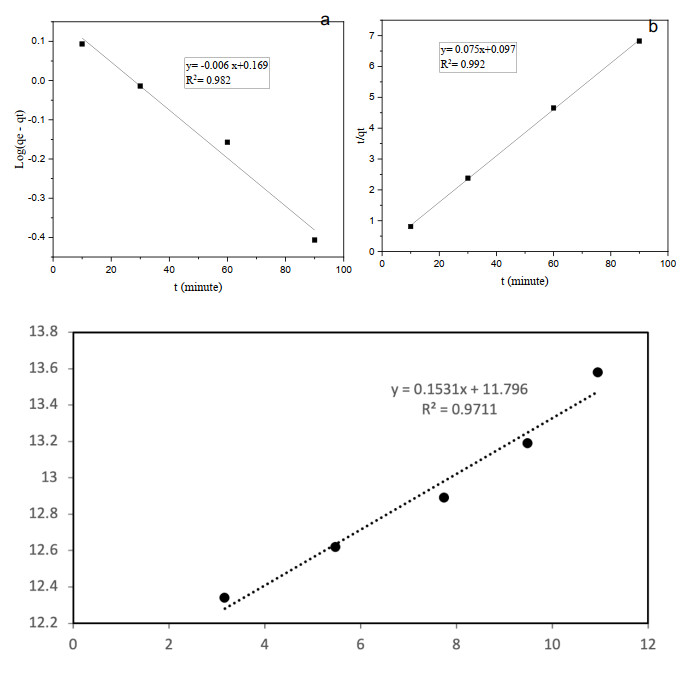
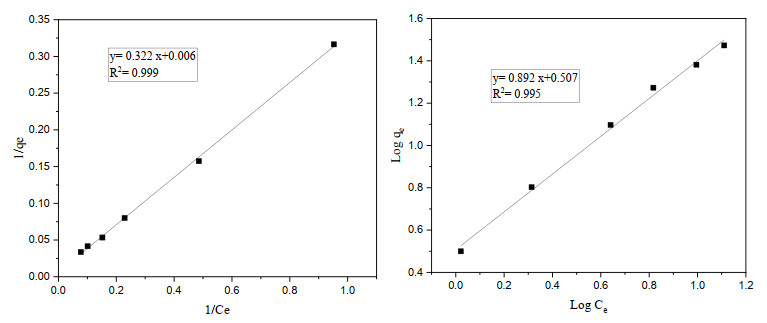
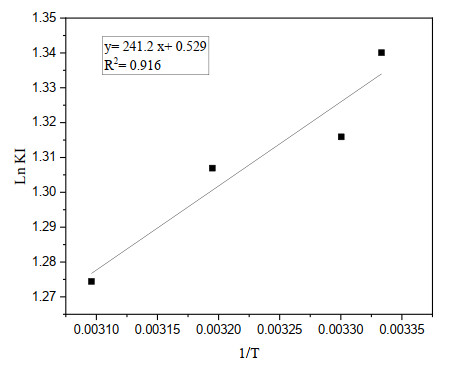
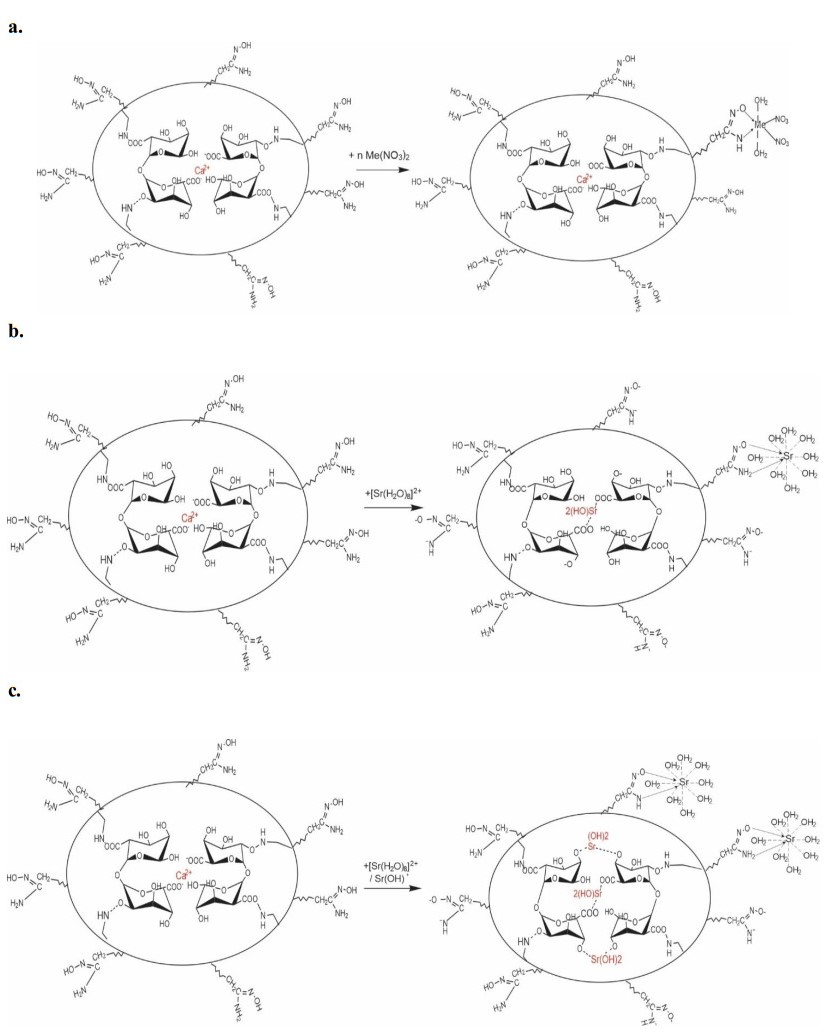
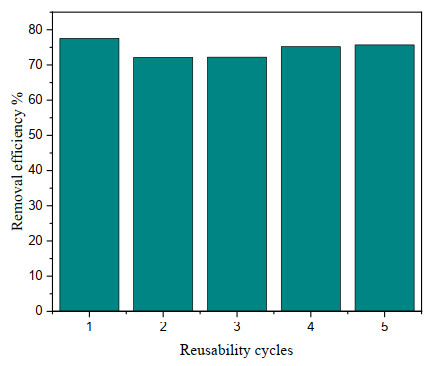
In this study, Ca-alginate-Amidoxime (Ca-Alg-AO) beads synthesized from coral skeleton waste and functionalized with amidoxime groups were utilized for Sr(Ⅱ) adsorption in aqueous solutions. The physicochemical characterization was conducted using FTIR, TGA-DTA, SEM-EDX, and XRF. Characterization confirmed successful functionalization, as evidenced by the presence of ACN functional groups at 2251 cm-1, C = N stretching vibrations at 1651 cm-1, and N–O vibrations at 939 cm-1, as well as thermal stability up to 282.2–652.1 ℃ and enhanced structural density. XRF analysis revealed an increase in Ca content from 94.63% to 94.76%, while SEM showed improved surface structural density. In aqueous solutions, the beads achieved an adsorption capacity of 13.58 mg/g and an efficiency of 84.8%, following pseudo-second-order kinetics and the Langmuir isotherm model. Thermodynamic analysis indicated an exothermic and spontaneous adsorption process driven by entropy. In seawater, the adsorption capacity decreased to 4.02 mg/g due to ion competition and Sr(Ⅱ) speciation changes. Adsorption mechanisms involved ion exchange and metal-ligand complexation at lower pH levels, while higher pH promoted electrostatic interactions and complexation, with Sr(OH)2 precipitation at excessive pH. Reusability tests demonstrated that the beads retained 75.7% of their initial adsorption capacity after five cycles, highlighting excellent durability and potential for environmental applications.
Citation: Alif Alfarisyi Syah, Anugrah Ricky Wijaya, Intan Ainul Malik, Dewinta Yuka Siwi. Sr(Ⅱ) adsorption using amidoxime-functionalized Calcium-Alginate gel beads derived from coral skeletons: kinetic, isotherm, thermodynamic, and mechanisms studies[J]. AIMS Environmental Science, 2025, 12(3): 435-460. doi: 10.3934/environsci.2025020
In this study, Ca-alginate-Amidoxime (Ca-Alg-AO) beads synthesized from coral skeleton waste and functionalized with amidoxime groups were utilized for Sr(Ⅱ) adsorption in aqueous solutions. The physicochemical characterization was conducted using FTIR, TGA-DTA, SEM-EDX, and XRF. Characterization confirmed successful functionalization, as evidenced by the presence of ACN functional groups at 2251 cm-1, C = N stretching vibrations at 1651 cm-1, and N–O vibrations at 939 cm-1, as well as thermal stability up to 282.2–652.1 ℃ and enhanced structural density. XRF analysis revealed an increase in Ca content from 94.63% to 94.76%, while SEM showed improved surface structural density. In aqueous solutions, the beads achieved an adsorption capacity of 13.58 mg/g and an efficiency of 84.8%, following pseudo-second-order kinetics and the Langmuir isotherm model. Thermodynamic analysis indicated an exothermic and spontaneous adsorption process driven by entropy. In seawater, the adsorption capacity decreased to 4.02 mg/g due to ion competition and Sr(Ⅱ) speciation changes. Adsorption mechanisms involved ion exchange and metal-ligand complexation at lower pH levels, while higher pH promoted electrostatic interactions and complexation, with Sr(OH)2 precipitation at excessive pH. Reusability tests demonstrated that the beads retained 75.7% of their initial adsorption capacity after five cycles, highlighting excellent durability and potential for environmental applications.

| [1] |
Bardi U (2010) Extracting minerals from seawater: an energy analysis. Sustainability 2: 980-992. https://doi.org/10.3390/su2040980 doi: 10.3390/su2040980

|
| [2] |
Yao Y, Gao B, Zhang M, et al. (2012) Effect of biochar amendment on sorption and leaching of nitrate, ammonium, and phosphate in a sandy soil. Chemosphere 89: 1467-1471. https://doi.org/10.1016/j.chemosphere.2012.06.002 doi: 10.1016/j.chemosphere.2012.06.002
|
| [3] |
Angino E E, Billings G K, Andersen N (1966) Observed variations in the strontium concentration of sea water. Chemical Geology 1: 145-153. https://doi.org/10.1016/0009-2541(66)90013-1 doi: 10.1016/0009-2541(66)90013-1
|
| [4] | Nanlohy F, Wijaya A R, Semedi B, et al. (2023) Adsorption of strontium (Sr2+) in seawater using adsorbent Fe3O4/MnO2/fulvic acid nanocomposite[C]//AIP Conference Proceedings. AIP Publishing 2634(1). https://doi.org/10.1063/5.0112262 |
| [5] |
Ryu J, Hong J, Park I S, et al. (2020) Recovery of strontium (Sr2+) from seawater using a hierarchically structured MnO2/C/Fe3O4 magnetic nanocomposite. Hydrometallurgy 191: 105224. https://doi.org/10.1016/j.hydromet.2019.105224 doi: 10.1016/j.hydromet.2019.105224
|
| [6] |
Hong H J, Park I S, Ryu T, et al. (2018) Demonstration of seawater strontium (Sr (Ⅱ)) extraction and enrichment by a biosorption technique through continuous column operation. Industrial & Engineering Chemistry Research 57: 12909-12915. https://doi.org/10.1021/acs.iecr.8b02895 doi: 10.1021/acs.iecr.8b02895
|
| [7] |
Jeong S K, Ju C S (2002) Extraction of strontium ion from sea water by contained liquid membrane permeator. Korean Journal of Chemical Engineering 19: 93-98. https://doi.org/10.1007/BF02706880 doi: 10.1007/BF02706880
|
| [8] |
Nagaoka M, Yokoyama H, Fujita H, et al. (2015) Spatial distribution of radionuclides in seabed sediments off Ibaraki coast after the Fukushima Daiichi Nuclear Power Plant accident J Radioanal Nucl Chem 303: 1305–1308. https://doi.org/10.1007/s10967-014-3633-9 doi: 10.1007/s10967-014-3633-9
|
| [9] |
Shozugawa K, Riebe B, Walther C, et al. (2016) Fukushima-derived radionuclides in sediments of the Japanese Pacific Ocean coast and various Japanese water samples (seawater, tap water, and coolant water of Fukushima Daiichi reactor unit. J Radioanal Nucl Chem 307: 1787–1793. https://doi.org/10.1007/s10967-015-4386-9 doi: 10.1007/s10967-015-4386-9
|
| [10] |
Sachse A, Merceille A, Barré Y, et al. (2012) Macroporous LTA-monoliths for in-flow removal of radioactive strontium from aqueous effluents: Application to the case of Fukushima. Microporous Mesoporous Mater 164: 251–258. https://doi.org/10.1016/j.micromeso.2012.07.019 doi: 10.1016/j.micromeso.2012.07.019
|
| [11] |
Hong H J, Ryu J, Park I S, et al. (2016) Investigation of the strontium (Sr(Ⅱ)) adsorption of an alginate microsphere as a low-cost adsorbent for removal and recovery from seawater. J Environ Manage 165: 263–270. https://doi.org/10.1016/j.jenvman.2015.09.040 doi: 10.1016/j.jenvman.2015.09.040
|
| [12] |
Zhao J, Liu J, Li N, et al. (2016) Highly efficient removal of bivalent heavy metals from aqueous systems by magnetic porous Fe3O4-MnO2: Adsorption behavior and process study. Chem Eng J 304: 737–746. https://doi.org/10.1016/j.cej.2016.07.003 doi: 10.1016/j.cej.2016.07.003
|
| [13] |
Marinin D V, Brown G N (2000) Studies of sorbent/ion-exchange materials for the removal of radioactive strontium from liquid radioactive waste and high hardness groundwaters Waste Manag 20: 545–553. https://doi.org/10.1016/S0956-053X(00)00017-9 doi: 10.1016/S0956-053X(00)00017-9
|
| [14] | Rane A V, Kanny K, Abitha V K, et al. (2018) Methods for synthesis of nanoparticles and fabrication of nanocomposites[M]//Synthesis of inorganic nanomaterials. Woodhead publishing 2018: 121-139. https://doi.org/10.1016/B978-0-08-101975-7.00005-1 |
| [15] |
Wijaya A R, Syah A A, Hana D C, et al. (2024) Addition of chitosan to Calcium-Alginate Membranes for Seawater NaCl Adsorption. AIMS Environ Sci 11: 75–89. https://doi.org/10.3934/environsci.2024005 doi: 10.3934/environsci.2024005
|
| [16] |
Fiol N, Poch J, Villaescusa I (2005) Grape stalks wastes encapsulated in calcium alginate beads for Cr(Ⅵ) removal from aqueous solutions. Sep Sci Technol 40: 1013–1028. https://doi.org/10.1081/SS-200048041 doi: 10.1081/SS-200048041
|
| [17] |
Gok C, Aytas S (2009) Biosorption of uranium(Ⅵ) from aqueous solution using calcium alginate beads. J Hazard Mater 168: 369–375. https://doi.org/10.1016/j.jhazmat.2009.02.063 doi: 10.1016/j.jhazmat.2009.02.063
|
| [18] |
Li X, Qi Y, Li Y, et al. (2013) Novel magnetic beads based on sodium alginate gel crosslinked by zirconium(Ⅳ) and their effective removal for Pb2+ in aqueous solutions by using a batch and continuous systems. Bioresour Technol 142: 611–619. https://doi.org/10.1016/j.biortech.2013.05.081 doi: 10.1016/j.biortech.2013.05.081
|
| [19] |
Hu S, Lin X, Zhang Y, et al. (2017) Preparation and application of alginate-Ca/attapulgite clay core/shell particle for the removal of uranium from aqueous solution. J Radioanal Nucl Chem 314: 307–319. https://doi.org/10.1007/s10967-017-5427-3 doi: 10.1007/s10967-017-5427-3
|
| [20] |
Wijaya A R, Syah A A, Hana D C, et al. (2024) Addition of chitosan to Calcium-Alginate Membranes for Seawater NaCl Adsorption. AIMS Environ Sci 11: 75–89. https://doi.org/10.3934/environsci.2024005 doi: 10.3934/environsci.2024005
|
| [21] |
Nakayama R, Takamatsu Y, Namiki N (2020) Multiphase calcium alginate membrane composited with cellulose nanofibers for selective mass transfer. SN Appl Sci 2: 1–7. https://doi.org/10.1007/s42452-020-03532-1 doi: 10.1007/s42452-020-03532-1
|
| [22] |
Chen J H, Li G P, Liu Q L, et al. (2010) Cr(Ⅲ) ionic imprinted polyvinyl alcohol/sodium alginate (PVA/SA) porous composite membranes for selective adsorption of Cr(Ⅲ) ions. Chem Eng J 165: 465–473. https://doi.org/10.1016/j.cej.2010.09.034 doi: 10.1016/j.cej.2010.09.034
|
| [23] |
Yang M, Xia Y, Wang Y, et al. (2016) Preparation and property investigation of crosslinked alginate/silicon dioxide nanocomposite films. J Appl Polym Sci 133: 22. https://doi.org/10.1002/app.43489 doi: 10.1002/app.43489
|
| [24] |
Manez K S, Husain S, Ferse S C A, et al. (2012) Water scarcity in the Spermonde Archipelago, Sulawesi, Indonesia: Past, present and future. Environ Sci Policy 23: 74–84. https://doi.org/10.1016/j.envsci.2012.07.004 doi: 10.1016/j.envsci.2012.07.004
|
| [25] |
Li L, Fang Y, Vreeker R, et al. (2007) Reexamining the egg-box model in calcium - Alginate gels with X-ray diffraction. Biomacromolecules 8: 464–468. https://doi.org/10.1021/bm060550a doi: 10.1021/bm060550a
|
| [26] |
Kamila N S, Syah A A, Wijaya A R (2024) Application of Silica from Beach Sand in the Synthesis of Calcium-Alginate-Silica as Adsorbent of Na + and Cl - Ions. E3S Web Conf 481: 03011. https://doi.org/10.1051/e3sconf/202448103011 doi: 10.1051/e3sconf/202448103011
|
| [27] |
Syah A A, Wijaya A R, Kusumaningrum I K (2024) Preparation and development of amidoxime-modified Fe3O4/SiO2 core-shell magnetic microspheres for enhancing U(Ⅵ) adsorption efficiency from seawater. Aims Environ Sci 11: 21–37. https://doi.org/10.3934/environsci.2024002 doi: 10.3934/environsci.2024002
|
| [28] |
Gao B, Gao Y, Li Y (2010) Preparation and chelation adsorption property of composite chelating material poly(amidoxime)/SiO2 towards heavy metal ions. Chem Eng J 158: 542–549. https://doi.org/10.1016/j.cej.2010.01.046 doi: 10.1016/j.cej.2010.01.046
|
| [29] |
Zhao Y, Li J, Zhao L, et al. (2014) Synthesis of amidoxime-functionalized Fe3O4@SiO2 core-shell magnetic microspheres for highly efficient sorption of U(Ⅵ). Chem Eng J 235: 275–283. https://doi.org/10.1016/j.cej.2013.09.034 doi: 10.1016/j.cej.2013.09.034
|
| [30] |
Wei Y, Salih K A M, Lu S, et al. (2019) Amidoxime functionalization of algal/polyethyleneimine beads for the sorption of Sr(Ⅱ) from aqueous solutions. Molecules 24. https://doi.org/10.3390/molecules24213893 doi: 10.3390/molecules24213893
|
| [31] | Putra H F S, Syah A A, Wijaya A R (2024) Application of Calcium Alginate Products for Seawater Desalination Process. 03010. https://doi.org/10.1051/e3sconf/202448103010 |
| [32] |
Wu F C, Tseng R L, Juang R S (2009) Initial behavior of intraparticle diffusion model used in the description of adsorption kinetics. Chem Eng J 153: 1–8. https://doi.org/10.1016/j.cej.2009.04.042 doi: 10.1016/j.cej.2009.04.042
|
| [33] | Skwarek E, Gładysz-Płaska A, Choromańska J B, et al. (209) Adsorption of uranium ions on nano-hydroxyapatite and modified by Ca and Ag ions. Adsorption 25: 639–647. https://doi.org/10.1007/s10450-019-00063-z |
| [34] |
Ou M, Li W, Huang Z, et al. (2023) Highly efficient extraction of uranium (Ⅵ) from seawater by Polyamidoxime/polyethleneimine sponge. Sep Purif Technol 331: 1–34. https://doi.org/10.1016/j.seppur.2023.125721 doi: 10.1016/j.seppur.2023.125721
|
| [35] |
Wang D, Song J, Lin S, et al. (2019) A Marine-Inspired Hybrid Sponge for Highly Efficient Uranium Extraction from Seawater. Adv Funct Mater 29: 1–12. https://doi.org/10.1002/adfm.201901009 doi: 10.1002/adfm.201901009
|
| [36] |
Jeong C, Kim S, Lee C, et al. (2020) Changes in the physical properties of calcium alginate gel beads under a wide range of gelation temperature conditions. Foods 9. https://doi.org/10.3390/foods9020180 doi: 10.3390/foods9020180
|
| [37] |
Kim S, Jeong C, Cho S, et al. (2019) Effects of thermal treatment on the physical properties of edible calcium alginate gel beads: Response surface methodological approach. Foods 8. https://doi.org/10.3390/foods8110578 doi: 10.3390/foods8110578
|
| [38] |
Zhao W, Qi Y, Wang Y, et al. (2018) Morphology and thermal properties of calcium alginate/reduced graphene oxide composites. Polymers 10: 1–11. https://doi.org/10.3390/polym10090990 doi: 10.3390/polym10090990
|
| [39] | P. M. V Raja, A. R. Barron (1934) Physical methods in chemistry Nature 134: 366–367. https://doi.org/10.1002/jctb.5000533702 |
| [40] |
Ablouh E, Hanani Z, Eladlani N, et al. (2019) Chitosan microspheres/sodium alginate hybrid beads: An efficient green adsorbent for heavy metals removal from aqueous solutions. Sustain Environ Res1: 1–11. https://doi.org/10.1186/s42834-019-0004-9 doi: 10.1186/s42834-019-0004-9
|
| [41] |
Dragan E S, Humelnicu D, Ignat M, et al. (2020) Superadsorbents for Strontium and Cesium Removal Enriched in Amidoxime by a Homo-IPN Strategy Connected with Porous Silica Texture. ACS Appl Mater Interfaces 12: 44622–44638. https://doi.org/10.1021/acsami.0c10983 doi: 10.1021/acsami.0c10983
|
| [42] | Jamshidi A, Rezaei S, Hassani G, et al. (2021) Optimization and modeling of ammonia removal from aqueous solutions by using adsorption on single-walled carbon nanotubes, " J. Eng. Technol. Sci., vol. 53, no. 3, 2021, https://doi.org/10.5614/j.eng.technol.sci.2021.53.3.9 |
| [43] |
Sharifnia S, Khadivi M A, Shojaeimehr T, et al. (2016) Characterization, isotherm and kinetic studies for ammonium ion adsorption by light expanded clay aggregate (LECA). J Saudi Chem Soc 20: S342–S351. https://doi.org/10.1016/j.jscs.2012.12.003 doi: 10.1016/j.jscs.2012.12.003
|
| [44] |
Syafiuddin A, Salmiati S, Jonbi J, et al. (2018) Application of the kinetic and isotherm models for better understanding of the behaviors of silver nanoparticles adsorption onto different adsorbents. J Environ Manage 218: 59–70. https://doi.org/10.1016/j.jenvman.2018.03.066 doi: 10.1016/j.jenvman.2018.03.066
|
| [45] |
Utomo S B, Jumina J, Siswanta D, et al. (2012) Kinetics and equilibrium model of Pb(Ⅱ) and Cd(Ⅱ) adsorption onto tetrakis-thiomethyl-C-4-methoxyphenylcalix[4]resorcinarene. Indones J Chem 12: 49–56. https://doi.org/10.22146/ijc.21371 doi: 10.22146/ijc.21371
|
| [46] |
Sadeghi S, Azhdari H, Arabi H, et al. (2012) Surface modified magnetic Fe 3O 4 nanoparticles as a selective sorbent for solid phase extraction of uranyl ions from water samples. J Hazard Mater 215–216: 208–216. https://doi.org/10.1016/j.jhazmat.2012.02.054 doi: 10.1016/j.jhazmat.2012.02.054
|
| [47] |
Galamini G, Ferretti G, Medoro V, et al. (2020) Isotherms, kinetics, and thermodynamics of nh4 + adsorption in raw liquid manure by using natural chabazite zeolite-rich tuff. Water Switz 12: 1–16. https://doi.org/10.3390/w12102944 doi: 10.3390/w12102944
|
| [48] |
Uğurlu M, Gürses A, Açıkyıldız M (2008) Comparison of textile dyeing effluent adsorption on commercial activated carbon and activated carbon prepared from olive stone by ZnCl2 activation. Microporous Mesoporous Mater 111: 228–235. https://doi.org/10.1016/j.micromeso.2007.07.034 doi: 10.1016/j.micromeso.2007.07.034
|
| [49] |
Uğurlu M, Karaoğlu M H (2011) Adsorption of ammonium from an aqueous solution by fly ash and sepiolite: Isotherm, kinetic and thermodynamic analysis. Microporous Mesoporous Mater 139: 173–178. https://doi.org/10.1016/j.micromeso.2010.10.039 doi: 10.1016/j.micromeso.2010.10.039
|
| [50] |
Ghaemi A, Torab-Mostaedi M, Ghannadi-Maragheh M (2011) Characterizations of strontium(Ⅱ) and barium(Ⅱ) adsorption from aqueous solutions using dolomite powder. J Hazard Mater 190: 916–921. https://doi.org/10.1016/j.jhazmat.2011.04.006 doi: 10.1016/j.jhazmat.2011.04.006
|
| [51] |
Ghaeni N, Taleshi M S, Elmi F (2019) Removal and recovery of strontium (Sr(Ⅱ))from seawater by Fe3O4/MnO2/fulvic acid nanocomposite. Mar Chem 213: 33–39. https://doi.org/10.1016/j.marchem.2019.05.003 doi: 10.1016/j.marchem.2019.05.003
|
| [52] |
Persson I (2010) Hydrated metal ions in aqueous solution: How regular are their structures? Pure Appl Chem 82: 1901–1917. https://doi.org/10.1351/PAC-CON-09-10-22 doi: 10.1351/PAC-CON-09-10-22
|
| [53] |
Hasan S, Iasir A R M, Ghosh T K, et al. (2019) Characterization and adsorption behavior of strontium from aqueous solutions onto chitosan-fuller's earth beads. Healthc Switz 7. https://doi.org/10.3390/healthcare7010052 doi: 10.3390/healthcare7010052
|
| [54] | Ceban G I, Nastas R (2023) Some considerations of nitrite ions adsorption on activated carbons. The suggested mechanisms. 16–16. https://doi.org/10.19261/enece.2022.ab07 |
| [55] |
Zaman H G, Baloo L, Kutty S R, et al. (2023) Post Synthetic Modification of NH2-(Zr-MOF) via Rapid Microwave-promoted Synthesis for Effective Adsorption of Pb(Ⅱ) and Cd(Ⅱ). Arab J Chem 16: 104122. https://doi.org/10.1016/j.arabjc.2022.104122 doi: 10.1016/j.arabjc.2022.104122
|
| [56] |
Birniwa A H, Mohammad R E A, Ali M, et al. (2022) Synthesis of Gum Arabic Magnetic Nanoparticles for Adsorptive Removal of Ciprofloxacin: Equilibrium, Kinetic, Thermodynamics Studies, and Optimization by Response Surface Methodology. Separations 9. https://doi.org/10.3390/separations9100322 doi: 10.3390/separations9100322
|
Figures(10) / Tables(6)

Alif Alfarisyi Syah, Anugrah Ricky Wijaya, Intan Ainul Malik, Dewinta Yuka Siwi. Sr(Ⅱ) adsorption using amidoxime-functionalized Calcium-Alginate gel beads derived from coral skeletons: kinetic, isotherm, thermodynamic, and mechanisms studies[J]. AIMS Environmental Science, 2025, 12(3): 435-460. doi: 10.3934/environsci.2025020





 DownLoad: