Citation: C. M. Vicario, G. Martino. Psychology and technology: how Virtual Reality can boost psychotherapy and neurorehabilitation[J]. AIMS Neuroscience, 2022, 9(4): 454-459. doi: 10.3934/Neuroscience.2022025

| [1] | Lucifora C, Grasso GM, Perconti P, et al. (2020) Moral dilemmas in self-driving cars | Dilemmi morali nelle automobili a guida autonoma. Rivista Internazionale di Filosofia e Psicologia 11: 238-250. |
| [2] | Lucifora C, Angelini L, Meteier Q, et al. (2021) Cyber-Therapy: The Use of Artificial Intelligence in Psychological Practice. Intelligent Human Systems Integration 2021. IHSI 2021. Adv Intel Systems Comp, 1322 . Cham: Springer. https://doi.org/10.1007/978-3-030-68017-6_19 |
| [3] | Daher K, Capallera M, Lucifora C, et al. Empathic Interactions in Automated Vehicles #EmpathicCHI (2021) pp. 1-4. https://doi.org/10.1145/3411763.3441359 |
| [4] |
Grasso GM, Lucifora C, Perconti P, et al. (2020) Integrating human acceptable morality in autonomous vehicles. Adv Intell System Comp 1131 AISC: 41-45. https://doi.org/10.1007/978-3-030-39512-4_7 
|
| [5] | Grasso G, Lucifora C, Perconti P, et al. Evaluating mentalization during driving (2019) Page 536-541. https://doi.org/10.5220/0007756505360541 |
| [6] |
Botella C, Fernández-Álvarez J, Guillén V, et al. (2017) Recent progress in virtual reality exposure therapy for phobias: a systematic review. Curr Psych Rep 19: 1-13. https://doi.org/10.1007/s11920-017-0788-4
|
| [7] |
Parsons T D, Rizzo AA (2008) Affective outcomes of virtual reality exposure therapy for anxiety and specific phobias: A meta-analysis. J Behav Ther Exp Psychiatry 39: 250-261. https://doi.org/10.1016/j.jbtep.2007.07.007
|
| [8] |
Anderson PL, Zimand E, Hodges LF, et al. (2005) Cognitive behavioral therapy for public-speaking anxiety using virtual reality for exposure. Depression Anxyety 22: 156-158. https://doi.org/10.1002/da.20090
|
| [9] |
Baghaei N, Chitale V, Hlasnik A, et al. (2021) Virtual Reality for Supporting the Treatment of Depression and Anxiety: Scoping Review. JMIR Ment Health 8: e29681. https://doi.org/10.2196/29681
|
| [10] |
Parsons TD, Riva G, Parsons S, et al. (2017) Virtual Reality in Pediatric Psychology. Pediatrics 140: S86-S91. https://doi.org/10.1542/peds.2016-1758I
|
| [11] |
Lucifora C, Grasso GM, Perconti P, et al. (2021) Moral reasoning and automatic risk reaction during driving. Cogn Technol Work 23: 705-713. https://doi.org/10.1007/s10111-021-00675-y
|
| [12] |
Vicario CM, Nitsche MA, Hoysted I, et al. (2020) Anodal transcranial direct current stimulation over the ventromedial prefrontal cortex enhances fear extinction in healthy humans: A single blind sham-controlled study. Brain Stimul 13: 489-491. https://doi.org/10.1016/j.brs.2019.12.022
|
| [13] |
Ney LJ, Vicario CM, Nitsche MA, et al. (2021) Timing matters: Transcranial direct current stimulation after extinction learning impairs subsequent fear extinction retention. Neurobiol Learn Mem 177: 107356. https://doi.org/10.1016/j.nlm.2020.107356
|
| [14] |
Marković V, Vicario CM, Yavari F, et al. (2021) A Systematic Review on the Effect of Transcranial Direct Current and Magnetic Stimulation on Fear Memory and Extinction. Front Hum Neurosci 15: 655947. https://doi.org/10.3389/fnhum.2021.655947
|
| [15] |
Feruglio S, Matiz A, Pagnoni G, et al. (2021) The Impact of Mindfulness Meditation on the Wandering Mind: a Systematic Review. Neurosci Biobehav Rev 131: 313-330. https://doi.org/10.1016/j.neubiorev.2021.09.032
|
| [16] |
Conversano C, Di Giuseppe M, Miccoli M, et al. (2020) Mindfulness, Age and Gender as Protective Factors Against Psychological Distress During COVID-19 Pandemic. Front Psychol 11: 1900. https://doi.org/10.3389/fpsyg.2020.01900
|
| [17] |
Di Giuseppe M, Ciacchini R, Piarulli A, et al. (2019) Mindfulness dispositions and defense style as positive responses to psychological distress in oncology professionals. Eur J Oncol Nurs 40: 104-110. https://doi.org/10.1016/j.ejon.2019.04.003
|
| [18] |
Di Giuseppe M, Orrù G, Gemignani A, et al. (2022) Mindfulness and Defense Mechanisms as Explicit and Implicit Emotion Regulation Strategies against Psychological Distress during Massive Catastrophic Events. Int J Environ Res Public Health 19: 12690. https://doi.org/10.3390/ijerph191912690
|
| [19] |
Conversano C, Orrù G, Pozza A, et al. (2021) Is Mindfulness-Based Stress Reduction Effective for People with Hypertension? A Systematic Review and Meta-Analysis of 30 Years of Evidence. Int J Environ Res Public Health 18: 2882. https://doi.org/10.3390/ijerph18062882
|
| [20] | Ma J, Zhao D, Xu N, et al. (2020) The effectiveness of immersive virtual reality (VR) based mindfulness training on improvement mental-health in adults: A narrative systematic review. Explor . https://doi.org/10.1016/j.explore.2022.08.001 |
| [21] |
Vicario CM, Nitsche MA (2013) Non-invasive brain stimulation for the treatment of brain diseases in childhood and adolescence: state of the art, current limits and future challenges. Front Syst Neurosci 7: 94. https://doi.org/10.3389/fnsys.2013.00094
|
| [22] | Vicario CM, Nitsche MA (2013) Transcranial direct current stimulation: a remediation tool for the treatment of childhood congenital dyslexia?. Front Hum Neurosci 7: 139. https://doi.org/10.3389/fnhum.2013.00139 |
| [23] |
Rivera-Urbina GN, Nitsche MA, Vicario CM, et al. (2017) Applications of transcranial direct current stimulation in children and pediatrics. Rev Neurosci 28: 173-184. https://doi.org/10.1515/revneuro-2016-0045
|
| [24] |
Vicario CM, Salehinejad MA, Mosayebi-Samani M, et al. (2020) Transcranial direct current stimulation over the tongue motor cortex reduces appetite in healthy humans. Brain Stimul 13: 1121-1123. https://doi.org/10.1016/j.brs.2020.05.008
|
| [25] |
Salehinejad MA, Nejati V, Mosayebi-Samani M, et al. (2020) Transcranial Direct Current Stimulation in ADHD: A Systematic Review of Efficacy, Safety, and Protocol-induced Electrical Field Modeling Results. Neurosci Bull 36: 1191-1212. https://doi.org/10.1007/s12264-020-00501-x
|
| [26] |
Salehinejad MA, Paknia N, Hosseinpour AH, et al. (2021) Contribution of the right temporoparietal junction and ventromedial prefrontal cortex to theory of mind in autism: A randomized, sham-controlled tDCS study. Autism Res 14: 1572-1584. https://doi.org/10.1002/aur.2538
|
| [27] | Anselmo A, Lucifora C, Rusconi P, et al. (2022) Can we rewire criminal mind via non-invasive brain stimulation of prefrontal cortex? Insights from clinical, forensic, and social cognition studies. Curr Psychol 16: 1-11. https://doi.org/10.1007/s12144-022-03210-y |
| [28] |
van 't Wout-Frank M, Shea MT, Larson VC, et al. (2019) Combined transcranial direct current stimulation with virtual reality exposure for posttraumatic stress disorder: Feasibility and pilot results. Brain Stimul 12: 41-43. https://doi.org/10.1016/j.brs.2018.09.011
|
| [29] | Laver KE, Lange B, George S, et al. (2017) Virtual reality for stroke rehabilitation. Cochrane Database Syst Rev 11: CD008349. https://doi.org/10.1002/14651858.CD008349.pub4 |
| [30] |
White PJ, Moussavi Z (2016) Neurocognitive Treatment for a Patient with Alzheimer's Disease Using a Virtual Reality Navigational Environment. J Exp Neurosci 10: 129-135. https://doi.org/10.4137/JEN.S40827
|
| [31] |
Lucifora C, Grasso GM, Nitsche MA, et al. (2022) Enhanced fear acquisition in individuals with evening chronotype. A virtual reality fear conditioning/extinction study. J Affect Disord 311: 344-352. https://doi.org/10.1016/j.jad.2022.05.033
|
| [32] |
Vicario CM, Salehinejad MA, Felmingham K, et al. (2019) A systematic review on the therapeutic effectiveness of non-invasive brain stimulation for the treatment of anxiety disorders. Neurosci Biobehav Rev 96: 219-231. https://doi.org/10.1016/j.neubiorev.2018.12.012
|
| [33] |
Vicario CM, Martino G, Lucifora C, et al. (202) Preliminary evidence on the neural correlates of timing deficit in post-traumatic stress disorder. Eur J Psychotraumatol 13: 2008151. https://doi.org/10.1080/20008198.2021.2008151
|
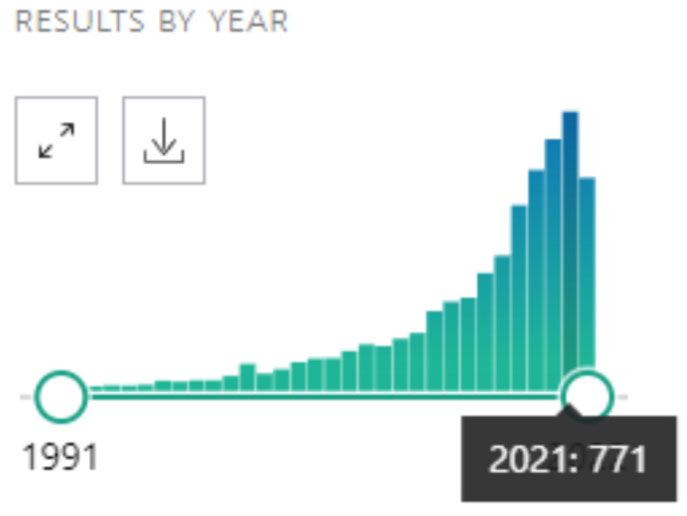
Figures(1)

C. M. Vicario, G. Martino. Psychology and technology: how Virtual Reality can boost psychotherapy and neurorehabilitation[J]. AIMS Neuroscience, 2022, 9(4): 454-459. doi: 10.3934/Neuroscience.2022025




 DownLoad: